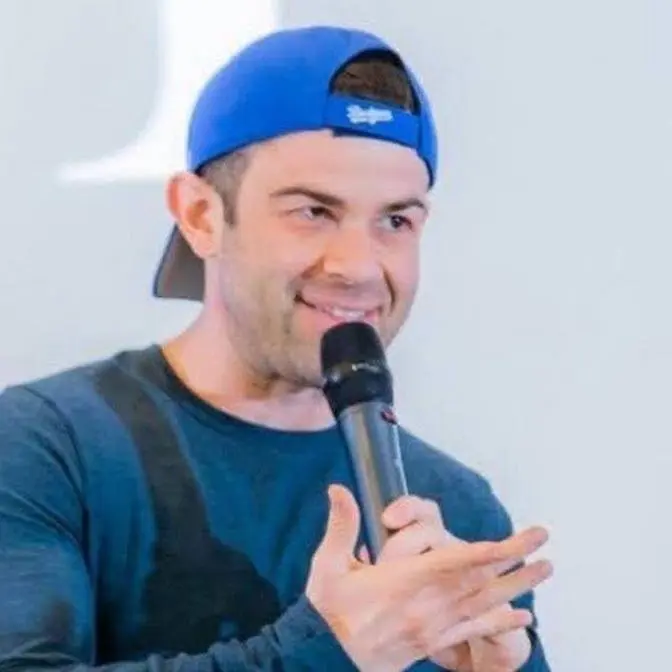
Dr. Anna Lembke is chief of the Stanford medicine, dual diagnosis clinic, and professor and medical director of addiction medicine at Stanford university's school of medicine. Dr. Lembke has testified before Congress and consulted with governors and senators from Kentucky to Missouri to Nevada. You may also recognize her from her appearance on the hit Netflix movie, “The Social Dilemma.” Aside from this. Anna has also written two books, “Drug Dealer MD,” and her latest book, the New York times bestseller “Dopamine nation.”
Today on the show we discuss: Whether or not Dr. Lembke believes cannabis is a gateway drug, why cannabis is not a reliable solution for anxiety, how cannabis interacts with dopamine, why cannabis is both physically and psychologically addictive, how to deal with the withdrawals from quitting cannabis and why abstaining from it will make your life much better and more.
⚠ WELLNESS DISCLAIMER ⚠
Please be advised; the topics related to health and mental health in my content are for informational, discussion, and entertainment purposes only. The content is not intended to be a substitute for professional advice, diagnosis, or treatment. Always seek the advice of your health or mental health professional or other qualified health provider with any questions you may have regarding your current condition. Never disregard professional advice or delay in seeking it because of something you have heard from your favorite creator, on social media, or shared within content you’ve consumed.
If you are in crisis or you think you may have an emergency, call your doctor or 911 immediately.
If you do not have a health professional who is able to assist you, use these resources to find help:
Emergency Medical Services—911
If the situation is potentially life-threatening, get immediate emergency assistance by calling 911, available 24 hours a day.
Ana, welcome to the podcast.
Thank you for inviting me back, Doug. It's great to be here.
It's great to see you. And I'd love to jump right in. I know a lot of your work,
a lot of your research revolves around dopamine and based on what you know
about dopamine and all of your research,
do you believe that marijuana can be a gateway drug to other substances?
Let's start by first defining what we mean by gateway.
Cause that that term is used a lot and I think when it's used
colloquially,
what we mean is that just like it sounds a metaphor,
it's we start with one thing and it leads to another.
But in the scientific literature,
there's actually a claim that some drugs physiologically,
because of the way that they work on the brain,
literally set that person up for higher risk for addiction to other drugs because
of something unique about that particular drug. For example,
there are a series of papers by very esteemed neuroscientists saying that,
for example,
nicotine is a gateway to other drugs because of exactly how it operates on the
brain.
So I tend to be skeptical of that claim at the beginning.
That is to say the claim that there's something uniquely physiologic about some
drugs that makes them a gateway to other drugs.
And instead what I think were the phenomenon I think we're seeing there is that
legal drugs because they're more accessible are usually the drugs that people
start with.
And it's only once they become more addicted and then are looking for another
high or a different kind of high,
are they willing to cross those societal and legal boundaries to get other drugs?
But it's not that there's something unique, for example,
about alcohol and nicotine that then moves people to specific other drugs.
I don't know if this is making much sense,
but the point is if heroin were legal and alcohol wasn't,
I think that heroin might be viewed as a gateway drug, right?
Because it's just people using it, it's normalized, it's socially sanctioned.
If alcohol were illegal, then people wouldn't use it as much.
It would take more activation energy to get people there.
So I think that the whole gateway drug phenomenon is less about this unique drug
leading to that unique drug and more about just simple accessibility.
Now what is true about the gateway phenomenon is that once we have primed our
dopamine reward pathway with highly addictive substances,
we are more vulnerable to getting addicted to other things.
So in that sense,
really anything can be a gateway to anything else that's addictive.
We know this from human behavior and we know it from animal studies showing,
for example,
that if you get a rat addicted to cocaine and then you take that rat,
that cocaine away, and then you expose that rat to cannabis,
that rat will get addicted to cannabis much faster than a rat who had never been
exposed to cocaine. So there's something that happens in the brain,
some kind of permanent physiologic change with exposure to one drug that then
translates to the increased vulnerability to the same behaviors repeating
themselves with another drug.
So do you think that there's also a gateway like mechanism with something
specific to something like marijuana,
which is highly legal now in many States in the U S and it's very accessible
that people can get primed and can get used to dealing with life with a
substance.
And because marijuana is so accessible that that becomes the thing that they use
to cope and deal with life.
And then they use so much of it that they can't get the same effect that they
may have gotten when they initially started it.
So they need to chase after a more potent substance.
Do you think there's validity there?
Oh, for sure. I mean, that's exactly how addiction works, right?
Whatever the substance is over time, our brain adapts such that you know,
we need more of the substance and more potent forms to get the same effect.
And if we go further, you know, far enough in that, in that progression,
we eventually get to a point where not only is the drug not working,
but it actually turns on us causing the opposite of what we hope for.
And that happens with cannabis all the time where people will initially use it
to relieve anxiety, but then it creates anxiety. They'll use it to sleep,
but then it keeps them up and they need more of it and more potent forms.
Almost anybody who's a habitual cannabis user will tell you that it stops
working or it doesn't work as well. Then they take a break.
They recapture some of that original sensitivity, you know,
then they go back to using it. They need less than to get the same effect.
So, I mean, this is,
this is the process of neuroadaptation that occurs in response to,
to any addictive drug. And yes, you know, just like with any addictive drug,
we see that people who become addicted to cannabis then are also more vulnerable
to getting addicted to other substances because of that neuroadaptation,
but also because of the learned behaviors,
as you point out what we sometimes call chemical coping,
where it just becomes then the reflexive thing. I'm feeling uncomfortable.
I'm feeling pain.
I'm going to do this thing or use this substance to take that feeling away.
And I'm in control of it over it. Right?
So the control piece is really a big part of it too.
It's like I'm going to take it away with this action that I'm going to do now.
And that we call chemical coping.
So a lot of our work with patients is trying to move them away from chemical
coping and doing two things. Number one,
helping them find healthier, more adaptive coping strategies,
but also probably even more importantly, learning that, learning,
teaching them to just sort of sit and tolerate the pain and just kind of,
you know, wait it out.
I feel like cannabis and marijuana specifically has been
touted as this, I guess,
fairly healthy mechanism to cope with things like anxiety and
sleep and needing to get sleep and stuff like that by many people.
And I've also seen that it can often have the adverse effect where it makes
those things worse. What's your stance?
Do you believe that marijuana is a effective
coping strategy for mental health issues?
Well, let's just look at the evidence.
If you review the studies for whether or
not cannabis works to treat mental health
disorders,
what you'll find is that there is no reliable evidence to support
the efficacy of cannabis in the treatment of any mental health disorder.
And what little evidence does exist,
it's not reliable or robust.
And it mostly comes from studies looking at the use of cannabis in things
like multiple sclerosis and spasticity.
And so the primary outcome measure for those studies is not actually looking at
psychiatric outcomes. So the studies were not designed to look at that,
but then a post hoc analysis reveals that there might've been some temporary
relief of depression or anxiety. Again,
I will emphasize that the evidence is not there to
support cannabis being effective treatment for any mental
health disorder.
Now here's what I do think it's important to take a moment to validate that in
the very short term, when we use cannabis,
many of us experience elevated mood.
Many of us experience relief from anxiety.
Many of us experience ability to go to sleep.
Some of the most common reasons that people will report using cannabis
along with using cannabis to alleviate physical pain.
But the problem is that anything that works that well and that fast
is going to be vulnerable to this process of neuroadaptation,
which means that over time it will stop working.
Then the person will have their old problem back plus a new problem,
which is that they are potentially physically dependent on the cannabis and now
need more and more to get the same effect and will experience withdrawal if they
stop.
So do you think that marijuana is not only psychologically
addicting, but also physically addictive as well?
So this dichotomy between physical and psychological addiction is a funny one
because psychological addiction is physical, right?
I mean this is all happening in our brains and these are chemical changes and
synaptic remodeling and all of that. But yes,
I mean there are these different dimensions of addiction.
What happens a lot with cannabis is people will say, well, it's not,
it's not addictive because when I stop, I don't have any withdrawal.
People will say with alcohol addiction,
I'm not addicted because I don't go into withdrawal when I stop alcohol,
even though other people do. But you know,
this physical withdrawal is only one manifestation of withdrawal.
I always like to say that the universal symptoms of withdrawal from any addictive
substance or behavior are anxiety, irritability, insomnia,
depression and craving.
And I can tell you that most people who use cannabis daily who stop for a period
of time will experience anxiety, anxiety, irritability, insomnia,
dysphoria and craving. So,
it's very clear that cannabis is addictive.
It's very clear that it's both physical behavior and a learned behavior.
So some of this, you know,
chemical coping or habit formation or just like the linked association between,
oh, I feel better when I use cannabis.
And so that's a learned association, right?
But the problem is that that learned association can get kind of calcified in
our brains where we have this sort of recall or memory for what the drug can do,
even if it becomes very much at odds with what the drug actually does, right?
So we have this idea of cannabis helps my anxiety when it's clear that I've now
reached a point where it's not actually helping my anxiety.
And I'm way more anxious than I was two years ago when I started using cannabis
to help my anxiety.
So this is the kinds of things we need to draw a patient's attention to because
it's very,
very easy to lose cause and effect as we are chasing dopamine.
So going back to something you said a few minutes ago where you said in the
short term, like, yes,
it can feel like something like marijuana or cannabis can be very helpful for
something like anxiety, but in the longterm it can be quite detrimental.
Why is that?
Like what does marijuana do to the brain for it to specifically impact your
anxiety?
How does it impact the way we manage anxiety?
We feel anxious and stuff like that,
right?
So cannabis works on our cannabinoid receptors,
our anandamide receptors, our CB1 receptors specifically,
which are widely distributed throughout the brain and ultimately lead to this
final common pathway of releasing dopamine in our brains reward and motivation
circuits.
What happens in the,
basically all human organisms have a drive toward homeostasis or whatever our
baseline level of anandamide,
that's our endogenous cannabis,
the ones that we make in our brain are endogenous anandamide transmission,
our endogenous dopamine transmission.
We all have kind of like a baseline level of firing of these essential hormones
and neurotransmitters.
That's called homeostasis and one of the universal principles governing all
physiologic processes, including our brain reward processes,
our pleasure and pain is to return to homeostasis.
So what cannabis does like with all reinforcing substances and behaviors is it
temporarily gets us out of that homeostatic balance and tilts toward our
reinforcing side or our pleasure side or whatever relieving pain.
It's a positive experience,
but in response our brains want to restore homeostasis and they do that by
down-regulating our anandamide and dopamine transmission,
not just to baseline levels,
but actually below baseline levels into this dopamine death state,
which is craving, right? It's withdrawal, it's craving.
It might be slightly outside of conscious awareness,
but of course it motivates us to want to reach for that drug again as a way to
recapture, you know, that initial pleasurable response.
And if we do that, then repeatedly over time,
that initial deviation to pleasure gets weaker and shorter.
But that after response, the pain gets stronger and longer. In other words,
the process of neural adaptation is a progressive one where we essentially can
end up in a dopamine,
chronic dopamine deficit state where we reset our hedonic or our joy set point.
We've so bombarded our reward pathway with this highly reinforcing substance
that in order to compensate,
our brain has developed a new normal where when we're not using, right,
we're in this dopamine deficit state, which by the way,
is exactly like depression, right? It's too little dopamine.
It's below our homeostatic baseline. And once we reach that point,
now we're entering addicted brain. Now we need to use not to get high,
but just to feel normal. And in order to get high,
we need to use ever greater potency and quantity type forms.
So that's, we begin to chase our tail.
What initially is problem solving becomes the problem itself,
but we don't see it.
And I think that's really the key that we don't see this causal relationship
between all of the pot we're smoking and feeling more depressed, more anxious.
All we know is that in the moment we're relieved of our anxiety.
And of course that control piece is a big part of addiction too. It's like, well,
I might be more miserable,
but at least I can fine tune control when I'm miserable and when I'm not.
And there's a big pull that.
How has marijuana changed over the years? I mean,
I've heard from people,
colleagues of mine or just friends in general that have had interactions with it
or their kids or whatever, that it's quite different now than when I was,
you know, when I was doing stuff, when I was a kid, if you could explain that,
I think people would really appreciate that.
Yeah. So, I mean, I'm sure as your listeners have heard,
many times the pot of today is not the pot of yesteryear and that these
plants can be genetically engineered to have variable
content of certain active ingredients.
THC is the active and addictive and psychotropic
or mind altering ingredient in cannabis. CBD is not addictive,
and you can genetically engineer a plant to have more or less of one or the
other. These are these different streams.
And what's happened now is that people have gotten into the business of
engineering the cannabis plant to have very high content CBD.
I mean, sometimes that too, CBD,
but THC is really what most people are going for.
And then you have different ways of kind of, you know,
processing the plant and also the resin.
So you get this dabbing with the resin,
which is sort of like the most potent part of the potent THC plant,
the result being that some forms of cannabis now have 90% THC,
whereas in the sixties, it was at most 10% THC.
The other big change with cannabis today is of course,
we have these sort of vaping delivery mechanisms,
right? So, you know,
even without having to go through the bother of like manipulating the plant to
roll a blunt or a spliff or something,
you've got these cartridges that people can sort of suck on all day long.
So you've got increased access through the engineering of the delivery
mechanism.
And then you have changes in cultural norms where people have come to regard
cannabis as safe. They see it as medicinal. They see it as not harmful.
It's normalized on, you know, podcasts like Joe Rogan. He's a huge influence.
You know, he, he, he uses it. Other people use it. So,
so there's this idea that it's not harmful. And what you have today,
what data shows that whereas in the sixties people who use
cannabis would use it on the weekends with friends,
but not like during the week.
And what we're seeing more and more now is daily cannabis wake and bake users.
So they start in the morning, they use all day till they go to bed.
So not just higher potency,
but also these more rapid delivery mechanisms and then a culture that
has sort of contributed to normalizing all day, everyday use.
So is it safe to say that marijuana in general is not good for the health of our
brain?
I can say that with pretty good confidence. First of all,
smoking anything is bad for us.
So the edibles are a little bit of a harm reduction strategy,
but most people don't want to use the edibles because of the delayed onset of
action. And then cannabis is just definitively addictive.
Now I wouldn't want to say that there's no situation in which it's useful.
So there are,
there is reliable evidence that short term cannabis can help with you know,
AIDS and chemotherapy related nausea and vomiting AIDS and chemotherapy related
anorexia and a spasticity in the context of multiple sclerosis and other
neurodegenerative disorders, as well as short term pain.
So those are good evidence. The problem is just like with opioids,
what works short term doesn't necessarily work long term.
And there are no store studies supporting use of cannabis for any medical
indication long term. So again, you know,
all of these things when used in the right way, in the right context,
including cannabis, although I would say cannabis,
the plant is not FDA approved for any medical indication.
It's the some of the active derivatives and smoking is not FDA approved for any
medical indication, but the actual, you know,
THC has been shown to be effective short term for these medical conditions,
but not any psychiatric conditions.
We're in the midst of this horrific opioid epidemic right now.
And I know I've had you on the podcast a few times to talk about addiction.
And now like we're seeing so many people dying from fentanyl and stuff like
that. And you also hear people say, well,
it's harm reduction is effective because it just gives addicts another shot.
It keeps them alive. It gives them hope, which obviously I agree with.
We should try to do what we can to save the lives of addicts.
I also know that marijuana is like we've said is very addictive and that if you
use that as a form of harm reduction, logically it could make sense.
But psychologically and physiologically, as you've just explained,
it doesn't really make sense to talk about like cannabis and marijuana is
effectiveness as a form of harm reduction for people coming off of opioid
addiction.
Yeah. So I always like to start these conversations by defining harm reduction.
Harm reduction speaks to the ways that we can mitigate the harm related to use
without necessarily stopping use.
And I mean that's things like DUI checks for drunk drivers.
That's a form of harm reduction, right?
Clean needle exchange is a form of harm reduction, right?
So we're trying to mitigate the harm to the individual and to society more
broadly through an intervention.
I think though what's happened of late is that we now almost talk about harm
reduction and abstinence oriented as like enemies of each other.
And it never was that way before.
And it somehow become like so many things in our culture, you know,
politically polarized. Like if you're, if you're,
if you think that abstinence is a path of recovery for people,
then you're against harm reduction. This is the kind of thinking,
or if you're pro harm reduction, then you're,
you must by definition be against abstinence. And that,
that's really not a sort of a fruitful or productive orientation. You know,
we've got recovery.
And then within the broader context of trying to help people there's this idea,
well, let's, let's at least limit,
also work to limit the harms of people who are using drugs,
the harms to themselves and others.
But what I I'm afraid has also happened there is that in that process of trying
to limit harms,
we've sort of on some level decided that for some people that's as far as they
need to go.
That that harm reduction is not a path to recovery,
but just an end in itself.
And I think we're doing people a disservice in that regard,
because I think again,
the whole idea is predicated on drugs being harmful, right?
And somehow we've gone from drugs being harmful and wanting to try to help
people, all people get into recovery, um,
to thinking that, well, actually drugs are fine. Drugs are fine.
And you know, people who can use drugs in a non-harmful way,
sure. Um, maybe that that's true. You know,
a lot of people drink alcohol and it's not a harm to self or others.
But if we're talking about addiction,
then we're talking about harmful use, right?
And then I really do think the goal for all of those individuals is recovery.
Um, but it's somehow gotten,
gotten sort of distorted to this goal of like that.
It's actually maybe almost superior that drug use is okay.
And people who use drugs, I don't,
I don't subscribe to that school of thought specifically with cannabis.
Um, for example,
there was this idea that maybe cannabis could help people get off of
prescription opioids, right?
That that would be what was called a harm reduction strategy for that.
But what the data have shown is that people with chronic pain on opioids who are
trying to get off,
who add cannabis in the mix don't actually end up getting off as opioids.
They end up on opioids and cannabis and they end up with worse pain.
And that's not all that surprising when you're thinking about the addiction
diathesis and you're really owning and acknowledging addiction as its own
disease. Um, the other thing I think that can be,
even just within our own minds,
I've had lots of patients who kept going back to their drug because they told
themselves, I'm doing harm reduction. I'm doing harm reduction.
And despite all the evidence to the contrary that they weren't doing harm
reduction,
these were relapses and that they were leading to a lot of harm.
This sort of harm reduction mantra had just sort of penetrated the culture and
penetrated their minds and resulted in them spinning in that addiction
vortex for a lot longer than they might have.
If someone had just come along and said, you have a disease of addiction,
and it's very likely that you can never use this drug again because we've,
we've done the experiment and doing the experiment is legit, right? That's good.
Get the research. But like, how much research do you need? I mean,
at some point it's very clear that you are harming yourself and or others
because every time you use this drug, anyway,
be curious about your thoughts on that.
I mean, yeah, I, I agree with you a hundred percent.
I think anytime you go against harm reduction,
the adverse reaction can be, well, you don't, you just don't care about addicts.
And it's like, well, no, I care so much about addicts and I've,
I mean, I can always speak from my own experience,
but I know that marijuana is addictive for, for a lot of addicts, right?
It was certainly addictive for me and a lot of other people that I know that led
to other things.
And that if the goal is for this person to become happier and to be fulfilled in
life and reestablish healthy relationships with themselves and others,
that in my experience and what I've heard from a lot of other people, like,
you know,
using marijuana every day when you're an addict is not the best approach to
getting there. Right.
And based on all the evidence that you've just shared,
that there's zero evidence to support that marijuana use has benefits for mental
health disorders over the longterm. Right. So now that we know that,
I think people can hopefully understand that, like, yes, it's,
it's a great maybe short-term bridge.
Like I'd like to know your thoughts on that to help people transition off of an
addiction to something much more harmful,
like an opioid into onto something else that can hopefully lead them towards the
path. And so I guess with all that said,
you talked about there's evidence to support that people who have chronic pain
or taking opiates, when they use cannabis as a form of harm reduction,
they end up using both drugs to treat the pain and end up with worse pain.
Right. But as far as addicts, like if it's,
if there's an addict that's addicted to a prescription medication and then
they're like, okay, I'm going to go to somewhere.
I'm going to use cannabis for three to six months or whatever it is to,
because it's a less potent drug,
but hopefully I can then transition down from that into,
you know, abstinence and sobriety and stuff.
Is there any evidence to suggest that something like that would work?
There's no evidence to support that.
And our clinical experience would say that this is just switching addiction
addictions. Furthermore, cannabis is a really potent drug now.
And that person might discover that the drug they were trying to quit was nothing
compared to their addiction to cannabis, right?
So there's whole this sort of drug of choice that we're all wired slightly
differently.
What's really reinforcing for your reward pathway may not be for mine and vice
versa. So in this process of trying to use cannabis to get off of heroin,
that person might discover that really cannabis was their drug of choice all
along.
And it's a heck of a lot harder for them to get off of cannabis than it was to
get off of heroin. You know what I mean? I mean, we,
there's this idea that cannabis is somehow safe or medical or, you know,
it really depends on the person and it's,
there's no evidence of medicinal value when it comes to treating addiction
or other mental health disorders. So that would not be whatever.
I would never recommend that path to somebody.
I think that would be just so fraught in so many ways.
I would,
I would imagine that it's even harder sometimes to come off of something like
cannabis or even like alcohol because it is so normalized in society that there
are people that can have a healthy relationship with both of these substances,
as you alluded to earlier. And the person I'm sure goes like,
why can't I do that? Right?
Why can't I have a healthy relationship with cannabis or with alcohol?
And so many other people around me can, right?
Cause you don't really have that conversation with like heroin and cocaine.
It's not like, you know,
typically people don't really have healthy relationships with either of those
drugs, right?
Those tend to be something that you get addicted to fast and it's a very,
very fast progressive deterioration of, of your, of your life, right?
If you're doing it every single day. And, and with all that said,
alcohol is also very normalized and you'll hear people say,
well, marijuana is safer than alcohol or,
you know,
a marriage has never been ruined because of alcohol or people aren't likely to
kill somebody in a car accident or whatever the example is when they're on
marijuana compared to alcohol.
What are your thoughts on the differences in as far as an addiction and how they
impact the brain between marijuana and alcohol?
Well, again,
all reinforcing symptoms and behaviors work on the same reward pathway lead to
this, you know,
dopamine release followed by this progressive dopamine deficit state.
So really there are more similarities than differences. I mean,
I think the sort of societal association between alcohol being more dangerous
than cannabis has to do with the fact that for some people,
alcohol is very disinhibiting. Um,
and so you can lead to public drunkenness and drinking and driving and other
harms, not just to the individual, but harms to others,
which society gets alarmed about, right?
It's one thing if you're deciding to do something to your own body.
It's another thing if you're now intoxicated and I'm acting out in a way
that's harmful. However, um, I would say that depending upon the person,
you can have, uh,
potentially just as much other harm with cannabis as you can with alcohol.
And again, there's enormous inter individual variability,
but this idea that cannabis is harmless because really you're just kind of
smoked out sitting on the couch, a motivated,
not bothering anybody is turning out to be less and less true,
especially with these more, more potent forms.
So we have people who are now driving under the influence and we know that it
affects reflexes.
It affects people's likelihood of getting in a motor vehicle accident.
Maybe it's not as bad as alcohol in terms of those parameters,
but it's actively being studied now.
And I'll be curious to see what the evidence shows because it could be that it's
just as harmful to use cannabis and drive as it is to drink and drive. Um,
the other thing is that people often forget the extent to which cannabis is a
powerful psychotomimetic,
meaning that it can make some people really, really paranoid.
And paranoia is considered to be one of the few psychiatric emergencies.
So paranoid ideation, suicidal ideation, homicidal ideation. Um,
when people get paranoid, they do really crazy things. They harm themselves.
They harm other people. Um,
they just engage in scary acts because they're,
they feel that they're in danger. Um,
and we see this all the time with cannabis,
especially in people who have an underlying sort of propensity for paranoia or
psychosis, people with schizophrenia or schizoaffective disorder,
some patients with bipolar disorder, some of those folks, when they use cannabis,
their underlying disorder just completely takes off.
Our antipsychotic medications don't work. Psychotherapy doesn't work.
So, I mean, I think it's,
it's almost like a cultural trope that, you know,
cannabis is safe and alcohol is not because we're seeing more and more, um,
societal and individual harm as a result.
How does cannabis and marijuana impact like
kids differently than adults, if anything? I mean, I've, as a,
as a personal trainer, I've coached, um,
a few kids over the young adults over the last few years that have ended up
having psychotic breaks due to excessive marijuana use.
And I have a lot of parents that listen to the podcast.
And I would imagine that, you know,
unless people are like studying the science and they're up to date on all of the,
the stuff regarding marijuana,
they might just see marijuana as something as the same kind of potency and the
same type of substance that they may have used or seen being used when they were
growing up in a, in an earlier point.
Is there any differences in how marijuana impacts like a teenager or
young adults brain versus somebody who's like my age at 35?
Yeah. I remember I was at dinner about 15 years ago with, uh,
one of the administrative leaders of Stanford and I was trying
to, uh, you know, engage him in a conversation about the dangers,
the growing dangers of drug use on college campuses, um,
including growing dangers with cannabis. And he just completely dismissed it.
He was a child of the sixties and he said, you know, I drank,
I smoked pot in college. You know, that was part of a rite of passage.
You know, that's what we, that's what young people do.
They're out there experimenting. That's no big deal. And you know,
you're just trying to like, you know,
you're a party pooper and I didn't, he didn't use those words,
but that was essentially the message. But you know, what, what,
what people don't realize, especially I would say people of that generation,
what they don't appreciate about this generation of young people is
the extent to which young people have incredible
access to highly potent drugs of all kinds.
And that polypharmacy has become the norm.
So people who use cannabis don't just use cannabis. They're using MDMA molly.
They're using psychedelics. They're binge drinking.
They're shooting up heroin. I mean, and it's all over,
all over the world, including in elite prestigious college campuses.
The other thing we're seeing is many,
many more young people who use in isolation. And this is really,
I think one of the scariest things about it. It's not like,
it's like a bonding experience.
These people are going home to their rooms and their parents' homes or to their
dorm room on campus and they're using by themselves.
And so this kind of loneliness and progressive isolation,
and it's just devastating.
It's devastating because many college campuses do not yet recognize the
extent to which drugs and alcohol are accessible, prevalent,
potent on college campuses and incredibly destabilizing
for building any form of community.
So if somebody is listening to this and they've smoked or used
marijuana a lot, or a parent has a kid that has,
and let's just say that they've become aware of this and they want to change.
They want to get better. And they're thinking to themselves,
am I going to be this way forever?
Is my brain going to be like permanently damaged or destroyed? I mean,
what's the path like as far as like healing the brain to become like,
I guess, more normal after excessive marijuana use.
Yeah. So there's lots of reason for hope.
The brain preserves enormous plasticity throughout life,
but especially when we're young.
One of the early interventions that we do is to,
we ask people to abstain from cannabis products for four weeks as a way to
reset reward pathways,
get dopamine firing back up to healthy level homeostatic,
healthy homeostatic levels.
We warn patients they're going to feel worse before they feel better.
Those first 10 to 14 days are excruciating,
but if they can't make it to four weeks,
what they'll notice is they get out of that craving vortex.
They're able to see true cause and effect. Usually symptoms of anxiety,
depression, insomnia, dysphoria, craving are much, much better.
They're able to be more present, to take joy in other things.
They're more connecting more to other people. And so, you know,
there's plenty of reason for hope.
And a lot of times this experiment of kind of dopamine fasting or abstaining for
four weeks gives people a lot of information on just how addicted they become
on how much better they feel not using and how,
what they thought was helping their depression,
anxiety was actually making it worse. So there's enormous plasticity,
lots of reason for hope.
People can change behaviors at any stage of life.
And because cannabis tends to not have a life-threatening withdrawal syndrome,
unlike some other drugs, you know,
people can stop it and kind of go cold turkey. And if they can endure it,
they can get to a place pretty quickly where they feel a whole lot better.
So that's,
that's sort of the first stage that sort of entering into
exploring a recovery lifestyle or an abstinence oriented lifestyle.
But even if the long-term goal is moderation, cannabis in moderation,
the way to get there is to start first by abstaining for long enough to reset
reward pathways, and then to be very intentional about what,
what they'll use, how much, how often,
and also accountable and honest if it doesn't work.
So that if they're not able to moderate after a period of abstinence,
they can be more embracing of, you know,
abstinence as probably the best option for them.
And a lot of times what we talk about too, is kind of reframing abstinence,
not as a sort of self-denial, but actually as a self-affirmation,
you know, as, as a way to be your best self, to live your best life,
to really do yourself a favor. Um, so those are,
those are things.
Have you seen people again,
just framing this in a way that assuming that whatever state you're living in or
whatever country you're living in, this is legal to do.
Have you seen people who were addicted to something like marijuana or cannabis
be able to abstain from it from a period of time and then have a healthier
relationship with it? Like down the road?
It's rare that people are actually able to maintain a successful
moderation long-term. Um,
I w I would say that most of what we see when people go back to it,
if they decide to go back to it, is that gradually over time, they,
they accelerate to where they're,
they're using it in a harmful and destructive way. But having said that, um,
you know, I, I, I,
I have had clinical cases where people use very,
very rarely. So rarely looks like, um, you know,
maybe once a year for a very special event, something like that. Um,
there are also a couple of papers out though, showing, uh,
specifically with cannabis,
that if people can reduce their use either in quantity or frequency,
for example, having, you know, for non-using days in a given week, um,
as well as using less when they do use that, those,
those individuals show improvement in anxiety markers of anxiety,
depression, and wellbeing. So, you know,
even though I still think the ideal for most is abstinence,
we do definitely see that people can do better by reducing their
use. So that's a laudable goal to move toward.
And for those who are trying to quit something like that, I know that, I mean,
the most challenging thing, at least in the short term is the withdrawal symptoms
is the increased, maybe anxiety, sleepless nights, the regret,
shame, maybe they have some physical symptoms or whatever the case may be.
And they can be tough to sit through.
And I know that's probably like the easy answer to say, you know what,
just sit through the pain and just know that you're going to get on the other
side of it. But a lot of times it's way easier said than done.
Like what do you recommend to people who are trying to recover from marijuana
addiction? Um, so that they can have, um,
a decent experience, um, through, through the withdrawal process.
So, I mean, you know, addiction is a biopsychosocial disease.
So that requires biopsychosocial interventions.
We have some medicines that can help people with cannabis withdrawal. I mean,
they're tricky to use in their own right, but they can be useful tools. Um,
in terms of the psychosocial, you know,
spiritual pathways and principles can really help people, prayer,
meditation. Those have been also shown to increase dopamine.
So there are ways to access healthy levels of dopamine, um, peer support,
you know, get getting support from others. Um,
and then I also recommend what, what, what sometimes referred to as hormesis.
It's a branch of science showing that, um,
intentionally doing things that are hard,
like exercise or ice cold water immersion,
especially in states of craving or as preventative, um,
can really help people with short-term withdrawal.
So I strongly recommend that people engage in those painful activities that are
more painful than the pain of withdrawal as a way to actually get through, uh,
the pain of withdrawal.
Now I'm not talking about cutting or other self-harm I'm talking about the right
level of, uh,
physically challenging experiences through exercise
and ice water, water plunges and other, you know, uh,
yoga, Tai Chi, Taekwondo, whatever, you know,
all of that sort of the embodied meditation can do that too. Prayer.
So what you're saying is at the first few weeks of withdrawal are going to be
tough, but once you get to the four week mark,
a lot of the cravings start to dissipate and go away and you start to really
notice a major difference in the way you feel.
Yeah.
One of my patients said that when you're standing on this side of recovery or a
dopamine fast,
it really feels like you're standing on one side of the grand Canyon and you're
being asked to literally leap across to the other side.
That's how impossible it feels,
which I just thought was such a great metaphor and a reminder to me of what that
feels like to ask somebody to just put it down for a while.
But the truth is that, um,
and so I think it's important not to minimize those first 10 to 14 days and
really validate how hard that is and how anxiety provoking it is just
anticipating it. But really I'm not asking you to fly across the grand Canyon.
I'm asking you to get on your backpack and get plenty of water and to walk down
and walk up the other side. And that's doable. Um,
especially if you have a guide and if you have somebody to do it with.
So that's, that's the recommendation.
Dr. Anna Lemke, this has been amazing. Thank you so much for your time,
your wisdom. I think the audience is going to get a lot out of this conversation.
Well, you're welcome.
Thanks for your advocacy and your support of people struggling with addiction and
supportive recovery. Um, you're doing great work.
Thank you. That means a lot. And I appreciate you once again,
coming on the show. Yeah, happy to.
Thank you so much for watching. If you liked this video,
I really think you're going to like this video as well. I'll see you there.