
How Can We Wake Up Our Fellow Americans Before It’s TOO LATE?? — Will Witt Interview 2023-10-19 01:48
2 Video Views·Oct 18, 2023
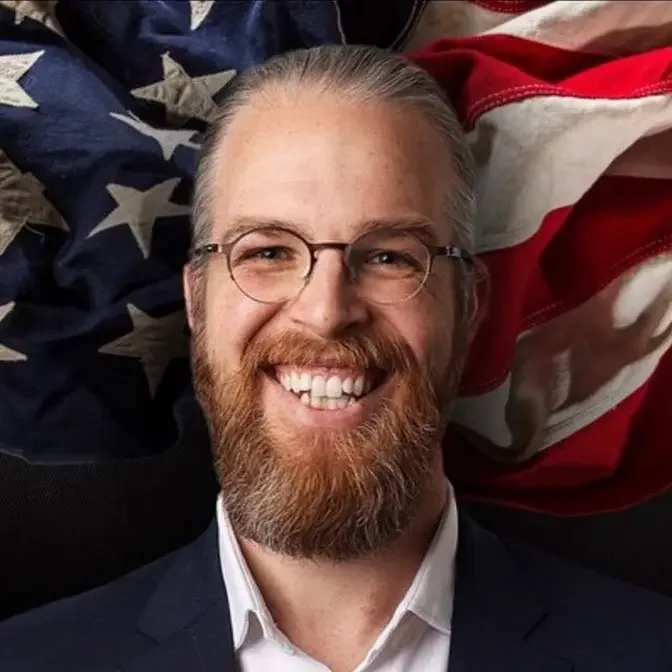
Join me for an important discussion with author and media personality Will Witt.
To learn more about investing in gold visit - http://goldwithseth.com, or call 720-605-3900
For high quality storable foods and seeds, visit http://heavensharvest.com and use promo code SETH to save 15% on your order.
Save up to 66% at https://MyPillow.com using Promo Code - MAN
LISTEN VIA PODCAST:
Apple: https://apple.co/3bEdO1S
Spotify: https://spoti.fi/3u9k8Vd
Podbean: https://bit.ly/3A4Jasy
iHeart: https://bit.ly/3npOBea
Ladies and gentlemen, welcome to Man in America. I'm your host, Seth Wholehouse.
So today I think we have a very important topic and it's a broad topic but it's also very specific
and it revolves around how do we wake up our fellow Americans and what does that even mean?
And so I'll have a little bit longer of an intro today because I'm going to talk about a few
different things I've been really thinking about lately and then I'll be getting into an interview
with Will Witt who is, maybe you've seen him, but he's a very popular influencer who's part
of PrankerU at one point, amassed close to a billion video views. And what he would do is he
would primarily go into college campuses and talk to these college students and understand how to
change their minds about their views, whether it was about communism or abortion or any of these
different topics. And so he amassed a massive amount of knowledge of how to talk to people.
And so he's written two books. One is called How to Win Friends and Influence Enemies,
which is really about specifically how to speak to people and how to get people to change their
mind and see what really is the truth, right? Communism is evil. Abortion is killing an
innocent life, et cetera. I'm sure you know all of these different arguments that you try to
make with people, but he understands how to do it in a way that I think is very effective,
which is important because if you're like me, you believe that we are in an information war
right now and you believe that it is our duty to try to wake up our fellow Americans, or if you're
somewhere else in the world, our fellow countrymen, and help them see what's really happening before
it's too late. And then the other book that Will recently came out with is called Do Not Comply,
which is literally about just how to not comply and how to have courage and to take away the
power from the elite. So these are both really important topics. And it's interesting because
there's two books that I'm in the process of working through right now that I want to talk
about. These aren't books that he wrote. These are much older books. So the first book is called
The Crowd. So it's called The Crowd, A Study of the Popular Mind. So this was written in 1895 by
a guy named Gustav Le Bon. And so from what I understand about this book is that it was a book
that was really commissioned almost in a sense, the study of Gustav, of what controls the crowds.
This is after the French Revolution. And the elites were very concerned because they had seen
that if a larger group of people gain enough momentum, they can actually overturn governments,
etc. And one of the points that Gustav Le Bon makes in this is that's exactly what does it,
is the power of that crowd. And so the elites wanted to understand how crowds work, how crowd
psychology works, so they could actually better control the crowds and maintain their control.
And one of the points that Le Bon makes in the book is that if you look back in history at the
significant changes that have happened, oftentimes we look in history and we think, oh, it was that
one leader that did that. It was that one leader that changed the whole country. But what he was
saying is that actually what leads to significant change is when the crowd collectively gets to that
point. That's what leads to the change. You can't just have a leader steps in and just changes
everything. The leader, whether they're good or evil, they have to change the thinking of the
populace to then move them into that big change. And so the control of the crowd becomes extremely,
extremely important. And so he lays that out in this book, the understanding of really the power
of the crowd. And the second book, which I'm sure you've heard me talk about as well plenty of times,
is written by Edward Bernays called Propaganda. Now, this is a book that, actually both these
books I highly recommend, but it's a relatively short book. You can get the paperback for eight
dollars. But so this is written by Edward Bernays, and this one I believe was out in the 20s. Let's
see if it tells me here when this actually book had originally come out. Anyway, I can't find it
here. So I believe it's out in the 20s. I might be incorrect on that one, but maybe 1928. Anyways,
Edward Bernays is the nephew or was the nephew of Sigmund Freud, and he became an expert in
propaganda and advertising and marketing, which really rooted back in the propaganda.
And this book is really, really, really significant because basically what he
outlines in this book is how to control people. Now, he was doing it, kind of studying what was
done through the different wars and looking at how people's minds, how the crowd has been
controlled. But he gets a lot more into advertising, right? And talking about, okay, how do you have
Coke and Pepsi? And he gets into the political class a lot and how the, really, I mean, he talks
a lot about the ruling elites and how the average person in our country needs to have someone else
making the decisions for them. He makes this point that if each individual person had to go and
research every single little topic, there'd be so much confusion. And so he describes it as that
there needs to be this elite class, these rulers at the very top that pull the invisible strings
that help to filter the decisions. And that the best possible outcome is that these elites
filter everything down into two choices, A and B, right? So it's Coke or Pepsi. I mean, imagine if
these days, of course, there's lots of other soft drinks, but imagine if there were a thousand
different soft drinks and you didn't know which one to drink. It'd be confusing. Or imagine if
there were a hundred different presidential candidates or a hundred different parties
represented. So the, at the foundation of Bernays' work is this discussion about how you have to
create two options. And that's really what we, the society we live in right now is they've created
these two options. Look at the presidential, it's either Trump or Biden, you know, there's either,
or, and of course we have RFK running independent, but the point being is that the crafting of A
versus B and how to control. And so the point though, that I've drawn from reading these two
books together and looking at where we're at society is this. And so the authors, they talk
about how basically you had before, you had the Kings, you had the rulers, and those rulers had
in a lot of ways, absolute power over the people. They put forth the edicts and laws. But then once
we had the, the industrial revolution, you had a lot more of the capitalism coming in. You had people
looking at America as an example, that they were able to on their own develop success and develop
power. And so before where you just had, you know, the ruling, ruling elite and everyone else down
here. But if you look around right now, look at Elon Musk as an example, right? This guy,
who's this billionaire and, you know, regardless of how he got to that place, he's absolutely
wealthy and he buys Twitter and Twitter is now become a free speech platform. Now, whether you
trust him or not, that's irrelevant because it is a free speech platform that probably is stepping
on the toes of a lot of the elites that don't want us to have these kinds of free speech platforms.
So that's a perfect example of what's happened now that the, the people can gain power through
business and through the various means that they can. And so what they figured out though,
is that, so basically as these people gain more power, you had the printing press and everything,
the elite started losing their power, like the Kings and the rulers started losing their power
as more of it was transferred and really earned and gained by the individuals. And so what Bernays
focuses on in his book is a lot of, you know, because in 1920s or so, this is where we had
the, the radio, this is where we had the, these mass controls of communication. And so it's amazing
to go back almost a hundred years and read in this book, the methods they're talking about. It sounds
like modern day social media and the, the just complexities of how they can control the message.
And so it was really, so you had this cycle, right? The rulers gaining power, and then the
slowly, then slowly losing the power to the crowd, right? As the crowd gains more influence. But then
what they realized is that, and this is what you see coming out in Gustavo von's book, and then also
specifically Edward Bernays' book, is that if the rulers can then control the crowd, right? You have
these people that become powerful and everything, but if you can still control the crowd, then the
rulers can actually still maintain their control over the world. But you see that it really,
fundamentally, you have to be able to control the crowd to control the world. There's not a scenario
where they, the picture they paint where just by virtue of being the wealthy elite, you automatically
have control. You have to be able to control the people. And so if you look at the progression of
the mass media and the mass communication in the United States, as an example, right? When we had
the television that came out, we had radio, newspaper, newspaper, even before the internet,
right? So, so rewind, say 30 or 40 years ago, most people in America got their worldview and their,
and their information from a few basic sources that were very easy to control. They read the New
York Times, they watched Walter Cronkite or Diane Sawyer, they turned on their radio, they listened
to their radio. So in that time, you know, the mid-century, right? 50s, 60s, 70s, I believe that
the elites were having a heyday in figuring out all these new ways of controlling us. And you go
back to Project Operation Mockingbird, you can see the CIA was, you know, very intimately involved
in the mainstream media and being able to control the narrative. They knew the power of this.
And so I think that there's, there's also, you had peak control. You had peak control of people
heading into, you know, the early 2000s. But, but as they've developed and then as the, with the
introduction of the internet and the introduction of social media, it became an even more potent
tool for them to control the crowd, right? As we talked about, who controls the crowd controls
the world. And so with the early social media, early, you know, search engines, et cetera,
they were able to put in these even more sinister methods of crowd control and not just controlling
the narrative, because now we're getting into deep psychological control, using dopamine and
algorithms to keep people hooked to these devices. So it's even more sinister, but something
very interesting has happened though, I would say in the past decade or so, which is really
significant because when I interview people like Cliff High or Martin Armstrong, which is interesting
because they both have a very similar perspective of where we're at in history, they both talk about
the fact that more and more people are seeing through the lies. And so I want to quantify that
a little bit, because if you look at what's happened with the internets, right? So at first,
the internet, Google, search engines, Facebook, Twitter, it became this great tool to further
suppress us. And then you combine that with lockdowns where we could no longer, you know,
go to the town square. We can no longer go to the local library and participate in a town meeting.
And now most people are being forced just onto social media, being forced into the areas where
the elites have absolute control over what was being said, especially at that time.
But if you look at where we're at right now, the tool that they built to control us even further
and to push us further into this technocracy, this digital totalitarian world, which they've outlined
in Agenda 2030 and all the different documents I'm sure that you've looked into and you've learned
about, what's happened is that there's a shift. And the shift that happened is me sitting right
here talking to you. I couldn't do this 50 years ago. It'd be so difficult. But now I'm just some
guy. I'm just some guy, some man in America, sitting in my studio and I'm talking to you and
I can give you information. I can expose the plans of the elites. I can show you different
ways to heal yourself that Big Pharma doesn't agree with. I can introduce all kinds of concepts
and ideas. And some of these, you know, some of the videos I've done, the video I recently did
interview with Dr. David Martin, got over a million views. I mean, over a million views on one
interview. That's more than a lot of CNN interviews will get. So now me, some average person, I've
become a powerful tool of propaganda, right? Now, propaganda is, as they describe it, as Bernays
describes it, he thinks of it as a good thing, right? It's really just influence. It's the ability
to influence. Now, it can be used in a sinister way, but it can also be used in a positive way.
My goal is to try to give you positive propaganda. It's positive influence. Hey, think for yourself.
Research. Don't trust the government. Make sure you buy some storable food. Make sure you stock
up. Learn how to use a gun. You know, positive things that I think will help give you more
freedom and more independence from this totalitarian system. But it's not just me. I mean,
there are so many influence. You have people like Mike Adams or even Alex Jones and the size that
he's amassed with his audience, even to just small people. Maybe someone puts a post up on Facebook
that gets a thousand views. That collectively is breaking their system, right? Because going back
to it, the elites know they have to be able to control the crowd to control the world.
And so what's happening right now, and it's this amazing moment in history, is that the technology
they've built to further control us is now being used against them. Look at Rumble. Look at these,
look at even Twitter. I mean, on Twitter, you can go in there and talk about the election. You can
talk about the jab. You can have these discussions. You can say, hey, there's a different story to
as it relates to the Israel-Hamas narrative or whatever it is. People can now go out and do this.
And so this is actually one of the biggest reasons why I feel and why I agree with my guests like
Martin Armstrong or Cliff Pines say that the cabal is in its end days or David Martin,
the interview I talked about, who said that the deep state's already dead. We're experiencing
the dying breaths of this beast and its last flailing arms as it dies.
I really believe that one of the fundamental reasons as to why that is, is because we have
seized control of the ability to communicate. Look at the plummeting ratings for CNN or even
Fox News. People don't watch them anymore. People are tuning into shows like this. People are
turning into blogs or substack articles or following someone new on Twitter. They're losing
control of the crowd. And that's why I believe that within the next couple of years, that we
will absolutely witness the collapse of the deep state, the collapse of the cabal, because even
though they've got trillions and trillions of dollars and all this, we have a soul that God
gave us. And that soul, we have free will. We can decide what information to pursue. We can decide
to not comply. And they cannot control that. And it drives them crazy. So that's why they hate people
like me. They hate people like you. And so this fits perfectly into this conversation with Will
Witt because he's someone they hate exceptionally. They have a huge amount of hate for him because
he's the one who's going to college campuses and talking to these kids on the ground and exposing
the lies of the elites. And so in today's show, we're going to be talking about the just how to
not comply, but also how to wake up more of our fellow Americans, because that's really where the
war is. We have to get more people. We have to take that crowd and say that that crowd is still
50 percent controlled by the cabal. They still control half the country, right? We have to chip
away at that. We have to say, let's take an extra percent, an extra percent, an extra percent. So say
by the 2024 election, maybe they only control 30 percent of the people here in America. Honestly,
that to me is getting close to the absolute end because he who controls the crowd controls the
world and they're losing control of the crowd. It's no thanks to people like you, people like
Will Witt, the other guests I have on. We're doing it. So, folks, please enjoy this interview.
Will, thank you so much for being on the show, man. It's very good to have you here today.
Hey, thanks, man. Appreciate it. I'm glad to be here.
Absolutely. So for those of the audience that hasn't seen you or seen your interviews on PragerU
or your interaction with the campus kids and surviving all that, give us just a real quick
rundown on your background. Yeah, I mean, I was a liberal atheist my entire life until I went
to college in CU Boulder, which we call the People's Republic of Boulder, actually. And I
went there and I was an English major, which was a worthless degree. And then I went to a sociology
class, which was a worthless class. And there's this black girl sitting next to me. And my teacher
in the class looks at me, points at me and says, you are oppressing this girl next to you because
of the color of your skin. And this seemed just very odd to me, like I didn't really know what
was going on, even though I was kind of liberal or even more apathetic towards politics. I was like,
I don't feel like I'm oppressing anyone. And this girl next to me didn't feel like I was
oppressing her either, which was, you know, just as just as strange. And so after that,
I started getting very involved and started looking things up and researching. And I found
out about so much reading and watching videos. And I eventually found out about PragerU,
decided on my campus to make a video interviewing women, what they thought about the wage gap
and tell myself how to shoot and edit the video, send it to PragerU. They ended up offering me a
job. And so after two years, I dropped out of college, moved to Los Angeles from Colorado to
go and work for PragerU. And then I worked for PragerU for the last five years. I directed
and hosted three short mini documentaries. I did about a billion views on my videos with
the man on the street content and all the other social media content. I've
spoken around the world now, written two national bestselling books. It's been quite the whirlwind,
I can say. But now I live in Florida. I left PragerU last year, live in Tampa, Florida,
where I'm the editor in chief of a newspaper outlet I started called the Florida Standard,
which we're very proud of. Hey folks, I've got a quick message for you. So
I'm sure you've heard a lot of people, myself included, talking about the importance of buying
precious metals, gold and silver. But what's really behind that? Is it just a thing of,
hey, buy this gold, buy this silver, right? Or is there something deeper that we should
be looking at? So I recently came across some figures about house prices. So in 1930,
the average family home was approximately $4,000. Fast forward to 2023, the average family home is
just over $400,000. So you have to ask yourself, why is that? Is it because things have just gotten
more expensive? No, it's actually because the dollar has lost 99% of its value since 1930,
right? When people talk about the collapse of the dollar or inflation, this is what it means.
Now let's take a look at gold. So in 1930, if you wanted to purchase your home in gold,
it would take approximately 200 gold coins. So 200 gold coins would purchase the average family
home in 1930, about $4,000. Now, if you, instead of buying a home with that gold or cash, you set
those aside, if you set aside $4,000 in cash in 1930, it would be worth $4,000 today. What can
you buy with $4,000? Can you buy a family home? No, you can't even buy a crappy used car. But if
you set aside $4,000 worth of gold coins in 1930, which is 200 gold coins, one ounce coins,
that would be worth approximately $400,000 today. And this is the key lesson about precious metals.
It's not about getting rich. It's about putting your money into an asset that protects you against
inflation and against the destruction of the currency, which is what happens to all fiat
currencies, especially now we're in the end days of the dollar. And so that's why it's important.
Maybe not all of your money, but a portion of your money, a portion of what you have,
I highly recommend putting it into precious metals of gold and silver, because what it's
doing is it's protecting you. This is an asset that has stood the test of time, not just stood
the test of time since the 1930s. We're talking about the rise and fall of civilizations. Gold
was used to buy houses back in ancient Rome. It's still around. It's an asset that will forever have
its value. So folks, if you want to do this and you need someone that you can trust, there's no
person I can recommend more than Dr. Kirk Kelly. He's a very good friend of mine. He's a strong
Christian patriot, and he's out to really help people to protect their savings and what you've
worked for against the destruction of the dollar, not to mention also protecting it against the
danger of a central bank digital currencies. So to learn more about this, go to goldwithseth.com
or call 720-605-3900. Again, that's goldwithseth.com or 720-605-3900. Both those places will allow you
to set up a quick appointment where you can talk to a wealth advisor that will help get you started
on this path. Again, goldwithseth.com, 720-605-3900. Man, so good. It's funny because I went to a
liberal arts school and somehow developed, midway through my bachelor degree there, developed this
mission to fight communism, which is like, they're teaching us communism. I'm like, I got to fight
this. I can't go along with this. It seems like we walked some similar paths. And so one of your
recent books, which I'm going to pull up here, so you've got Do Not Comply, which I want to talk
about, but I want to first talk about this book, which is How to Win Friends and Influence Enemies.
And so you also, when you were with PragerU, you spent a lot of your time doing this kind of man
on the street in the campus, interviewing people and discussing. And I think that for a lot of the
folks that are watching this show, because I interact with a lot of them and I also do speaking,
and you get a chance to interact with the people and see what's really on the forefront of their
minds. And I'd say one of the most important things that they feel is part of their mission
is waking up their fellow Americans and helping them see that these good things that you think
that you are doing good for society, whether it's supporting LGBTQ plus rights, or thinking that the
immigration and open borders are good things that gives everyone an equal opportunity in America,
or pushing what the theories are teaching in college. You and I know, and the audience knows
that many of these things are really just communism rebranded in these kind of woke
social campaigns. But ultimately what it does is it just progresses this communist agenda.
And so we see that and we see that our country is very quickly heading towards a future that
probably isn't that different than what we see in communist China right now with social credit
scores, labor camps, et cetera. And we understand that yet there's a lot of our fellow Americans
that aren't just not fighting back against it, but they're going along with it. They've become
the useful idiots and getting them to stop that, getting them to wake up is so important. And so
I look at you as we mentioned before that we started recording as kind of like a professional
waker-upper, like someone that was on the streets discussing and developing tactics on how to get
people to see the right side of history. And so I want to focus on that and to see
what's your experience with this and what is the practical advice you can give people when
they're trying to help their friends, family, colleagues, et cetera, see what's really happening
in our country. Yeah, there's a lot that goes into this. I think when you're talking about
before that people see it as their mission to go and help people or at least wake them up.
There's this great story about this corn farmer who would win, this is a hundred years ago,
would win all these corn farming contests. He had the best seeds and always won this contest,
but he would go around to his neighbors and their farms and give them his corn seeds.
And the judge would come up to him and say, why would you give your corn seeds,
your winning corn seeds to these other people right around you? And he says, well, if the other
people around me have the good corn too, then they're all pollinating each other and the wind's
blowing all the good nutrients from theirs to mine. And I can't win and have the best corn
if everyone else doesn't have the same great corn as I do. So I think that's kind of a story on what
we all should be looking to do when we're going in and having these discussions and what we want
to do. I find what's, what's imperative to tell people is that most people nowadays, like,
especially if you go on social media and these types of things, or you're talking to someone,
they're going into a conversation, not trying to prove that the idea that they have is right.
They're going to try to prove that they are right. And this is a fault. This is pride. This is
vanity. It is me going into a discussion and wanting this person because I need some sort of
validation or I have social anxiety, whatever it is. I need some sort of validation to prove that
this person thinks that I am correct. I don't care if someone thinks I am correct. I care if
they think that the ideas are true and right, and then follow those ideas to their conclusion.
That is the most important thing to me. So that's the first thing. And then what goes on more than
this and how to actually break free from having it be about yourself and pride is actually by
asking questions instead of going and telling somebody what you think you are then asking them
what they think you are weaving the facts that are true about the situation into the questions
instead of just out front telling them exactly what they need to be thinking already.
Because in a lot of ways, we understand that the left doesn't care about hypocrisy, right? We see
this all the time. If the left has the power in this country, then hypocrisy calling them out on
it is meaningless because they're still the ones holding the gun. It doesn't matter to them if it's
logical or not. So when we're going and having these conversations and trying to show that,
you know, you're a hypocrite for believing this, it's not the best argument. What we need to be
is asking them what they think and putting them on the defensive. So now they have to tell us
exactly the outlines of their ideas, their agenda, whatever it might be. If you can do that and you
actually listen with some compassion and some understanding and knowing that this person might
be able to help you with your ideas and actually teach you something, you're not just a person
going in knowing everything, trying to show them that you are correct. You can do so much good.
It's about the questions. It's about compassion. You are compassionate when talking to normal
people and in conversations, but you are unflinching and unwavering on the ideas.
Which is interesting, the blend of just concepts you presented there, because,
you know, I've studied some personal coaching and psychology and some Tony Robbins and, you know,
the various things to understand how the human mind works. And, you know, I've read How to Win
Flynn's Friends Influence People. And, you know, one thing that you see throughout that is that
people like when you give them attention, whether it's your enemy or not. They like when you ask
about their personal life, because actually most people don't really ask about people.
You might have someone that goes through their day-to-day life for a year and no one actually
asks them, how are you doing today, in a sincere way. And so that's a really good thing. I agree
that it gets them to lower that barrier. But you also, in saying that, like removing yourself from
it. And that's a really good point, because I think that for a lot of folks, they, you know,
we feel like we've been red-pilled, we've been enlightened to the truth of what's really
happening. And I think it's easy to develop a sense of arrogance because of that, because we
feel like we're the right ones. But actually, I think that that can be a very dangerous,
a very dangerous thing that actually gets us in the way of what we were trying to accomplish in
the first place. Yeah, definitely. And I think we're seeing that right now a lot with the
political candidates running for office on the Republican side. I think what we've done is look
at candidate over principals in a lot of ways for, that's not just Trump, you know, maybe DeSantis,
maybe any of these people. And we're looking at them as instead, these are these infallible
candidates who can do nothing wrong, and the other side are just idiots. And they need to wake up to
this, because I believe this. And that is, of course, 100% right. And just follow the candidate,
and the candidate's going to fix all the problems for us. But you can't fix all the problems in the
country without ideas. I mean, the ideas are the most important part. And what it seems to me is
we are losing that sense of being able to separate people from ideas. And that's really sad because
you can't really have any sort of good dialogue with someone if the only thing that you're looking
at is the person. It's like someone like me who was in 2020 going to the Stop the Steal rallies
and supporting Donald Trump and everything, you know, and then people coming at me and saying,
well, you know, you are this type of person. You must believe this because you support Donald Trump.
And it's like, that's wrong. That is not the case of how it should be. It's like, I know Democrats
who I have met who I like better than a lot of Republicans themselves. You know, maybe they're
more anti-vax or they care about the environment more than some corporate khaki pants wearing
Republican who I hate, you know, something like that. It's like we're so worried about these
people instead of worrying about the ideas. And I think that's a big fault of us right now.
Hey folks, I have a quick message for you. Thank you so much for watching and listening to this
interview. I have one small request. If you're enjoying what you're listening to, could you
please share this interview with one person? Just one person. Because of censorship and shadow
banning, it's so hard to get this content out to more people. And the only way we can really do it
is when you help by sharing it. So if you like what you're listening to,
hit pause, share it with one person. It helps so much. Thank you so much.
It's funny you mention that because in the neighborhood we lived in before this,
there is a different kind of selection of different people we're living next to. And
it was funny because the woman that we identified almost the most with was this extreme liberal
teacher at a local college because she was into gardening. She was into natural environments. She
ate all organic. She wasn't using any kind of pesticides. And then the person right next to
her who is a strong Republican is a guy that's out spraying Roundup all over his yard. And it's
not this black and white thing. They've mixed it all together. Or say we'll go to some Republican
event and they've got rock and roll music playing. And it's like, okay, that's fine,
the rock and roll. But then you go to some, say the ballet, which in New York might be much more
of the liberals. And there's people that are appreciating this beautiful ballet and the
beautiful classical music. And you think actually that, wow, there's something off here. Because
a lot of ways it's the liberals that have infiltrated, but they've also maintained a lot
of that culture and that appreciation of the arts. Whereas again, a lot of the Republicans I know,
not to say all of them, but they're fantastic people and they're protecting our country,
but they might be smoking cigarettes and drinking, not Budweiser anymore, but drinking a 12 pack of
beer and shooting their guns off in the backyard. It's not this black and white thing anymore.
Right. And there's a time and place for everything that you're saying. You can love,
like you should be able to love rock and roll and beer and smoking a cigarette,
and also want to go and see Wagner or Beethoven and Tchaikovsky, something like that at the same
time. You should be able to bridge the gap between those things and be able to do both
and be more of a well-rounded type of person. But our political landscape now, I blame a lot
with social media, the entertainment industry, politicians as well, who have pitted us so much
in this Republican versus Democrat, but it's not that. I mean, you come to realize exactly what
you're saying, what I'm saying. It is not this Republican versus Democrat thing. It is good
versus evil. It is the elites versus the rest of us, the people who want to turn us into slaves.
And I think what's very important, what you're talking about with going see that ballet or
something like that, is that our world no longer has the appreciation for beauty that we once had.
Whereas beautiful architecture and music and sculpture and writing and oration and all these
things, these were seen as some of the greatest things that you could do in humanity,
creating these beautiful things. Geniuses would devote their lives to these kinds of things.
And now you go and see the buildings that we have, they're hideous and ugly,
great speeches and things like that have been replaced with podcasts, very easy listening type
of stuff. Everything is just the lowest common denominator for what you can make. There's not
really any sense of real creation of something new. It's just kind of like a copy of a copy of
a copy, and it destroys any sort of innovation. And if you lose beauty, then you demoralize your
people. And I think the elites want us to be demoralized. That's why they don't want anything
to be beautiful anymore. I couldn't agree more. It's funny, as you talk about that, I thought of
Shen Yun, I'm not sure if you've seen the Shen Yun show before, but it's to me, it's like the
pinnacle example, because these are people that escaped communism in China and they wanted to
revive this 5,000 year history of China, which was this beautiful, magnificent culture before
the CCP got a hold of it. And it's the exact thing. You go to modern China, it's disgusting
that the moral principles of what they're promoting, coming through the Chinese Communist
Party with atheism and really the communist architecture, everything is there. But you also
have what they're doing with Shen Yun is the exact opposite of this, this revival. So it does give me
hope. But something I want to ask you in terms of more specifics is that when you've come across
people that have had very different views than yours, and you've used these particular, I don't
even want to call them techniques, they're just ways of interacting with humans, I think in a
genuine and sincere way, which is really one of the main points I got from the original book,
How to Win Friends and Influence People, is that you have to be sincere about this. You have to
be sincere that you care about the person you're asking about, right? But do you have any stories
or examples of when you've been able to successfully take somebody that had very different and maybe
even more communist views of the world and help them see through that? Oh yeah, lots of times,
man. It's been great going out on campus or on the streets of LA, wherever it is that I went
and being able to do that. One thing that I'll just say before I even mention that is that not
everyone's mind is willing to be changed. That's just something that we all have to realize. If
everyone's mind was able to be changed to the perfect, you know, sinless mind, we wouldn't
have any of the problems that we have in America today or around the world. So it's a utopia that
will never exist. So that's just something to keep in mind when you are talking to people,
for any of the listeners out there, don't take it personally when someone's mind doesn't change
based off of the things you say. It doesn't have to be your fault that their mind didn't change.
Again, that's putting pride into it. It's putting vanity into it. Don't do that when you're going
and talking. But yeah, I mean, I've had one of the most successful ones that I was able to do
was about abortion with talking to pro-choice people and going and talking to them. Because
what I would do is start asking them about, well, do you know what it looks like in the womb when
it is nine months old, right? And you start there and then see if they can describe it. Well, what
do you think about six-month-olds? See if they can describe it. Three-month-olds, see if they
can describe it. And you go all the way down to the start of life. Do you know that 21 weeks
or 21 days is already a heartbeat on a child? When they're here, they're like, oh my goodness,
I had no idea that was the case. And you can actually go all the way down, all the way up
until conception and say, well, if it's like this this entire time, what makes it any different here
when it is also this here? I think that if you can break things down in very simple terms like
that and give people the chance to answer and not know the answer. And then when someone says, oh,
I don't know, or they get the answer wrong, you don't say, haha, idiot. You obviously don't know
anything. You come and say, well, what do you know about six months? You just continue the
conversation with them and keep going and just keep asking questions. And eventually their mind
will wake up because at the end of the day, it's not you changing that person's mind. It's them
changing their own mind because they couldn't answer the question that you gave them. And that's
what's so important to remember. But yeah, I've had a lot of examples. It's been it's been a lot
of fun. That has always been my thing when I've gone out on the street and interviewed people,
the thousands of people that I've interviewed, you know, there's all these all these people who go
out trying to just make liberals look so stupid and and those gotcha moment videos and things
like that. And granted, I've had people in my videos look very dumb. There's no doubt about it.
That's just the prevalence of what happens when you do these kind of things. But my my paramount
principle has always been to change minds. And even if I don't change the mind of the person
who I'm talking to that day, maybe someone who's watching who's never heard these questions or
ideas might have their mind changed on it as well. And when you're interacting with these people,
do you have this perception of them and you're thinking this person is just some either dumb
liberal or they're actually malicious and there's some communist or are you thinking to yourself,
this person's actually confused. This person maybe thinks they're doing the right thing,
but they've actually been deceived. Like what mindset do you take going into it?
Well, I think it definitely depends on the person. Like if I'm going I've been to all these
different rallies, the Women's March and the pro-immigration rallies and the communism marches,
like all these things in L.A. that they have basically every weekend these days. But I would
go to all of these things. And, you know, you're talking to some college student there and you see
them and you ask them about what they believe and their their opinions go this deep. It's
incredibly shallow. And so when I hear someone like that, I'm like, man, I feel bad for this
person. I feel bad that they are that they have these ideas that are evil. I mean, communism is
the most evil, insidious ideology in human history. There's no doubt about it. Killed
one hundred million people. It's it's completely evil. So for someone to think that rationally,
obviously, it must be pretty shallow. But then you go and talk to the leaders of these movements.
And I've done that, too, where I go and like I talk to these people at a what was it? It was like
native native, like reclaiming the land communism march. I mean, I don't know how to even these
things happen. It's hard to understand. But like I go and talk to one of these leaders there and
you can tell that they they understand what they are trying to do. And so there's a different
mindset going into a conversation like that. You are actually trying to these people are trying to
instill an agenda on you that they know is is not good, but will give them some sort of selfish
purpose. And that's the same. Like if you talk to one of these Republicans, right, you talk to a
Republican candidate and you can tell with a lot of them that they aren't doing it because they
care about America or care about the people or their district or whatever it is. They're doing
it because they know that these types of ideas that they are now professing can get them some
sort of notoriety or money or clout or a book deal or or power over others, whatever it might be.
So I think it's very important that when we're going to all these conversations,
we're looking at the people who are actually talking to. It's such a good point. And what
about courage? Because that's the other thing with this is there's one is just understanding
how to navigate the conversation and how to get them to lower their garb asking questions. And
I think ultimately similar to what a good psychologist does is getting the person themselves
to actually have the aha moment. And so they figured it out instead of you telling them what
it is. Right. Which is great questioning and everything. But I think that even for myself,
say I'm at a family dinner or I'm with some say some friends from high school and I know that
they've got very different views of me. And it's just it's very easy to say, well, I'm not going
to bring it up right now because it's going to make the conversation tense. It's going to be
uncomfortable. And so I think a lot of people actually just never even venture into that space
where they're trying to talk to people. But obviously, for you to walk into a Women's March
rally and start having these conversations or say, go talk to Antifa or whatever it is,
courage comes into that. And so have you always just been a courageous person or did you have to
go through some process to figure out how to actually do that? Right, folks, I've got a quick
message for you. I have one simple question. If today you could no longer go purchase more food
for your family with the food stores that you have in your home, how long would you be able
to feed your family? Would it be a week, three weeks, a month, two months, a year? This is a
really important question, folks, that we have to be very realistic about because the elites are
proactively trying to put us into a state of food crisis and a state of famine. I'm sure you've seen
all of the different food processing plants and farms that are blowing up. You've got cattle dying
by the tens of thousands. They're proactively trying to collapse our food system because they
know if they can control our food, they can control us. And so one of the best ways to be
outside of their control is to be able to have our own stores of food and to be able to produce
our own food. So there's really two things I would recommend. One is having heirloom seeds that you
can grow your own food with, making sure that they're non-GMO heirloom seeds, that that way you
can harvest your seeds this year, use them next year. You can use these seeds for generations.
Literally, it's how it will work. The other thing, though, is high-quality storable food.
This is food that's sitting somewhere. It's hidden in your basement, buried in your backyard,
whatever it is. So that way, if there is a crisis, if there is an emergency, you might have three
months set aside to get through that time period. And so for this, I would highly recommend a
company called Heaven's Harvest. This is an amazing Christian-owned Patriot company. And
what they're doing is they're making high-quality storable food. Again, a lot of the food companies,
they say these food buckets, they're all about maximizing calories per dollar. They're filling
the buckets with a bunch of filler and junk, like sweet beverages, et cetera. But Heaven's Harvest,
they focus on very high-quality food that will last up to 25 years on the shelf. They also sell
heirloom seeds. You can buy all of your seeds. You can buy all of your storable food. And look,
folks, personally, I would recommend having at least three months per person in your household,
if not six months or even a year. Again, depends on your budget, but definitely make sure you have
some seeds because those seeds could be worth their weight in gold, if not more in the future.
So to go ahead and do this right now, go put up a new tab and go to heavensharvest.com. And if
you use the promo code Seth, that's S-E-T-H, promo code Seth, you'll save 15% off of your entire
order. So again, folks, the time is running out and you'd rather be three months or one year early
than one day late. Again, heavensharvest.com and use promo code Seth to save 15% today.
Oh no, I grew up incredibly shy and bashful and never wanted to talk to anyone. I played a lot
of Pokemon when I was a kid on my Game Boy and read a lot of books. And that felt like courage
to me. I mean, that was the extent of me going and talking to people. My brother was like, he was
the very outgoing one and all that, my older brother. And so I followed him around doing
things and would just be in the shadows. I mean, when I started out doing this and was making these
first videos, they were not very good going back and watching these things, not nearly as good as
I was able to get at it. And seeing my first speeches, they were terrible. I mean, I'm a
nervous wreck going up. I'm saying the wrong things. I can't keep my ideas in a straight,
cohesive line. I mean, it's terrible, these things. But when I finished a bad speech and
I got these kids laughing at me for how bad I did, I didn't say, well, now I can't speak anymore. Now
I can't do this anymore. I said, well, I'm going to be even better. I'm going to build myself and
not let my insecurities of how I just did destroy me. I'm going to go and do it again and get even
better and practice and practice. The only way to get better at something is by practicing.
And I think that courage is the most important virtue because all the other virtues rest on
courage. You have to be brave to do all of the other ones as well. So I think without courage,
America's lost. And it's easy to think that courage is like, you only think of it in the
sense of like slaying a dragon or saving some kid from a burning building or something like that.
But there's real courage in all sorts of different ways in our lives that we don't even realize.
And I can say pretty confidently that you are unable to live a life worth living without
courage. If you do not have courage in your life, then you are not living a life that is worth living
because God wants you to be courageous as well. I also think I could agree more that if we don't
have courage at this time in history, we won't have America anymore. And I think it's that
serious. And so, you know, kind of bridging the courage conversation into
the how to resist this agenda, right? So this, your other book, which you recently have released
called Do Not Comply, right? And these are all, you can get these any place you can,
you can purchase books. So Do Not Comply, it says taking power back from America's corrupt elite.
This is also really important because we've talked about this battle of, you know, we,
the people versus small group of elites, which are probably satanic and who knows if they're
even human for all we know. I mean, they're monsters. If you look what they're doing to
this world. And so we've established that, yes, okay. A big part of it is waking up our fellow
Americans, waking up people, you know, getting more people to see through the propaganda and
the lies and the deceit and having the courage to do that. But we're also, you know, they've
talked about these lockdowns 2.0, you know, are we going to wear a mask? Are we going to get our
jabs again? Are we going to go through that whole process or are we going to not comply? And so
I think that the conversation for a lot of people is how do we take power back from
the elites? How do we conquer these people that have unlimited money, unlimited resources,
unlimited power over the media and all these things? Like, how can we possibly,
how can we possibly win against them? Well, I think it really is the title of the book. It is
Do Not Comply. I mean, I think people look at America and what the future is, and they think
of 1984 and they think of big brother watching over them and men with guns coming and telling
them what to say and all of this. I don't see that. I mean, I've seen a little bit of that,
but in reality, I don't see us as an authoritarian state in the dictatorship sense of the word of
oppression by the minority in terms of the government control. I see it much more as a
brave new world type of mentality, where in brave new world, it is positive reinforcement.
If you can make people want to be slaves, if you can make people want to love their servitude,
then you can control them forever. And that's what complying is.
Complying is telling the elites that you are okay with them controlling your life, with giving you
everything you want, because that's what we have in America. You have a bloated government that
gives you everything that you want. You have an entertainment system and entertainment and media
that is endless dopamine hits and basically SOMA, as in the book Brave New World, and an
endless amount of vices you can partake in at an unforeseen rate here in America today,
in the West today in general. And so basically you have every single thing that you want. You're
comfortable, you're safe, and if someone can provide you to keep that comfortability and safety,
people are going to go along with it. But again, the only way to live a life worth living is to
have courage and embrace suffering. Suffering comes in your life. If you're not willing to
embrace that suffering, then you're not ready to be a truth teller. You cannot be a truth teller
and someone who is doing what is correct and what is right if you are not ready for suffering,
because the elites, the radical left, all these horrible people in charge of our country,
they hate you. It's not about disagreeing with you or just wanting power over you. They hate
your ideals, they hate the way you live, they hate that you want to be autonomous over yourself,
and so they will try to destroy you. They will try and ruin you. And that's something that people
have to realize, and that it will take suffering, it will take hard work, it will take destruction
almost in a way for us to fix these things. You can't comply with the people who just want to
have you live some safe and comfortable life. You have to seek danger out. Build your houses
on the slopes of Vesuvius and go out there and change America. And what happens if enough
Americans don't comply? Well then I think they can't do it. I think that they're not allowed
to do it. I mean, like in Los Angeles, we did this rally, it was called the Defeat the Mandates
rally. This was, what, a year and a half ago, something like that. And that was 25,000 people
in Los Angeles who got to City Hall and set up this rally to stop the COVID nonsense and mandates
in LA County. And we did it. I mean, we did a fantastic job and influenced things there.
It was by people not complying. It was by me going to the grocery store with no mask and getting
flipped off and cursed at by people, but them having to still serve me because I wouldn't
say, no, I'm coming in to get my food, right? I'm not going to leave and not do that. So it takes
people like that so they can't enforce it. But it's like the stigma, like I'll talk to college
kids, like I just got back from a month-long book tour and I'll talk to college kids and they'll be
so afraid to speak up for what they believe in, so worried about what people are going to think
about them or their grade or work, whatever it might be. And I always say, I'm like, if all of
the college kids in this room or in America said, I'm going to be brave and stand up for what I
believe in, then there is no more stigma. There is no more stigma of fear. And then they can't
give you a bad grade for what you believe in anymore because everyone's doing it. But if you
just have these small individuals coming up and doing it one at a time, they're going to continue
to pummel these types of individuals who are the brave ones. So I think that it really takes all
of us if we want to fix America. I think you can fix yourself and be that brave person yourself
and live a good life with courage and all this, but that's not enough to fix America. If we want
to fix America, then it has to be all of us saying no more to this stigma. All right. So final question
for you. You've spent a lot of time on college campuses, which I think for a lot of us, we look
at that with this perception that our youth is done, right? Just like Lennon's dream, they've
seized the hearts and minds of our youth and now say 50% of them are now Marxists, et cetera. And
it's very worrying. But from what you're seeing, is there hope? Is there hope on the current
college campus? Are there enough kids that are seeing through this agenda or is it just some
giant Marxist orgy porgy? Yeah, well, I do think it is the Marxist orgy porgy, not going to lie
there. It's definitely the truth of the situation. I mean, colleges are no longer really places for
real learning or a challenge at least. It's just a place where, like I have a whole problem with
the school system in America because the school system in America, public schools, colleges now,
basically, they teach people how to memorize. You get out of school and it is who is the best
memorizer. You're not learning anything. You're not learning how to create something or be
articulate or anything like this. It is who memorized the best and whoever memorized the best
now gets the highest grades and the highest accolades in this post-knowledge and post-learning
society that we've created. And so I don't think that the colleges or the public schools in that
are doing a good job whatsoever. And I think that, like we have kids who are going to a university
and they're conservative and they're trying to become a conservative doctor or something like
this and speak out against these powers that be. And I herald them for that. That's an amazing,
beautiful thing and I applaud you. But it's tough when you have to give $50,000 a year to this
university that hates your values just so that you can be a part of their cabal and part of their
group to try and fight it from the inside. It's upsetting that we can't fight these things from
the outside like the medical establishment and the big pharma establishment or the media
establishment because they make it so that you now have to have these ludicrous degrees to do
anything in America. So I go both ways on it. I see hope in the fact that there are people who
have good values who are trying to get into these positions of power to change things. I don't have
hope because we're making these colleges and things exorbitantly wealthy and continuing to fund them
and be a part of them and herald them as institutions that mean something where we
should more so be looking at them as failures and that they no longer represent what they were told
that they were supposed to. It's like our politicians. It's like we wonder why the
politicians don't get anything done. It's because we the people don't demand anything from them.
We continue to vote for them and there's an R next to your name. I'm going to vote for you.
And if we don't demand anything from them, then they're going to continue to be sleazeballs and
pieces of garbage on both sides of the aisle. It's the same with the colleges. We demand nothing
from them, but pay them all this money and attend their classes and treat them as these higher
institutions when they're not anymore. So we have to demand more from them. And I think if we do
that, then we can really start to do some change. But I do, of course, see glimmers of hope in a lot
of the students I talk to, and I'm very proud to know a lot of them. Well, that's great. So really,
I mean, it comes back to us, like each and every single person that's following or watching or
interacting with this, you know, even whether someone shares this video or not. I mean, that's
an act of saying, hey, let's get this information out that really comes back to us. Well, Will,
I know you're a busy guy and I thank you for the time that you've given me today. I'll put the
links that we've showed up on here during the interview in the description. So for Florida
Standard, your books, your Prager page, et cetera. So again, thank you for just being a strong voice.
And also thank you for showing the audience that there are still young people like yourself and
I'd still consider myself young, that care about the future of our country. Like that
right there gives me hope. Hey, thank you, man. I appreciate it a lot. And you're doing
the same thing. So God bless you too, man. It means a lot. Thank you very much.