
The Poetic Odes of John Keats - Readings, Context and His Life
9 Video Views·Oct 12, 2023
So I wanted to lay out a little bit of the life of Keats, really, really small amount.
So if you have bigger questions, please do ask at the end,
because I do want to focus mostly on the readings.
And I'm very aware with talking about poetry
that people don't want to be kind of taught about poetry necessarily,
like, you know, what this line and what the meter is and what I think it all means.
There will be a bit of that, but it's more laying out the ideas behind it
and then just letting you enjoy the readings.
And I'll have the text up each time.
So a bit of context.
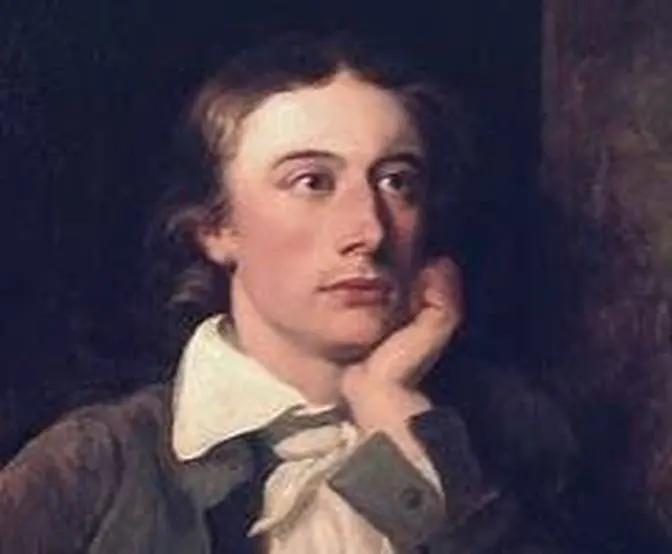
Keats was born in this area of Moorgate in north central London, 1795,
to three other surviving siblings, to two parents who were together.
But when he was, I think, eight or nine years old,
his dad fell off a horse while visiting them at school
and sort of broke his neck and died, which was pretty traumatic.
And then his mum remarried and then went off with this man,
leaving Keats and his siblings with his grandparents, with their grandparents.
And then his mother came back into his life while he was away at school,
kind of again away from his grandparents.
And at the age of 14, then she died.
So he had these two losses of his parents at a very young age.
So this was already quite a powerful moment for him.
And perhaps because of this, or perhaps not, at school,
it's recorded that he escaped a lot into literature,
or he, you know, the word escaped doesn't come up,
but he had this great passion for focusing on literature
and trying to know everything about literature,
both modern stuff at the time,
but also works back from the classical Greek and Roman world.
He was quite a boisterous guy at school.
He could have big fits of anger.
So he wasn't just this lazy, you know,
very, very overly sensitive poet writing about love and beauty.
He had quite an adventurous, boisterous, energetic side.
So in 1815, after school,
he was in the care of two kind of carers for him.
Oh, I forget the word, patrons or something.
And he went to study at Guy's Hospital as a surgeon,
as an assistant surgeon.
So he was busy with cutting up bodies and operating on people
with pretty nasty medical situations.
So no painkillers and kind of pretty nasty,
facing death on a daily basis and a lot of suffering.
But around his time in London, in more central London,
he was getting involved in literary scene.
One close, who became a close friend, Lee Hunt,
who was a journalist and a writer in his own right,
who was covering other writers such as the existing literary scene.
And he actually published some books in 1817 and 1818,
but they didn't get very, poetry books this is,
but they got very scathing reviews.
One of them said, basically, you're not well educated.
You're writing in a ridiculous modern style.
Go back to school or go back to the apothecary John.
Very scathing reviews.
But he was reading people who were writing in the Romantic movement.
So Keats is labelled, if you want to label him,
as a second generation Romantic poet.
But the first generation, people like Wordsworth over here,
Coleridge, William Blake,
who were writing after some years of the Industrial Revolution,
writing after some years of the Enlightenment,
this obsession with reason and science
and carefully ordering everything out to its nice finish
and putting a little equals and then putting the number what it all equals.
And these writers were rebelling against that.
They were focused on the individual feeling,
the importance of emotions, often very deep, powerful emotions,
be it loss or sadness or joy or the awe of nature.
So it was quite internal.
It was very internal and it was drawing upon the autobiography,
sorry, the lives of these writers.
It was a lot to do with nature as well.
So Keats was growing up in this new era of literature,
a new kind of style, more open hearted writing.
Also a big influence was Thomas Chatterton,
who was from the later 1700s.
So he wasn't really part of the Romantic movement officially,
but also had a very personal, quite anguished,
searching writing style that was kind of very,
very laid bare, who killed himself at the age of only 17.
So, yeah, this is a painting of him having killed himself.
So in 1818, Keats actually got tired of living
in pretty horrible places in London,
and he moved to Wentworth House in Hampstead,
owned by someone who knew Charles Wentworth.
And it was at this time, shortly before this time in December 1818,
that his brother, who was very, really dear to him,
Keats in his letters writes that siblings were dearer to him
than the love of women or the idea of love of women.
His brother Thomas died of tuberculosis,
and it's thought that it's at this time when Keats was caring for him
that he himself got tuberculosis.
And, of course, it then came out in his life and killed him in 1821,
only a few years later.
Here's the plaque, and it's a house.
It's still there, and it's a museum to Keats and to his poetry and life.
It's also here that he met Fanny Braun,
who was living for a time in the house and then lived close by.
And he fell in love with her kind of gradually over time in 1819.
But it didn't work out. It's quite tragic.
He had to go to Rome later on in his life in 1820
to try and recover from tuberculosis and died without seeing her ever again,
without being able to marry her,
without being able to even consummate their relationship.
When he died, she went into mourning for six years or so.
So they had a really close bond.
And, yeah, it's quite a tragic young love story.
Just an old photo of the house here.
And Keats was walking around Hampstead a lot.
The year before, he had gone on a huge trip around the UK up to the Scottish Islands,
and he really was quite a traveller before and an explorer.
And we'll talk about Ode to a Nightingale later,
one of his famous odes.
And there is a story that he wrote that or inspired to write that
while in the garden of the house, listening to a nightingale singing.
But a few months before, he had been for a walk with Coleridge
and Coleridge was writing that he had already talked about nightingales
and immortality and the nature of beauty and the nature of poetry.
So these ideas were already kind of going through his head in Hampstead.
And a quote here.
So before I start reading the odes,
as I don't want to talk about each one before too much,
I'm kind of laying up some of the ideas before,
which you'll see in quite a lot of the odes.
I'm certain of nothing but the holiness of the heart's affections
and the truth of the imagination.
So this is from the time in 1818 and 1817
when he's mixing with these literary people
and he gets a sense of the kind of poetry,
the kind of feeling that he wants to try and express in poetry.
So the holiness of the heart's affections,
the truth of the imagination.
This is something that we'll see in his odes quite a lot.
Someone's unmuted themselves or I can hear someone's background noise.
If you could unmute yourself, sorry, mute yourself, that'd be great.
And a very important part of his poetry,
especially these odes of 1819,
which was kind of his most thought about poetry.
He writes that he really took care to write these poems
in a considered way.
And he writes about something called negative capability,
which is a term that he coined.
But once it struck me what quality went to form a man of achievement,
especially in literature, in which Shakespeare possessed so enormously.
I mean negative capability.
That is, when a man is capable of being in uncertainties,
mysteries, doubts, without any irritable reaching after facts and reason.
Coleridge, for instance, being incapable of remaining content with half knowledge.
This pursued through volumes would perhaps take us no further than this.
That with a great poet, the sense of beauty overcomes every other consideration
or rather obliterates all consideration.
So negative capability, the art or the intention of being able to lose oneself,
to approach a topic, to write about it, to feel about it,
and not to really care where you end up.
You're just getting lost in that particular realm of the mysterious.
So the first ode that they think he wrote was Ode to Psyche.
So this is one that he writes about, sends to a friend in April or early May of 1819.
So it's early in this few month period when he's writing these odes.
And it's about this story of Psyche and Cupid.
And he reads a book by Apuleius called The Golden Ass,
which is a sort of 2000 year old Roman story.
And it's about this character, Psyche.
A certain king and queen had three daughters.
The charms of the two elder were more than common.
But the beauty of the youngest was so wonderful
that the poverty of language is unable to express its due praise.
The fame of her beauty was so great that strangers from neighbouring countries
came in crowds to enjoy the sight and looked on her with amazement,
paying her that homage which is due only to Venus itself.
So first there's this aspect of this character who is beyond words for beauty.
And Psyche became the symbol of the soul.
And Cupid was love.
And they eventually came together in this great love,
this union between the soul and this sort of godhead figure of love.
And she was born mortal.
But through her connection with Cupid and Eros, same thing,
she then became divine.
So it's this journey of the soul to become divine.
And Keats realised that this figure of Psyche,
she wasn't really worshipped at all.
And this is what he writes about that in a letter.
You must recollect that Psyche was not embodied as a goddess
before the time of Apuleius the Platonist,
who lived after the Augustan age,
and consequently the goddess was never worshipped or sacrificed
to with any of the ancient fervour,
and perhaps never thought of in the old religion.
I am more orthodox than to let a heathen goddess be so neglected.
So perhaps worshipping this pagan ideal of the soul,
he is in his own life and through writing about it for the reader,
creating this journey, this allowing of the soul to become more embodied
or to become realised.
Remember he had this quote about the truth of the imagination,
that they're somehow attaining the beauty of the soul
by writing about it, by expressing it in a particular way.
And the character of Psyche, she actually goes through trials
in order to eventually become divine.
And these are some just paintings of trials that she went through.
She had to go down into the underworld, for example.
So there's also the sense of the trials and tribulations
that the soul goes through to become more divine
or more able to realise its own beauty, something like this.
Of course, trials and tribulations were a big part of Keats' very short life.
The last little quote here before I start reading
is a quote from one of Keats' letters about the state of education
and the state of people he saw,
how they weren't really free with their imaginations.
How sad is it when a luxurious imagination is obliged in self-defence
to deaden its delicacy in vulgarity and riot in things attainable,
that it may not have leisure to go mad after things which are not?
And I just wanted to finish with this lovely picture in Ostia near Rome.
I was there last year.
I just found this statue of Psyche and Eros united together.
So let's read the poem.
O to Psyche.
O Goddess, hear these tuneless numbers
rung by sweet enforcement and remembrance dear,
and pardon that thy secrets should be sung
even into thine own soft conched ear.
Surely I dreamt today, or did I see,
the winged Psyche with awakened eyes?
I wandered in a forest thoughtlessly,
and on the sudden, fainting with surprise,
saw two fair creatures couched side by side
in deepest grass beneath the whispering roof of leaves and trembled blossoms
where there ran a brooklet scarce espied.
Mid-hushed, cool-rooted flowers, fragrant-eyed,
blue, silver-white, and budded Tyrian,
they lay calm-breathing on the bedded grass,
their arms embraced, and their pinions too.
Their lips touched not, but had not bade adieu,
as if disjoined by soft-handed slumber,
and ready still past kisses to outnumber
a tender eye-dawn of aurorian love.
The winged boy I knew.
But who was thou, O happy, happy dove?
Is Psyche true?
O latest-born and loveliest vision,
far of all Olympus' faded hierarchy,
fairer than Phoebe's sapphire-region star,
or Vesper, amorous glow-worm of the sky,
fairer than these, though temple thou hast none,
nor altar heaped with flowers,
nor virgin choir to make delicious moan
upon the midnight hours,
no voice, no lute, no pipe,
no incense sweet from chain-swung censer teeming,
no shrine, no grove, no oracle,
no heat of pale-mouthed prophet dreaming.
O brightest, thou too late for antique vows,
too, too late for the fond-believing liar,
when wholly with a haunted forest bows,
wholly the air, the water and the fire,
yet even in these days so far retired
from happy pieties, thy lucent fans
fluttering among the faint Olympians,
I see and sing by my own eyes inspired.
So let me be thy choir
and make a moan upon the midnight hours,
thy voice, thy lute, thy pipe,
thy incense sweet from swinged censer teeming,
thy shrine, thy grove, thy oracle,
thy heat of pale-mouthed prophet dreaming.
Yes, I will be thy priest
and build a fane in some untrodden region of my mind
where branched thoughts, new-grown with pleasant pain,
instead of pines, shall murmur in the wind.
Far, far around shall those dark-clustered trees
fledge the wild-ridged mountains steep by steep,
and there by zephyrs, streams and birds and bees
the moss-laying dryads shall be lulled to sleep.
And in the midst of this wide quietness
a rosy sanctuary will I dress,
with the wreath-trellis of a working brain,
with buds and bells and stars without a name,
with all the gardener fancy air could feign,
who, breeding flowers, will never breed the same.
And there shall be for thee all soft delight,
that shadowy thought can win,
a bright torch and a casement oak at night
to let the warm love in.
So another reason why Keats was ridiculed by the critics,
the older generation of writers,
was that he was trying to invent a new sonnet form.
Not really invent, but he was trying to play
with the existing forms of poetry.
Older forms of sonnet from Petrarch and Horace
and these sort of classical styles were very metered,
they were very precise,
and you could portray an emotion or some kind of situation
quite nicely in a compact, lyrical way.
But Keats wanted to do more than that,
to play with perspectives, to play with stories
or describing objects and then coming out
of describing them to describing his own inner state.
So this is what you see in these sonnets.
So it's quite a new, bold way of writing.
In one of his classical history books,
he saw some drawings of antiquities
and one drawing he saw is the Sosyphos vase,
which I think is in the Louvre,
I'm not sure exactly where it is now, sorry,
but he saw it in a book and he traced it out here.
You can see on the right, he traced it out
just on a piece of paper and obviously became
quite interested in this nature of art,
the nature of beauty.
When you look at something and you find it beautiful,
that's one thing, that's a lovely feeling in itself.
But when that object is really ancient,
it brings up this question of immortality.
This object creates a sense of beauty in the viewer,
but that object might be 2,000 years old.
So this object is a kind of emblem
of this continuing beauty in every new person,
in every new eye and brain and soul,
a similar, perhaps, feeling of beauty
or some sense of, wow, I feel connected to this.
That is amazing, it's inspiring.
Whatever word, I think beauty does quite fit
that feeling as well or a deep interest,
something like this.
So in this ode, he writes about this vase
and about the nature of art and this continuation
of this feeling of beauty.
Ode on a Grecian urn.
Thou still unravished bride of quietness,
thou foster child of silence and slow time,
sylvan historian, who canst thus express
a flowery tale more sweetly than our rhyme?
What leaf-fringed legend haunts about thy shape,
of deities or mortals or of both,
in Tempe or the dales of Arcadie?
What men or gods are these?
What maidens loathe?
What mad pursuit?
What struggle to escape?
What pipes and timbrels?
What wild ecstasy?
Heard melodies are sweet,
but those unheard are sweeter.
Therefore, ye soft pipes, play on,
not to the sensual ear, but more indeed,
pipe to the spirit ditties of no tone.
Fair youth beneath the trees,
thou canst not leave thy song,
nor ever can those trees be bare.
Bold lover, never, never canst thou kiss,
though winning near the goal yet,
do not grieve.
She cannot fade,
though thou hast not thy bliss,
for ever wilt thou love,
and she be fair.
Ah, happy, happy vows,
that cannot shed your leaves,
nor ever brit the spring adieu.
And happy melodists, unwearied,
forever piping songs, forever new.
More happy love, more happy, happy love,
forever warm and still to be enjoyed,
forever panting and forever young,
all breathing human passion far above,
that leaves a heart high sorrowful and cloyed,
a burning forehead and a parching tongue.
Who are these coming to sacrifice?
To what green altar, O mysterious priest,
leads thou that heifer lowing at the skies,
and all her silken flanks with garlands dressed?
What little town by river or seashore,
or mountain built with peaceful citadel,
is emptied of this folk, this pious morn?
And little town by streets forevermore will silent be,
and not a soul to tell,
why thou art desolate, can e'er return.
O attic shape, fair attitude,
with breed of marble men and maidens overwrought,
with forest branches and the trodden weed,
thou silent form dost tease us out of thought,
as doth eternity, cold pastoral.
When old age shall this generation waste,
thou shalt remain in midst of other woe,
and ours a friend to man,
to whom thou sayest, beauty is truth,
truth beauty.
That is all ye know on earth,
and all ye need to know.
From his medical days,
he would have come across melancholy a lot.
This is before kind of mental health awareness
about what lower moods or higher moods really are.
And melancholy was seen as a physical ailment,
an imbalance of the humours.
Melancholy in ancient Greek is just
melakolia, which is black bile.
So if you had an over large amount of black bile
that was balancing, over balancing the yellow bile,
then you would feel sad and depressed
and lazy and self-obsessed.
And this was quite condemned
or seen as a kind of a curse,
even at this time.
So really a cloud over the spirit
wasn't understood at all.
But this in Ode on Melancholy,
Keats is saying something quite different
than just putting it down
or saying that it's some kind of evil
or an imbalance.
He's saying to embrace it,
to embrace essentially life in its reality,
which is that in every beautiful thing,
you enjoy the flower,
but you know that it's going to die.
It's impermanent.
Joy can often be tinged with sadness
because it's going to fade.
It's going to die.
You can't make anything last forever.
And this is an extract from one of his letters
when he writes about his troubles.
Do you not see how necessary
a world of pains and troubles is
to school an intelligence
and make it a soul?
So this Ode on Melancholy
is in a way quite a life-affirming poem.
Of course, it depends how you look at it,
how you deal with those feelings of impermanence.
But I think it's quite beautiful.
Ode on Melancholy.
One thing,
one of the things he's saying,
which is quite interesting for the modern age,
is if you feel sad,
don't go and drown out that sadness
or take a huge sleeping pill and go to sleep.
It's more of an integral, holistic thing
to actually kind of feel it and embrace it,
which I find quite an interesting sentiment
at this time in the early 1800s.
No, no, go not to Lethe,
neither twist wolfsbane
tight-rooted for its poisonous wine,
nor suffer thy pale forehead
to be kissed by nightshade,
rude begrape of prosopine.
Make not your rosary of eweberries,
nor let the beetle, nor the death-moth
be your mournful psyche,
nor the downy owl a partner
in your sorrow's mysteries.
For shade to shade will come too drowsily
and drown the wakeful anguish of the soul.
But when the melancholy fit shall fall
sudden from heaven like a weeping cloud
that fosters the droop-headed flowers all
and hides the green hill in an April shroud,
then glut thy sorrow on a morning rose
or on the rainbow of the salt-sand wave
or on the wealth of globed peonies
or if thy mistress some rich anger shows
imprison her soft hand and let her rave
and feed deep, deep upon her peerless eyes.
She dwells with beauty, beauty that must die,
and joy whose hand is ever at his lips
bidding adieu and aching pleasure nigh
turning to poison while the bee-mouth sips.
Ay, in the very temple of delight
veiled melancholy has her sovereign shrine.
Though seen of none save him
whose strenuous tongue can burst joy's grape
against his palate fine,
his soul shall taste the sadness of her might
and be among her cloudy trophies hung.
And at some point in the spring or the summer of 1819
Keats was lying in the grass, dozing,
quite empty, nothing really going on,
quite peaceful.
And suddenly his three main triggers or hooks appear.
Love, ambition and poetry.
And he sees them and goes,
oh, I had nothing going on, I was quite peaceful
and now suddenly these temptations are here.
Oh yes, I should go and follow these things.
No, actually why?
Love, haven't got any time for it.
Ambition, that's a folly.
Poetry, you can't write in words
the beauty that I'm feeling right now just lying here.
And this is the subject of the next ode,
which is ode on indolence or on sort of laziness
or inactivity.
And the poem begins with a short quote from the Bible
from Matthew.
And why take ye thought for clothing?
Consider the lilies of the field, how they grow.
They toil not, neither do they spin.
So in this apparently effortless existing world of nature,
of its apparent ease,
it doesn't worry about where its next meal is coming from,
how it's going to get its clothing.
And suddenly you have then humans who are often worrying
and that's the sentiment, I think you get it.
So it's quite an interesting idea for that time,
which of course you can imagine was quite frowned upon
by a more sort of rigid earn your right to exist
and try hard and work hard attitude.
Ode on indolence.
They toil not, neither do they spin.
One mourned before me were three figures seen,
with bowed necks and jointed hands, side-faced,
and one behind the other stepped serene,
in placid sandals and in white robes graced.
They passed like figures on a marble urn,
when shifted round to see the other side.
They came again, as when the urn once more is shifted round,
the first seen shades return.
And they were strange to me, as may be tied with vases,
to one deep Infidian lore.
How is it, shadows, that I knew ye not?
How came ye muffled and so hush a mask?
Was it a silent, deep-disguised plot
to steal away and leave without a task my idle days?
Ripe was the drowsy hour,
the blissful cloud of summer indolence,
but numbed my eyes, my pulse grew less and less.
Pain had no sting, and pleasures wreath no flower.
But why did ye not melt and leave my sense,
unhaunted quite of all but nothingness?
A third time passed they by, and passing,
turned each one the face a moment whilst to me,
then faded.
And to follow them I burned, and ached for wings,
because I knew the three.
The first was a fair maid, and love her name.
The second was ambition, pale of cheek,
and ever watchful with fatigued eye.
The last, whom I love more,
the more of blame is heaped upon her,
maiden most unmeek.
I knew to be my demon, Posey.
They faded, and, forsooth, I wanted wings.
O folly, what is love, and where is it?
And for that poor ambition,
it springs from a man's little heart, short fever fit.
For Posey, no, she has not a joy,
at least for me, so sweet as drowsy noons,
and evenings steeped in honeyed indolence.
O, for an age so sheltered from annoy,
that I may never know how change the moons,
or hear the voice of busy common sense.
And once more came they by, alas, wherefore?
My sleep had been embroidered with dim dreams,
my soul had been a lawn besprinkled o'er
with flowers and stirring shades and baffled beams.
The morn was clouded, but no shower fell,
though in her lids hung the sweet tears of May.
The open casement pressed a new-leafed vine.
Let in the budding warmth, and throstles lay.
O shadows, t'was a time to bid farewell.
Upon your skirts had fallen no tears of mine.
So, ye three ghosts, adieu.
Ye cannot raise my head cool-bedded in the flowery grass,
for I would not be dieted with praise,
a pet lamb in a sentimental farce.
Fade softly from my eyes, and be once more
in mask-like figures on the dreamy urn.
Farewell, I yet have visions for the night,
and for the day faint visions there is store.
Vanish, ye phantoms, from my idle sprite,
into the clouds, and never more return.
So there is this story from one of Keats' friends
that he was sitting in the garden outside this tree
in the house which is still there,
and was very fascinated by this song of the nightingale,
and came in and wrote loads of papers down,
and then that then became Ode to a Nightingale.
Another lodger at the time says that that's not true at all,
so it's a nice story, but it's not really clear
if it's exactly true.
But he was very fascinated by this nightingale,
this beautiful bird song, so free and melodious
and apparently so kind of joyful and warbling,
which I don't think many exist in England now,
which is, I don't know that for sure,
but they're certainly not heard in Hampstead very often.
And perhaps you noticed in these other odes,
before these other poems,
that there's a lot of very sensual language,
like my head, my head cool-bedded,
these new ways of mixing the senses with the cerebral,
with everything, everything's coming together
in this kind of synesthesical thing,
trying to go beyond just the words
and into something more sensual.
O for a life of sensations rather than of thoughts.
So I'm going to play just a quick extract
of a Nightingale singing,
but before, just to give a sense of, in the ode,
how Keats shifts between taking comfort
in this beautiful sound,
but also compared to his own situation of melancholy,
his own feeling of sadness,
and yet burdened by thoughts,
and yet this bird is just,
apparently with no effort,
just in the branches of trees,
putting out this incredible, incredible sound.
It goes between taking comfort in this,
but also being left quite isolated,
hearing this sound, and yet around him,
and perhaps the human thinking condition,
is that you're somehow separated from this,
and you can't experience that same kind of,
perhaps sort of animal joy,
if you want to call it joy, you know,
really joy anthropomorphising,
but think again, you know what I mean.
So here's a sound of a Nightingale,
and then I'll start reading it.
Ode to a Nightingale.
My heart aches,
and a drowsy numbness pains my sense,
as though of hemlock I had drunk,
or emptied some dull opiate to the drains.
One minute passed, and leafy woods had sunk.
Tis not through envy of thy happy lot,
but being too happy in thine happiness,
that thou, light-winged dryad of the trees,
in some melodious plot of beech and green,
and shadows numberless,
singest of summer in full-throated ease.
O for a draught of vintage,
that hath been cooled a long age
in the deep-delved earth,
tasting of flora and the country green,
dance and provincial song,
and sunburnt mirth.
O for a beaker full of the warm south,
full of the true, the blushful hippocrene,
with beaded bubbles winking at the brim,
and purple-stained mouth,
that I might drink and leave the world unseen,
and with thee fade away into the forest dim,
fade far away,
dissolve, and quite forget
what thou among the leaves hast never known,
the weariness, the fever,
here where men sit and hear each other groan,
where palsy shakes a few sad last grey hairs,
where youth grows pale and spectre thin,
and dies,
where but to think is to be full of sorrow,
and leaden-eyed despairs,
where beauty cannot keep her lustrous eyes,
or new love pine at them beyond tomorrow.
Away, away,
for I will fly to thee,
not charioted by Bacchus and his pards,
but on the viewless wings of Posey,
though the dull brain perplexes and retards,
already with thee.
Tender is the night,
and happily the queen moon is on her throne,
clustered around by all her starry phase,
but here there is no light,
save what from heaven is with the breezes blown,
through verdurous glooms and winding mossy ways.
I cannot see what flowers are at my feet,
nor what soft incense hangs upon the boughs,
but, in embalmed darkness,
guess each sweet wherewith this seasonable month endows
the grass, the thicket, and the fruit-tree wild,
white hawthorn, and the pastoral eglantine,
fast-fading violets covered up in leaves,
and mid-May's eldest child, the coming musk rose,
full of dewy wine,
the murmurous haunt of flies on summer eves.
Darkling, I listened,
and, for many a time,
I have been half in love with feastful death,
called him soft names in many amused rhyme,
to take into the air my quiet breath.
Now, more than ever, seems it rich to die,
to cease upon the midnight with no pain,
while thou art pouring forth thy soul abroad
in such an ecstasy.
Still wouldst thou sing,
and I have ears in vain,
to thy high requiem become a sod.
Thou wast not born for death, immortal bird.
No hungry generations tread thee down.
The voice I hear this passing night
was heard in ancient days by emperor and clown,
perhaps the selfsame song that found a path
through the sad heart of Ruth
when, sick for home,
she stood in tears amid the alien corn,
the same that oft times hath charmed magic casements
opening on the foam of perilous seas
in fairy lands forlorn.
The very word is like a bell
to toll me back from thee to my soul self.
Adieu!
The fancy cannot cheat so well
as she is famed to do deceiving elf.
Adieu! Adieu!
Thy plaintive anthem fades,
passed near the meadows,
over the still stream,
up the hillside,
and now it is buried deep in the next valley glades.
Was it a vision?
Or a waking dream?
Fled is that music.
Do I wake or sleep?
So one of, well, the last ode that he wrote
is even more condensed and mature in a way,
so it's just called To Autumn,
not even Ode to Autumn.
And this is the last ode he wrote
and potentially one of the last poems he ever wrote,
just called To Autumn,
in September of 1819,
before he found out that he had tuberculosis
and then went to Italy to try and recover in 1820.
And he writes in a letter
that he was in autumn time,
in Hampshire near Winchester,
and he writes about how he feels about autumn.
How beautiful the season is now.
How fine the air.
The temperate sharpness about it.
I never liked stubble fields so much as now.
Somehow a stubble plain looks warm
in the same way that some pictures look warm.
This struck me so much in my Sunday's walk
that I composed upon it.
To Autumn.
Season of mists and mellow fruitfulness.
Close bosom friend of the maturing sun.
Conspiring with him how to load and bless
with fruit the vines that round the thatch eaves run.
To bend with apples the mossed cottage trees
and fill all fruit with ripeness to the core.
To swell the gourd and plump the hazel shells
with a sweet kernel.
To set budding more and still more
later flowers for the bees
until they think warm days will never cease
for summer has over brimmed their clammy cells.
Who hath not seen thee oft amid thy store?
Sometimes whoever seeks abroad
may find thee sitting careless on a granary floor.
Thy hair soft lifted by the winnowing wind
or on a half-reaped furrow sound asleep
drowsed with the fume of poppies
while the hook spares the next swathe
and all its twined flowers.
And sometimes like a gleaner thou dost keep
steady thy laden head across a brook
or by a cider press with patient look
thou watch'st the last oozings hours by hours.
Where are the songs of spring?
Ay, where are they?
Think not of them.
Thou hast thy music too
while barred clouds bloom the soft dying day
and touch the stubble plains with rosy hue.
Then in a wailful choir the small gnats mourn
among the river sallows borne aloft
or sinking as the light wind lives or dies.
And full-grown lambs loud bleat from hilly horn.
Hedge crickets sing and now with trebles soft
the red breast whistles from a garden croft
and gathering swallows twitter in the skies.
So a doctor recommends that he go to warmer climates.
So he goes to Rome, lives in this house by the Spanish steppes.
But his tuberculosis gets worse and worse.
And in 1821 he takes his last breath and dies.
The mask is made, so this is his death mask
over here on the left.
There are various papers that were connected
between him and Shelley, poems and letters
that during the Second World War they were sent
to Monte Cassino from the house in Rome
for safekeeping in case of bombing.
And the abbot of the monastery,
when there was a threat of bombing at the actual monastery,
he took these letters into his own private possessions
and hid them in his own special box.
So they were seen, it's very, very, very important.
And he's buried in a cemetery in Rome as well,
this grave here, with a broken lyre
above his quote that he wanted on it.
Here lies one whose name was writ in water.
Yes, that's the end of the readings.
So I hope you enjoyed it.
And thanks very much for joining.