
History of Queen Victoria For Kids | Bedtime History
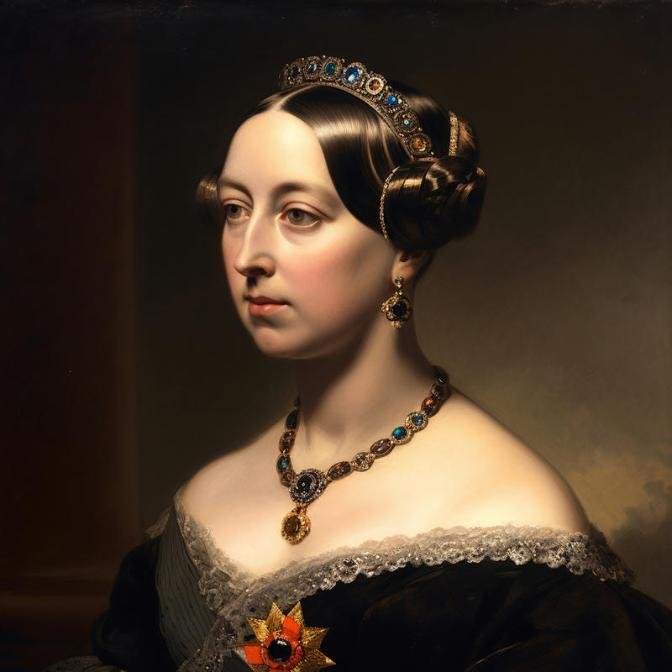
Imagine you are in a beautiful old church in England.
The year is 1827, and you are at the coronation or royal crowning ceremony of a new monarch.
All around you, rich people are dressed in beautiful clothing.
As the music starts, in enters the princess, who is about to be crowned queen.
She is only 18 years old, and as she enters the room, you can see that she is very short.
But she is poised and calm.
She has the confidence of someone who knew this is her path.
She is Queen Victoria.
Queen Victoria was born in 1819 in London, England.
When she was born, her name was Alexandrina Victoria, but she was called Victoria as her
nickname.
Victoria was the daughter of Prince Edward, the Duke of Kent and Strathairn, and Princess
Victoria of Saxe-Coburg-Salfeld, which was the sister of the King of Belgium, Leopold
I.
Sadly, when Victoria was only 18 months old, her father died.
After that, her mother became a domineering influence in her life.
Domineering means bossy and controlling.
She was raised by her mother and her mother's accountant, John Conroy.
Because her family was wealthy, Victoria had a very privileged childhood.
This means as a child, she had very nice things and lived in luxury.
She had the best foods, the nicest clothes, everything you can imagine a princess to have.
But Victoria was said to be kind, warm-hearted, and lively.
She loved dolls and had over 100 of them in her playroom.
Despite all of her toys and nice things, Victoria was not allowed to play with other children
in a normal way, so she had very few friends.
This made her sad, but her best friend and constant companion was her nanny, Louise Lezen.
Victoria's nanny taught her at the Royal Palace.
She learned all the subjects that a wealthy child who may one day become a queen would
need to learn, including languages and politics.
Victoria had a talent for drawing and painting, and Governess Louise encouraged her to pursue
these hobbies.
Victoria also really enjoyed journal writing.
She started writing as a child and continued to write in her journal for the rest of her life.
While she was growing up, Victoria's mother and John Conroy kept a very close eye on her.
They knew that she may one day become the Queen of England, and they wanted to keep
their influence over their child themselves.
Influence means control and impact.
While she was a child, they never let Victoria be alone without one of them present.
Victoria slept in the same room as her mother until she was 18 so that she wasn't on her own.
Her mother and John Conroy were worried that if Victoria was left alone, that other people
might try to influence her themselves and might turn her against them.
Despite her mother's influence, Victoria had a feisty temperament.
This means that she had high energy and was very independent in nature.
She had a big personality, but physically, Victoria was famously very short.
As an adult, she was only 4 feet 11 inches tall.
At the time of her birth, Victoria was fifth in line to the throne, but over the course
of her childhood and early teenage years, Victoria's uncles, her father's three brothers,
all died without having living children.
This meant that when Victoria turned 18, in 1837, she knew she would become the Queen
of Great Britain and Ireland.
One of the first things that Queen Victoria did, after becoming Queen, was to claim her
own control and authority over her life and her rule.
She moved out of her mother's bedroom into her own room.
She distanced herself from her mother and John Conroy, which means that she broke away
from them and their constant advice and influence.
She had seen how much they were controlling her and trying to tell her what she should
do and she didn't like it.
Instead, the young Queen Victoria turned to her friend, the Prime Minister at the time,
Lord Melbourne, to teach her about government and her role as a Queen.
A Prime Minister is similar to a President in England.
Lord Melbourne was Queen Victoria's first Prime Minister, who served for seven years
from 1834 to 1841.
He helped teach Queen Victoria about the details of being a Queen and the role she plays in
government at the time.
He acted as the Queen's advisor on politics and was the person she could speak to openly
and get advice during the early years of her reign.
In 1840, Victoria married her cousin, Prince Albert of Saxe-Coburn in Gotha.
She met Albert when she was just 16.
Since Victoria was Queen, Albert couldn't propose to her, so she proposed to him on
October 15, 1839.
At first, the British public didn't like Prince Albert because he was not from the United
Kingdom but from Germany.
At first, he was not allowed to be involved in politics at all, but eventually, people
realized that he was a good person and Queen Victoria started to rely on his advice and
he helped her to rule.
During the early part of their marriage, Queen Victoria and Prince Albert fought quite a
bit.
They both had strong personalities and didn't like to be wrong.
But they loved each other very much and were committed to being successful together.
Over time, they started to get along better, and Prince Albert started to give Queen Victoria
advice and helped her make difficult decisions during her reign.
And together they had nine children.
Their palace was a busy and noisy place with so many kids.
Prince Albert also brought a number of German traditions to the United Kingdom that became
popular for British people.
This included the tradition of putting up a Christmas tree at the holidays.
Prince Albert had put a Christmas tree up for a celebration at their royal home, and
a picture was taken of Queen Victoria, Prince Albert, and their children in front of the
tree.
The picture was in a popular newspaper at the time, and afterwards many people in the
UK and other parts of the British Empire started putting up Christmas trees too.
Life in Britain during the 19th century was known as Victorian England because of Victoria's
long reign and the stamp it and her personality placed on the country.
During her reign, Great Britain grew its industry more than ever before.
They built railways, bridges, underground sewers, and power or energy networks throughout
much of the empire.
This is also known as industrialization.
During her reign, Britain also expanded the size of its territories, doubling in size
and taking over Canada, Australia, India, and a number of other places in Africa and
the South Pacific.
The Queen loved the British Empire and felt that it was good of the world that Britain
grew to take over so much of it.
Because Britain controlled so many different parts of the world during her reign, people
started saying a famous expression,
The sun never sets on the British Empire.
During Queen Victoria's reign, she also supported scientists to do research and learn more about
the world.
There were great advances in science, such as Darwin's theory of evolution, the telegraph,
and the popular press or common newspapers.
The main cities in England grew very large, and more and more people learned to read.
The Victorian era was a time of great development for the British people.
But not everyone always liked the decisions that Queen Victoria made.
During her life, there were seven assassination attempts made on her life.
This means that her enemies tried to kill her so that she would no longer be in charge,
but they did not succeed in their attempts.
After several years of suffering from a sore stomach, Victoria's beloved Albert died of
typhoid fever in 1861 at the age of 42.
Victoria was very sad.
She had a plaster cast made of his hand, and she kept it by her side for the rest of her
life.
She also went into a 25-year seclusion, which means hiding on her own.
For the rest of her reign, she wore black.
Queen Victoria died on January 22, 1901.
When she died, she had been the longest reigning woman monarch in the world.
While she was Queen, her country saw great cultural expansion, advances in industry,
science and communications, and the building of railways and the London Underground.
The expansion of the British Empire during her reign continues to have great impact on
the world and the cultures of various places that were British colonies under her rule.
Can you imagine being born into a royal family and knowing that you will one day be king
or queen?
This would be a great amount of pressure for a child.
Even though she had nice things and was very wealthy, Victoria still cared about her people.
She took great pride in her country and wanted to use her powers to do good things.
With all of her money, she could have had just a good time, but instead she rose to
the challenge to be a great queen to the British people.
If you were a king or queen of a country, what are some of the things that you would
focus on?
Where would you live?
What are some of the things you would do to make it better?
Thanks for listening and be sure to tune in next week.