
Royalty Family Queen Victoria History * Documentary * the royalty family documentaries
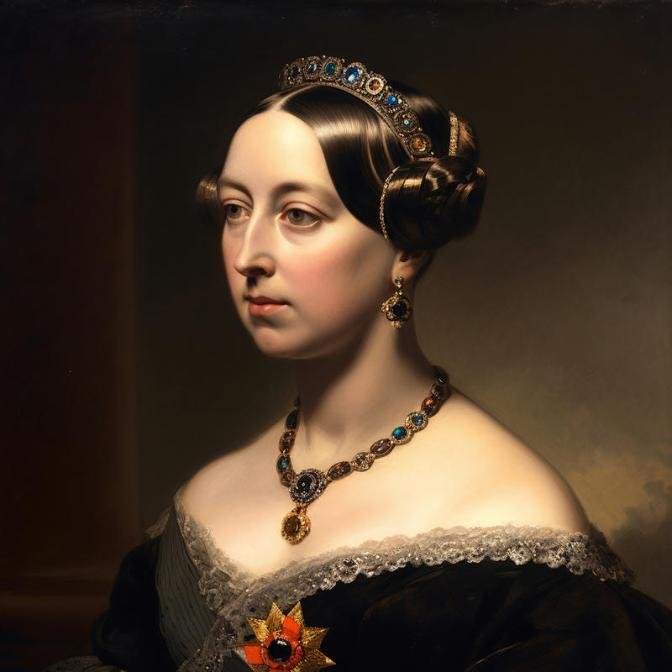
Once upon a time, in the early 19th century, there lived a young princess named Victoria.
She was born on May 24, 1819, in Kensington Palace, London. Little did anyone know that this petite,
unassuming girl would go on to become one of the most influential and celebrated monarchs in
history, Queen Victoria of the United Kingdom. As a child, Victoria was curious and intelligent,
but her upbringing was not easy. Her father, Prince Edward, Duke of Kent,
died when she was just eight months old, leaving her in the care of her mother,
Princess Victoria of Saxe-Coburg-Saalfeld. Victoria's mother, along with her maternal
advisor, Sir John Conroy, exerted a strong influence on the young princess,
isolating her from the outside world. Despite the isolation, Victoria's education was extensive,
and she developed a passion for learning. She studied history, geography, languages,
and even learned to play the piano. Her strict upbringing and her mother's reliance on Sir
Conroy, however, created tension in the household. On June 20, 1837, at the tender age of 18,
Princess Victoria ascended to the throne after the death of her uncle, King William IV. She
became the Queen of the United Kingdom of Great Britain and Ireland, and her reign would later be
known as the Victorian Era, which would leave an indelible mark on the world. As Queen, Victoria's
first task was to assert her independence from the influence of her mother and Sir Conroy.
She quickly formed a strong bond with her Prime Minister, Lord Melbourne, who became her trusted
advisor and mentor. Under his guidance, she learned the complexities of ruling, and earned
the respect of her advisors and subjects alike. In 1840, Queen Victoria married her cousin,
Prince Albert of Saxe-Coburg and Gotha. Their love of each other was profound, and Prince Albert
became her confidante, and the driving force, behind her many accomplishments. Together,
they had nine children, and their family life was the epitome of Victorian morality and values.
During her reign, Queen Victoria oversaw a period of immense change and progress in the United
Kingdom. The Industrial Revolution brought technological advancements, and the British
Empire expanded to new heights, making it the most powerful empire in the world. Queen Victoria's
image became synonymous with stability and strength. However, her reign was not without
challenges. Victoria faced political unrest, including the Irish potato famine, and had to
navigate through the complexities of international relations. Despite these obstacles, she remained
a beloved figure among her subjects, known for her strong sense of duty and compassion.
In 1861, tragedy struck when Prince Albert passed away, plunging Queen Victoria into deep mourning.
She wore black for the rest of her life, and retreated from public life for a period,
earning her the nickname the Widow of Windsor. Though her public appearances were limited,
Queen Victoria continued to rule for several more decades, becoming the longest-reigning
monarch in history. Her influence on the monarchy and the British society as a whole
cannot be overstated. As the years passed, Queen Victoria's health declined, and on January 22,
1901, she passed away at the age of 81. Her reign, which spanned over 63 years,
was an era of immense progress, social change, and cultural transformation. Queen Victoria's
legacy continues to be remembered and celebrated to this day,
as she remains one of the most iconic figures in British history.