
Love Affair That Made the Hundred Years' War Inevitable
21 Video Views·Oct 5, 2023
Every dynastic war in history is an amalgamation of many events and stories that seemingly
led to one bloody conclusion, and the Hundred Years' War between England and France and
their allies is no different. Yet, among the many incidents that made war inevitable, one
stands apart. This is the story behind the liaison that caused the Hundred Years' War
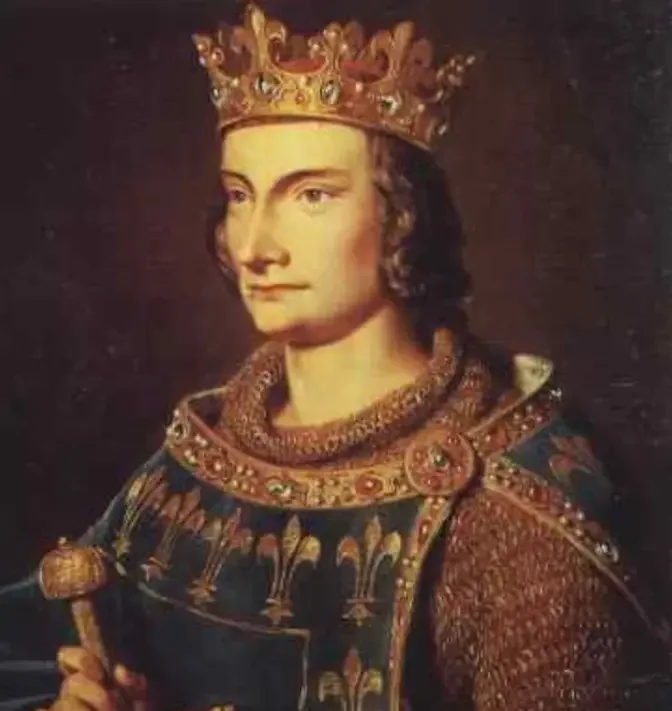
The Tourdenelle Affair. King Philippe IV Capet, called the Fair, was
one of the most successful rulers in medieval French history. Although often criticised
for the Great Exile of the Jews in 1306, the extermination of the Templar Order in 1307,
and the later appropriation of the property of both of these groups, Philippe managed
to do much in order to centralise France, by fighting off the nobles and via dynastic
marriages. He married off his daughter Isabelle to the heir of the English throne, future
Edward II, while his heir Louis married Margaret, the daughter of the Duke of Burgundy, one
of the strongest feudal lords of the realm. The king's younger sons Philippe and Charles
married daughters of the Count of Burgundy, Jeanne and Blanche. The mother of the latter
too, Maro, was the Countess of Artois. These marriages should have ensured the security
and expansion of France, however tragedy was just around the corner.
According to the sources, in 1313 Isabelle was visiting her father's court and gifted
ornate purses to her sisters-in-law. Upon her return to London, Isabelle noticed that
two Norman knights, Philippe and Gautier who accompanied her, had the purses on them. Some
chroniclers claim that Isabelle selected these two knights to accompany her, on the advice
of Robert d'Artois, who lost the county of Artois to Maro and was in a bitter rivalry
with her. In any case, Isabelle saw the purses as evidence that her sisters-in-law were
unfaithful and in 1314 informed her father of this fact.
After a month-long investigation, Philippe ordered the arrest of his daughters-in-law
and the two knights. The latter were tortured and admitted to having an affair with Marguerite
and Blanche at the tower called Tordinel. The knights were executed horrifically and
Marguerite and Blanche were imprisoned in Chateau Galliard. There was no proof that
Jeanne was unfaithful or even knew of the affair, but she was still put under house
arrest. On top of that, no one but the adulterers knew when this affair had started, so the
legitimacy of Marguerite's daughter Jeanne was also under suspicion.
Philippe IV passed away shortly after, possibly from the shock. His son Louis X succeeded
him. The new king needed to divorce Marguerite to remarry and gain an heir. However, only
the popes were allowed to divorce Catholics. Unfortunately for Louis, Pope Clement V died
and it took the conclave more than a year to elect a successor. Once again, the sources
conflict, but Marguerite died in 1315 either from a common cold or murdered on the orders
of her husband. A few months later Louis married Clementia
of Hungary. Using the celebratory mood, Louis' brother Philippe asked that Jeanne of Burgundy
be released from confinement, as there was still no proof of her infidelity. The king
himself died in 1316 from a lung disease at 26, while his wife was with child. She gave
birth to a son in November. However, Jean I was a king for just five days. Once again
theories claim that he was poisoned or was hidden from the possible poisoners and a commoner's
child died in his stead. The French lords needed to decide who would rule them.
The daughter of Louis and Marguerite, Jeanne was the heir, as no proof of her illegitimacy
had been presented, yet Louis' brother Philippe had the support of the nobles and the assembly
declared that women couldn't rule France. Philippe V became the next king. He had four
daughters, so when he died in 1322 at the age of 29, the ruling that brought him to
power was used against his daughters. His brother Charles IV managed to divorce Blanche
and remarry twice, but his only offspring was a daughter, and when he died in 1328,
age 33, the main Capetian line ended. The candidates for the throne were Charles'
cousin Philippe Valois and the son of Isabelle, the English king Edward III. The nobles preferred
Philippe, as Edward had too many holdings in France and him being a king of two kingdoms
would have made him too powerful. The fact that he was an heir matrilineally was cited
once again. Philippe VI would become the new king and establish the Valois dynasty. This
would be one of the reasons the Hundred Years' War started, as Edward would assume the title
of King of France. Fate would prove its cruelty yet again. Robert d'Artois, who never stopped
his attempts to gain the county of Artois, would be exiled from France and would become
one of the catalysts for the English invasion of the continent. Thus, the Tourdenelle affair
caused one of the bloodiest wars in history. We are considering making more videos on famous
scandals throughout history, so make sure you are subscribed to our channel and have
pressed the alarm bell to learn more. These videos are made possible by our brilliant
patrons over at Patreon and our youtube sponsors. Visit our patreon or press the sponsorship
button to learn more about the perks. This is the Kings and Generals channel, and we
will catch you on the next one.