
Financial Issues under Charles I | A Level History
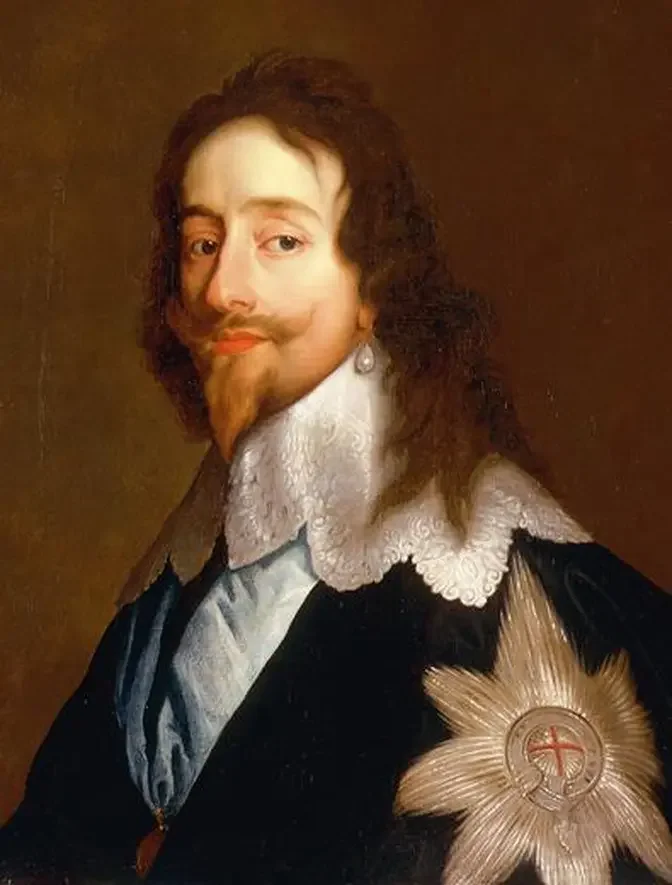
In the last few lessons we've been talking about James I and we've been talking about things relating to financial issues, religious changes and also James' relationship with Parliament.
Well in this lesson we're going to do those same lessons, talk about the finances and the religious issues and relations with Parliament, but under the reign of Charles I, James' son.
And we're going to begin by talking about the economy that Charles inherited because when we were looking at James we looked at the economy he inherited under Elizabeth I and so let's talk about the economy that Charles inherited.
Well the economy under James was, he had inherited a generally disastrous economic position from James I. That's the argument that we tend to see and there's a lot of reasons why this is the case.
There was an economic depression resulting from bad harvests in the 1620s, so generally speaking bad harvests occur quite often actually in this period.
They occurred quite a lot under Elizabeth I and then they occurred a few times under James I.
And equally as a result of debts from Elizabeth I, don't forget Elizabeth I died in 1603. Elizabeth I died in 1603.
And as a result of debts that were accumulated under her reign, by the 1620s the royal debt had equalled around £900,000 which is a significant amount of money in today's standard if we account for inflation.
So this is a significant amount of money that we are looking at in this situation.
Parliament was also not going to grant James I any kind of subsidies when they met in 1621 and 1624. You'll remember from the last lesson that James had an up and down relationship with his parliaments.
There were a few that refused to grant him any kind of subsidies, 1621 and 1624. And then there were a few where he had to give a number of concessions in return for financial funding.
And then there were a few towards the end of his reign where there was a little bit more cooperation.
Now parliament was generally quite cooperative towards the end of James's reign, at least the last parliament before he died.
So the relationship with parliament while being up and down ended relatively positive and a relatively positive matter.
On top of all of these financial problems, some of them not caused by James himself, some caused by Elizabeth, some caused by just naturally bad harvests, some caused by a relationship with parliament.
On top of all of these problems James I had an extravagant spending habits and it meant that Charles had inherited a great amount of debt as a result of this great spending habits as well as all of these other issues.
So we have to really start to look at what Charles did as he became the monarch of England.
And one of the things that is important was the impact of Charles's foreign policy during this period of time.
Because this was, as we already know, foreign policy objectives tend to be one of the biggest drivers for economic prosperity or economic depression during these periods.
When we have long and costly wars that take place then that tends to have a negative effect on an economy.
Whereas if we tend to have a generally quite peaceful foreign policy then the opposite tends to be the case.
For those who are interested, Henry VII was somebody who had a very peaceful foreign policy choosing to go through negotiations and diplomacy rather than war.
And so therefore left the English economy and also the monarchy in quite a strong financial position.
However, Charles decided to continue and intervened in the Thirty Years War.
This obviously was going to have an impact on the economy.
The conflict itself was very costly, mainly because of Charles's commander-in-chief who was the Duke of Buckingham.
The influence of Buckingham ultimately led to sour relations with parliament.
Charles's foreign policy led to a number of different issues.
If we have his foreign policy here, it had a negative impact on the economy.
But it also had a negative impact on Charles's relations with parliament.
The most notable reason for this is obviously as a result of the commander-in-chief, the Duke of Buckingham.
And obviously we know why a foreign costly war would have an impact on the economy.
So what do we see when we are looking at the economic policies that Charles decided to introduce?
Well, confrontations between the king and parliament was ultimately the result of poor economic conditions that ultimately Charles inherited.
So the fact that the economy was poor was not necessarily Charles's fault, at least when he inherited the throne.
Because he had gone into a situation where he had inherited quite a poor economic situation.
This was something that James inherited and ultimately made worse.
So Charles wanted to get a loan of around £60,000 from the City of London merchants.
This is one of the things that took place.
And when we see this taking place, this gives us an insight into the kind of relationship that Charles had with parliament.
Because parliament then broke the custom and refused to grant Charles this tax and also tonnage and poundage for life.
Now these were taxes that were granted at the start of every monarch's reign.
So these were granted at the start of a monarch's reign.
And ultimately this was a general convention that existed at the time.
It was general custom to grant the monarch with these excise taxes and also tonnage and poundage.
However, these were things that the parliament refused to do.
And this led to them breaking with tradition and refusing to do so.
Obviously showing the kind of sour relationship that we will talk about in a later lesson.
As a result of this, Charles dissolved this parliament in 1625 when they offered him tonnage and poundage but for only one year rather than for life.
So we can see they broke with tradition and in response to that breaking from tradition, Charles decided to just dissolve parliament as is his right.
In 1626, as a result of expensive foreign policy ventures, don't forget we're talking about the Thirty Years War in this example.
Parliament attacked the character and actions of the commander-in-chief who was the Duke of Buckingham.
So let's not forget this was the commander-in-chief.
And so this resulted in Charles dissolving parliament again and issuing a forced loan.
Something that is obviously extremely unpopular.
And then in 1628 we see that Charles passes or at least wanted to pass a bill that would grant him financial subsidies.
And it was only passed when Charles agreed to give royal assent to what we call the Petition of Right.
Now the Petition of Right, it made clear a number of things.
We will talk about this in much more detail when we look at Charles' relationship with parliament.
But one of the things that, or at least two of the things that the Petition of Right did was it made clear that Charles would agree to no taxation without parliamentary consent.
So this idea of a forced loan, for example, can be seen as a form of taxation.
And we also have no instigation of martial law.
Again, something that the monarch may or may not have technically had the power to do.
And in order to even get these subsidies, Charles had to agree to these demands effectively by parliament.
And there were multiple other things that we're going to look at in the later lesson because this relates to the relationship between Charles and parliament.
Now what's important to note is, if you want to take a very macro view of Charles' economic policies and the financial position of England at this time,
you should note that the first thing that happened was that he inherited quite a disastrous economic policy.
This was something that had been brewing effectively since the reign of Elizabeth I.
And then under the reign of James I, his dad, we see that quite expensive and extravagant spending practices, as well as a number of things such as bad harvests, led to the debt getting even worse.
So we have to be careful in discrediting Charles with regard to that because he did inherit quite a poor economic policy.
However, he did not make the economic policy any better when he joined the Thirty Years' War, which would obviously be a very costly conflict that took place.
Now running alongside that, a theme that runs alongside the story of Charles' economic policies, is the relationship with parliament.
Because the relationship with parliament often would always be soured by the fact that we have these debates and disagreements between the monarchy and between parliament about economic policy.
Things such as the granting of subsidies, for example, and the granting of certain taxations, something that was actually custom or practice.
And we also have running alongside that the issue of foreign policy. Is it related to Charles' relationship with parliament?
Because parliament was very hesitant and very critical of the commander-in-chief during the Thirty Years' War, which was the Duke of Buckingham.
In the next lesson, what we're going to do is talk about some religious issues that took place under the reign of Charles I.
And again, how these also cause more and more conflicts between Charles and parliament, before we talk about Charles and parliament in more detail in its own separate video.