
Federigo’s Falcon by Giovanni Boccaccio
Hi everyone, welcome back to Pages of the Globe. Today I'm going to be reading to you the short
story Federico's Falcon by Giovanni Boccaccio. Before we start I'm going to talk to you a little
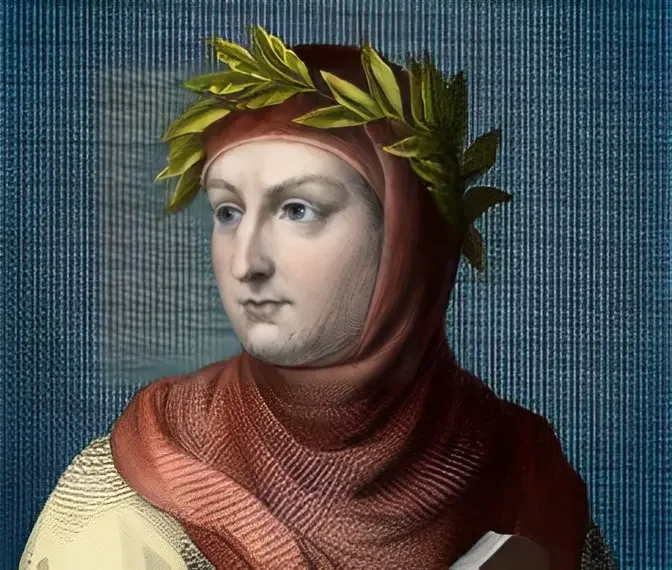
bit about the author and then we're going to jump straight into the story. So Giovanni Boccaccio is
an Italian writer. He was born on June 16, 1313 and died on December 21, 1375. He was an Italian
writer, poet, and the correspondent of the Petrarch and an important Renaissance humanist.
Born in the town of Setraldo, he became so well known as a writer that he was sometimes known as
the Setraldese and he was one of the most important figures in the European literary
panorama of the 14th century. Some scholars, including Vittori Bronca, define him as the
greatest European prose writer of his time, a versatile writer who amalgamated different
literary trends and genres, making them convergent original works thanks to creative activity
exercised under the banner of experimentalism. So he was very fluent in Italian, Tuscan, and
Florentine dialect and Latin. And as I said before, he lived in the early Renaissance period
and he wrote in many genres, epic poems, lyric poems, sonnets, pastoral, novellas, short stories,
literary criticism. Remember, I don't know if y'all watched the video, but in one of the videos,
I was like, if I had a dime for every writer that I've ever talked about on this channel that
did literary criticism, I'd be so rich. He also wrote biographies and as I said before, he was
in correspondence. Now his most notable works are the Decameron, which is just a collection of short
stories, which in the following centuries was a determining element for the Italian literary
tradition, especially after Pietro Bembo elevated the Bacchusian style to a model of Italian prose
in the 16th century and on famous women. He wrote his imaginative literature mostly in Tuscan
vernacular, but he also wrote many works in Latin and is particularly noted for his realistic
dialogue, which differed from that of his contemporary, like the other writers
basically around him. Now he had so many different works, he's written so many different novels,
short story collections, short stories, but the one we will specifically be reading today is called
Federico's Falcon and it's kind of just a short story about the good of humanity, the kindness of
humanity, and it's kind of your basic early renaissance or even just early Italian literature
that you would find. Without further ado, let's get on with the story. Remember to like, share, subscribe,
and comment down below which short story you would like to read next. Federico's Falcon by Giovanni
Boccaccio. There was once in Florence a young man named Federico, the son of Messer Filippio
Alberghi, renowned above all other men in Tuscany for his prowess in arms and for his courtliness.
As often happens to most gentlemen, he fell in love with a lady named Mona Giovanna. In her day
considered to be one of the most beautiful and one of the most charming women that there ever was
in Florence, and in order to win her love he participated in jousts and tournaments,
organized and gave feasts, and spent his money without restraint. But she, no less virtuous than
beautiful, cared little for these things done on her behalf, nor did she care for him who did them.
Now as Federico was spending far beyond his means and was taking nothing in, as easily happens he
lost his wealth and became poor, with nothing but his little farm to his name, from whose revenues
he lived very meagerly, and one falcon which was among the best in the world. More in love than
ever, but knowing he would never be able to live the way he wished to in the city, he went to live
at Campi where his farm was. There he passed his time hawking whenever he could, asked nothing of
anyone and endured his poverty patiently. Now during the time that Federico was reduced due to
need, it happened that the husband of Mona Giovanni fell ill, and realizing death was near,
he made his very last will. He was very rich and he made his son, who was growing up, his heir,
and since he had loved Mona Giovanna very much, he made her his heir, should his son die without a
legitimate heir, and then he died. Mona Giovanna was now a widow, and as it is the custom among
our women, she went to the country with her son to spend a year on one of her possessions very
close by to Federico's farm, and it happened that this young boy became friends with Federico and
began to enjoy hunting birds and hunting dogs, and after he had seen Federico's falcon fly many times,
it pleased him so much so that he very much wished it was his own, but he did not dare ask for it,
for he could see how dear it was to Federico, and during the time it happened that the young
boy took ill and his mother was much grieved, for he was her only child and she loved him enormously.
She would spend the entire day by his side, never ceasing to comfort him and often asking him if
there was anything he desired, begging him to tell her what it might be, for if it were possible to
obtain it, she would certainly do everything possible to get it. After the young boy had heard
her make this offer many times, he said, mother, if you could arrange for me to have Federico's
falcon, I think I would be very well very soon. When the lady heard this, she was taken aback for
the moment, but she began to think what she could do. She knew that Federico had loved her for a
long time, in spite of the fact that he never received a single glance from her, and so she
said to herself, how can I send or go and ask for this falcon of his, which is, as I have heard tell,
the best that ever flew, and besides this, his only means of support, and how can I be so
insensitive as to wish to take away from this gentleman the only pleasure that is left to him?
And involved in these thoughts, knowing that she was certain to have a bird, she asked for it, but
not knowing what to say to her son, she stood there without answering him. Finally, the love she bore
for her son persuaded her that she should go make him happy, and no matter what the consequences
might be, she would not send for the bird, but rather go herself for it, and bring it back to
him. So she answered her son, my son, take comfort and think only of getting well, for I promise
that the first thing I shall do tomorrow morning is go there and bring it back for you. The child
was so happy that he showed some improvement that very day. The following morning, the lady,
accompanied by another woman, as if going for a stroll, went to Federico's modest house and asked
him. Since it was not the season for it, Federico had not been hawking for some days, and was in his
orchard attending to certain tasks. When he heard that Mona Giovanna was asking for him at the door,
he was very surprised and happy to run there. As soon as she saw him coming, she greeted him
with a feminine charm, and once Federico had welcomed her courteously, she said,
She then continued,
To this, Federico humbly replied,
And your generous visit is certainly so dear to me that I would spend all over again that which I
spent in the past, but you have come to a poor host. And having said this, he received her into
his home humbly, and from there he led her into his garden. And since he had no one there
to keep her company, he said, My lady, since there is no one else but this good woman here,
the wife of this workman, will keep you company while I go set the table.
Although he was very poor, Federico until now had never realized to what extent he had wasted his
wealth. But this morning, the fact that he found nothing with which he could honor the lady,
for the love of whom he had once entertained countless women in the past, gave him the cause
to reflect. In great anguish, he cursed himself and his fortune, and like a man beside himself,
he started running here and there, but could find neither money nor a pawnable object.
The hour was late, and his desire to honor the gracious lady was great, but not wishing to turn
for help to others, not even his own workman. He set his eyes upon his good falcon, perched in a
small room, and since he had nowhere else to turn, he took the bird, finding it plump. He decided it
would be worthy of food for such a lady. So, without further thought, he wrung its neck and
quickly gave it to the servant girl to pluck, prepare, and place on a spit to be roasted with
care. And when he had set the table with the widest of tablecloths, a few of which he still
had left, he returned with a cheerful face to the lady in his garden, saying that the meal he was
able to prepare for her was ready. The lady and her companion Rose went to the table together
with Federico, who waited upon them with the greatest devotion, and they ate the good falcon
without knowing what it was they were eating. And having left the table and spent some time
in a pleasant conversation, the lady thought it was now time to say what she had come to say,
and so she spoke these kind words to Federico. Federico, if you recall your past life in my virtue,
which you perhaps mistook for harshness and cruelty, I do not doubt at all that you will
be amazed by my presumption when you hear what my main reason was for coming here.
But if you had children through whom you might have experienced the power of parental love,
it seems certain to me that you would at least in part forgive me. But just as you have no child,
I do have one, and I cannot escape the common laws of other mothers. The force of such laws
compels me to follow them against my own will and against good manners and duty,
and to ask you of a gift which I know is most precious to you. And it is naturally so,
since your extreme condition has left you no other delight, no other pleasure,
no other consolation. And this gift is your falcon, which my son is so taken by,
that if I do not bring it to him, I fear his sickness will grow so much worse that I may lose
him. And therefore I beg you, not because of the love that you bear for me, which does not
oblige you in the least, but because of your own notability, which you have shown to be greater
than that of all others in practicing courtliness, that you will be pleased to give it to me,
so that I may say that I have saved the life of my son by means of this gift, and because of it I
have placed him in your debt forever." When he heard what the lady requested and knew that he
could not oblige her since he had given her the falcon to eat, Federico began to weep in her
presence, for he could not utter a word in reply. The lady at first thought his tears were caused
more by the sorrow of having to part with a good falcon than anything else,
and she was on the verge of telling him she no longer wished it. But she held back and
waited for Federico's reply after he stopped weeping, and he said,
"'My lady, ever since it pleased God for me to place my love in you, I have felt that fortune
has been so hostile to me in many things, and I have complained of her. But all this is nothing
compared to what she has just done to me, and I must never be at peace with her again.
Think about how you have come here to my poor home, where, while it was rich, you never deigned
to come, and you requested a small gift, and fortune worked to make it impossible for me to
give it to you, and why this is so I shall tell you briefly. When I heard that you, out of your
kindness, wished to dine with me, I considered it fitting and right taking into account your
excellence and your worthiness that I should honor you, according to my possibilities,
with an even more precious food than that which I usually serve to other people. Therefore,
remembering the falcon that you requested and its value, I judged it food worthy for you,
and to this very day you had it roasted and served to you, as best as I could. But seeing now that
you have desired it in another way, my sorrow in not being able to serve you is so great that I
shall never be able to console myself again." And after he said this, he laid the feathers,
the feet, and the beak of the bird before her as proof. When the lady heard and saw this,
she first reproached him for having killed such a falcon to serve a meal to a woman,
but then to herself she commended the greatness of his spirit, which no poverty was able to,
or would have been able to diminish. Then, having lost all hope for getting the falcon,
and perhaps because of this, improving the health of her son as well, she thanked Federigo for both
the honor paid to her and for his goodwill, and she left in grief and returned to her son.
To the mother's extreme sorrow, either because of his disappointment that he could not have
his falcon or because of his illness must have necessarily led to it, the boy passed from this
life only a few days later. And after the period of her mourning and bitterness had passed,
the lady was repeatedly urged by her brothers to remarry, since she was very rich and still
very young. Although she did not wish to do so, they became so insisted that she remembered the
merits of Federigo and his last act of generosity, that is, to have killed such a falcon to do her
honor, and she said to her brothers, I would prefer to remain a widow, if that would please you,
but if you wish to take me a husband, you may rest assured that I shall take no man but Federigo
del G. Alburghini. In answer to this, making fun of her, her brothers replied, you foolish woman,
what are you saying? How can you want him? He hasn't a penny to his name. To this she replied,
my brothers, I am well aware of what you say, but I'd rather have a man who needs money than money
needs a man. Her brothers, seeing that she was determined and knowing that Federigo, to be of
noble birth, no matter how poor he was, accepted her wishes and gave her in marriage to him with
all her riches. He found himself the husband of such a great lady who he loved so much, was so
wealthy, besides, he managed his financial affairs with more prudence than in the past, and lived
with her happily the rest of his days. The end. All right, so that was Federigo's Falcon by Giovanni
Boccaccio, and so in this short story, Boccaccio presents the reader with a woman, the lady Giovanna,
who appears to exercise a sense of agency in her own life. Now, Giovanna is a married woman, and she
ignores the apparently unwanted affections of Federigo, despite the fact that within the conventions
of courtly love, which were socially accepted in her day, it would not have been outside the
realm of possibility for her to allow herself a flirtation with Federigo. Yet, she does not
acknowledge Federigo or the grand demonstrations of his affection in any fashion. Despite the
illusion of personal power and independence, and against her better judgment, Giovanni does her
son's bidding and follows her brother's wishes for her to remarry, despite her protestant that she
is content to be alone. Giovanna revolts against the authority of her brothers by choosing someone
they do not approve of, namely Federigo. Likewise, Federigo's Falcon is allowed to hunt, only she
hunts for food for Federigo. She is considered to have attained a possession, and Federigo's Falcon
functions as a parallel for Giovanna. Like the bird, Giovanna is permitted the illusion of power,
but her actions, like those of the Falcon, are determined by the wishes of the male figures in
the story. Giovanna's son, Federigo, and Giovanna's brothers dictate female action and the fates of
the females in the story. When Fiamenta, the narrator of the story, initially introduces this tale...
By the way, before I continue, I do want to explain that this is actually an entire story, Federigo's
Falcon. It's an entire book, but I just picked out the one excerpt from it I found
from the American Literature website, and that was what I read. Otherwise, this is an actual
complete book, so if you're interested in reading that, you always could.
Now, Federigo shows a man that would basically just about do anything for Giovanna, right? He
isn't very wealthy at this point, but the woman he was in love with was very wealthy, and the story
is just a love story in many different ways, and it's also a story about family. The Falcon does
play a big part of the story, but it's what represents the Falcon that we are reading.
The three messages in the story are just love, family, and then, obviously, like I talked about
before, Giovanna's entire, like, these male figures controlling her life. Now, this story
kind of reminded me of The Gift of the Magi, just because it was, like, so familiar. In The Gift of
the Magi, if you aren't aware, you could always go watch that, or maybe I could even read that,
but basically, this woman buys a comb for her, or a watch band for her husband,
and in order to buy it during Christmas time, in order to buy that watch band, she has to cut off
her hair and sell it, and then her husband decides to sell his watch in order to get, like, a really
good comb because he knows she has long, luscious hair, but then they, like, exchange their gifts,
and they're like, oh my god, we both gave up something we love to give each other gifts, but
now we can't even use those gifts, but yeah, this kind of reminded me of that because, like,
first of all, Giovanna didn't even want to go to Federico and ask for his falcon because she was
like, this is such a, like, rude thing to do. This is the one thing he has left, and I'm trying to
take it, but she does anyway. In the meantime, Federico's thinking, oh, she just came to my
house. I have to give her something good. He decides to cook his own, like, falcon, so it's
just, like, it very much reminded me of The Gifted Magi, but in a much more, like, kind of
shocking way because, obviously, he literally killed his dear falcon just for something,
just for Giovanna, but Giovanna isn't even that interested in him. She only decides to be with
him because she's trying to spur on her brothers. Anyway, that is it for today. Remember to like,
share, subscribe, and comment down below which short story you would like to read next.