Key Source: “Farther Than Any Man,” by Martin DuGard, Washington Square Press 2001
Did you know that two out of every three guys are going to experience some form of male
pattern baldness by the time they're 35?
I definitely know for me, I was around 25 when I started to lose all of my hair.
I wish Keeps had been around when I was younger because advancements in science have meant
that there are now treatments that can combat the symptoms of hair loss and help you keep
the hair that you have.
It's too late for me, my hair's not coming back, but you don't have to be like me,
you can stop your hair loss early thanks to Keeps.
Keeps offers generic versions of the only two FDA-approved drugs for treating hair
loss, so you may have tried them before, but never at a price this low.
That's right, if you were thinking, oh boy, this is some sort of medicine that's about
to get extremely expensive, well, you couldn't be more wrong because Keeps starts at just
$10 a month.
How does it work?
Well, for one thing, there's no need to visit a doctor's office, just schedule a quick
online consult and a bit later, a discreet package is going to arrive at your door and
you can use it in the privacy of your own home.
In the 18th century, much of the world was still unknown to European civilization.
As shipbuilding and navigation technology improved and trade routes expanded from the
great cities of Europe across the globe, countries played a game of empire building,
setting out to find new lands to claim for themselves, gambling that as-yet-undiscovered
islands and even entire continents would hold vast riches for them to exploit.
To accomplish this, they needed explorers, daring ship captains that had no qualms about
being tens of thousands of miles from home, alone in a vast ocean, who could navigate
the unknowns and return to port to tell their discoveries.
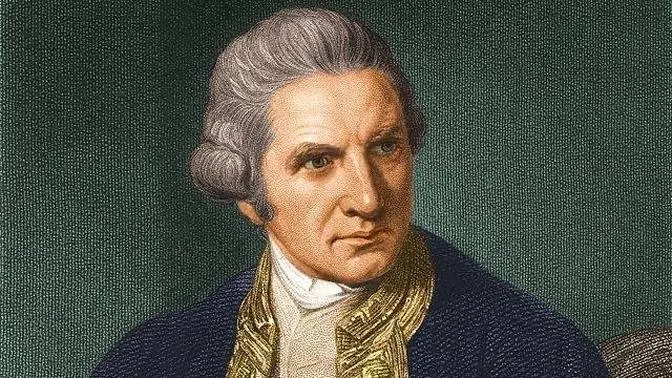
Perhaps the best known of these explorers was Captain James Cook, who embarked on three
different expeditions that spanned 12 years, filling in much of the map of the Pacific
Ocean with his discoveries.
His adventures read like a Robert Louis Stevenson novel, complete with surviving vicious storms
and near shipwrecks, battling tribes of hostile natives, setting foot in places no European
had ever been before, and returning home to become an international hero.
Cook's one major flaw was that he let his fame go to his head.
He truly began to believe his own hype, and it eventually led to his spectacular and sudden
downfall that is just as famous as his globe-spanning adventures.
James Cook was born on the 7th of November, 1728, in a small village in Yorkshire, England.
His father, also named James, was a farmer, having risen to the lofty position of foreman
at the largest estate in the region.
His son might have been expected to follow in his father's footsteps, and thus would
have disappeared into history.
But that was not his destiny, as it quickly became clear that young James was not suited
for farm work.
In 1746, after leaving an apprenticeship at a grocery store, the young James travelled
to Whitby, a prominent port city where he was introduced to the owner of a merchant
fleet.
Taken on as a seaman's apprentice, it appeared that he had found his life's calling.
Cook took to sailing with gusto, not only learning the technical side of the trade,
but also the academic, teaching himself the advanced mathematics and astronomy needed
for navigation.
This allowed him to quickly rise through the ranks of the merchant marines, until, by 1755,
his employers were ready to offer him the captaincy of one of their ships.
Cook would have been set for life, earning a comfortable living in a respected profession
in society.
But that wanderlust that would follow Cook all his life, to seek out new horizons, hit
him again.
And, to the astonishment of everyone who knew him, he rejected the promotion and instead
decided to join the Royal Navy as a naval seaman.
Cook must have made an odd sight among his shipmates aboard the HMS Eagle when he came
aboard, and when they discovered he'd given up a career in the Merchant Navy to become
one of them, they probably thought he was a bit insane.
Royal Navy sailors were jealous of their merchant counterparts.
They were generally better paid, lived in less cramped and fetid quarters, spent more
time at home, and usually weren't subject to the overbearingly harsh discipline commonly
imposed by military officers of the period.
In addition, Royal Navy officers were almost always the well-to-do sons of the landed gentry
who had been serving aboard warships since before they'd gone through puberty.
James Cook, with his humble background and late start, seemed to stand little chance
of ever commanding a ship.
It just didn't seem possible in the rigid class structure of 18th century Britain.
Nonetheless, Cook's superiors quickly took notice of his intelligence and experience,
and plucked him out of the depths of the ship.
Within two years, he'd been promoted to sailing master, responsible for navigating
the ship, a very important role, and likely as high as he would ever be able to rise within
the Royal Navy.
Cook saw action during the Seven Years' War against France, and played a key role
in the Siege of Quebec when he surveyed and mapped the entrance of the St. Lawrence River,
allowing British General Wolfe to launch his famous surprise assault that captured the
city.
Recognized for his navigational and cartographic skill, Cook was commissioned to chart the
coast of Newfoundland, which consumed most of his time over the course of the next five
years.
His maps of the island were so thorough that they were still being used by sailors two
hundred years after he made them.
Life in Newfoundland
Once he completed his survey of Newfoundland, Cook returned to Britain and his wife Elizabeth,
who had married in 1762.
Despite the long years he spent away from her, it was apparent that he loved his wife
deeply, and flaunted the traditional notion of a sailor having a girl in every port, by
never being unfaithful to her.
In 1768, though, it seemed like James was going to have a lot of time to spend with
Elizabeth in their London home, because his naval career appeared to have stalled.
Not currently at war, the Royal Navy was being drawn down, and there were few positions available,
even for a talented man like Cook.
It was at this point that fortune smiled on Cook, through a remarkable set of circumstances.
The Royal Society was Britain's scientific authority, and they were excited by an upcoming
astronomical event that promised great potential for scientific advancement.
On the 3rd of June, 1769, the planet Venus would cross the face of the Sun in the Earth's
sky.
By accurately charting the precise time that the transit of Venus began and ended, from
different points around the Earth, it was believed that it would be possible to precisely
calculate the Earth's distance from the Sun, what is today known as an astronomical
unit, AU.
One of the points it was decided to observe the transit of Venus from was the newly discovered
Pacific island of Tahiti, and the Royal Society proposed a voyage there.
A young scientist named Joseph Banks was deeply interested in the voyage, for reasons that
had nothing to do with astronomy.
Banks was a botanist, largely self-taught because of a teenage fascination with plants
that had parlayed into a career.
It had certainly helped that he had a sizable inheritance to fall back on, though.
Banks figured that if he led the expedition to Tahiti, he'd discover hundreds, if not
thousands, of new plants and animal species, and become a household name.
He went to one of his influential friends, the Earl of Sandwich, for help in sponsoring
the voyage.
Sandwich was interested in the idea for his own reasons.
It had been a long-held dream of his for a British ship to be the first to discover the
fabled Southern Continent that was supposed to be situated on the bottom of the world
to counterbalance the land in the Northern Hemisphere.
Scientists had convinced themselves that Antarctica was a boundless land of plenty, chock-full
of natural resources to enrich whoever broke through the treacherous Southern Ocean to
find it first.
There was no reason, he thought, that a single voyage could not fulfill everyone's purposes
at once.
But there was a problem.
The Royal Society, believing the voyage to be primarily scientific in nature, wanted
one of their own to command the expedition.
Banks himself coveted the posting.
The Royal Navy balked at the idea, insisting that any ship sent to the Pacific would be
commanded by a naval officer.
Banks hit on what he thought would be a compromise.
He would advocate for a senior, non-commissioned officer to command the voyage, one that had
the requisite navigational and cartographic experience, but lacked the social standing
that Banks did, so Banks could effectively tell him what to do without being formally
in command.
A friend of Sandwich's had just the man in mind.
James Cook.
And so it was that Cook, out of nowhere, was promoted to First Lieutenant and given command
of the expedition aboard the HMS Endeavour.
The ship left port in August, 1768, making a stop in Brazil before making the treacherous
trip around the tip of South America, Cape Horn.
Now in the Pacific, Endeavour headed north to Tahiti.
Along the way, he endured a private battle of wills with Banks, who tried to enact his
plan to take command of the expedition.
Banks was undercut by frequent bouts of seasickness, it being difficult to issue commands when
you are constantly throwing up, and any credibility he had left was destroyed when a shore expedition
he led went wrong and two of the men froze to death.
No one would ever question Cook's command again.
Endeavour arrived in Tahiti in April, 1769, and spent weeks there preparing to observe
the transit of Venus.
It was here that James Cook encountered the native Polynesians for the first time.
He adopted a paternalistic view of them, believing them to be noble but simple savages that needed
to be guided by men of reason such as himself.
Cook would eventually believe himself to be an expert in the native tribes of the Pacific,
making attempts to learn their language and customs, but his incomplete knowledge and
dismissive attitude towards them would come back to haunt him one day.
After observing the transit, Endeavour headed southwest, looking for Antarctica.
They didn't find it, of course, and after a while, Cook turned west, intending to sail
around the previously unexplored New Zealand.
It was Cook who discovered that New Zealand is actually made up of two different islands,
with what is now known as Cook Strait separating them.
Endeavour sailed around both islands, Cook charting and naming places as he went along,
before heading west and doing the same thing to the eastern coastline of Australia, then
known as New Holland, nearly being shipwrecked in the process after the ship ran aground
on the Great Barrier Reef.
After surviving that, Endeavour sailed for home, arriving in July, 1771.
The voyage was considered a sensational success.
Banks had collected over 30,000 specimens of plants during the voyage, leading to the
discovery of 1,300 new species, a 25% increase in the amount of known flora at the time.
Cook had circumnavigated the globe and charted places never seen before by Europeans, and
in the process had not lost a single man to scurvy, the dreaded scourge of 18th century
sailing that would later be traced to severe vitamin C deficiency.
Cook found that feeding his sailors fresh food whenever possible, and in particular
citrus fruits and sauerkraut, kept his sailors healthy, though it would take decades for
the Royal Navy to start implementing this in the rest of their fleet.
But Cook still hadn't found Antarctica, and to make matters worse, Banks had used
a sustained publicity campaign to make himself out as the hero of the expedition, reducing
Cook to a mere footnote.
So after a year ashore in England, Cook was ready to try again.
Discovering and claiming the proposed Great Southern Continent was a growing obsession
for King George III in the early part of the 1770s.
So in 1772, the Royal Navy promoted Cook and gave him a new mission.
Bind Antarctica, however long it took.
For this voyage, Cook was to be in command of two ships, HMS Resolution and HMS Adventure.
Initially, Joseph Banks was to accompany Cook on this second trip to the Pacific, but after
Banks' proposed modifications to the Resolution for his own comfort proved liable to capsize
the ship in heavy seas, they were scrapped.
Banks threw a fit and refused to go, probably thinking the Admiralty would cave to his demands,
and was therefore very surprised when they simply found other scientists to go in his
stead.
Cook's expedition got underway in July 1772, heading down the coast of Africa to Cape Town
to resupply before the two ships made their first attempt to head south, becoming the
first vessels known to have crossed the Antarctic Circle.
They began to encounter sea ice the farther south they went, and Cook eventually turned
back because he feared the ice water would either smash his ship to pieces, or freeze
them in place, leaving his men to starve or freeze to death.
This was another unexpected scientific discovery.
Until now, it was thought that it wasn't possible for salt water to freeze.
Cook headed for the Pacific, running into problems with the captain of the Adventure,
Tobias Furnow.
Cook was incensed to discover that men aboard the Adventure were getting sick and dying
Cook had prescribed.
Furnow probably wasn't the best choice to serve as Cook's lieutenant on this voyage.
Eventually, the two vessels were separated from each other, and Furnow lost his nerve
after some of his men were killed and eaten by Maori cannibals in New Zealand.
He sailed for home, abandoning the mission.
Cook, meanwhile, seemed determined to see every inch of the Pacific for himself.
He sailed in a wide, meandering circle that took him across Polynesia and Melanesia, and
He made another attempt to find Antarctica, reaching 71 degrees south latitude, before
finding his path completely blocked by sea ice, a record that stood for decades.
He made one more attempt in the South Atlantic, discovering South Georgia and the South Sandwich
Islands, but no Antarctica.
Cook concluded that if the Great Southern Continent existed at all, it was entirely
contained in the deep southern latitudes that were covered year-round in ice.
Even if they were discovered, they wouldn't be worth anything.
With that question answered, he sailed for home, arriving in July, 1775.
This time around, Cook didn't have to share the spotlight with anybody.
He was Great Britain's foremost adventurer, a celebrity known all over the Western world.
He had done something nobody had done before.
Circumnavigated the globe at extreme southerly latitudes, braving terrifying storms and hostile
natives in the process.
Cook enjoyed his newfound fame, doing the 18th century equivalent of the talk show circuit
by accepting invitations to dinners at wealthy mansions and regaling his hosts with his adventures.
The Royal Navy promoted him to post-captain and, at his request, put him out to pasture,
placing him in charge of the Royal Navy Hospital in Greenwich, which served as a retirement
home for sailors.
Cook himself seemed destined for retirement.
In 1776, King George and his government had more pressing concerns than Antarctica.
War with the American colonies threatened to disrupt the transatlantic trade, which
was the lifeblood of the British Empire.
For the Earl of Sandwich, now First Lord of the Admiralty, it was more important than
ever to cultivate new trade links wherever they could.
The biggest prize was the so-called Northwest Passage, a route around the North American
continent from the Atlantic to the Pacific Ocean.
This route would save thousands of miles on a sea trip from Europe to Asia and would avoid
the hazardous trips around the southern tips of South America and Africa.
There was only one problem.
While everyone was convinced that a Northwest Passage existed, no one had ever found it.
The passage was so important to the King that he offered a staggering prize of £20,000,
worth almost $50 million in today's money, to the first man who found it.
The fortune on offer proved too tempting for Cook to resist, and he volunteered himself
to Sandwich to lead the expedition.
Sandwich was only too happy to have lured his old friend, now the world's most famous
explorer, out of retirement.
HMS Resolution would again serve as Cook's flagship for the voyage, with a second ship,
HMS Discovery, replacing the Adventure.
Cook departed from Great Britain in July, 1776.
No one knew it at the time, but the sea captain would never see his homeland or his family
again.
The North West Passage
The official purpose of Cook's voyage was to return Amai, a Polynesian man who had been
taken to Europe during Cook's last journey, back to his home in Tahiti.
Once this was done, Cook could turn his attention to his actual objective, the Northwest Passage.
In December, 1777, Cook left Tahiti and headed north, making for the California coastline.
It was during this trip that he first came across the island in the middle of the Pacific
that no European had ever seen before.
He had discovered the northernmost Hawaiian islands.
Cook spent most of the rest of 1778 trying to find the Northwest Passage, sailing through
the Bering Strait and charting the coastline of Alaska in the process.
Eventually, he found his path blocked by ice and turned back.
Cook wanted to make another attempt the next year, hoping that making the attempt in summer
would provide a route through the ice.
But first, he needed a place to spend the winter, so he headed back to Hawaii.
In November, they sighted the island of Maui and, soon after, the big island of Hawaii.
After exploring these new lands for two months, resolution and discovery dropped anchor on
the southwestern coast of Hawaii.
By pure chance, Cook's arrival coincided with the native Hawaiian harvest festival
celebrating Lono, the god of the harvest.
There is some speculation that the Hawaiians thought Cook was the personification of Lono
there to visit them, which would explain the initial excitement surrounding his visit.
Before long, however, relations between Cook's crew and the natives had deteriorated significantly,
and both sides were happy to see the two ships depart from the bay after a month to return
to the Bering Sea.
However, soon after leaving, they were caught in a storm, and the foremast on the resolution
broke off, and Cook returned to the bay for repairs.
For the Hawaiians, this was an unexpected and unwelcome surprise, and it set off a chain
of events that would end in violence.
On all three of his trips, Cook had to deal with native Polynesians and Malinesians stealing
things from his crew.
He did not understand that the natives had a very different definition of property than
the Europeans, and felt that since Cook's ships had so much extra stuff with them, they
shouldn't mind sharing it with the people who didn't have it.
Over time, Cook began to retaliate against the natives in even more harsh ways, from
kidnapping tribal elders, to ransoming them back for the stolen items, to flogging the
offenders with a bullwhip.
On this particular trip, however, Cook had descended into outright barbarism in an attempt
to deter thievery by the natives.
During a three-month stay in Tonga, Cook had ordered dozens of natives lashed, and when
that didn't work, he started cutting off ears, shooting natives, and then forcing them
to try and swim ashore, beating them with boat oars and other blunt objects, and in
at least one case, he had a cross cut into a man's arm, going all the way down to the
bone.
Many of Cook's crew were veterans of his previous voyage, and were shocked by his marked
change in demeanor from previous trips.
Not only was he less patient and more savage to the native populations they came across,
but the usually careful man was making mistakes in judgment, and spent more and more time
sequestered in his cabin.
Cook was probably ill for great stretches of the voyage, complaining in his journal
of a stomach ailment, among other things.
But at least part of it was his oversized ego.
He was the great man, the discoverer of the whole of the Pacific, and everyone should
listen to what he had to say.
The Hawaiians were unimpressed by Cook and his men at this point, and two days after
the ship's return to the bay, one of the Resolution's longboats was stolen by the
Hawaiians.
To get the boat back, Cook decided on an old standby.
He would kidnap the most important chief of the island, and hold him for ransom.
The next day, the 14th of February, 1779, Cook put his plan into action.
He rowed ashore with the ship's detachment of Royal Marines in tow, and set out for the
chief's hut.
The chief was still asleep when he was awakened by Cook, and politely asked to accompany him
back to his ship.
Believing that he was being asked to visit the ship as a guest, the chief complied.
One of his wives, however, realized something was wrong, and followed the party to the beach,
wailing for help.
This alerted other chiefs to the trouble, who came to the scene with their warriors.
By the time Cook and his men reached the beach, they were being followed by hundreds of increasingly
angry Hawaiians.
The captured chief suddenly realized that he was being kidnapped, and refused to get
into the rowboat, sitting down in the sand instead.
Cook's attempts to manhandle the chief only made the crowd more angry.
At this point, Cook should have realized that he was outnumbered, and let the chief go,
discretion being the better part of valor.
But Cook was so used to getting his way with the natives he'd encountered on his adventures,
that he made the fatal decision to persist with his intimidation tactics.
No one is exactly sure what started the fight.
There are multiple accounts from different people.
What is known is that a general melee broke out, in which four Royal Marines and at least
a dozen Hawaiians were killed.
At the center of it all was James Cook.
The famous sea captain was knocked to the ground, and then stabbed in the chest with
a metal dagger, ironically given to the Hawaiians as a gift weeks earlier.
As the remaining Marines fled for their lives, and the two ships started firing on the crowd
with their cannons, the Hawaiians took turns stabbing Cook's body over and over again.
They passed the dagger from one person to another, each getting a turn to punge it into
his flesh.
Cook was dead long before they finally ceased.
Cook's body was dragged off the beach and placed in a roasting pit until his flesh had
been cooked off his bones.
They were pulled out and buried in secret caves all over the islands.
Four of the most powerful chiefs ate Cook's heart to absorb his manna, his power.
The only bits of the captain's body recovered by the crew of the Resolution were his hands
and part of his skull, which were buried at sea.
The expedition carried on under Cook's subordinates, and made another attempt to find the Northwest
Passage, but again they were foiled by the ice pack blocking the way.
The two ships slowly made their way back home, reaching Britain in October, 1780.
By then, news of the death of Cook had already reached London, and all of Europe was shocked
by the dramatic death of the world's most famous explorer.
Cook's posthumously published journals were a literary sensation, and Captain Cook remains
a cultural touchstone even in the 21st century, as pirate captain James Hook, from Peter Pan,
and starship enterprise captain James Kirk are both named after him.
From a historical standpoint, Cook has a very mixed legacy.
On the one hand, he was a renowned explorer who filled in great swathes of the world map.
On the other, his brutal treatment of the native populations he encountered served as
a forewarning of the kinds of barbarity that would come from the eventual colonization
of these islands by Europeans.