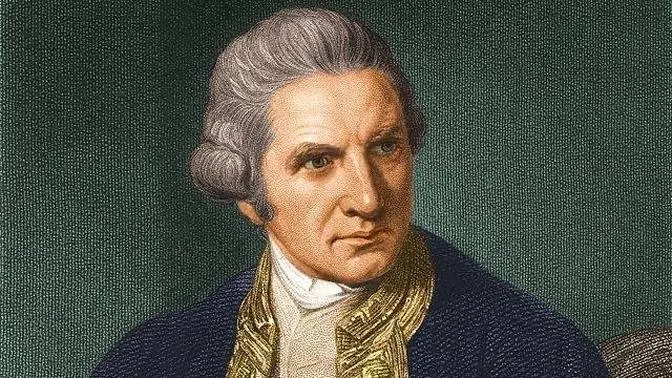
Join me on a journey through the early life of one of history's greatest explorers, Captain James Cook. In this video, I explore Cook's formative years in the picturesque county of North Yorkshire, England, and the experiences that would shape his legendary career.
Cook was born in the village of Marton near Middlesbrough in 1728 and spent much of his childhood in the nearby village of Great Ayton. In this video, I visit the places that were significant in Cook's early life, including his birthplace and the school where he received his education.
I also take a look at the impact that North Yorkshire had on Cook's development as an explorer and navigator. The rugged landscapes, wild coastlines, and seafaring traditions of the region would all prove to be influential factors in Cook's later career as a navigator and explorer.
From humble beginnings in North Yorkshire to the heights of exploration and discovery, Cook's story is one of perseverance, dedication, and adventure.
Whether you are a fan of history, exploration, or simply interested in learning more about one of the world's greatest navigators, this video is sure to captivate and inspire. Don't forget to like, comment, and subscribe for more videos like this!
Hi and thanks for clicking through to watch my latest video. If this is your first time
watching one of my videos my name is Andrew and my videos follow me around my two favourite areas,
the North York Moors National Park and the Yorkshire Heritage Coast.
Today I'm following in the footsteps of one of the world's greatest ever explorers
during his early years. Starting on the site where Captain James Cook was born here in Middlesbrough
I'll be making my way out to the North York Moors and down the Yorkshire Coast
ending up in Whitby where he famously learned his trade before going on to explore the world.
I'm starting at the birthplace of this local legend here in Martin in Middlesbrough. Most
people know the story of James Cook and what he went on to achieve in life leading three great
voyages of discovery as a genius navigator and chart maker and adding a third to the map of the
known world in just over a decade. But what's probably less well known and what I find most
intriguing is the humble beginnings he was born into as the son of a farm labourer, effectively
a commoner at the time, which makes his story of success in that era even more remarkable.
I'm on familiar turf here in my hometown and the story of Captain Cook is one I grew up with
with many school trips to museums and locations connected to him.
I was born and grew up about three miles from here and around the whole area there are several
homages to the great adventurer. The site of Cook's birth now stands in the glorious Stewart Park
and is marked by this granite urn. It was erected in 1852 to mark the site of the cottage where Cook
was born in October 1728. Just over the road from Stewart Park is St. Cuthbert's Church where Cook
was baptised. His father, also called James, was a farm labourer who was originally from Scotland.
His mother was a local called Grace. At the time of Cook's birth he had one older brother and went
on to have seven siblings. Close to the site of the urn is the Captain Cook Birthplace Museum.
It was opened in 1978 on the 250th anniversary of Cook's birth. Inside is a small collection
of items relating to James and his family and memorabilia from his voyages.
It's believed the house Cook first lived in here would have been a timber framed and thatched
traditional, clay biggan, typically quite a damp and unpleasant place to live. The cottage was a
ruin by the late 1780s and was pulled down in changes made by the landowner at the time.
The cottage was also a place of worship for James and his family.
Cook lived in Martin until he was eight years old. I'm now heading back to my car to make the
six-mile journey to Great Ayrton where Cook moved to with his family in 1736.
There are four locations I'll be visiting here starting at this farm. The Cook's move to Great
Ayrton came about when James Cook senior secured a new job as a hind for the tenant farmer.
This is Airy Home Farm which is on the edge of the village of Great Ayrton.
It sits in the shadow of Rosemary Topping, one of this area's most famous landmarks
and it's up there that Cook will have got his first glimpses of the sea.
The farm was owned by the Lord of the Manor in Great Ayrton, Thomas Scotto and the Cooks
lived in a cottage here. During that time the young James would have helped on the farm
tending to livestock and crops in the fields all the way up to Rosemary Topping.
The cottage he lived in was positioned at the top of the hill behind Airy Home Farm.
There's no longer anything to see of the house and these trees have now replaced it.
It's still a remote location up here but it's quite a view they had.
Also worth mentioning is Captain Cook's Monument erected in 1827 on the next hill along known as
Easeby Moor. It's always been one of my favourite spots in the whole area.
The views from up there are spectacular and sit above the village of Great Ayrton.
The move to Great Ayrton was a pivotal point in Cook's life. When the family first arrived here
Thomas Scotto agreed to pay for James to attend the Postgate School in the village.
This is the Captain Cook School Room Museum. It's set up as a reconstruction of how the school
room might have appeared when Cook was here from 1736 to 1740. Obviously worlds apart from today's
system but while here he would have received a basic education in reading, writing, arithmetic
and religious instruction. As you'd expect this place is really popular for local school visits
but it's run by a team of volunteers and since the pandemic they've really been struggling for
volunteer staff to get the museum open for the public. They've kindly opened it up for me today
to come and film inside for this video so if you are local and would like to get involved here
I'll put a link in the description below the video to the museum's website where you can find
all the info you need for that. While I'm here in Great Ayrton I'm going to jump forward in time
briefly. I'm heading to the site of what's known as Cook's Cottage. In 1755, the year that Cook
joined the Royal Navy, his father retired from Maryholm Farm and built himself a new home right
here. Cook never actually lived here but it's believed he last visited his father here around
Christmas time in 1771. In 1933 the cottage was purchased by an Australian called Russell
Grimwaite. It was dismantled brick by brick and put into 253 cases and 40 barrels with everything
being recorded and catalogued and then transported from Great Ayrton Railway Station to Hull Docks.
When it reached Melbourne in April 1934 it was transported to Fitzroy Gardens in the city to
be reassembled and the cottage was officially handed to Victoria Estate on October the 15th
1934. On my first visit to Australia a few years ago one of the first things I made sure I did
was pay a visit to the cottage. Here in Great Ayrton the cottage was replaced by this monument
which was unveiled on the same day that the cottage was handed over in Melbourne.
The stones it's built from were quarried in Point Hicks in Australia. The location from which Cook
first set eyes on the country. A short walk away is the 12th century All Saints Church which Cook
attended regularly. Of his seven siblings five are buried here along with his mother. Four of those
five siblings died before their fifth birthday. This sculpture in the village square depicts
James at the age of 16. This is when he left the family home here to start an apprenticeship by
the sea in Stathes. Stathes is about 20 miles from Great Ayrton and it was a thriving shipping village
when Cook arrived here in 1745. He came here to work for William Sanderson a grocer and haberdasher
and a close friend of Thomas Scotto. The Sanderson family lived above the shop while James slept on
the floor behind the counter each night. For years when I've walked down this street I've often thought
about what a change it must have been for James arriving here from his family life on the remote
farm. While I'm here a quick mention to this building which is now the Stathes Heritage Centre.
Inside there is a life-size street scene of how Stathes looked during Cook's time here.
the harbour James would have seen the workings of a busy fishing community and the daily comings
and goings of fishing boats and their crew and he will have interacted with them regularly.
Ultimately this is where James Cook got his first taste for a life at sea. The original building
which housed Sanderson's shop is no longer here as it was washed away by the sea during a storm.
It was later rebuilt using some of the original stone and it's now a holiday let known as Captain
Cook's Cottage. Cook would have undoubtedly been offered the opportunity to go to sea on the fishing
boats at Stathes but decided against it. Perhaps under the guidance of Scott Orr who had seen his
potential early on and he would only be here for 18 months before leaving for Whitby to start a
very different apprenticeship. Cook arrived in Whitby in 1746 as an 18 year old to begin his
naval career as an apprentice to a well-respected Quaker ship owner called John Walker. The Quaker's
approach to life was very sober and industrious and it's obvious these traits were adopted by James
during his career, shaping his approach as a captain and his ability to establish friends
and trade with people on his adventures. John Walker's house where Cook stayed during his
other apprentices stayed during their time with the Walkers. When Cook arrived here he could not
have come to a better environment. The training and experience he received here equipped him with
the skills in seamanship that would serve him well throughout his career. The town was booming at this
time and had a thriving shipping industry centred around the shipyards, roperies and sailyards.
It also had the sixth largest merchant fleet outside of London. His attic room viewed directly
onto what would have been the heart of Whitby's shipbuilding business with at least five major
shipyards on the River Esk. Most of the ships built in Whitby were built for carrying bulk loads
such as coal and timber. They were known as the Whitby Cat and it was in these that Cook first
learned his seamanship and navigating skills. It was also here that a Whitby Cat was built
named the Earl of Pembroke, the ship which went on to become HMS Endeavour. During his apprenticeship
there are accounts of how intensely Cook studied in his own time, in particular the subjects of
mathematics, algebra, geometry, spherical trigonometry and also navigation and astronomy.
The Walker ships operated in the treacherous North Sea and were mainly engaged in the coal trade
between the North East and London. Cook's first voyage down to London was on the Freelove in 1747
and then when his apprenticeship ended in 1749 he signed on to the Three Brothers where he became a
seaman on the ship's official muster role instead of a servant. It was also at this time that he
lost both of his young brothers. In March 1752 Cook's loyalty to John Walker was rewarded with
a promotion to mate serving under the ship's master on the Friendship. He remained as the
All of this was obviously instrumental in the success he went on to enjoy.
However you have to think that the hardship he was born into starting in a damp mud clay house,
moving on to work in long hours on a farm on the exposed slopes of the North York moors
and then sleeping for a year under a shop counter must have given him the resilience,
the readiness and mentality and work ethic to succeed to the level to which he did.
After nine years in Whitby learning his trade the next chapter for Cook was to join the Royal Navy
in 1755 just in time for the Seven Years War with France and that's where I leave the story for now.
Today Whitby still has a shipbuilding facility on the River Esk but the harbour is now largely used
as a marina. There are still signs of Cook's legacy here though with the Endeavour pub overlooking the
and within stumbling distance of the Walker's house and then there's the Endeavour Experience
at Dock End, a life-size steel replica of the famous ship
with exhibits on view over two floors as well as an on-board restaurant.
I've really enjoyed filming this one and have met some great people along the way. Captain James Cook
has left a huge legacy in this area of the world and as with all my videos I hope this one inspires
a few of you to come out and explore the places I've visited today. I would love to follow in the
footsteps of Cook around the world and tell the rest of his life story and adventures and depending
on how this channel grows this is something I will look into doing. For now though I'm in Whitby so
I'm off for some fish and chips. I hope you've enjoyed this video and learned a bit more about
one of this area's most famous and popular suns. If you have do give it a like and make sure you
subscribe to my channel if you're not already. As always thank you for watching and see you again
soon for the next one.