
Winston Churchill ⭐ The Great Man in Britain And 3 Times Failed The University Entrance Exam
1 Video View·Mar 31, 2023
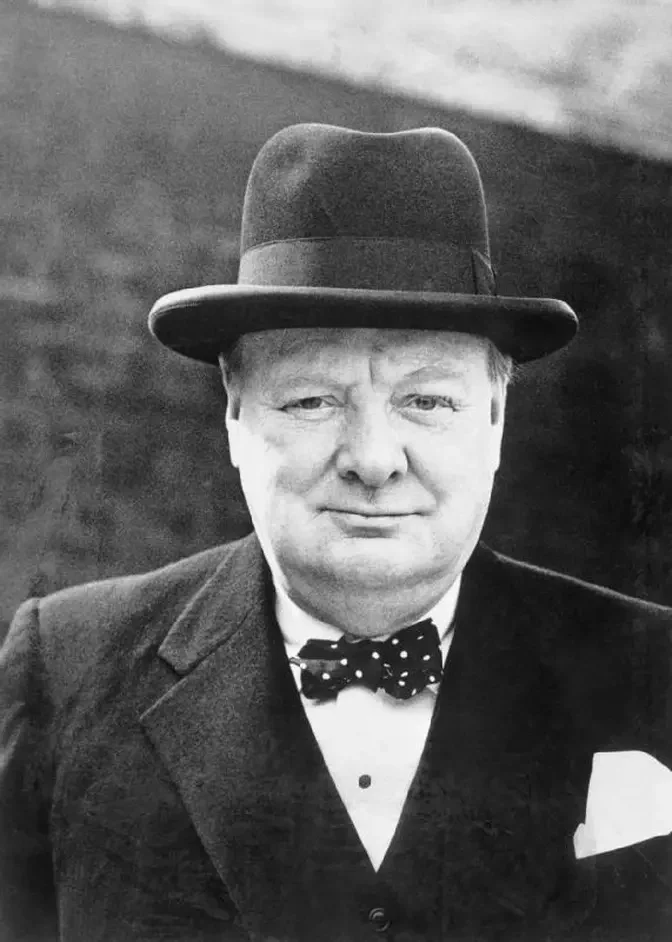
Winston Churchill came from a long line of English aristocrat politicians.
Churchill was born at the family's estate near Oxford on November 30th, 1874. He was educated
at the Harrow Prep School, where he performed so poorly that he did not even bother to apply
to Oxford or Cambridge. Instead, in 1893, young Winston Churchill headed off to military school
at the Royal Military Academy Sandhurst. After he left Sandhurst, Churchill travelled all around
the British Empire as a soldier and as a journalist. In 1896, he went to India. His
first book, published in 1898, was an account of his experiences in India's northwest frontier
province. In 1899, the London Morning Post sent him to cover the Boer War in South Africa,
but he was captured by enemy soldiers almost as soon as he arrived. By the time he returned
to England in 1900, the 26-year-old Churchill had published five books. That same year,
Winston Churchill joined the House of Commons as a conservative.
Four years later, he crossed the chamber and became a liberal. His work on behalf of progressive
social reforms such as an eight-hour workday, a government-mandated minimum wage, a state-run
labour exchange for unemployed workers, and a system of public health insurance infuriated
his conservative colleagues, who complained that this new Churchill was a traitor to his class.
In 1911, Churchill turned his attention away from domestic politics when he became the first
Lord of the Admiralty. Churchill began to prepare Great Britain for war. He established the Royal
Naval Air Service, modernized the British fleet, and helped invent one of the earliest tanks.
Despite Churchill's pre-science and preparation, World War I was a stale mate from the start.
In an attempt to shake things up, Churchill proposed a military campaign that soon
dissolved into disaster – the 1915 invasion of the Gallipoli Peninsula in Turkey.
Churchill hoped that this offensive would drive Turkey out of the war and encourage the Balkan
states to join the Allies. But Turkish resistance was much stiffer than he had anticipated.
After nine months and 250,000 casualties, the Allies withdrew in disgrace.
After the debacle at Gallipoli, Churchill left the Admiralty. During the 1920s and 1930s,
Churchill bounced from government job to government job, and in 1924, he rejoined
the Conservatives. Especially after the Nazis came to power in 1933, Churchill spent a great
deal of time warning his countrymen about the perils of German nationalism. But Britons were
weary of war and reluctant to get involved in international affairs again. Likewise,
the British government ignored Churchill's warnings and did all it could to stay out of
Hitler's way. In 1938, Prime Minister Neville Chamberlain even signed an agreement giving
Germany a chunk of Czechoslovakia in exchange for a promise of peace. A year later, however,
Hitler broke his promise and invaded Poland. Britain and France declared war. Chamberlain
was pushed out of office, and Winston Churchill took his place as Prime Minister in May 1940.
Just as Churchill predicted, the road to victory in World War II was long and difficult. France
fell to the Nazis in June 1940. In July, German fighter planes began three months of devastating
air raids on Britain herself. Though the future looked grim, Churchill did all he could to keep
British spirits high. He gave stirring speeches in Parliament and on the radio. He persuaded U.S.
President Franklin D. Roosevelt to provide war supplies—ammunition, guns, tanks, planes—to
the Allies, a program known as Lend-Lease, before the Americans even entered the war.
Though Churchill was one of the chief architects of the Allied victory, war-weary British voters
ousted the Conservatives and their Prime Minister from office just two months after
Germany's surrender in 1945. The now-former Prime Minister spent the next several years
warning Britons and Americans about the dangers of Soviet expansionism. In a speech in Fulton,
Missouri in 1946, for example, Churchill declared that an anti-democratic Iron Curtain had descended
across Europe. Churchill's speech was the first time anyone had used that now-common phrase to
describe the Communist threat. In 1951, 77-year-old Winston Churchill became Prime Minister for the
second time. He spent most of his term working to build a sustainable detente between the East and
the West. He retired from the post in 1955. In 1953, Queen Elizabeth made Winston Churchill a
Knight of the Order of the Garter. He died in 1965, one year after retiring from Parliament.