
This ancient SURVIVAL GUIDE for disasters and pandemics still works today!
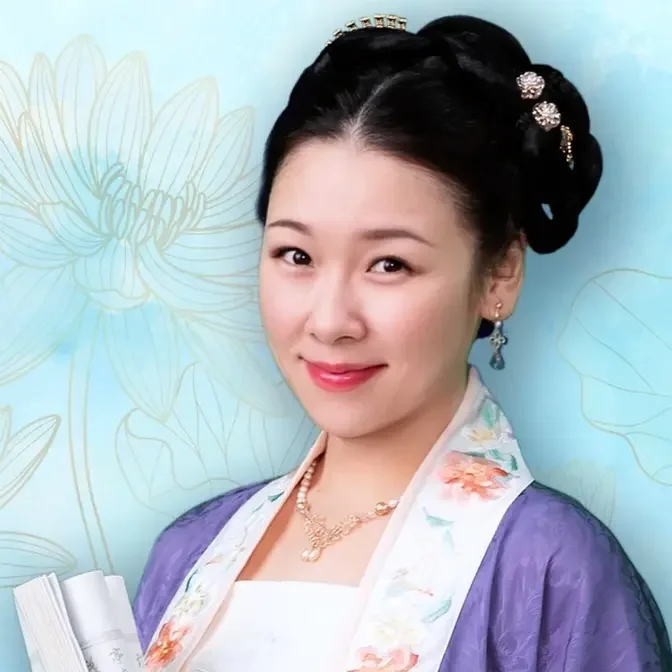
Looking for a cure for the pandemic? Want to know how to survive from all disasters? This is it! Ancient Chinese had the answer for thousands of years.
------------------------------------------
#survivalguide #survive #cure
------------------------------------------
Ganjing World: https://is.gd/1iBYSY
Facebook: Five Thousand Years
Instagram: Five_Thousand_Years
中文Youtube頻道:https://goo.gl/MPJijL
------------------------------------------
Cinematographer: Jimmy Xie
https://www.jimmycxie.com
Music: Enrico Trigoso
https://www.youtube.com/channel/UCEuDqdezv22VAC5KdQxH_LQ
Hi everyone, I’m Ally
There are always disasters happening in the world
Whether it be a pandemic, drought, flood, wildfire, earthquakes, or others.
Luckily for us, Chinese people have a long and continuous historical record for everything
Including how they dealt with disasters in the past
So in this episode, let’s look at some examples
Of how Chinese emperors as well as commoners overcame disasters and plagues in ancient times
Let’s first talk about emperors
I explained in my previous video of ‘What Makes a Great Emperor’
That Chinese emperors were also called Heaven’s Son - Tianzi
They had unmatchable power, but also needed to bear the greatest responsibilities
The Chinese character for King - Wang is written with three horizontal strokes and one vertical stroke
The three horizontal lines represent Heaven, Earth, and People.
And the King is the one connecting all of them in the middle
So to better serve under the Heaven
Emperors would do rituals many times a year to worship and report to the Gods
And whenever a disaster struck, they would take it as a warning sign from Heaven
And therefore examine themselves for any wrong doings, repent, and correct themselves
And according to historical records
Things would often become better immediately after the emperor went through this process of self-examination
For example, in the beginning of the Shang dynasty
There was a terrible drought that lasted seven years and caused people to starve.
The court astronomer suggested to King Tang of Shang to sacrifice a human being for rain
After hearing this, Tang of Shang said,
“I am praying for rain for the sake of the people.
If we have to kill someone, then let that person be me.”
He then cut his hair and nails, and kneeled in a mulberry forest and prayed to Heaven
While listing out six of his wrongdoings one by one
Before he could finish his words
Rain started pouring down thousands of kilometers around him and ended the seven-year drought
In Lunyu or The Analects, it was recorded that Tang of Shang said to the Heavens
“If I have sinned, please don’t involve the people.
If the people have sinned, please impose it on me.”
That’s why he was considered a sage-king in Chinese history and praised as a role model for emperors who came after him.
Very few rulers were able to match his legacy,
but Emperor Taizong of Tang was one of them
According to a Tang dynasty article, in year 628,
A locust plague hit the capital city Chang’an
Emperor Taizong saw the situation and captured a few of locusts in his hands and spoke to them
He said, “People’s lives depend on these crops, and by eating them you are harming the people.
If people have sinned, that’s my fault.
If you can understand, then don’t eat the crops and devour my heart instead”
Emperor Taizong then swallowed the bugs
People around him panicked and tried to stop him.
They told Taizong that locusts are dirty,
And might cause him to get sick
Taizong told them,
“That’s what I want! I hope to transfer the disaster onto myself,
Why would I be afraid of the disease?”
After the emperor swallowed the bugs,
The locust invasion was no longer a problem
Throughout Chinese history, there were emperors willing to sacrifice their lives to repent their sins,
There were also others willing to give up their ultimate power and position to redeem themselves
Emperor Wenzong of Tang was also facing drought issues during his reign.
He was ashamed of the situation and told his prime ministers that,
“I am the ruler of the country,
But my virtue is not enough to protect my people and caused this drought.
If it still doesn’t rain in three days,
I will step down as the emperor.
You should find another wise and prudent person to lead the country instead.”
Wenzong’s prime ministers were all crying and asking to be punished.
But the Heavens did not have plans to change the emperor.
It rained that night.
So far, we’ve seen examples of how Chinese emperors dealt with disasters,
But as a regular person, is there something we can do as well?
The answer is the same,
Looking within and correcting oneself
In the book Taiping Guangji,
There was a story of a Taoist Zhang Daoling
He was a scholar when he was young,
but later realized that all the books he read had no help in extending his life whatsoever,
So he started practicing Taoism
He lead his disciples to live in Sichuan province and taught the local people how to live a better life
He didn’t want to regulate people with laws,
So instead he asked people who were sick to write down all the wrongdoings they have committed since they were born,
Then throw the paper into water,
And make a vow to the gods to never commit them again,
Otherwise let the gods punish them with death
People who followed his suggestion all recovered,
At the same time, their moral standards were lifted
because they would feel ashamed for doing bad deeds and scared of catching a disease as punishment
Another example is from the Ming dynasty.
In the summer of 1511, there was a man named Gu Zhen.
He and his family were all infected with the plague
So in order to cure their disease,
He led his family to pray to Heaven and vowed to never eat meat in the future again.
The entire family recovered as a result
Unfortunately, in Gu’s case,
He wasn’t sincere with his promise and suffered the consequences.
One day he went into the city to get some rice.
On his way home, he saw someone selling fish.
He ignored his vow and bought three fish and ate them with wine
He went home without telling his family what he did.
But on the same day, he became sick again and died soon after
During the burial, Gu’s family saw three fish jumping into his coffin, but couldn’t find them anywhere.
They were very confused, until they asked someone who went into the city with Gu and found out what he did
His family then realized that those were the three fish he ate and this was Heaven’s warning to everyone
Chinese people weren’t the only ones who believed in heaven, gods and karmic retribution.
Even though people in the west had different religions and beliefs,
Moral values were more or less universal in ancient times
For example, in 1633 when a plague commonly known as the Black Death struck Europe again
It also hit a small town in Germany called Oberammergau
Local people were living in fear, so they prayed and made a vow to God that if they could be spared from the plague,
They would perform a play that honors the divine every ten years
After the vow was made, not a single inhabitant of the town died from the plague again.
On top of that, all the town members that were suffering from the plague were recovered miraculously
And of course, the town people fulfilled their promise, even till today
A Polish poet and holocaust survivor once said a famous quote
“No snowflake in an avalanche ever feels responsible.”
Are we truly not responsible for what happens in the world?
That’s something we can all think about.
And hopefully, when the next calamity strikes,
Everyone can look within, change for the better, and be protected.
Thank you for watching.
I’ll see you next time