
Czego Nie Wiesz o J.R.R. Tolkienie
25 Video Views·Mar 14, 2023
As my channel slowly but steadily grows, I've decided lately to expand my fields of activity and besides talking about creatures, myths, mythologies and universes related to fantasy, to this group we also join people who are fantastical or seem to have not quite much in common.
As you might have guessed, today we're going to talk a little bit about a pan, which I've mentioned several times in my materials, a pan that revolutionized not only fantasy literature, but to some extent also the entire, widely understood literature.
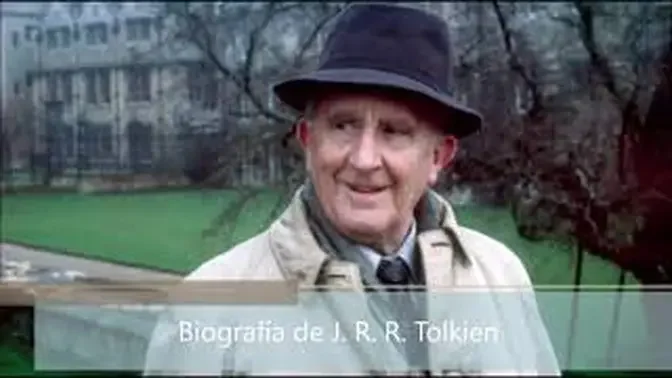
A brief history of John Ronald Reuel Tolkien, born into an English family in 1892 in what is now the South African Republic, was the son of a banker, Arthur Tolkien, who in 1895 returned to England with his younger brother Hillarym and mother Mabel, after the African climate did not work out too well.
After he became very close to his mother's side of the family, he was able to have a big impact on his father's death, and later on the death of his son, the younger John's grandson.
Arthur Tolkien's death also caused serious financial problems for his wife and sons, as they often moved from one house to another.
Meanwhile, young John Tolkien studied slowly alongside his brothers foreign languages, especially Latin and French, and already from childhood he showed linguistic ability, which brought him great genius, but later.
In late November 1904, twelve-year-old John Tolkien survived the death of his mother, who had a profound influence on his character, and later became a close friend of his mother's books, in which he reported extensive knowledge of philosophy, Old English and a few other subjects.
Interestingly, he became interested in Old Norse only to be able to read the original Siegfried saga, a story he became interested in as a child, while meeting his future wife Edith Bradd and taking some lessons.
In 1911 he began studying at Exeter College in Oxford, where, of course, he also learned various interesting things, this time taking up the Welsh language, and later Finnish, in which he devised the language of the Elves.
Unfortunately, through all his interest in languages he focused only on them, and through them he failed to acquire proper learning.
He had to go to school to study at the Institute of English Language and Literature, where he read various Old English works, and eventually became interested in Middle-earth mythology. In 1915 Tolkien finished his studies, and won a prize for his work.
Later during World War I he was called up for the army, where in 1916 he fought in one of the bloodiest battles of the war, the Battle of the Somme.
Later that year he was sent to England due to symptoms of the so-called Gorączki Okopowej, where he began work on his project.
He then turned to writing The Book of Lost Tales and The Silmarillion, where he wrote various myths and stories about the world he created.
Then he got sick again, then he got sick again, and from time to time he was taken to either a sanatorium, or a school of communication, or somewhere else.
I took Tolkien as a living being.
Of course, after a while the war ended, by which time his first son was already a year old.
Three more children were born later, and Tolkien never complained about his life, even though he was quite happy with it.
Although he always wanted an acting career, which to marry also meant.
First in Lidz he became a professor of theology, which Tolkien later took over, and in 1925 he was appointed head of the Rollins and Bosworth Chair of Old English at Oxford.
There in 1926, he founded an informal club in a circle of colleagues, whose participants met regularly to read Islamic sagas in the original.
In the early 20th and 30th century, of course, Tolkien began to write fantastical stories regularly.
It was at this time that the tale, today known as The Hobbit, or Litami z powrotem, was born, which forms a kind of basis for the mythology of the Middle East and is the prelude to the greatest work, the Władcy Pierścieni.
To put it in perspective, Władca Pierścieni was not supposed to be in Tolkien's three parts, one obscure book.
As she wrote her first novel during World War II, her work on it was also quite often interrupted by the war.
Ultimately, it ended up being that Władca Pierścieni was not enough, that it had to be divided into three parts due to the rise in paper prices in England, and thus the relatively high price of the book, so it was not published until 1954, because not every publisher wanted to publish it without any beer.
Ostatecznie dzieło has been published.
In the USA in the early 1960s, the appearance of an unauthorized copy of Władcy Pierścieni sparked a cult following among students, and Tolkien gained great fame also overseas.
Tolkien spent the last years of his life working on The Silmarillion, which he never completed and which was not published until after his death by Tolkien's son Christopher.
I'm not surprised that this book is so hard to read, it's been almost 60 years since I've seen it written.
He died in 1973 in a private hospital in Bournemouth at the age of 81.
He was fluent in over 30 languages, published over 100 works on ancient philology and literature and collaborated on the creation of the largest English dictionary ever published after the First World War.
I would have been in summation everything today this time different than usual so it would have been good if you would have been known in comments about judging such films on my channel.
Anyway, I hope you enjoyed it. subscribe to the channel to be updated, visit the fan page, link of course in the description and share ten famous movies, to learn something too.
By the way, I also recommend checking out a book by J.R.R. Tolkien if you haven't read any yet, because it's pretty bad, because March 25 is Tolkien's reading day.
One word, do the next, no I cześć.
I was just curious, did you know that although Tolkien knew so many languages, he couldn't handle Polish?