
Jean-Noël Hamal (1709-1778) - Ouverture da Camera No.5, Op.1 (1743)
★ Follow music ► https://www.instagram.com/reciclassicat/
Composer: Jean-Noël Hamal (1709-1778)
Work: Ouverture da Camera No.5, Op.1 (1743)
Performers: Camerata Leodiensis; Hubert Schoonbroodt (1941-1992, conductor)
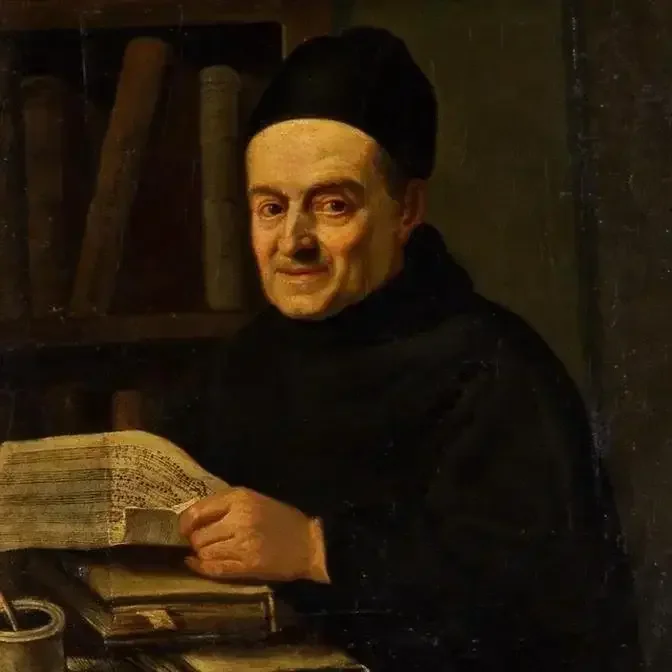
Painting: Pittore napoletano (18th Century) - Concerto (c.1750)
Image in high resolution: https://flic.kr/p/2jJuNWB
Further info: https://www.discogs.com/es/Jean-Noel-Hamal-Camerata-Leodiensis-Hubert-Schoonbroodt-Six-Overtures-Da-Camera-A-Quattro/release/13586170
Listen free: No available
---
Jean-Noël Hamal
(Liège, 23 December 1709 - Liège, 26 November 1778)
Composer, son of Henri-Guillaume Hamal. He became a chorister at the cathedral of St Lambert, Liège, at the age of seven and studied with Henri-Denis Dupont, a lover of Italian music. He had already studied with his father, who had transmitted his musical spontaneity, use of the Liège language and Italian style to his son. He probably also studied under Arnold Delhaye, who brought about an intense revival of Italian art in Liège. In March and September of 1726 Dupont mentioned Hamal's good progress, which led him to Rome to study with Giuseppe Amadori at the Liège College from summer 1728 to summer 1731. On 28 July 1731 he was ordained priest there. Henri Hamal wrote that Jean-Noël made so much progress in Rome that Amadori arranged for his compositions to be performed in the Roman churches. In July 1738 he was appointed director of music at Liège Cathedral. In the same year he and his father organized concerts spirituels in the town hall. He took the oath of imperial canon in July 1745, and in 1750 he returned to Italy, where he met Jommelli in Rome and Durante in Naples and became immersed in the concertante style that characterized Italian music. He died of the after-effects of a paralytic seizure. His secular works are more experimental and innovatory than his sacred ones, and his music in general became increasingly symphonic in style. Some is in an Italian late Baroque style, while some is more pre-Classical, with the use of sonata form. The op.3 sonatas, which follow the fast–slow–fast plan, are similar in manner to Alessandro Scarlatti's opera overtures. Hamal's expressive sense can be seen in his use of verbal instructions as well as in the implicit, and occasionally explicit, crescendos and decrescendos. His instrumentation reflects that typical of the Brussels composers (e.g. H.-J. de Croes) of the time. His operas are notable for their use of folk music from Liège as well as librettos in the local dialect (this was not unusual in comic operas). Based mainly on the Neapolitan opera buffa, these works were also inspired by the French theatre of J.-J. Rousseau and Diderot, which strove towards spontaneity and simplicity. In his librettos Hamal also followed the example of Vadé's genre poissard, with the exception of Li liegeoi ègagï, which combines the comic with the pathetic. In musical terms, emphasis falls on the vocal line, which is often doubled by the strings above a simple bass. #ClassicalMusic