
Guillaume-Gabriel Nivers (1632-1714) - La Messe Cunctipotens (1667)
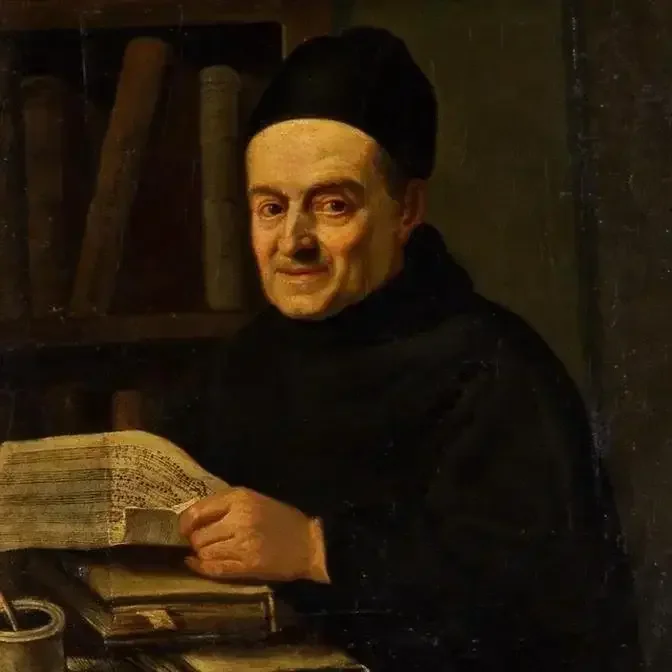
★ Follow music ► https://www.instagram.com/reciclassicat/
Composer: Guillaume-Gabriel Nivers (1632-1714)
Work: La Messe Cunctipotens (1667)
Performers: Jеan Wοlfs (organ); SchοIa Cantοrum
Painting: Claude Lorrain (1600-1682) - Paisaje con las tentaciones de San Antonio
Image in high resolution: https://flic.kr/p/2k9LY2j
Further info: https://www.muziekweb.nl/en/Link/CLX3208/Musique-de-Versailles
Listen free: No available
---
Guillaume (Guilaume) Gabriel Nivers
(Paris?, c.1632 - Paris, 30 November 1714)
French organist, composer and theorist. He came from a prosperous family; his father, a ‘bourgeois de Paris’, was farmer to the bishop. He married in 1668 and had one son. Nothing is known about his musical training, though he is assumed to be the Guillaume Nivers who received the MA degree from Paris University in 1662. He became organist of St Sulpice in the early 1650s and retained the post until his death. To it he later added three other remunerative positions: on 19 June 1678 he was named one of the four organists of the royal chapel; in 1681 he replaced Du Mont as master of music to the queen; and in 1686 he was given charge of the music at the Maison Royale St Louis, the convent school at St Cyr for young ladies of noble birth. Despite some friction with the school's founder, Mme de Maintenon, documented in her correspondence, he continued in this last post in association with Moreau and Clérambault until his death, establishing and conducting chants and motets in the chapel and participating as harpsichordist in various dramatic productions, notably Racine's Esther and Athalie. His will, dated 1711, gives a detailed picture of the comfortable circumstances of his last years and of his piety and devotion to the church. Nivers' three Livres d'orgue were the first published works to establish the distinctive styles and forms of the French organ school of the late 17th and early 18th centuries, and most subsequent publications seem to have been modelled on them. Nivers is less remembered today as a composer of sacred vocal music and an editor of Gregorian chant. His work on plainchant falls within the context of Catholic reform, which favoured the re-use of ancient Gregorian chant in various forms. He was one of the most important musicians involved in this movement, as a reviver composer, theorist and pedagogue. His comprehensive knowledge of ancient Gregorian chant inspired him to write in a multiplicity of styles, including the purest Gregorian style, following 17th-century criteria (e.g. chants for Cluny) a form of plainchant ornamented and using leading notes in the style of Du Mont's plainchant masses (e.g. most of the pieces in the books written for nuns); and a monodonic chant with a distinctive free and variable rhythm, including ornaments and textual repetitions, named ‘chant varié’ or ‘motet’ (e.g. some pieces for St Cyr or for nuns, and the Lamentations of 1704). He also wrote motets for one and two treble voices with continuo, which in their use of agréments and irregular recitative-like rhythms, are representative of a French style still relatively unaffected by Italian influence. #ClassicalMusic