
[Sheet music] Johann Gottlieb Naumann (1741-1801) - Sinfonia ex C
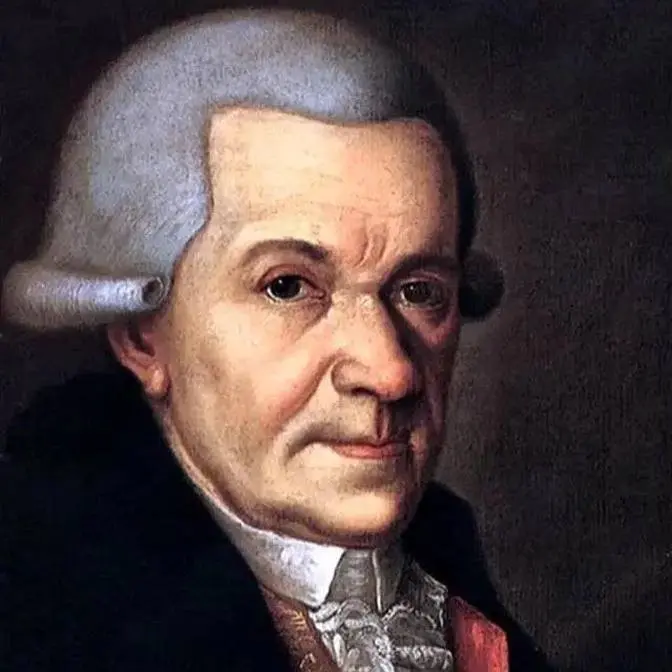
Consider to support this project on https://ko-fi.com/michaelhaydn
★ WORLD PREMIERE RECORDINGS ★
♫ Recovery project of sheet music by Johann Michael Haydn (1737-1806) and by other neglected composers ♫
Composer: Johann Gottlieb Naumann (1741-1801)
Work: Sinfonia ex C, IJN 35
1. Allegro 0:00
2. Allegretto 3:54
3. Presto 7:30
Software: Sibelius + Instruments samples
World Premiere: Yes
Sheet music (pdf): https://vmirror.imslp.org/files/imglnks/usimg/d/df/IMSLP806115-PMLP879416-Naumann_-_Sinfonia_in_C_-_Partitur.pdf
Sheet music (xml): https://www.mediafire.com/file/ccwmnyjy57wk6c5/NAUMAN-SinfoniaC.zip/file
Info about sheet music recovering project: https://i.ibb.co/hML4xyJ/HAYDN-M-3.jpg
---
Johann Gottlieb Naumann
(Blasewitz, 17 April 1741 - Dresden, 23 October 1801)
German composer and violinist. His earliest education was at a local town school, but he was soon sent to Dresden to the Kreuzschule, where his teacher was Gottfried August Homilius. In 1757 he undertook a study tour to Italy, where he received instruction from Giuseppe Tartini. Here his opera Il Tesoro insidiato received such acclaim that he began to receive attention as Johann Adolph Hasse’s successor as “Il caro sassone.” Hasse recommended him as his successor in Dresden in 1764, and his work soon began to achieve considerable success throughout central Europe. In 1777 he was commissioned by Swedish king Gustav III to write an opera, Amphion, that led to other commissions from the north, including Cora och Alonzo with which the new Royal Opera in Stockholm was inaugurated in 1782. Although his last Swedish work, the nationalist Gustaf Wasa, was ready for performance in 1786, he was lured to Denmark to write works for the Danish Opera; in 1792 he married the daughter of a Danish admiral. In 1789 he was active in Berlin, and by the time of his death he was probably one of the most respected and popular composers in Europe. His music incorporates a mixture of the various late 18th-century styles and forms, always well constructed and dramatically intense. His Vater unser was considered the epitome of German sacred music of the time, while his cantatas were more in the Italian style with fluid melodies and progressive harmony. He had an interest in the glass harmonica, writing a substantial amount of music for this instrument. His works include 21 Masses, 15 Kyries, 13 oratorios, 20 offertories, 19 Marian antiphons, at least three Te Deums, nine vespers, eight Psalm cantatas, over 130 songs, two concertos for keyboard, 25 operas (in Italian, Swedish, and Danish), 16 symphonies, 12 sonatas for glass harmonica, 15 chamber works, and a host of smaller compositions for the voice and chamber ensembles. Naumann can be considered one of the most significant composers of the last half of the 18th century. #ClassicalMusic