
Jacob Herschel (1734-1792) - Quartetti per il cembalo, No.1 Op.I (c.1770)
★ Follow music ► https://www.instagram.com/reciclassicat/
Composer: Jacob Herschel (1734-1792)
Work: Quartetti per il cembalo, No.1 Op.I (c.1770) (World Premiere Recording)
Performers: Sibelius + Harpsichord samples (edited by Pau NG)
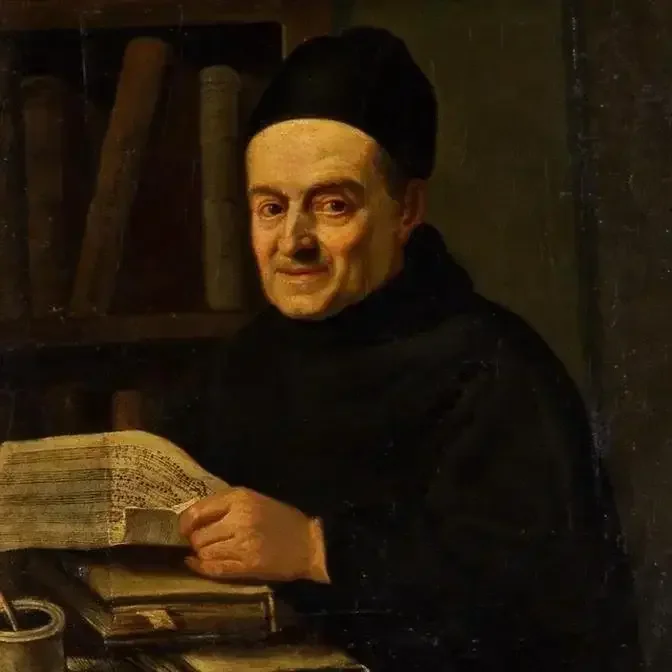
Painting: Attribué à Louis van Blarenberghe (1734-1812) - Vue dun port fortifié
Image in high resolution: https://flic.kr/p/2kBWruX
Further info: https://imslp.org/wiki/Category:Herschel,_Jacob
Listen free: No available
---
(Heinrich Anton) Jacob Herschel
(Hanover, 30 November 1734 - Hanover, 1792)
German composer. He was the second of the ten children born to Isaac and Anna Herschel of Hanover, and the eldest of their six boys. Five of the boys survived infancy and every one of them showed precocious talent as musicians. Three of the four who survived into adult life had other talents - William in mechanics and astronomy, Alexander in mechanics, and Dietrich in natural history - but Jacob, musically the most gifted of all, found fulfilment in his music. At the early age of fourteen he followed his father into the band of the Hanoverian Guards, a pleasant enough life in peacetime but hazardous and stressful in times of war. It did not compare with the comfort and prestige of a post in the Court Orchestra of Hanover, and in the autumn of 1755 he petitioned for his discharge from the army in expectation of a post in the orchestra. But sadly the discharge had not arrived when the Guards marched out of Hanover, to reinforce England against a French invasion. The Guards eventually sailed for England at the end of March 1756. Later that year Jacob received his discharge and returned to Hanover, a civilian. Before long the French threatened Hanover itself, and on 26 Julu 1757 the Hanoverians and their allies were defeated at the Battle of Hastenbeck and the town occupied by the victors. Jacob spent weeks in hiding, first to escape being pressed into the makeshift defence force being assembled by the burghers, and then to avoid arousing the interest of the occupiers. He eventually slipped out of the town, joined William in Hamburg, and together they took refuge in England. There the brothers at first scratched a living, teaching and copying music. William emerged as a significant figure on the English musical scene, but Jacob preferred to return home in 1779, when peace had returned to the region aroung Hanover. There he successfully auditioned for a post in the Court orchestra; and although he spent extended visits in England in the years ahead, he remained as a leading member of the orchestra for the rest of his days. In 1792 he died by strangulation, murdered in circumstances that somehow involved the fighting then going in Hanover on. #ClassicalMusic