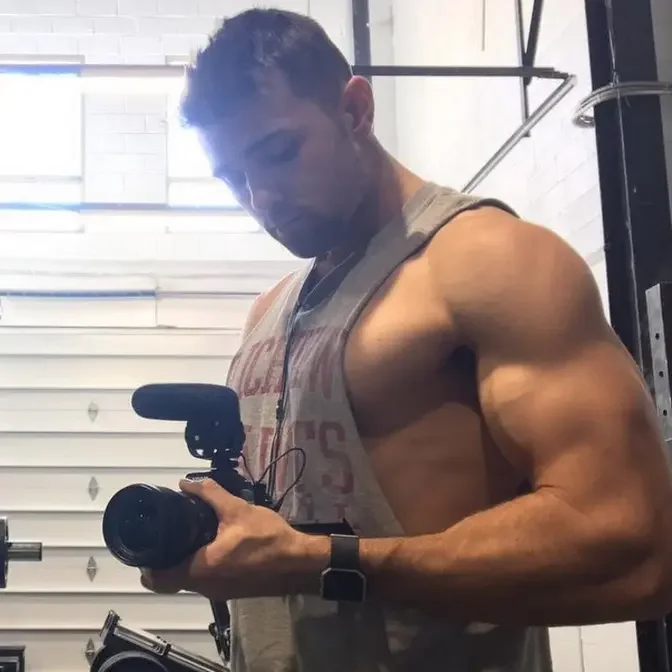
How to fix tennis elbow pain and tendonitis naturally? Here are 6 quick tips to help you cure and even prevent that pain! This is an extremely common occurrence and something a lot of you have asked us to make a video on so here it is. Enjoy! Make sure to smash that like button and don't forget to subscribe.. Enjoy!
Time Stamps: (0:04)- Introduction 1. (0:32)- Warm up effectively before any workout 2. (1:37)- Incorporate various dynamic stretches 3. (4:04)- Remove all bad habits from your training 4. (6:43)- Listen to your body 5. (8:03)- Follow the R.I.C.E principle 6. (8:45)- Know what the source of the pain is (11:00)- SMASH THAT LIKE BUTTON!
Don't forget to like, comment, subscribe, and share with your friends!
This is a common injury that happens to a lot of us.
I've suffered through it.
A lot of my friends at the gym have suffered through it and there are some
really easy ways to combat this and fix it,
but if you don't know what they are,
you can go months and months and months and have a lot of pain in your elbows
and it can really affect your training,
how much weight you're lifting and your overall mentality in the gym and we
don't want that.
So Josh from Colossus Fitness and I are going to share with you six quick tips
to help you start eliminating tennis elbow now.
So for the first tip,
it's all about warming up with the tennis elbow.
A lot of people will find that they get this issue because they're not warming up
their body before exercise and chances are if you're experiencing the tennis
elbow, you might have pain and soreness in other areas.
These first two tips are going to talk about preventative measures to avoid it
altogether. So first and foremost,
it's imperative that you guys are doing a warmup.
We really recommend a Lisp warmup. That's low intensity,
steady state cardio. You can execute this by any method of cardio.
You're not taxing yourself too hard.
You are just getting the blood flowing in your body. That's it.
Plain and simple. Pass that. One thing we highly recommend,
and this is imperative,
is that you don't jump into high stress loads immediately.
If you have a tennis elbow and you go and you're about to bench press 315
pounds, that's probably not a good idea.
You have a cold elbow and you're just going to toss 315 pounds.
That's crazy amounts of stress and that's what's going to hurt it.
Whereas if you can do a lighter warmup, as you can see me here doing with the
bench,
I'm just getting the blood flowing and I'm warming up progressively to my
maximal weight.
All right guys.
So tip number two actually relates a lot to what Josh just said.
It has to do with performing dynamic stretches before starting your workout.
Now,
obviously what stretches you're going to do is going to highly depend on what
you're training for that day. I mean, at the end of the day,
it's probably a good idea to do a lot of these,
no matter what you're doing just to keep things loose throughout the week.
But for example,
if you guys are doing an upper body workout where you're doing a lot of
exercises that push through the shoulders and the elbows,
here are some stretches that you can try to do before starting the actual
movements.
The first one is arm circles.
Very simple guys.
You're going to stand up straight with your arms up by your sides and you're
going to take turns rotating them clockwise and counterclockwise until your
shoulders feel nice and warmed up.
Usually 10 rotations forward and 10 rotations backward is enough to get them
nice and loose and just do one to two sets.
Another thing you can try doing is shoulder slaps and this is basically like
giving yourself an aggressive hug and as you do the shoulder slaps,
you're basically going to alternate which arm is on top and which one's on the
bottom and again for this 10 maybe 15 repetitions,
two sets.
Some other great things you can do for specifically the elbows.
One of my favorite things is a really light single arm dumbbell overhead
extension and I'm talking really light guys get a five pound dumbbell,
maybe even a three pound dumbbell if they have one and just really focus on
keeping your arm as vertical as possible and going all the way down and all the
way up with the movement. Again, couple sets, 10, 15 reps per arm.
If you're doing lower body warmups, some great things that you can do.
One is called butt kicks and to do a butt kick,
basically get a stand in one place and literally jump in the air, alternating,
kicking yourself in your butt with your heels and just go side to side,
10 to 15 reps per side, two sets of this and another great one.
And this is actually what I do all the time and this really helps me get into
the mindset when I'm going to squat is I like to do air squats and air squats are
going to allow you to really warm up the hips, warm up your knees,
and then also get you in the mindset of going ass to grass on those squats
because you guys know how important it is and how much I stress going ass to
grass when doing your squats guys.
So simple warmups like these can help drive blood to the area,
help get things nice and loose and help to eliminate some pain you might have in
your workout. Tip number three is remove bad habits from your training.
Now you guys might've noticed that Josh and I kind of touched on a wide variety
of things for tips one and two and that's just because we want to make sure you
guys are really, you know,
getting the point that you need to warm up your body overall when you work out,
not just what hurts. Okay? Even if your elbows don't hurt,
you should still be doing these warmups to make sure you don't get an injury in
the future and apply that to your entire body.
Now as far as removing bad habits from your workouts,
what I mean by this there's always a debate of whether or not you should fully
extend on exercises. Okay? Because it can cause pain in the elbow,
but there's a big difference between having a controlled lockout and snapping
your elbows. Now let's think, why do they call it tennis elbow?
What actually happens in tennis that causes all that pain? Well,
when you swing the racket,
if you lock out your arm at the same time you're driving the force forward,
that snap,
that constant snap in the elbow is what's causing all that pain over time.
Now if you're doing a controlled bench press and you're focusing on mind muscle
connection and going all the way to the top and locking out and then coming down,
there's no snap happening.
There's no hyperextended extension in the elbow happening,
but if you're doing your sets and you're throwing the weight up and down like
this as fast as you can, chances are when you're getting to the top,
you're doing a little bit of a hyperextension that you don't even realize you're
doing and that's what's causing pain over time. Also too,
a lot of people tend to get sloppy on their last repetition when they do their
exercises. So for example, if you're dumbbell bench pressing,
you do a nice and controlled movements,
but then when it comes time to put the dumbbells down,
you bring them down like this and just kind of like throw them to the ground and
you're doing like a hundred pound dumbbell presses.
You're basically taking a hundred pounds of force and going like this and snapping
your elbow and obviously it's going to cause some pain over time or even if
you're doing tricep extensions, you know,
if you're going down too quick and you're snapping it at the bottom every single
time, that's going to cause pain in your elbow over time because you're getting
that tiny bit of hyperextension at the bottom and then when you're done,
your repetitions,
let's say you're doing nice controlled motions on every single repetition.
So you're not hyperextending the elbow, you're not snapping the elbow,
but then as soon as you're done,
you just kind of like fling the weights up into the air that sudden like let go
and then catch at the top could be putting some force unwanted force in that
elbow area as well, which can cause some pain.
So it's really about being smart what you're training and not just being smart
during the movement, but also be smart in how you end it as well.
Tip number four guys, and this one is a huge one. This goes into everything.
You need to listen to your body with any injury.
You really need to make sure you're listening to your body signals.
It's going to tell you when you can actually continue and when it's time to
stop.
But one thing I want to make incredibly clear is that there are two different
ends of the spectrum. There's discomfort and there are pain.
Sometimes there's a fine line to try to be able to figure out which side you
are on, but you need to listen. Discomfort is okay.
You need to be able to push through discomfort.
You need to overcome the like uneasiness you'll feel sometimes when doing the
exercise, especially if you're injured with tendonitis.
To overcome it and break down that scar tissue,
you need to make sure that you're actively performing the exercise.
On the other end, however, there is pain.
And if you have shocking tough, hard pain,
you really need to listen to your muscle and perhaps try tapering down the
weight, tapering down the volume, trying an alternate exercise.
But what you want to make sure you are not doing is stopping the exercise in
total. This is something very bad.
And a lot of people will find it as an excuse.
They'll get hurt and they'll go, I can't go to the gym.
I'm done working out.
And you're going to inhibit yourself and put yourself into a place where you're
not allowing yourself to actually exercise and become better.
And you're just going to think that you're stuck, maimed and injured.
And that's not something you want.
You want to come in, do your best, listen to your body and push through it.
All right, guys, for the fifth tip,
this is going to be our first restorative tip.
And this is very important.
If you're feeling pain in your elbow after your workout,
you're going to want to make sure you go ahead,
go home and follow the RICE principle. Rest, ice,
compress and elevate.
I'm sure you guys have heard this many times in health class or whatever it be,
but you want to make sure you're following this post workout.
Past that there's some other really good natural methods you can do like ice
baths and things of that nature.
We don't really recommend taking an excess amount of drugs to deal with a small
pain that you may have in your arm.
So you guys are going to want to make sure you're going and icing it after every
workout that you feel this pain.
This is your best source to prevent future pain with your tennis elbow.
And the sixth and final tip to help you guys combat tennis elbow or tendonitis
of the elbow is to really know what the source of the pain is.
I see a lot of people when they have, when their elbow hurts,
they literally just kind of take that one area and stop massaging that area and
you might be guilty of this too.
You could be sitting at your computer right now and your elbow hurts and that's
why you're watching this video and you're just rubbing this area hoping that's
going to alleviate the pain. But unfortunately guys, it's not that simple.
That's not how your body works. If you need,
if you want to figure out exactly where the source of the pain is coming from,
you need to start stretching your entire body. For example,
when I go see my massage therapist cause I get injuries in my shoulders and my
elbows, I get tightness in the same areas that you guys get.
A lot of what she's taught me is that it's usually other areas of your body that
are pulling and causing the pain to happen. So for example,
you could have pain throughout your back and your shoulder and all those muscles
pulling is causing like a chain reaction that's pulling all the way down through
your entire arm and it just happens to be the source of pain is right here.
So you could literally have tightness in your back or your shoulder,
but the pain is happening in your elbow cause all those muscles and tendons are
so tight that everything's pulling this way.
Everything's pulling that way at the same time.
So it really comes down to knowing your body and that's why it's so important to
make sure you guys get things like foam rollers or you can get things like
lacrosse balls and try to loosen up your entire body instead of just trying to
focus in that one area. Because I'm sure many of you have noticed by now,
if you just sit there and rub your elbow all day,
it never gets better and it never will. So really know your body.
And if you need to set up a massage,
set up an appointment to go see a sports massage therapist and they can really
try to figure out exactly what's happening inside your body.
And believe it or not, after one or two visits,
it's going to be like a night and day difference.
You could be suffering from tennis elbow for months and go see someone who knows
what they're doing and feel like a totally new person even after one session.
Believe me, it works. I hope you guys enjoyed this video.
And if you didn't check out the one we did on how to fix your shoulders,
how to fix your posture, make sure you check that out, that one out as well.
And definitely make sure you're giving these videos lots of likes guys really
show that love. I don't know if you know this,
but the YouTube algorithm is always changing and a lot of times it look for
videos that are getting a lot of views and a lot of likes.
So we need to really start boosting that number up.
If you guys want to see more good content,
be sure to hit that subscribe button if you haven't already. And as always,
more good stuff coming soon. See you guys.
The one thing I see very often is a lot of people just kind of go through the
motion without actually feeling the contraction in their lats.
So number one tip I have for you guys is to almost feel like you're driving your
elbows down into your butt or another thing is you could imagine that you're
squeezing a tennis ball in between your scapula.