
Japanese Curry From Scratch
20 Video Views·Feb 6, 2023
Hi, I'm Mark Matsumoto, and today we're going to be making Japanese curry.
Now you probably either know exactly what I'm talking about, or you're scratching your
head and thinking, huh?
Japanese curry?
I thought that was Indian.
Curry is not traditionally a Japanese dish, but it's something that's been eaten there
for the last 80 years.
It's much milder than an Indian curry, and the two main differences are, one, that it's
much thicker than an Indian curry because it uses a roux to thicken it, and the second
thing is that it's much sweeter, and it's typically sweetened with honey or fruits
like apples.
Most castles these days just use instant mixes.
They come in little packages and blocks, you may have seen them before, but while they
taste great, I think it's so much better to make foods from scratch, and that way you
don't have a lot of those ingredients that you can't pronounce.
Alright, let's go check out what we have in the fridge.
So one of the key flavor elements in any curry is that you first want to start out with a
great base of aromatics, specifically onions.
I like to use a lot of onions, so let's see, we've got three small onions here, and we're
going to get these nice and caramelized to give the curry the sweetness and flavor that
we want.
We're also going to want a protein, so in this case I have some boneless, skinless chicken
thighs here, and we want some substance, so we've got some potatoes here.
These are Yukon Golds, I love these because you don't have to peel them, and let's throw
in some carrots.
We're also going to throw in some frozen peas here, that'll give our curry some nice color
and some contrast.
Alright, let's get cooking!
So these onions are where the curry is going to get it's nice, sweet flavor from, so we're
going to want to get the onions cut as thinly as possible so they caramelize quickly and
we're not having dinner at midnight.
Okay the pan's nice and hot, we've got our onions chopped, and so I'm going to add a
bit of oil to the pan, maybe a tablespoon or two, and we are going to go ahead and put
the onions in.
And you want to do this over a medium to medium-low heat because we want to cook them for a long
time and get them caramelized without burning them.
So it's going to take about 20 minutes, you don't have to sit and watch it all the time,
but you want to stir it around every once in a while so it browns evenly.
Now while the onions brown, I'm going to go ahead and chop up some of our other vegetables
and our meat.
So you can really use any kind of meat, beef, poultry, I've got some chicken thighs here
which I love because you can cook them for a while and they get tender and soft without
getting dried out like with a chicken breast.
So these have been washed and trimmed of any excess fat, and we're just going to cut these
into bite-sized pieces, you don't want them too small, but you don't want them too large
either.
Okay, and then we're going to chop up some carrots.
Now because we're going to be cooking these for a while, we don't want to cut them too
small and have them disintegrate on us.
So I'm going to go ahead and chop the ends off, and then I'm going to give it kind of
a cross-cut.
So basically, you want to come at it at an angle, and then make one cut, turn it 3 quarters
of the way, make another cut, turn it, cut, turn it, cut, turn it, and so on and so forth.
So cutting it like this gives you nice even cuts even though the carrot is tapered differently.
Now the onions are going to take a while to brown, but while we have that going, we're
going to go ahead and make the roux.
Now this is a combination of butter and flour, and it's what makes the curry nice and thick.
So we have a pan here over medium-low heat, we're going to add about a quarter cup of
butter, and about a quarter cup of flour.
And we're going to want to stir this around constantly so it doesn't burn until it gets
to a nice medium brown color.
Okay, so our roux's been going for about 15-20 minutes now, and it's this beautiful medium
brown color.
It smells amazing, like baking bread and caramel.
And what we're going to want to do is put our spices directly in here, and what that's
going to do is help roast the spices and get some of that flavor out.
So here I have some garam masala powder, and you can pick this up at any Indian grocery,
or even some supermarkets have it.
If you can't find it, you can use curry powder.
I'm going to add about 2 tablespoons of this into the roux, and just let that toast for
about a minute.
It won't take very long.
You'll see it bubbling up and it'll be sizzling a little bit.
Okay, that should be good.
Now we're going to go ahead and turn this off, and once it's off the heat, we're going
to add about 3 tablespoons of sauce.
Sometimes it's called tonkatsu sauce, and it's made with fruit and vinegar and a lot
of spices.
If you can't find it, you can use Worcestershire sauce, and you'll get a similar effect.
So about 3 tablespoons of that, and we're going to add 2 tablespoons of ketchup.
And just mix that up, keep it from burning, and this is our base for the curry.
If you want your curry a little spicier, you can add some cayenne pepper, it'll give it
a little bit of that kick.
Alright, let's go check on our onions.
The onions are a nice brown color now, and they've caramelized nicely.
You get this great, sweet aroma coming up, and they're a nice deep brown color.
So I think we're ready to add the meat.
Okay, now just turn the heat up a little bit, and push the onions out to the sides of the
pot.
And we're going to go ahead and just take our meat, and throw it right into the center
there.
And spread it out as best you can, and we're going to go ahead and let the meat brown on
one side, flip it over, and then we're going to add everything else in.
Our meat's nice and brown, and the kitchen is just filled with the wonderful smells of
the onions and the meat.
Now we just have to add our carrots in, and we want to give the carrots a little bit of
a head start over the potatoes, because they're going to take a little longer to cook.
So the carrots are in, we're going to add about four cups of water to the pot.
And I actually like to add a little bit of black cardamom, because it gives it a nice
earthy, smoky flavor.
Now we're just going to put a lid on this, and bring it to a rolling boil.
Now what that's going to do is bring all the impurities and stuff, especially if you're
using a redder cut of meat like beef, and it just brings it up as kind of like foam
on the top, and you can just skim it off and get rid of the nasty stuff.
Okay, while that's coming to a boil, let's go ahead and cut up our potatoes.
So you don't want to cut these up too small, it's kind of like a stew, so I'm just going
to, these potatoes are kind of small to begin with, so I'm just going to cut them up into
quarters.
Okay, our chicken's at a boil now, and if you look at the surface here, you'll notice
that there's some foam accumulating on the top.
There's not a lot, because this is chicken, but if you had beef, you're really going to
want to do this.
So I'm just going to use this little skimmer to take off that foam and some of the excess
fat off the surface of the stock.
Great, that looks just about it, and I'm going to go ahead and turn the heat down, cover
this up with a lid, and let it simmer for about 10-15 minutes to give the carrots a
head start.
Okay, this has been simmering for about 15 minutes now, and I've got my potatoes that
I'm going to add in.
As I mentioned before, one of the key features of Japanese curry is that it tends to be a
little bit sweeter than a typical Indian curry, and the way we get that is by adding some
fruit.
So I have an apple here that I've cored and peeled, and I'm just going to grate this straight
into our curry.
And then I'm also going to add about another tablespoon of garam masala straight into here
so we can get a nice flavor to the meat.
And then I'm going to add some salt.
Now you don't want to over-salt it at the beginning, but we want to add a little bit
in there so it gets some flavor into the meat and the vegetables.
So I've got about a tablespoon of kosher salt, maybe a little bit more.
We'll add about two tablespoons.
If you're using regular salt, you want to cut back and use about half that.
And make sure you've got a light simmer going on, cover it up, and we're going to let this
cook until the potatoes and carrots are softened.
Alright, be back with you in about 40 minutes.
Okay, our curry's been simmering for about an hour, the apartment smells amazing, and
I think our potatoes and our carrots are done, so let's take a look.
Ah, that looks great.
Okay, so we have our roux, and we want to make sure the heat's not up too high, otherwise
it's going to burn to the pan.
And we're just going to add that into the curry, and use a spatula to break it up and
mix it in, being careful not to crush the potatoes or the carrots.
Okay, and now the taste test, we just want to make sure our salt and our sweetness are
all where we want it to be.
Mmm, that's perfect.
Now we're just going to add some yeast for color, I've got probably about three quarters
of a cup to a cup, and that's going to give it a nice, bright green color.
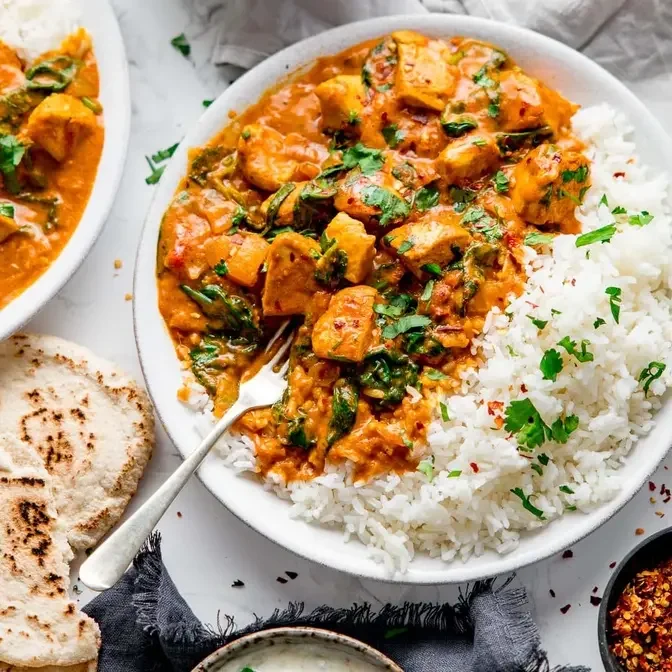
We're going to want to serve it on top of some rice, and we'll have a fantastic meal
with lots of leftovers.
Mmm, delicious.
Sweet, smoky, thick but not too thick.
It has a very different taste from an Indian curry.
I hope you enjoy.