
Carles Baguer (1768-1808) - Simfonia en Do menor, No.2 (1790)
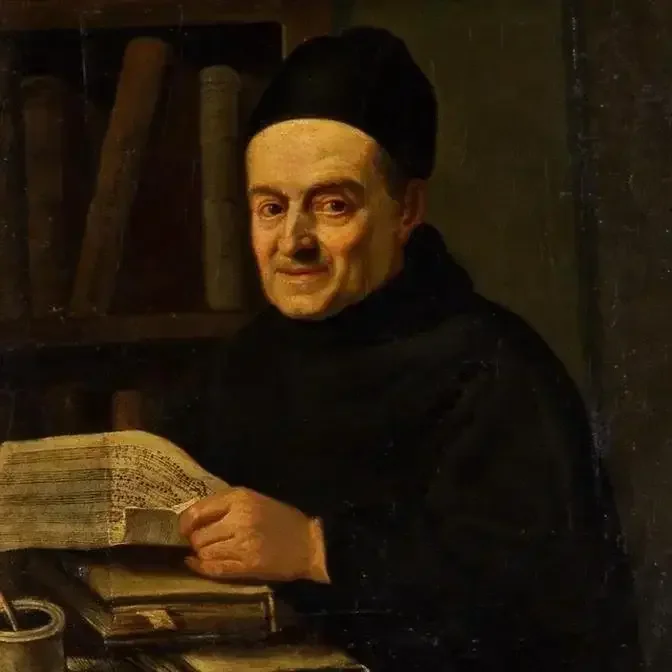
★ Follow music ► https://www.instagram.com/reciclassicat/
Composer: Carles Baguer (1768-1808)
Work: Simfonia en Do menor, No.2 (1790)
Performers: Acаdèmіа 1750
Simfonia en Do menor, No.2 (1790)
1. Allegro 0:00
2. Andante 4:56
3. Minuetto, trio 8:12
4. Rondo, presto 11:02
Drawing: Eugène-Ferdinand Buttura (1812-1852) - Barcelone
Image in high resolution: https://flic.kr/p/2kXC3Wi
Drawing: Adolphe Hedwige Alphonse Delamare (1793-1861) - Porta de la Ciutadella a Barcelona
Image in high resolution: https://flic.kr/p/2kXKDnT
Further info: https://www.amazon.es/Carles-Baguer-Sinfonias-Academia-James/dp/B002CAOW8C
Listen free: https://open.spotify.com/album/7bxhLrkGTnjeYAoq2EBuQ4
---
Carles (Carlos) Baguer
(Barcelona, 13 March 1768 - Barcelona, 29 February 1808)
Spanish composer and organist. Known affectionately as ‘Carlets’ to his Catalan contemporaries, he studied under his uncle Francesc Mariner (1720-1789) and in 1786 succeeded him as organist of Barcelona Cathedral, where he remained until his death. He played an active part in the city's musical life, was much admired for his organ improvisations and attracted many pupils, such as Francisco Andreví y Castellar, Ramón Carnicer and Mateo Ferrer. He was a prolific composer and his work was unusually widely disseminated for a Catalan composer of the day. Baguer's sacred works testify to a clear Italian influence and he only occasionally used the learned style. His oratorios consist chiefly of four-part homophonic choruses alternating with arias (often with coloratura) and recitative interspersed with arioso passages. His sinfonías fall into two patterns: a single sonata-form movement with a slow introduction, or four movements. In the latter case the second movements take the form of theme and variations and the third are minuets. His style shows a desire to emulate that of Haydn, especially in his use of musical form and his melodic patterns. But in tonal range, thematic treatment, textures and harmonic progressions Baguer's style is simpler and more restrained. His keyboard works, for organ or piano and probably written for his own and his pupils' use, span a broad variety of styles and forms. Some pieces recall the Spanish polyphonic organ tradition. Others in the modern pianistic style combine Italian and Austrian influences with a traditional local style. On the whole, his output bears witness to this singular mixture of influences that affected Catalan music at the time. Baguer's works, however, remain the only surviving examples of a movement of unprecedented diffusion within this geographical area. #ClassicalMusic