
![[Sheet music] Georg Valentin Röder (1780-1848) - Missa in C](https://image2-us-west.cloudokyo.cloud/image/v1/2a/e7/73/2ae77345-d3fc-41b9-bbfa-ab423f8b65fd/672.webp)
[Sheet music] Georg Valentin Röder (1780-1848) - Missa in C
★ WORLD PREMIERE RECORDINGS ★
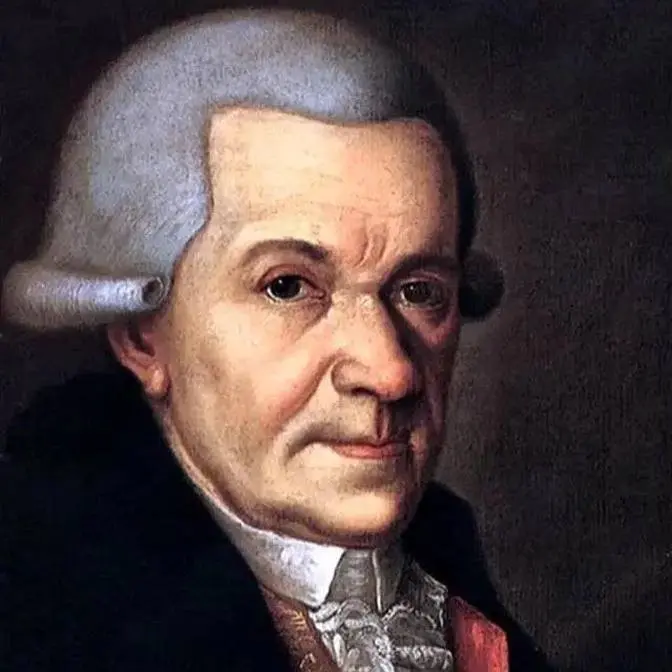
♫ Recovery project of sheet music by Johann Michael Haydn (1737-1806) and by other neglected composers ♫
Composer: Georg Valentin Röder (1780-1848)
Work: Missa in C
Software: Sibelius + Instruments samples
World Premiere: Yes
Sheet music (pdf): https://www.cpdl.org/wiki/images/d/d8/Mh-Roeder-Roeder.pdf
Sheet music (xml): https://www.cpdl.org/wiki/images/9/9e/Mh-Roeder-Roeder.mxl
Info about sheet music recovering project: https://i.ibb.co/hML4xyJ/HAYDN-M-3.jpg
---
Georg Valentin (Vincent) Röder
(Unterebersbach, 21 November 1776 - Altötting, 30 December 1848)
German composer. Son of Johann Michael Röder (1751-1838), teacher in Pfändhausen, and Margaretha (née Wehner) from Rottershausen, he received musical lessons from his father. Later he attended the grammar school of the Augustinian monastery in Münnerstadt. After graduating, he studied law at the University of Würzburg, where he also worked as organist at the Juliusspital and as a musical private tutor. Also there, he met the composer Ignaz Franz Xaver Kurzinger (1724-1797), music director at the Juliusspital, and from whom he received theory lessons. From 1801 he was employed as a cellist of the Würzburg court orchestra and from 1808 he was music director at the theater in Würzburg. After a performance of his first mass in Munich, he is said to have received from King Max Joseph a “precious golden box adorned with an excellent mosaic painting” and a grateful letter. Around 1830 he successfuly applied for the music director post in Augsburg, where he also worked with the poet Christoph von Schmid (1768-1854). In 1837 he moved to Munich, where he worked as a court music director at the royal court opera until 1842. Finally, he got the post of conductor of the collegiate and band music in Altötting, where he remained until his death. As a composer, he was mainly known by his sacred works which were very popular and widespread in southern Germany and Austria in the 19th and early 20th centuries. #ClassicalMusic