
Vincenzo Manfredini (1737-1799) - Concert choisie pour le clavecin
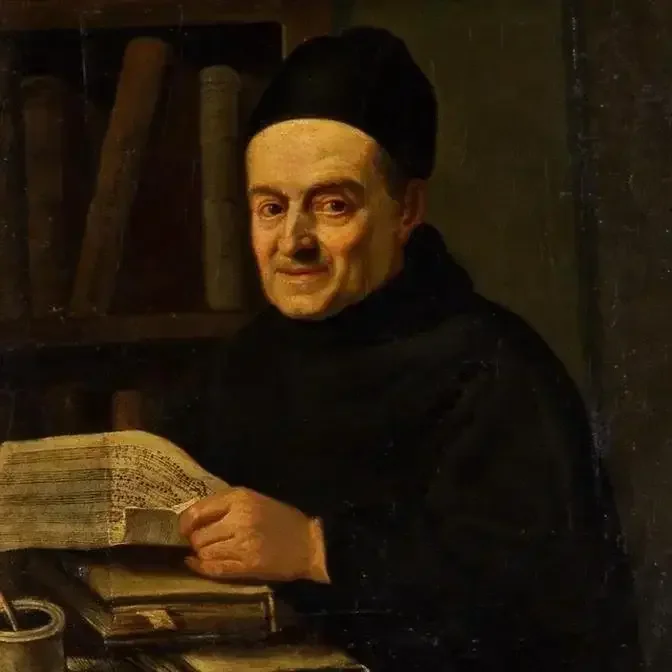
★ Follow music ► https://www.instagram.com/reciclassicat/
Composer: Vincenzo Manfredini (1737-1799)
Work: Concert choisie pour le clavecin (piano version)
Performers: Felicja Blumental (1908-1991, piano); Mozarteum Orchestra; Michiyoshi lnoue (conductor)
Concert choisie pour le clavecin
1. Allegro 0:00
2. Grave 5:04
3. Allegro 16:08
Drawing: Benjamin Patersson (1748-1815) - Palais imperial, pris du côté de midi de la Forteresse á St. Petersburg
Image in high resolution: https://flic.kr/p/2mdXyFX
Drawing: Christian Gottlob Hammer (1779-1864) - Vue du Palais Marbre et des ses environs á St. Petersburg
Image in high resolution: https://flic.kr/p/2mdTTvE
Drawing: Benjamin Patersson (1748-1815) - Field of Mars and Rumyantsev Obelisk (1806)
Image in high resolution: https://flic.kr/p/2mdXyG3
Further info: https://www.amazon.com/Blumental-Viotti-Manfredini-Piano-Concertos/dp/B000P8FHXM
Listen free: No available
---
Vincenzo Manfredini
(Pistoia, 22 October 1737 - St Petersburg, 16 August 1799)
Italian composer and writer on music. He studied music first with his father, F.O. Manfredini, and then with Perti in Bologna and Fioroni in Milan. In 1758 his brother Giuseppe, a castrato, went with Locatelli’s opera troupe to Moscow, where he stayed until 1766 as a fashionable singing teacher, later living in Bologna. Vincenzo went with him, possibly as one of the troupe. Moving to St Petersburg, he became maestro di cappella to Pyotr Fedorovich, who on becoming emperor in 1762 made him maestro of the court’s Italian opera company. Confirmed in this post by Catherine II, he composed operas and occasional works, but on Galuppi’s arrival in 1765 he was relegated to composing the ballets performed with Galuppi’s operas and to serving as harpsichord teacher to Paul Petrovich, heir to the throne. His six harpsichord sonatas (St Petersburg, 1765), dedicated to Catherine, were reviewed unfavourably by J.A. Hiller in Wöchentliche Nachrichten (21 Oct 1766). In 1769 he returned with a pension to Bologna. After two further attempts at opera, Manfredini devoted himself mainly to writing and teaching, also publishing a set of symphonies (1776) and string quartets (?1781). From 1785 to 1789 he was a contributor to Giornale enciclopedico di Bologna, a publication devoted to cultural renewal. When Paul became emperor in 1796, he summoned his former teacher, who arrived in September 1798, but took up no post and died the next year. Manfredini’s Regole armoniche, o sieno Precetti ragionati (Venice, 1775), which is in two parts, an introduction to the elements of music and to keyboard accompaniment, now appears to have been drawn substantially from a 17th-century manuscript.
His observations on the proper method of teaching singing aroused vigorous opposition from G.B. Mancini. The second edition (Venice, 1797) was much revised and enlarged with new sections on singing and counterpoint. In April 1785 Manfredini reviewed the first volume of Esteban de Arteaga’s Le rivoluzioni del teatro musicale (Bologna, 1783) in the Giornale enciclopedico di Bologna. In his third volume Arteaga reprinted extracts from this critique with acerbic commentary, leading Manfredini to publish his Difesa della musica moderna (Bologna, 1788/R), a commentary on Arteaga’s commentary. While ostensibly an episode in the querelle des anciens et des modernes, with Manfredini defending modern music against Arteaga’s charges of decadence and insistence on classical ideals, this often bitter debate is better understood as a response to changing socio-political contexts for music, including a redefinition of the social status of the composer, the emergence of music criticism, and the role of music in public life. Whether he is arguing for nature over artifice, as in his debate with Mancini, or for the progress of modern music, particularly the ascendency of instrumental music, Manfredini reveals a tendency towards Enlightenment modernism that suggests the influence of Rousseau. While in Russia, Manfredini married the singer Maria Monari, and they had a son, Giovanni (b c.1769), who later wrote a biographical note on his father. Autobiographical material by Vincenzo is held at the Accademia Filarmonica, Bologna. Vincenzo’s daughter Antonia Elisabetta (b ?1786) had a highly successful career as a prima donna during the Rossinian period. #ClassicalMusic