David, this is not some crazy, rich, whiny Asian story.
This is a crazy, talented, underrepresented refugee Asian story.
And let me tell you this, Sunisa Lee's gold medal
means so much to Asian America more than any script, TV show, or movie,
because this was not some Hollywood fake shit.
This was real life global stage.
Welcome, everybody, to the Hot Pop Boys.
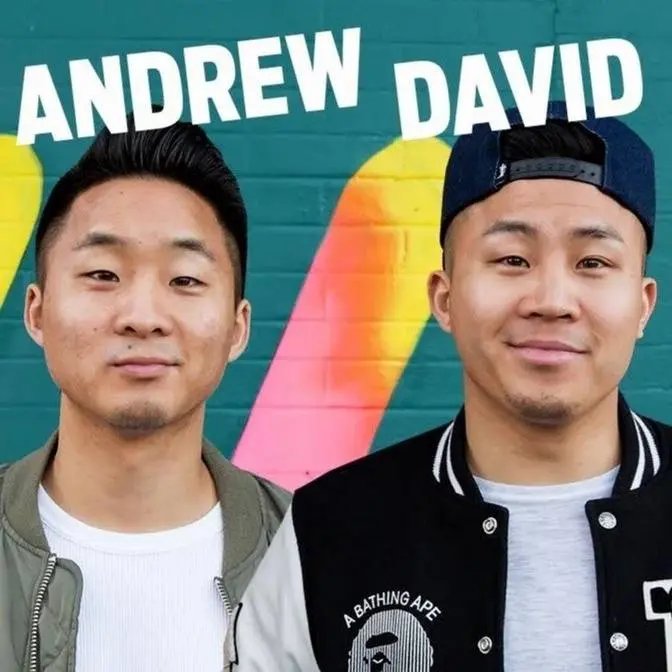
Andrew and David here.
Something big that we got to talk about.
Sunisa Lee, a Hmong American from St. Paul, Minnesota,
has just won the gold medal in what is considered the top event
of the entire Olympics.
This is setting the internet on fire, specifically the Asian internet.
I think that the mainstream people, they are covering it,
but they're almost more caught up in the Simone Biles,
sort of like white-black binary debate.
Obviously, African-Americans more supporting Simone and white Americans.
I guess I'm just painting everybody in generalizations right now
going against her for quitting.
I actually don't see that discussion happening
in the Asian American community.
We're more celebrating Sunisa.
Yeah, and so there's so many different layers to this.
You could say, oh, she's just an American girl from Minnesota.
That's great.
She won the gold.
But actually, her being Hmong is huge to this.
So let's talk about what it means to the Hmong community specifically,
what it means to larger Southeast Asian community,
because that's where the Hmongs are from,
and then what it means to Asian America and what it even means to America.
So we're going to pull it from micro to macro.
Micro to macro.
Let's do it.
I think on a Hmong American level, they
haven't had a lot of positive representation on this level,
like a real champion.
I know that Brenda Song is Hmong.
She played a lot of Chinese characters.
Obviously, Gran Torino was, I guess, more negative
because it was talking about the refugeehood, I guess,
gang aspect of that experience.
But I think Sunisa's story is amazing.
It's very 2021.
The parents are still refugees.
They built her makeshift gymnastics equipment.
The father had a tragic ladder accident and is paralyzed from the chest down.
In just a few days before she went to go to nationals, she won nationals.
She's a world champion.
And then finally, she becomes a global champion.
And by the way, real quick, I mean, when
we're talking about the Hmong community,
for a lot of people who are out there and that are not familiar,
even a lot of Asians in America are not familiar with Hmongs.
We're familiar because we grew up in the south side of Seattle
around Hmong, Mien, and Cham people.
These are groups of Southeast Asian people that do not have countries.
They don't have a set nation.
And I think that more people are kind of getting exposed to that idea nowadays.
Even smaller countries like Laos, Vietnam, they have ethnic minorities.
It's not just one group, you know what I mean?
And obviously, Hmong people, they have a history originally
from what is now modern day Yunnan, China, by the Yellow River.
And then the Han came down from the north, chased them out,
unfortunately.
I mean, not that I can apologize on behalf of anybody,
but let me apologize for it.
For what it's worth.
It doesn't mean much, but my bad, or our bad.
But I guess basically, they got chased into Southeast Asia.
And they've been existing as the non-dominant group in Laos, Vietnam,
and still to this day in China.
And they have a similar story to a lot of other Southeast Asian refugees
with the Vietnam War.
It's a very tumultuous history.
A lot of pain, a lot of trauma, a lot of death from their history.
And then they made it to America.
I mean, even America kind of gave them up after the secret war.
I mean, I don't want to get into that stuff,
but this all provides a backdrop for how amazing it is.
And you know, this group has had decades and decades,
or maybe you could argue even centuries of pain, the Hmong people.
And so for Sunisa to have this, it's almost like that's not,
they don't have to focus on the stories of pain anymore.
Those still always will be there, but this can transcend that.
I mean, that's beautiful.
And they needed that.
And I'm so happy for them as the Hmong American community.
The Hmong American community is one of those underrepresented Asian groups
that needs the disaggregation of data.
Because basically, they don't fall in line
with the overall model minority myth narrative.
Basically of Asians being all well-to-do, super educated, super hooty-toot.
Like that, that's the other side.
They're the Southeast Asian side in general.
This is it.
And not only that, it's that I think it's interesting that she's Hmong
because she's won the gold in Tokyo.
Which, if you think about Japanese as the, I guess,
most well-known, elite, advanced Asian, right?
And that is the most advanced city in the world, Tokyo, right?
But she's coming there as a Hmong American, which I guess in a way,
if she was still in Asia, she might not even get this opportunity
to compete in the Olympics because Hmongs don't have a nation
to compete in the Olympics, right?
And I think that that speaks to the beauty of America.
And I think there's so many think pieces.
They're gonna try to dissect it because it's like,
there's so many angles to it, pros and cons.
This story's only possible in America.
But you could also say that America also has a very tumultuous relationship
with the Hmong people.
And I'm just so happy that it's going up.
Because Sunisa Lee has her own day in Minnesota now.
They could just focus on this.
They can build on this positivity.
And the people in St. Paul, maybe they didn't always accept the Hmong people.
But now they have a champion.
They gave America a champion.
They gave Minnesota a champion.
By the way, this does not mean racism in Minnesota
is going to stop against Asians or anything like that.
Of course, we know that media representation is super, super important.
But it can't change everything.
But it just changes everybody a little bit.
That's what media does.
It just hits you a little bit.
And that's why it's important.
And that's why it's important to say she's Hmong American, too.
Because it's an underrepresented group of an underrepresented group.
Right.
Shout out to the Moob.
The Moob.
I believe that that is what they refer to.
They have sayings within the Hmong community
that I read about where it's like, Hmong must love Hmong,
because who else will love Hmong?
And that's like, man, that was so.
They've been ostracized in a lot of the lands that they, their homelands.
I'm not going to lie.
When I heard the quote, I was like, whoa, that's heavy.
Man, I'm so happy for Hmong people.
I know they've been through a lot.
And obviously, I can't fully speak to it, not being part of that group.
But I know a lot of Hmong people.
We filmed the Hmong food episode that went pretty viral before.
And man, media representation, I will say this.
As much as this is like, I think a lot of people
always go to TV shows and movie roles and all these careers
and associations with white people.
Sunisa Lee just came up from the dirt and just came in the game
and took it over.
She doesn't have a gatekeeper and her exec give her the OK.
It's a meritocracy in sports.
And this reminds me a lot of when Jalen came in and started
dropping 25 a game straight off the rip.
And it's like, that's why I value sports so much.
And sports is media representation, too,
because at the end of the day, sports is still
entertainment and media and effects representation.
So amen.
So happy for Sunisa Lee and the Hmong community.
You know what, Andrew?
I got to say, it made me want to announce.
What say it?
We might be part Hmong.
OK, all right.
We might be like, I think 1%.
I believe we are 1% Hmong.
We did the DNA test.
And we plugged it into some other data.
And it got really specific on the tribe
that are like 3% Southeast Asian side is probably
from our Cantonese father, who's Southern Chinese, right?
Yeah, I mean, it's close to there.
Hey, I'm not jacking it just to, you know,
just because I'm not cloud chasing.
But I just wanted to say that, you know, the funny thing is,
it's like, it felt like an apt time to just bring that up.
Hey, listen.
I know so many Hmong people that for the longest time,
they were like, yo, guys, I've been trying to explain
what Hmong is to people.
And we try to do our part, you know, with our platform
as well.
And it was so hard because they're really like,
it wasn't that much to work off of.
But when you have a star from your community,
and this is why, fortunately and unfortunately,
stars are important.
You need these high achievers to come from your community
and shed light on your identity.
And you get to speak up about every identity, not just
Asians or not just colored people,
every identity has gone through some version of this
where you have to have that famous person come out
and speak up.
And what I love about Sunisa, shout out to her.
She is unapologetic.
She says stuff that's on the top of her mind.
She's an 18 year old.
She's from Minnesota.
She don't care.
No, she know all the TikTok dances, you know,
I don't know, I didn't see, but like, I'm sure she can,
you know, I'm a savage.
You know, she is a savage.
Yeah, she is a savage.
And you know, I love that.
I think that, you know what, to speak to one more,
I guess to get more macro about Southeast Asians,
I love how authentic and organic they are.
To be honest, I do think,
and I'm not trying to make a split here.
I'm just making observations.
A lot of the East Asians in media,
which are from Japan, Korea, China,
they're from very preppy boarding school backgrounds
or elite private schools, at least the ones in media.
Obviously we didn't go to one, we're East Asian,
but like, you know what I mean?
Like a lot of the people in media
is from very bougie backgrounds.
So why are we surprised that they do bougie things
once they get even more richer off being in movies
and media and getting in that like silo?
Like to me, I'm not against it
because I don't really want to hate on people
just for being born into a private school family
and running with it
and achieving private school kid things.
Like that's why a lot of elites in society
come from private school.
But like, I'm about the kids.
Like I was reading about Sunisa's family
trying to fund her gymnastics career,
selling pho out of the garage.
Because a lot of Southeast Asians eat pho
but the whole reason they have their own version.
But like, they're selling pho,
they're trying to get the,
the whole community funded her
very expensive gymnastics thing.
And I remember seeing that growing up.
You know, like our parents,
not our parents, but I'm saying our friends' families
own catering trucks, small restaurants,
just had like stands selling strawberries.
Like just all different types of things
that's like very not part of the model minority experience.
It's very much part of the refugee, blue collar experience.
And I got so much heart for that.
And I learned so much from that.
And I think for me,
I think it's so important for Southeast Asians to see
like you don't gotta be from like,
and even East Asians that are not from like
a bougie background to see you can be from,
you can get it out the mud.
Yeah.
In gymnastics, which is not like,
it's not basketball or one of those sports that is play,
it's not a team sport.
And it's not played like, you know, in the hood.
Really gymnastics is like she,
gymnastics is a way in a way,
like for her to change her family narrative, right?
Her excelling at gymnastics
and basically now going to college
with the new collegiate rules
where she can monetize even during college.
Like she has basically changed her entire family narrative
and possibly impacted the community as well.
And I think that when you come from
such a tight knit small community,
it really impacts it and the ripple effects are crazy.
Yeah. I mean, we just had Raya drop.
And you know, I think that,
I think this is going to really shine a spotlight
on Southeast Asians.
Yeah.
They deserve it.
I think they have such interesting personalities
and to be honest, far generally to me,
far more interesting than East Asian personalities.
Honestly, because they can do the dances.
They can do the, I'm the savage dance.
A lot of East Asians can't do that or they're not into it.
We always said that the Southeast Asians,
they got the most interesting stories.
When you talk about stories from Asia
or which stories should get made into movies
or which ones should get scripts written about them.
The Southeast Asian ones are the most like craziest.
Yeah. Like I'm not like tiger tail and farewell.
I understood those movies very deeply
to my family's experience.
Cause that's, I was like, he is kind of like that,
but somebody got to tell the Southeast Asian story
and not Gran Torino too.
Like I was talking about like
in a more dope positive textured light.
Exactly.
I just like that they're getting the spotlight
and people think, you know what's crazy?
Is that she is not just making America
think more about Hmong people.
She is making the globe acknowledge Hmong people.
Think about it.
Like I said, people don't even speak English
from Denmark, Japan or wherever else.
Like, well this, yeah,
they speak English in Australia, of course.
But I was like, they're thinking
about what Hmong people are right now.
They're seeing these headlines being like,
what is this H-M-O-N-G?
Like, okay, let me just Google this, you know?
I mean, I started, you know,
we've had Hmong food before once
doing a video out in LA about Hmong food.
And since then I was yelping Hmong food
in St. Paul, Minnesota.
Cause I was like, yo, if we go out there,
these are the spots we're hitting.
I'm trying to get the boiled chicken and cabbage.
Yeah, they got the stuffed chicken wings
and the sausages and all that.
Anyway, what do you think about-
I think just for larger Asians, man,
I mean, we kind of alluded to it.
We've been kind of blending all three topics,
but it's just like, I want to see more representation
from like really regular families, you know?
Like you still see the same level of sacrifice,
even in a, you know, at just a lower income level.
And like I said, sports,
it's always been the way for blue collar people to come up.
You know what I mean?
Like to change your family's fortune,
your whole family narrative in just 18 years.
You can do it.
Yeah, Sunisa Lee did it.
She did change it for a whole community.
There's been searching for a champion.
You know, it's even beyond maybe
what they would have imagined.
And I just think that I do agree
that sometimes East Asians, you know,
not to say that their challenges
or East Asian challenges aren't valid,
but they get caught up in it
and they're not paying attention to the whole group.
And I will say it's possibly because we're Chinese,
which is more of a Pan-Asian Asian.
You know what I mean?
I guess like a lot of Asians are related to like
in some way historically to being Chinese
or whatever like that, if you really analyze it.
But like, I always cared about the whole thing.
I cared about everybody.
You know what I mean?
Like I always wanted to see everybody do good.
And that's why I'm so happy for it.
I'm going to say this.
It is time right now that the larger East Asian community,
the people who have been dominating the Asian narrative,
the crazy rich Asians, the everything like that.
And-
Like the CEOs of TikTok and Twitch
who are mostly Asian, East Asian,
they need to cut Sunisa a check
to start streaming or something like that.
It is time that the larger East Asian community
show the Southeast Asian community props.
Okay, because Sunisa Lee just did something
as a Southeast Asian that no East Asian has done.
Or any Asian, yeah.
They have never won a gold in this position,
in this event ever.
So that's why East Asians need to be like,
listen, I know that we've been pushing K-pop
or Chinese food or Japanese anime,
all this stuff on you guys.
And like, we've all been proud of it.
And everybody's been looking at us this whole time.
But you know what?
Let's shed some light on you guys.
It's your time.
I'm just saying,
there's a lot of trillion billion dollar companies
in East Asia.
Cut Sunisa a check, man.
She deserves an endorsement deal for a big check.
And yeah, and I just think that for me,
on a larger scale,
I don't know if America knew how to handle it.
Like on an America scale,
let's just bring it to the ultra macro
in terms of a national level.
I think that if you look at it,
for the longest time, you know,
you had Keri Strug, you had this girl, that girl,
they're all white.
And then it turned into Gabby Douglas,
and then it turned into Simone Biles.
And now it's like,
every face of USA Gymnastics
that's representing USA on a global stage,
doesn't, is not white.
Well, the last three, yeah.
And it may, I don't know.
I mean, it's hard.
And they don't even have white names.
Like Simone Biles is not a white name,
and I would not say that.
Well, even one of the last American ones
wasn't white right after Strauss.
She was Russian born, right?
So it's, yeah.
So anyways, but yeah,
I think that,
what does it mean to America
that the face of American Gymnastics
is now an Asian girl?
Does it mean anything?
Does it shock them?
Or are they kind of like,
ah, it's Gymnastics,
we only care about it once every four years anyways, guys.
But I'm like, this is,
I mean, you know, like we said,
it's crazy for the Asian community.
But yeah, for the non-Asian communities in America,
it's less of a huge thing.
It's a smaller deal.
I think that it doesn't fit back
to the Simone Biles discussion.
And I got a lot of love for her.
I'm like, I don't even know.
I think she's just gonna take care of herself.
That's my honest opinion.
She already won.
She did what she needed to do, by the way.
And you know, they have like backups there for that reason.
So if anything,
she was just giving the backup a chance to shine.
Like they got fill-ins.
They bring fill-ins on the team just in case that happens.
So to me, I just think that like America,
it gives America a chance to get out of this binary
where everything is white versus black,
where everything is like,
essentially has roots back to deep, deep history.
And it's like, it just offers a reprieve from that.
Some people are gonna take it as a nice reprieve,
and some people aren't gonna lean into it.
Some people are gonna be like, ah, Asian girl one.
Doesn't fit into my political narrative
that I wanted to have.
So I'll just give a quite quick thumbs up and just move on.
You know why the larger Asian American community
needs this right now?
Because a lot of people for right or wrong reasons,
and we know that they're kind of painting us
with a broad brush,
don't respect the larger Asian narrative
because they feel like we don't struggle enough.
And Southeast Asians, they go through it.
And if not for any other reason,
you gotta respect it
because it's basically making people respect Asians more.
By showing that story that Sunisa Lee
went through her dad paralyzed.
Didn't couldn't afford the little balance beam.
He built it for her.
She wins gold.
She wants to just be like a regular college student now.
And I'm like, that is a powerful story.
That story needs to be out there.
And that's one of the reasons why we're talking about it.
Because we understand what is important
to not just America, not just to Asian America,
but to certain Asian groups.
And in a way, East Asians for right or for wrong,
like I said, they get painted as like all like
privileged kids, which is not true,
but that's how it is in media.
And now you have this other side of Asia
that is getting more recognition.
When we say privileged, we're talking about
Andrew Yang, Michelle Wee, Chloe Kim.
First of all, there's a pretty long list, you know.
Yo, and I mean, you know.
Even Jeremy Lin came from a pretty good background,
to be honest, straight up.
Yeah, I mean, yeah.
Anyways, so that's what I mean to say.
I think that that is, it's so significant.
It's so significant, I cannot stress enough.
I mean, we could go on for another 30 minutes, David,
about how significant this is.
It's big, it's like, honestly,
and you know, some people are gonna be like,
these are rich.
I feel like Sunisa Lee is the real-life Raya,
the real-life one, the real-life one.
Not the make-believe, not a white writer.
Not a CGI.
Dreaming up something, doing their
archi, you know, anthropological studies.
This was it.
Real-life champion.
Hmong American, Southeast Asian American,
Asian American, American American.
I'm here for it.
I think there's a trillion things to say.
I'd love for you guys to say what it means
in the comments section below.
Share this with somebody you know.
Like I said, I think there's gonna be
100 to 1,000 different pieces coming out
in the next week or so, Andrew, about this topic.
I don't think any of them are gonna go in on it like us.
Yo, and let's be honest, man.
You could tell how passionate we were about this topic
because David's hat is flying off his head.
That's how passionate he was about this, okay?
So don't even question.
Anyways, guys, thank you so much for watching.
This is the Hot Pop Boys.
Let us know in the comments down below.
This is a podcast that we plan on doing more
and more frequently.
Please let us know if these are the type of topics
you'd like us to cover, and if you like our analysis,
please share this video.
Thank you so much for watching.
Hit that thumbs up, click subscribe,
and until next time, we out.
Peace.