
[Sheet music] August Röckel (1814-1876) - Offertorium pro omne tempore
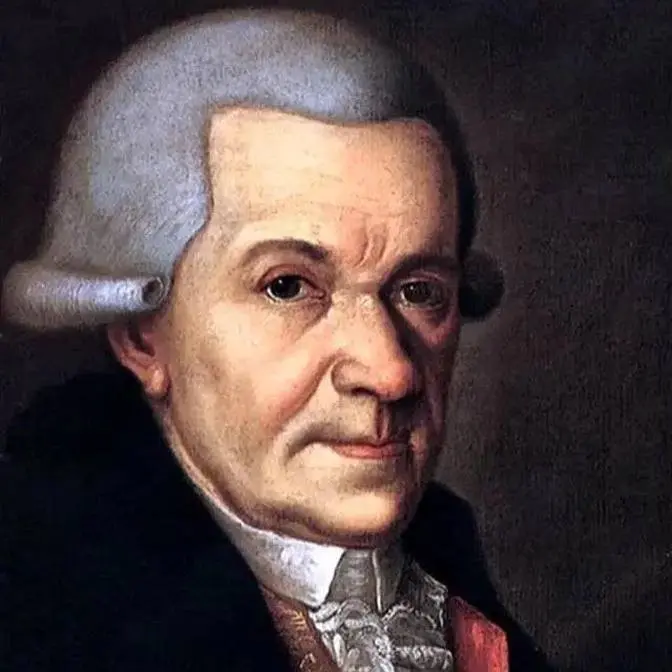
.
Consider to support this project on https://ko-fi.com/michaelhaydn
★ WORLD PREMIERE RECORDINGS ★
♫ Recovery project of sheet music by Johann Michael Haydn (1737-1806) and by other neglected composers ♫
Composer: August Röckel (1814-1876)
Work: Offertorium pro omne tempore
Software: Sibelius + Instruments samples
World Premiere: Yes
Sheet music (pdf): https://www.cpdl.org/wiki/images/f/f5/Mh-Roeckl-Partitur.pdf
Sheet music (xml): https://www.cpdl.org/wiki/images/c/cb/Mh-Roeckl-Partitur.mxl
Info about sheet music recovering project: https://i.ibb.co/hML4xyJ/HAYDN-M-3.jpg
---
August Röckel [Roeckel]
(Graz, 1 December 1814 - Budapest, 18 June 1876)
German conductor and composer, son of Joseph Röckel (1783-1870). He was taught by his father, with whose travelling company he worked as a répétiteur. He later studied the piano in Vienna with J.C. Kessler and in Paris with J.P. Pixis and H. Payer; he was also Rossini’s assistant at the Théâtre Italien. He followed his father to London, but returned to Germany in the late 1830s, serving as director of music in Bamberg (1838), Weimar (1839-43) and Dresden (1843-49), where he met Wagner. In 1839 he wrote an opera, Farinelli, which was later accepted for performance at Dresden, although Röckel withdrew it out of esteem for Wagner’s genius. Like Wagner, he was involved in the Dresden Revolution of 1848, when he abandoned music and devoted himself entirely to politics. Röckel edited the revolutionary Volksblätter, which had come into existence in 1848. After 13 years in prison (1849-62), he became editor of various newspapers in Coburg, Frankfurt, Munich and Vienna successively. It is for his correspondence with Wagner that he is chiefly remembered: Wagner’s letters contain above all valuable insights into the Ring. Although Röckel was one of Wagner’s closest friends and confidantes during the late 1840s and 1850s, they had a falling out in the late 1860s, due to Wagner’s belief that Röckel was spreading gossip about his relationship with Cosima. Röckel was the author of Sachsens Erhebung und das Zuchthaus in Waldheim (Frankfurt, 1865), as well as other political pamphlets. #ClassicalMusic