Hello from California's smallest national park: Pinnacles! This park is located east of the Big Sur area and south of the Bay Area and is famous for its rock pinnacles, California Condors (the largest flying bird in the WORLD), and caves.
While it may be the smallest national park in the state, it packs a BIG punch! We spent half a day in the park hiking the Condor Gulch, High Peaks, and Bear Gulch Reservoir trail (5.5 miles total) and in just a few hours we saw tons of pinnacles, plus gorgeous mountain and hill views, hiked up steps carved into rocks, and explored dark and narrow caves. It was one of the most fun and unique trails we have been on!
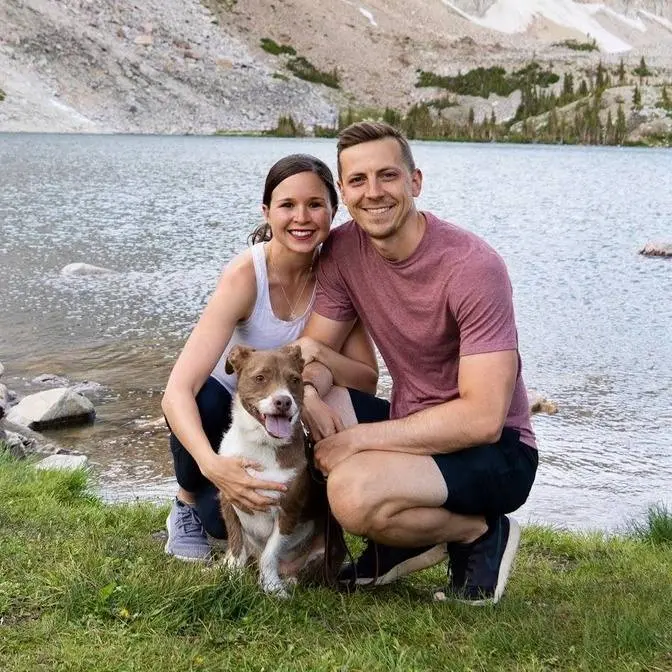
👋🏼 About us Hi y’all! We’re Adam, Kathryn, and Kona, an adventurous married couple (+ pup!) living on the road in our self-converted sprinter van! You can often find us driving all around the US and Canada, scoping out the best coffee shops, eating tacos and ice cream (we're a 5+ taco and 2+ scoop household), and enjoying nature.
We help travelers spend less time (and stress!) planning their trip and more time enjoying it! Our detailed travel guides, YouTube videos, and travel resources share the must-visit local eats, popular and off the beaten path sights, and tons of tips to make planning your next adventure a whole lot easier.
Note: We’ve linked a handful of items so you can see exactly which products we take with us. Full disclosure--if you click on these links and make a purchase, we get a small commission at no extra cost to you. We will only ever recommend products we truly love, actually use during our adventures, and think you can benefit from too!
This has been significantly more of an adventure than I anticipated.
I can't believe they let you do this.
During the last month in California, we visited three of its nine national parks,
and today we're exploring Pinnacles National Park, the smallest of them all.
Pinnacles National Park is located in central California,
east of Monterey and the coast, and south of San Jose.
There are two entrances into the park, one on the west and one on the east,
with no road in the park connecting the two.
And since we only have half a day to explore,
we're entering from the east and are going to hike a 5.5 mile loop,
combining some of the park's top trails, Condor Gulch, High Peaks, and Bear Gulch.
Long before Europeans were here, this land was home to many native peoples,
including the Amamutsun and the Shalom, who used this land for food, medicine, and materials.
In 1908, Pinnacles became one of the first U.S. national monuments by Teddy Roosevelt,
and by 2013, it became a national park.
But despite being federally managed now,
it is working closely with both tribes through indigenous land management practices.
The park is known for its namesake rhyolite rock pinnacles,
which are the result of a volcanic eruption 23 million years ago
and have been shaped over time by wind and water.
It's also home to caves, wildlife, and scenic views,
all of which we're hoping to experience today.
We made it to our first major destination on this trail, the Condor Gulch Overlook.
This overlook gets its name after a very popular bird in the park,
the California condor, which is part of the vulture family
and is one of the largest flying birds in the world.
It has a wingspan of nine and a half feet.
It can weigh up to 20 pounds, and what I think is the craziest
is that they can soar and glide for hours without flapping their wings.
They used to be found in many areas, but as people moved west,
their population diminished, and by the 1900s,
they could only be found in the mountainous areas of Southern California.
By 1987, there were only 27 left in the world,
and they were taken to zoos.
That way, they could breed safely and then be released back to the wild.
And as of December 31st, 2020, there are now 500 condors,
with 329 of them being in the wild in places like California,
Utah, Arizona, and Baja, Mexico.
There's no guarantee that you'll see condors in the park,
but we hear that the best spot to do so is in the High Peaks region,
which is where the trail will take us next.
I think we might be seeing our first condors.
We see some big birds flying up there,
and we had one fly over, and it looked a lot like it,
so hopefully we'll be able to tell for sure soon.
I saved a photo to my phone of what they look like from underneath.
That way, we could identify them better,
and they had this white on their wings and kind of the feathers.
Up under, yeah.
That's what it looked like, but I don't know.
Now they're kind of far away.
I don't know.
I bet we'll see more.
What makes things tricky is there's also turkey vultures out here,
and we've been seeing some of them up close
and being able to get a better look at them,
and we've definitely been able to confirm that those are turkey vultures that we just saw.
Not sure about the ones we saw farther away,
but as we keep going, hopefully we'll be able to see the condors.
I feel like Pinnacles isn't really a park you hear much about outside of California,
so we didn't really know what to expect here,
and it's such a unique mix of scenery.
You have all these green mountains and hills,
and then also these orange rocks jutting out.
It's just very unique.
I'm just getting all kinds of different...
It's bringing back memories or reminding me of other places.
One, Chiricahua with the pinnacles and things,
but then also, like you said, with the green and the orange,
kind of gives me like Zion vibes or like...
Yeah.
Like Utah, like southeastern Utah.
Arizona.
I don't know.
It's so weird.
It's very, very different.
It's really beautiful.
We're going up there where those railings are.
This part of the trail has some really cool steps in the rocks and railings,
and we just got our first glimpse,
and I can't believe we're going up there.
Oh wow, this is so steep.
This is basically like a ladder more so than steps.
We just notched out into the rock.
Such a unique feature.
This is fun.
This is awesome.
This part's tough.
You like have to lean over this drop off here to get by.
This is tight.
It's gonna get low.
It's not working either.
Oh no.
That's a condor.
It has the white in certain parts underneath it,
but not the whole bottom of the wing.
Well, bummer.
By the time we got the lens swapped out to be able to zoom in on him,
we're pretty sure he flew away because we just never saw him again.
We have made it to the Bear Gulch Reservoir,
and it's one of Pinnacles National Park's most iconic sites.
It was originally built in 1935 by the CCC mainly to prevent flooding,
but also for aesthetic reasons,
and unlike Barker Dam and Joshua Tree,
this dam has water,
and it is just beautiful with the water there surrounded by the rocks.
It's a gorgeous spot.
No, no, no.
Someone's trying to steal our sandwich.
For the final part of the hike,
we're about to enter Bear Gulch Cave,
which is one of the many talus caves here in the park.
Talus caves are openings between boulders piled up on mountain slopes,
and this one is thought to have been created
when rocks filled an existing canyon back during the last ice age,
and in the 1930s, the CCC built steps inside so you can walk through it.
We're here, and it's very dark,
so we brought our headlamps so we can go explore.
This cave is home to a colony of Townsend's big-eared bats,
which are a sensitive species and are required to be protected here in the park.
There's two caves, an upper and a lower.
The upper is rarely open to the public,
and the lower one is open most of the year,
but is closed mid-May to mid-July so that the bats can raise their young.
I'm not totally sure,
but it looks like we're only going to be able to explore the lower one today.
These boulders are massive.
We're a tad confused on where to go.
There's not the best signage,
and we're not in a cave anymore,
so I think there might be more caves up ahead.
All right, I think we made a wrong turn,
so back into the cave we go.
We got pretty turned around in here.
It's not very clear where to go,
but we think we're going down here.
There's this kind of great fencing area.
I think that actually might be the upper cave.
I think it might be open because there's a door that's open,
but there's no one around.
This was a really busy area,
and then suddenly when we got lost, everyone left,
so we're gonna hope this is right.
Oh, yeah.
Yeah, okay.
Okay, we found it.
Oh my gosh, this is tight in here.
Yeah.
This has been significantly more of an adventure than I anticipated.
This is the kind of cave crawling I'm not.
Yeah, this is what you hate.
I like it.
I just don't like feeling like we're getting lost.
You're gonna go down to the left.
This is proper cave exploring.
I can't believe they let you do this.
Okay.
Man, this is down in here.
That did end up being a lot of fun,
I think, looking back on it.
Not in the moment.
It was just way tighter and sketchier than I thought it would be.
We'd read that, like, it's really narrow,
and you might bonk your head,
but I just can't believe they actually let people just freely go in here.
So we think the cave that we just came through is the upper,
which, like I said earlier, is rarely ever open,
so that is really cool,
but we've still got a little ways to go.
We thought we were done.
That's so cool.
This cave is definitely way less rugged than the one we were in before.
It has actual stairs and handrails,
so much safer,
and you can actually bypass the other one if it is open,
and you don't want to use it.
You'll kind of go to, like, a T,
then you can go on this, like, graded bridge,
and get back onto a regular trail,
if the one we did first is not for you,
which Adam's like,
why didn't I know that?
We made it out alive!
I don't feel like we did a very good job filming that experience,
because it was really dark,
we had people behind us trying to pass us,
so we just had to kind of move quickly,
but that was incredible.
One of the coolest features on a trail that we've ever done.
I don't know if Adam totally agrees,
but it was so fun to climb in there,
and I'm just so glad that we got to do the upper cave,
and the lower cave,
so we think at least.
That was just such a special experience.
Like I've always said,
I do not like going in caves,
but that one maybe kind of opened me up
to maybe trying a little more adventurous cave exploring.
All right!
Yeah, after successfully going through that,
I'm feeling pretty confident about it.
Indiana Adam Jones!
It's a tunnel!
We thought this trail was basically over,
but it just keeps having surprises.
That may have been a quicker national park adventure,
but it packed a huge punch,
that one hike alone had probably more unique and fun features
than any trail we've ever been on.
We had amazing scenery the entire time,
and we saw a little bit of wildlife,
mostly just hungry squirrels,
but we did see one condor.
And while there is a whole other area of the park to explore,
it was going to get a little warmer this afternoon,
so we couldn't leave Kona Bear any longer,
but it was so cool that we were able to see so much of the park
in just a half day's adventure.
And to end this adventure,
we found Snickers ice cream bars!
I think they're melted, but...
Oh no, oh gosh.
Not for you!
Oh, it's really broken.
That's okay.
Don't eat it!
No chocolate, no chocolate!
Okay, well...
But I want a bite.
Okay, cheers!
Mine's falling apart!
Still good even melted.
What makes things tricky is there's also a turkey...
Turkey...
Turkey vultures.
I've been practicing some new dance moves in the van.
Oh, that's a good one!
What was the other one I did?
I was trying to do like the...
I don't know how to do that one.
The stanky leg?
Kind of, but it's like the...
The not...
The fanky, it's the fanky leg.
Oh yeah, the Bernie.