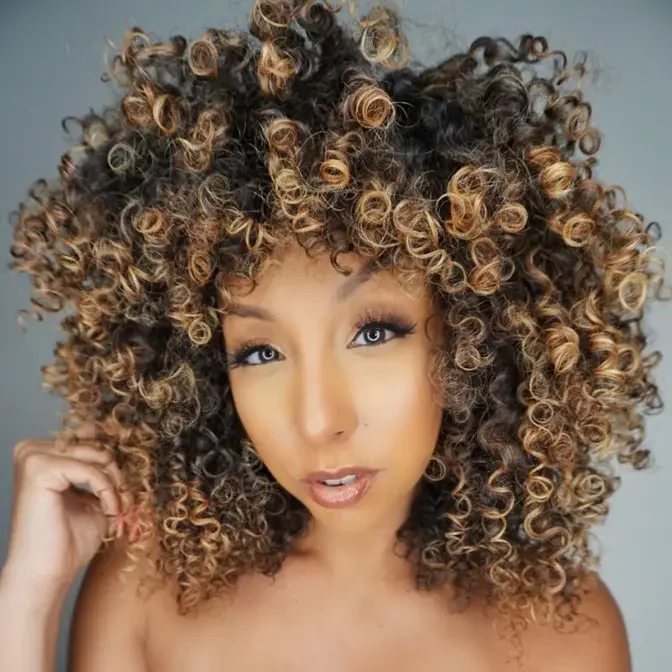
Let's talk about this Zendaya controversy because she wore a 4C Wig for a photoshoot for her 25th birthday. People on twitter are MAD!! Why? Let's talk about it. Leave your thoughts in the comments below!
Follow me on IG, Snapchat & TikTok for DAILY laughts & beauty tips @MzBiancaRenee!
Please LIKE and SUBSCRIBE for more videos! I post new videos every Sunday at 6AM PST.
*Some affiliate links are used, which means I may receive a commission should you decide to click that link and make a purchase. My content is 100% not influenced by brands, PR products received, usage of affiliate links, or brand partnerships.*
Follow me on TikTok @MzBiancaRenee
Follow me on INSTAGRAM www.instagram.com/MzBiancaRenee
Follow me on TWITTER www.twitter.com/BiancaReneeToday
Hey girlfriends, I'm Bianca Renee and you're watching Bianca Renee Today and today we're
gonna get into a little sticky of a topic, a little debate that happened on Twitter this
past week.
So what happened was Zendaya, the actress, she wore a 4C wig for her photo shoot for
her 25th birthday and apparently black Twitter wasn't feeling it and they had some things
to say.
Now if you don't know what black Twitter is, it's kind of like, I mean we kind of made
up for black people talking on Twitter.
Now it's just called black Twitter.
I didn't make it up.
That's just, it is what it is, but I found this very, very interesting before I give
my opinion and share yours that you guys shared with me on Instagram.
Let me just read you what I found on Twitter.
Well first let me show you the picture.
Here's the picture from her photo shoot for her birthday, rocking an afro.
Some people had tweeted, our genetics aren't a fashion statement because we don't choose
them, they're given.
This was a lot.
And no shade to her, but do better.
I hate when people say no shade and then I throw shade.
It's annoying for them to be chosen or accepted because they're on a specific Western digestible
version of us.
Nah, she wrong for this.
Why is she a biracial wearing a 4C wig for political black performative actions?
This was super exploitative.
I don't want the afro to be associated with activism.
Black women need to gatekeep their hair texture.
So it was kind of interesting that people were kind of claiming that this was kind of
like a cultural appropriation thing when afros are definitely a part of black culture.
But here's the thing, Zendaya is literally black.
She is half black.
Her dad is black.
She's black.
I don't know if you can culturally appropriate your own culture.
I don't know.
I thought that was a stretch and this could go into the whole light skin versus dark skin
thing.
Type three hair versus type four hair like it's getting really nitty gritty and it's
just gonna I don't know.
I just don't like this inner controversy even within black culture like this isn't Twitter
having a problem.
This is black Twitter having a problem.
And we recently had a whole debate about people wearing their bonnets out in public and the
argument was people need to stop policing black hair and stop telling black women how
to rock their hair.
Yet now this is black Twitter talking about another black girl's hair.
Let me read some more tweets.
Someone else said, I thought y'all wanted afros to be represented in a good way.
This was not activism.
It was a fashion statement.
Plus it's just hair.
Someone else said, what's the difference between Zendaya wearing an afro wig and you wearing
a 30 inch straight wig?
Everything is not a problem.
I promise.
This whole Zendaya hair situation is dumb AF because anyone who is full black, biracial,
dark skin, light skin can have 4C hair.
How y'all gonna get mad that she's wearing an afro but y'all wear weaves that's not even
4C.
Not y'all mad at Zendaya for wearing an afro wig when half of y'all too afraid to rock
your natural afros.
I didn't say it.
I'm just reading Twitter.
So yeah, I just found this to be a very interesting topic that I really wanted to hear your input
on.
So feel free to leave the comments, your thoughts below in the comment section.
Keep things nice.
Let's not, you know, have any fights happening down there, but just want your honest opinion
because I will admit, even I being a biracial girl, I'm mixed with black, white, bunch of
other stuff, but my dad is very black with a very black afro that he rocked at one point
and even I was thinking like, I forgot what it was, but I was like, I just love volume.
You guys know that.
And I think an afro is a beautiful hairstyle and I just love the big volume because I can
pick my hair out as much as I want and I can get it pretty big.
Like this is as big afro-esque as my hair can get.
But even this isn't still like a real, true, legit afro in my opinion.
So I was thinking like, what if I wore an afro wig that was like a straight up 4C beautiful
afro wig?
And I even like paused for a second, like, would that be right?
Because I was like, what does it, what do I mean, like, is that right?
I'm literally half black.
But I know as these tweets have proven that people would be mad because I guess I'm not
black enough.
I'm not full black.
So I can't rock a different hair texture.
Like I don't know.
I think things are just weird because we can go down the spectrum of curl, curl types,
but it's like, we're not allowed to go up for some reason.
Like if you have an afro, naturally you can wear a wig of my texture.
You can wear a wig that's straight and it's okay.
I don't know.
Do you guys feel this way?
If a girl that has straight hair wears a curly wig, like that's just my texture, is that
still a problem?
Or is it just if we go into type four or if somebody has wavy hair and goes to a curly
type three hair, is that also a problem?
Or is it just type four?
I don't know.
I, I think it's getting a little tricky.
So I kind of had this debate with my husband cause he's always like my voice of reason
and I think he gives, you know, good, good opinions.
So I was like, okay, okay.
Why is it that it's cultural appropriation to wear afro but not if you're black and you
wear straight hair?
And he explained in a good point that it's because of the negative stigma that's always
associated with black hair.
For example, he went to a middle school, high school, it was like one of those schools that's
like all the grades.
As a black man, he had cornrows in school and I think even an afro, I think the cornrows
were the problem.
And he got pulled into the principal's office and was told that he could not wear braids
in school.
It was against like the dress code and the school rules.
And it was, I think they even said it was gang affiliated.
It was a gang affiliated hairstyle.
Like anytime you tell them the story, like this is wild.
This is in California.
This is the nineties.
And he was told as a black kid that he cannot wear braids because it was like gang affiliated.
So then he ended up shaving his head eventually because they were literally threatening to
like kick him out of school or they were going to cap his grades.
So he was just going to basically fail if he didn't do something about his hair.
This would be, I mean, I don't know if they're still doing this at the school, but this sounds
wild now in the year 2021.
He then shaved his head and then he was told that his hair was too short and that that
was also a problem.
So it's just like, so the problem is like he can wear braids or anybody could have braids
and it could have like a negative stigma or maybe you just wore your natural hair to work
and it was considered unprofessional or unkept.
And there's always been like a negative thing about black hair.
It's too big, it's too kinky, it's too this, it's too that.
But then let's say a celebrity of a non-black descent decides to wear braids.
Now it's, oh, it's such an exotic look.
It's so stylish.
Everyone loves it.
That's the problem.
It's a problem that one culture can get bashed for it and then another can get praised for
doing the same thing that they stole from another culture.
And that's what makes you go like, okay, I get it.
Especially if you're claiming that it's like your thing.
If you did this hairstyle, you give it a new name and now it's like your thing.
You're not getting any credit to the actual source of the style of the culture.
That is definitely where it becomes a problem.
Another example could be like Kim Kardashian.
She was going to create her line called kimono and then the whole Asian community or just
people with a brain were like, um, no, you can't just call your company something that's
based off of a traditional gown in our culture and it has nothing to do with our culture
and you're not giving credit to where you even got the name.
Like there was just a total disconnect and that's where people have an issue because
now you're just stealing something from someone else's culture that has a really relevant
meaning and you're just kind of making it your own thing.
So that, that I understand that is where it's definitely just like, it's just insulting
at that point to know that if you wear your natural hair or you wear your braids to work,
it's an issue.
But then if someone who's not black does the same exact thing as you and they don't get
any slack for it, that's what kind of makes you raise an eyebrow.
Let me, let me just, let me just play both sides.
We also want, I think the ultimate goal would be for black hair to be known as the most
beautiful hair in the world.
And in order for it to be the most beautiful, the most accepted, it has to be the most popular
and something to be most popular means everybody wants it.
So I guess if you want Afros or black hair or curls to be the most popular, it would
be the biggest sign that everybody wants to have this type of hair now.
It would be a great thing.
I would love for everyone to love curly hair.
I would love to just completely lose the stigma of any type of black hair being bad or any
association, anything negative because it literally just grows out of your head like
that.
We have no control over the hair that grows out of our head and that's what makes us unique.
That's what makes it beautiful.
Period.
So how do we get there?
How do we make like a nice transition to where everybody wants Afros?
Like right now, everybody can have straight hair and it's not a problem.
So if that's not a problem, how do we make Afros not a problem or how do we make curly
hair not a problem?
And it's just kind of like, like I could tell some of you guys are like, no, I don't want
everyone wearing Afros.
And I get that.
Like it's, it's tricky.
And I see this even when I get braids.
Every time I post a braid video, one of my most common comments is, so I'm not black,
but my hair is really crazy.
It's really curly.
Am I allowed to get braids?
Is it inappropriate if I get braids?
Like people always ask me that.
I don't have all the answers.
And at the end of the day, I can literally be like, wow, I love this apple.
It's so yummy.
And people will comment like, wow, you're not going to talk about oranges.
Oh, so you hate oranges.
Wow.
Bianca hates oranges.
And that's just kind of how it goes.
But I was even like talking to my stylist about this and we kind of felt like, okay,
you have really curly hair.
You're going on vacation.
You want to try braids.
It's a beautiful style.
Obviously, you go to a black stylist, you pay a black owned business and she does it
for you.
And you understand that you didn't create this new braid look.
This is not a new look.
You bring in an inspo pic of Beyonce, like, you know, you're getting this from someone
black.
Do I have a problem with that?
I do.
Because I understand why you would want braids because it's a beautiful hairstyle.
I understand why you would want curly hair.
And even I would understand why you'd want a big afro because of the volume and it's
just like, it's such a look, but we also have to be careful because it's, it's also more
than a look.
It also was used as a form of political activism in the seventies with Black Panthers.
It was to make a statement about a very important issue at the time.
It was, it was more than just fashion.
So I don't know.
What do you guys think?
Like, it's kind of like, as long as you understand the history and you understand that you didn't
create this and you know where it came from, I feel like it should be okay.
But at the same time, if someone passes you on the street or they see your picture on
Instagram, they're not going to be like, Hey, so tell me why you got braids.
Tell me the history.
Prove it to me.
Prove it to me that you like own and like deserve this hairstyle.
They're not like your friends might know your heart.
Your family might know, you know, that you're not just doing this for clout.
Like you just genuinely love the look, but at the end of the day you're going to make
someone upset.
So you could, you could get braids.
Just know that you're probably going to piss off somebody.
Like it's just literally inevitable.
But I want to know your opinion so much so that I just asked you on Instagram, what do
you guys think about this Zendaya situation?
And I think you guys all passed the vibe check.
I'm going to just say that right now, but let me read you some of the responses I got.
I mean, 4C girls were 3C wigs.
So shrug.
Skin tone and hair texture have more to do with genetics.
So was black Twitter being racist?
Aren't Afros basically the epitome of cool?
Why deny her a chance to feel awesome on her birthday?
I like that one.
People wear straight wigs, wavy wigs and curly wigs all the time though.
She has every right to wear it.
I don't see a problem with it.
And I'm a dark skin type 4 natural.
That's the opinion we really need to hear from.
I want to hear all your opinions, obviously in the comments, but especially if you are
a black woman and especially if you were someone with type 4 hair, I would love to hear how
you would feel about that.
Do you feel like, Hey, I know my 4C hair is beautiful and I understand why everybody else
would want to rock it.
Or do you feel like, no, I always get messed for my hair and it's always a struggle and
it's not fair for you to be able to just put it on and take it off when I have to live
with this every day.
Let me know.
People are saying it's wrong because she isn't wearing her correct hair texture.
But with that viewpoint, women with 4C hair shouldn't be wearing wigs that are of another
hair texture like they usually do.
Biracials can have 4C hair.
Hair type does not equal skin color.
That is very true.
I had to start following someone on Instagram.
I think she's black and Asian, but she actually like just feature wise, she looks Asian, but
she has an Afro.
And I think she looks so dope and I feel like that's not something you see very often.
But to see someone who looked Asian with an Afro, like it was a whole vibe and that's
literally the hair that grew out of her head.
And I bet you people walk past her all the time like, wow, I can't believe she would
do that.
Cultural appropriation, dah, dah, dah.
Little do they know that that's literally how she was born.
You never know people.
People are just so quick to judge.
When we wear straight hair wigs, it's because we feel pretty with them.
Is it wrong to feel pretty with 4C hair?
I say, absolutely not.
You should feel pretty with 4C.
It's a shame that a biracial woman cannot acknowledge all aspects that make up her identity.
I agree.
All right, here, here's a switch up comment.
Someone said she's tone deaf.
Women with 4C hair have to live with having 4C hair.
They can't just take it off.
Here's another one.
I'm sick of biracial people being too white to be black and too black to be white.
We're both and can celebrate both.
That's the beauty of who we are.
Stop putting us in a box.
Oh, she said what she said.
And I definitely get that all the time.
I often feel like I'm either not white enough to be white, not black enough to be black.
I'm not trying to play the victim like, oh, woe is me.
Because even I know that I have certain benefits to my life for being mixed.
And I'm not going to like even put down the struggles that people that are fully black
have to deal with.
Like, it's just really not about that.
But different people have different struggles.
And I don't think it's right to say that one person's struggle is more than another or
more important than another, because we only can experience what we know.
And I think it's important to acknowledge the different struggles that other people
are dealing with.
That's how you are empathetic to other people's situations.
And I think you should be able to put yourself in other people's shoes.
But I also don't think you should belittle someone else's struggle because it's different
than yours.
Why do they think so bad of it, though?
I don't like when people shame others for their good intentions.
And I don't think Zendaya was even trying to like make a statement.
It wasn't like a political activist type of movement.
I think it was just a creative choice that she wanted to rock on her birthday.
And I'm like, I don't think it literally went past that thought, like red lipstick or pink
lipstick, Afro hair or straight hair.
Like I think it was just a creative choice.
Who cares?
Stop gatekeeping hair.
That part.
No one says a thing when people wear straight hair wigs to the floor.
Why is this different?
And that's another point that I brought up with my husband is that he was saying like
it's not the same that someone, let's say white, is wearing an Afro versus someone black
wearing straight hair because black people with straight hair often had to straighten
their hair because that was the only way for us to fit in or be business appropriate
or special occasions.
Like we had to because we were told to straighten our hair because that was the accepted look.
So there's a difference there.
So you're choosing curly because you just can and it's like a fun hairstyle for you.
But if you have curly or kinkier texture, you were told that that was not OK and you
had to make it straight.
And to this day, we still have people that refuse to rock their curly hair because they
either one don't know how to do it.
They think it's too hard.
Their family members told them that it's not appropriate.
Their work told them it's not appropriate.
Like we still are struggling with this.
And it's just it's a negative stigma going one way, but just a fun decision to go the
other way.
Oh, so in conclusion, I don't see a problem with Zendaya wearing a 4C hair wig.
That's just me.
That's my opinion, especially because she is literally half black.
Black is part of her culture and it is possible for her DNA to have given her that actual
hair.
We see it all the time.
Just because you have lighter skin does not mean that it is impossible for you to have
a tighter curl pattern.
That's just the facts.
Now, if she wasn't black at all, I could see there being more of a controversy there.
And then you kind of have to feel like, well, what's the intent?
Are you claiming that this is all you?
This is your new hip style or are you doing it for a certain like political reason?
I don't know.
It just it raises more questions.
I just I don't know.
The whole conversation kind of makes me uncomfortable, especially being mixed, because I get it.
I get what it feels like to feel like you're not black enough or you're not white enough.
Like it's definitely a thing.
I don't know.
I want to know what you guys think.
At what point is it a problem and how do we fix it?
How can we just make all the beautiful things of black culture like popular enough to be
for everyone, but to where it's not like taking away from black culture or appropriating it?
How do we change it from appropriating to celebrating?
That's what I want to know.
How do we get there?
What are the proper steps?
And do you believe that it's OK for someone to get braids if you're not black?
And if you say, oh, well, as long as they know why they're getting it or like the history
behind it, how are you really going to know if they know all that?
Like if you walk past someone at the store, how are you going to really know if they know
the history?
Are you going to question everybody that hasn't like drilled them on the history lesson of
braids or black hair?
Where do we draw the line?
And do you think it's right for a culture to like own a hairstyle like this is ours?
No one else can do it.
And if someone can, what are the proper steps to do that?
Let me know.
Thank you all for your input on Instagram.
I loved hearing all your different opinions.
Leave your thoughts down below on this very interesting topic and let us know how you
think we can grow from here.
If you enjoyed this curl talk, make sure to leave me a comment and let me know.
Give me a thumbs up and subscribe so you don't miss any more of my videos.
I post new videos every week.
You also follow me on Instagram, TikTok and Twitter at Miss Bianca Renee.
I'll see you guys next time.
Thanks for watching Bianca Renee today.