
Bernard de Bury (1720-1785) - Quatrième Suite (1736)
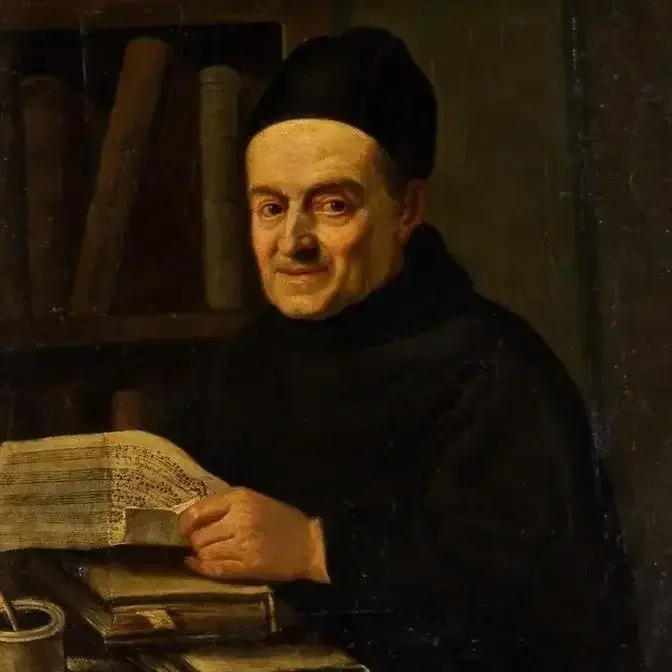
Joyeux anniversaire Bernard de Bury! 🎹🍷
Composer: Bernard de Bury (1720-1785)
Work: Quatrième Suite (1736)
Performers: Jory Vinikour (clavecin)
Quatrième Suite (1736)
1. La Brillante 0:00
2. La Dampiere 1:50
3. La Michelon 5:04
4. La Jeunesse 6:16
5. Chaconne 7:44
Drawing: Anoniem (18th Century) - Gezicht op de stad en het Paleis van Versailles
HD image: https://flic.kr/p/2nEtMZH
Further info: https://www.amazon.com/Premier-livre-pieces-clavecin-BURY/dp/B000CS4L46
Listen free: https://open.spotify.com/album/6HMAhDv2GjZoPpPqxmzqYA
---
Bernard de Bury [Buri]
(Versailles, 20 August 1720 - Versailles, 19 November 1785)
French composer. The son of Jean-Louis Bury, ordinaire de la musique du roi, he came of a musical family, many of whom held court appointments. He was a pupil of his father and Collin de Blamont. At about 15 he published his Premier livre de pièces de clavecin, five suites in the style of François Couperin, and at 19 he composed the music for a three-act ballet produced by the Duke of Tremouille. On 25 November 1741 he bought for 6000 livres the reversion of Marguérite-Antoinette Couperin’s post of keyboard player to the chambre du roi. In 1743 he was commissioned to write a three-act opéra-ballet, Les caractères de la folie, for the Paris Opéra; the following year he married a niece of Collin de Blamont, who assured him in a note of 27 February 1744 of the reversion of his post as maître de chapelle and also of his patronage. In 1745 Blamont suggested to Bury that he compose a divertissement in honour of the victory at Fontenoy; as a result the five-act tragedy Jupiter vainqueur des Titans was performed in the Grande Ecurie at Versailles for the dauphin’s wedding on 11 December 1745, being acclaimed as the highlight of the festivities. In 1751 Bury was given the reversion of Rebel’s post as surintendant de la musique du roi; he later relinquished the position to Pierre Berton and then to François Giraut for a sum of 10,000 livres and an annuity of 1000 livres, payable also to his widow and children. He was commissioned to edit the operas of Lully, and in May 1770 he collaborated with Dauvergne, Rebel and Francoeur on a revival of Persée for the marriage of the dauphin to Marie Antoinette.
He had earlier composed a new prologue for the same opera, of which the Mercure de France (March 1747) remarked: ‘L’ouverture, qui est dans le goût moderne, passe, avec raison, pour une des plus belles de ce genre. Toutes les paroles sont fort bien exprimées, il y a un Choeur très-beau, et les symphonies sont agréables, mélodieuses, pleines de tours de chant heureux, et faciles à danser’. From 1779 he received a royal pension, and in June 1785 he was ennobled by Louis XVI: he died little more than five months later. While Bury’s early works are in the style of Lalande and Collin de Blamont, his later compositions show the influence of Mondonville and Rameau, especially in the descriptive instrumental symphonies. Although rather conventional in melodic invention, Bury excelled in dances and in his treatment of the orchestra, notably when writing for flutes and bassoons. Almost all his works were very successful: the divertissement La nymphe de Versailles was repeated at the personal request of the queen, and the third entrée (‘Les caprices de l’Amour’) of Les caractères de la folie (which the Mercure of September 1743 stated to be ‘sans contredit, la plus belle de ce Ballet … elle a parû trop courte, quoiqu’elle soit une des plus longues du Théâtre Lyrique’) was selected together with ‘Les Incas’ from Rameau’s Les Indes galantes for a gala performance in March 1744. Only the pastorale Titon et l’Aurore (1750) appears to have had little success: according to the Mercure of April 1751 ‘l’ancienne et grande reputation de M. Roy; les charmes de M. Jeliotte et beaucoup de fort bonne musique répandue dans cet ouvrage, n’ont pû le faire réussir’. #ClassicalMusic