
[Sheet music] Christlieb Sigmund Binder (1723-1789) - Sonata (V) per il cembalo
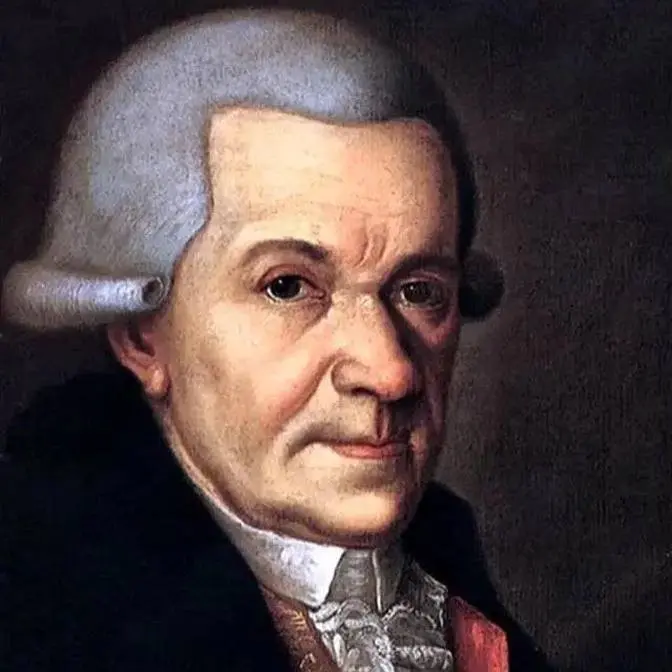
.
Feel free to support this project on Patreon ► https://www.patreon.com/paung
Or consider to support me with a cheap coffee ► https://ko-fi.com/michaelhaydn
★ WORLD PREMIERE RECORDINGS ★
♫ Recovery project of sheet music by Johann Michael Haydn (1737-1806) and by other neglected composers ♫
Composer: Christlieb Sigmund Binder (1723-1789)
Work: Sonata (V) per il cembalo, ICB 5
Software: Sibelius + Instruments samples
World Premiere: Yes
Sheet music (pdf): https://www.mediafire.com/file/arncb3qrv9yakls/BINDER-Sonatas.pdf/file
Sheet music (xml): https://www.mediafire.com/file/rdzxan0btjaevgc/BINDER-SonataV.xml/file
Info about sheet music recovering project: https://i.ibb.co/hML4xyJ/HAYDN-M-3.jpg
---
Christlieb Siegmund Binder
(Dresden, bap. 29 July 1723 - Dresden, 1 January 1789)
German composer. The son of an oboist, he probably received music instruction as a Dresden choirboy from Pantaleon Hebenstreit, to whom he was referred by the court in 1742 to learn his teacher’s dulcimer-like invention, the pantaleon. It was as a pantaleonist that he became a court musician in 1751, but he also performed as a harpsichordist. In 1764 he became second organist to Peter August in the court’s Catholic chapel, and he was first organist from August’s death in 1787; both were active as harpsichordists in Dresden’s public musical life. Most of Binder’s career took place in the reign of Friedrich August III, an amateur musician, and his compositions reflect the court’s active interest in keyboard and chamber music. His extant works show a mixture of Empfindsamkeit and earlier Baroque elements, although they require greater virtuosity. The intense slow movements and the concentrated development of thematic material echo the style of C.P.E. Bach, but the keyboard figuration and choice of genres hark back to J.S. Bach; similarly, exact gradations of dynamics are interspersed with Baroque echo effects. Although Binder was a prolific composer, his influence was virtually confined to Dresden; few of his works were published in his lifetime. Binder had two sons who were also musicians. August Siegmund Binder (1761-1815) was an organist and composer who became first organist of the electoral chapel on his father’s death in 1789; he composed harpsichord sonatas, organ preludes, cantatas and sacred music, but only the preludes have survived (D-Dl). Carl Wilhelm Ferdinand Binder (1764-?) was an instrument maker in Weimar who specialized in harps. #ClassicalMusic