
ExclusiveWe Need to Restore The Traditional Ways of Education | Marilyn Torley
279 Video Views·Nov 1, 2023
How much has America’s Education System changed in past 20 years? What are the impacts on teachers and students? What should real Education be like?
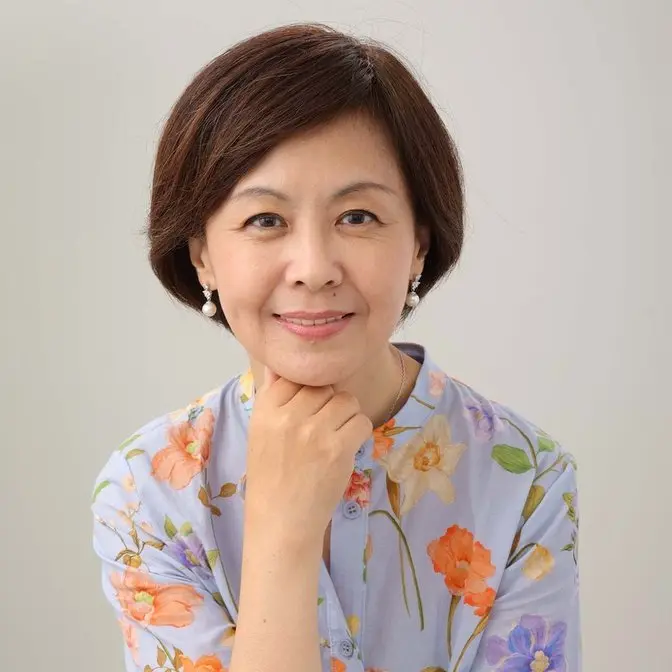
In this episode we interviewed Dr. Marilyn Torley, a retired principal from New Jersey public school system with 25 years of experience, who shared her unique perspectives on these important questions. Dr. Torley is currently co-principal of Northern Academy at Middletown, New York.
Hi, welcome to Focus Talk.
Today we're going to have a conversation with Dr. Marilyn Torley
about America's education system.
Dr. Torley is a retired principal from New Jersey Public School System
with 25 years of experience.
She's currently co-principal of Northern Academy at Middletown, New York.
Hi, Marilyn. Thank you for coming on to our show.
Hello, Jenny. It's great to be here. Thank you for having me.
Great. Thank you.
So lately we have invited different people to our program
to talk about America's education system.
Last time I invited Professor Nicholas Giordano
to share his experience and thoughts on this issue.
And he gave a very interesting example in the program.
He said he gave his students a citizen's test and most failed.
Then he gave them Russian Constitution to read
and pretended that it was U.S. Constitution
and almost no one recognized it.
Later he asked his students why
and they said that they were never taught it.
So essentially these students were never taught
or asked to read the U.S. Constitution in middle school or high school.
Now, Marilyn, you have decades of experience teaching in the K-12 system.
Why was that the case and do you see a problem with it?
Well, I have to be quite honest with you.
I believe that his students were absolutely being honest and truthful with him.
And if I had to share with you what has happened over the last 25 years,
I'd like to begin with my own experience back in the 90s when I became a teacher.
Sure.
So in the 90s there was this traditional way of being within a classroom
where the curriculum was based on the local needs of the community.
And whatever the curriculum was, we as classroom teachers
had the time to really go in depth with the students in regards to all subject matters.
And students were inquisitive and they were creative, as they are now.
But we as teachers had much more time within the classroom
to actually delve into things that they might be interested in.
For example, I remember in fourth grade we were teaching about the rainforest.
And the students were just so excited about the fact
that animals lived at all different levels of the canopy.
So a lesson that probably would have taken maybe three days
ended out to be maybe five or six days
because we were able to really delve in and allow the students to do research
and they were excited that this animal was up on the top of the canopy,
whatever it might have been.
But it allowed for teachable moments.
So what happened then in the early 22, I think it's 2002,
there was an act called No Child Left Behind.
And this was a mandate from the federal government that said
we really want states to focus their curriculum on math and reading.
And with that mandate, and states wanted to use that funding to support that idea,
things changed in the classroom.
And the standardized tests became a real focus.
The Common Core Standards came in, which basically said
students had to know certain things at certain grade levels
for this idea that consistency would happen across the nation.
And that whole ability to have the teachable moment ended
because there wasn't enough time.
And because the money didn't really, the federal funding did not connect
to the amount of incentives that the states had to do,
many of the other subjects, such as history, science, foreign languages,
no longer had, because they weren't tested,
they weren't given the time in the classroom.
Math and reading became the focus.
So back in the 90s, at that time, did you teach Constitution,
Americans Founding Principle in, let's say, history class or other?
Yes. Yes, absolutely.
And we used what is called the primary source.
We'd actually have copies of the Constitution
that the students would have in their hands.
And again, it was a very traditional way of teaching
that became lost when these mandates from the federal government came down.
So how do you think, explain to us a little bit more
about this No Child Left Behind and Common Core.
What exactly are they and how have those things
impact the quality of the education?
Well, there was a specific, as I said,
the curriculum changed to really connect with the Common Core standards.
And so when teachers had to create lesson plans,
they had to make sure that between the beginning of the school year
in September and June, that they were able to get in
certain amount of information that connected to the Common Cores
because the students were going to be then tested
on these standardized tests that were new.
So there was this thing called AYP, or Adequate Yearly Progress.
So students who tested at the beginning of the year in a certain level
were tested again at the end of the year,
and then it would be determined if they reached that Adequate Yearly Progress,
which then, if they did, that was wonderful.
If they didn't, it actually fell back onto the teachers.
And so for a while, teachers were being looked, in society,
as being responsible for all the ills of society
because these scores were then broadcasted
and it just changed the whole vibe of what was happening within the schools.
What about the No Child Left Behind policy? What does that mean?
Well, their idea was that students should have basic skills.
They should have a foundational knowledge of reading and math,
and they didn't want any struggling students to be left behind,
that everybody should be at a certain level.
So it wasn't like that before?
No. I believe that we met the students exactly where they were.
We differentiated the instruction to take them from, you know,
whatever their strengths or weaknesses were.
I don't think that this legislation was really to support those students
because a few years later, in 2010,
another round of it came through in Obama's Race to the Top,
which was adding a higher level of standardization,
wanting all the states to be doing the same,
and that traditional way of teaching, which was based on the local community
and their needs for those students, radically changed.
And all of a sudden, it was what the federal government wanted
because the money they were giving to the states
and not what was really great for kids,
which was already happening within the classroom.
And another part, Jenny, that I'd like to share is those teachers
that for years were doing wonderful things for students retired.
They just realized or recognized that this was not the kind of education world
that they wanted to be a part of, and so many teachers left or retired early.
So the new teachers came in with maybe a different kind of mindset?
Well, they came in knowing that they were going to have to, you know,
meet the needs based on the new parameters from the state and federal levels.
And another thing that happened is the supervisors came in
with a higher level of, what do I want to say, directive.
So what they did with math, for example, is they made pacing charts
so that every single day a teacher was required to teach specific information.
And if a student wasn't able to understand it within that lesson,
they were given more support for homework,
they'd have opportunities to stay after school,
but the teacher couldn't stop and reteach, really.
They had to go on to the next lesson, next lesson,
because within the time frame of that year,
they were responsible for teaching whatever the curriculum was.
And it was the most difficult thing as a principal during those years
is that when teachers came into my office,
they were either angry or they were frustrated.
And they were feeling those things because they were saying to me
they weren't being given the time they felt they needed
to really support the students in a meaningful way.
They also felt that the standards that they were being given,
because they kept on increasing the level of what students
are going to be responsible for knowing at each of the grade levels,
and they felt it wasn't, you know, developmentally appropriate.
And so there were children in first grade who were learning, you know,
algebraic expressions when they should really have been spending a lot of time
with those foundational skills of, you know, their addition facts
and their subtraction facts, and yeah.
So a lot of that good learning was lost.
So what were the major impacts on the students with those changes?
I believe it's expressed in Dr. Giordano's classroom,
where students were given something at the college level
and could not recognize their own constitution
because in their learning experience they didn't have that opportunity.
We're doing something wrong if that's what's happening in education.
I mean, how much more important is the constitution of the United States
in order for students to understand what it means to be an American?
So what were some of the other changes that you have witnessed
or experienced in the past decades?
I think especially with what's happened recently with the pandemic,
if there's one positive thing that we can take away from this horrible situation
is I believe that parents are sort of waking up
and understanding that they have to play a bigger role in education
and understanding what their children are learning in schools.
I am aware of Mr. Gutman, who recently wrote an article about, you know,
what is happening to his child within his school, within their school,
and he's not happy with what he feels is like brainwashing that's going on.
Parents are the gatekeepers.
They're the ones that are going to decide,
and especially what's happening within education right now,
what they want for their child.
Families have traditions and they have values
and they have deep moral understanding of what's best for their child.
And I believe that more so than ever before in my 25 years of experience
that parents need to come to the Board of Ed meetings.
They need to talk to the people responsible for what's happening
in the education of their child within their schools,
talk to other parents, and make a decision if this environment is right for their child.
And if it isn't, communicate that and ask for changes.
Yeah. In addition to, you know, the experiment that Professor Giordano did with his students,
I wanted to share with you another example,
which I think also shows the consequence of our education,
and I want to hear your thoughts on that.
You know, this past long weekend was Memorial Day.
A friend of mine told me that she saw a video on YouTube.
It was a news report.
And in that video, the reporter went to a university campus
to interview students about their thought of this holiday, Memorial Day holiday.
So to his surprise, many students thought this holiday should not be said at all.
And they said the soldiers who sacrificed were, quote-unquote,
disgraced to America because they died of invading other countries and occupying colonies.
This is shocking. Where did they get this idea?
Oh, Jenny, I was not aware that that had taken place.
My first reaction is a deep sadness because I come from a family of veterans.
My father was in the Army, my husband in the Air Force, and my brother in the Navy.
And so I have lived with the tradition of men, and I have two nieces who are the Marines,
who gave their time and their energy for this country so that we could have the freedoms
that we so embrace and are privileged to have.
I believe that those students who have said that are misinformed, misdirected,
and it is a reflection of what is happening within our education system.
And so I have to reiterate that parents have got to pay attention.
They have got to know what is being taught to their children in school.
Yeah, but why do you think this is happening? Who taught these students these things?
Well, I can only assume that they're getting information from sources that are trying to undermine our way of life.
And I don't know whether that's happening in school, whether that's happening in the media,
the music that they're listening to. There's a lot of distractions out there.
There's a lot of forces that are trying to change the way that people are thinking.
And if you don't have a strong education that allows you to understand what is right and what is wrong
and that beautiful relationship between home and school, which was the traditional way that we were brought up,
if that's not in place, then this young person who said this, it makes sense that they are brought to this misunderstanding
because they have missed out on a strong education based on our values.
So, if these were your students, what would you say to them?
Well, I think my first question would be where did they receive their information from?
Was it something that they overheard and they were just sort of putting it out there as truth?
Or have they really taken the time to, you know, if these are my students working through our history program,
you know, discussed their misunderstandings with their history teachers?
You know, using all of the information, all the documentation from primary sources that we have,
and just the knowing that the United States has always been there to support nations
and to provide, you know, support as they were fighting for freedom.
And we were there to support them along the way.
Memorial Day is a time for us to appreciate what these men and women have done
so that we could have the freedoms that we do, not just in this country, but for the countries that we help to support.
What do you believe are the teachers' duties?
You know, it's funny, I was thinking about before this interview,
all of the many, many interviews that I've done with people who wanted to get into the teaching profession.
And they talk about their philosophy of education, that's part of the process.
And they talk about their love of children.
I believe that when a person chooses to become a teacher, it becomes a vocation.
It comes from their heart, from an understanding that they want to use their life for the betterment of a child.
And so if teachers, and I know this is hard because there's so many different pressures out there,
but if they could work together within their unions to say that they no longer are going to be oppressed
by what the federal government is asking them to do, and go back to the reason they became a teacher,
then maybe this whole tide of disinformation and, you know, this level of, I don't even know what you want to call it.
Craziness?
Yeah, thank you. Craziness can be stopped, can be stopped.
Because we're talking children. We're talking their lives.
And teachers play such a huge role in that whole process.
And there used to be such trust between the family and the teacher, and we have to go back to that.
We have to return to those traditional ways.
So in your view, what should real education be like?
What should real education be like?
The very first thing that comes to my mind, probably because of our conversation this evening,
is that education has to support the character development of each and every child.
If they can have the opportunity to learn and discern through their, you know, choices and their decision-making,
and then get supported within the classroom, within the whole school environment,
to create a culture of support, of, you know, being resilient and understanding compassion,
they have an opportunity then to go into the world with a strong foundation, no matter what they want to be.
Whether they're going to college, whether they're going to be, you know, a baker or, you know, a truck driver.
If you're a good person, and you have a strong moral compass,
then whatever is happening in the world, you're going to discern and make the right choices,
because you know what is good, you know what is right.
And I think education supports that process. It should support that process, as it has done in the past.
So Marilyn, because CRT is a very hot issue nowadays, so I want to ask your opinion on it.
What do you think of the critical race theory?
So several years ago, in New Jersey, we had the highest, strongest laws about bullying.
And part of the bullying process, as a principle, was to ensure that children were not being intimidated by anyone of their color,
their race, their ethnicity, their belief system, their age.
Any qualifier would be looked at if a child felt like they were bullying.
And then all of a sudden, in a short period of very few years, all of a sudden this critical race theory came out.
But the critical race theory and this whole bullying initiative, which we called HIV, which was harassment, intimidation, and bullying,
all of a sudden, I'm like, where is this disconnect?
We as educators were there to stop that from happening.
We were mandated to stop that from happening.
And then all of a sudden, this idea comes into the education system that's saying that it's okay.
And doing exactly that.
Exactly. I don't understand.
I'm lost by how could that penny have shifted, like flipped so quickly.
It's something that, again, parents really have to pay attention to and say, that's not what I want for my child.
But it's going on in a lot of schools.
So why do you think that all these schools are buying into it?
Why do all these administrative staff or even teachers, why are they buying into this thing?
Maybe because it was a slow process of going from this bullying education into this critical race theory.
I'm not an expert on it, but it sort of makes me feel like that whole story with the frog in the boiling water,
where the frog is swimming around and then all of a sudden the temperature is turned up and all of a sudden he's soup.
So I don't know if that's what's happening in education.
But if that's what we're recognizing that's taking place, then we as the adults must take the time and address it directly.
So how do you think that we can restore the education back to what it used to be or what it's supposed to be?
Well, the first step is to make sure that everyone's aware of what's going on.
And that's through communication. That's through getting involved.
That's through talking to your neighbors. That's through going to your board of education.
That's through looking at the assignments that your children are coming home with and saying,
this is not correct. This is not what I want for my child.
How can we move forward and make the changes necessary to bring education back to what it should be,
which is to embrace the child and to allow them a learning environment that is balanced with all the information,
from reading all the way to science, from math to social studies,
and bring children to a more healthier understanding of the world.
Lately, not only parents start to speak up, teachers also start to speak up.
There's this math teacher. I forgot his last name. His first name is Paul, I think.
He teaches at a New York school. He actually wrote this letter,
and he spoke up about this critical race thing going on in his school.
But there's very few of them, because he said most of the teachers were too scared to speak up.
So do you have any specific advice for teachers? What should they do?
How should they really hold on to the principles and values of being a teacher?
Well, I think it's very difficult if you stand alone.
I think it's a time where people have to be honest and truthful and speak and find other people that have the same beliefs as they do.
I mean, teacher unions are a force of nature, and teachers have the right within that union to get support.
And I think that that would be a great way to shift education back to local control,
and stop this state mandates and federal mandates, and allow teachers to be teachers.
So how's the situation like in your school?
Well, our school is based on the fact that we're trying to bring to students opportunities
to experience more of the traditional, classic education.
You know, we're trying to get them to become well-educated individuals.
We're working with them to have experiences to work on their character, to work on their heart, to work together.
I'm very excited to be in the environment at Northern, because we do have the ability to create our own curriculum.
And a big piece of that that we've been working on is a humanities piece,
where instead of subjects being separated out, we have brought together history and language arts,
and we're allowing more of a traditional view of looking at classical texts,
and going back to the time of Socrates, and studying the great works.
We also have the opportunity to work on character education.
Our three core values are integrity, compassion, and resilience.
And we are working on a new program that we're starting next year
to allow students to actually practice skills that are embedded within those core values.
We have a wonderful parent organization, having students actually from all around the world.
You know, there's a lot of time that we spend now using these screens,
but now we have opportunities to talk to parents, even though they might not be here in the country,
and their students are being boarded with us.
We still have that opportunity to reach out and make sure that their questions are answered,
who are very clear with the curriculum, and making sure that we have aligned what their thoughts are
that the school should be to what we feel is best for students.
So it's a wonderful, wonderful place to be.
That sounds great. But do the state or federal mandates impact your curriculum?
Being a private school, we do not have that type of restriction.
So we're able to decide upon our own curriculum.
So you will have them read the U.S. Constitution?
Yes, absolutely. Not just to read it, but to discuss it, to debate it,
to look for ways in history that it was expressed.
You know, it's not just enough to have a top or very low-level understanding.
They need now to have a deep understanding of what's in our Constitution,
because there are people who are trying to cancel it out.
And it's our job as educators to make sure they understand how horrific that would be.
Well, Marilyn, thank you so much for taking the time to share your experience and your unique perspectives.
Those are very helpful.
Thank you, Jenny.
Well, thank you, everyone, for watching Focus Talk. We'll see you next time.