

Could AI Influencer Discovery Make Creator Campaigns More Effective?
Learn how brands can improve creator research, audience fit, campaign efficiency, and influencer selection with practical AI influencer discovery strategies…

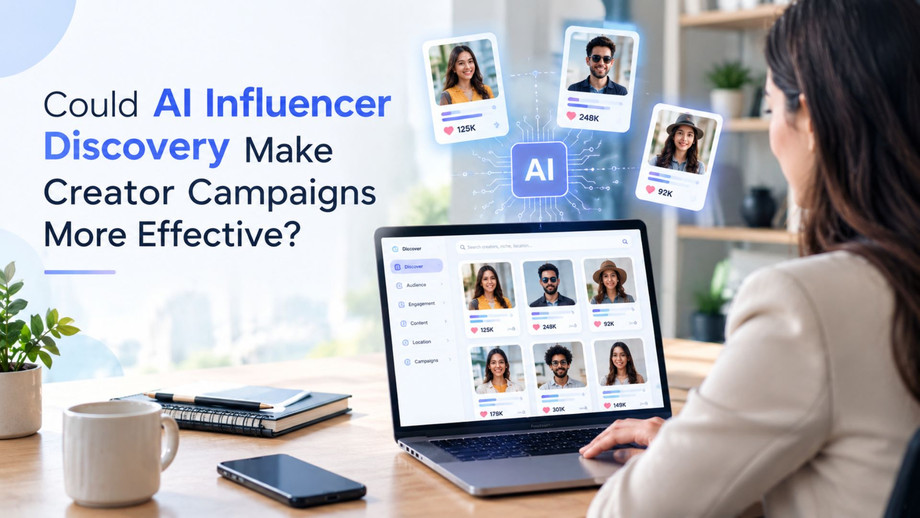
What if brands could spend less time scrolling through creator profiles and more time evaluating the people who genuinely fit their campaigns? Finding suitable influencers is rarely just about follower counts. Audience relevance, engagement quality, content style, brand alignment, location, and previous partnerships can all affect campaign performance. AI influencer discovery can help organize these signals and make creator research more systematic. However, technology should support human judgment rather than replace it. Experienced marketers still need to verify audience quality, review content manually, and consider whether a creator can communicate a product naturally. The strongest approach combines efficient research with careful evaluation, transparent criteria, and campaign-specific goals.
What Should Brands Look for When Finding Influencers?
Effective creator research starts with defining what the campaign actually needs. A fashion launch may require creators whose audiences are interested in style and shopping, while a B2B software campaign may depend more on professional relevance and industry authority.
Follower count can provide useful context, but it should not become the deciding factor. A smaller creator with a highly relevant audience may offer stronger alignment than a larger profile whose followers have little connection to the product.
Brands should also examine engagement patterns. Look beyond the headline engagement rate and review comments, shares, saves, and the quality of audience interactions. Generic comments appearing repeatedly across unrelated posts may deserve additional investigation.
Content history is another important source of evidence. Review how creators introduce products, disclose partnerships, explain benefits, and respond to their communities. Consistency between sponsored and organic content can indicate whether a partnership is likely to feel natural.
How Can Technology Improve Creator Research?
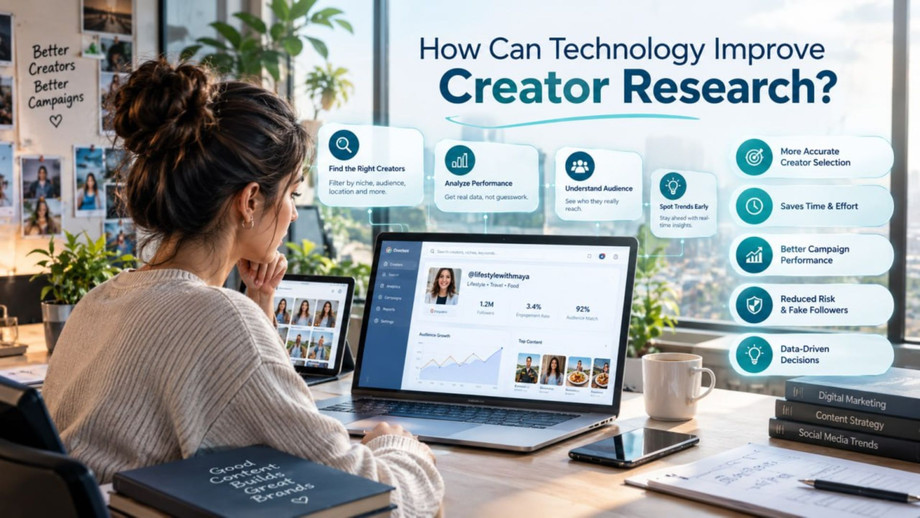
Modern discovery tools can help marketers narrow large creator databases using multiple criteria instead of relying on manual searches alone. Depending on the platform, brands may be able to examine audience demographics, interests, engagement patterns, content categories, location, estimated reach, and previous collaborations. These insights can help brands Launch Influencer Campaigns with creators who better match their campaign goals and target audience.
The practical advantage is efficiency. Instead of opening hundreds of profiles without a consistent process, a marketing team can establish filters based on campaign requirements and create an initial shortlist. This gives specialists more time to conduct the human review that automated systems cannot reliably replace.
For example, imagine a skincare company searching for creators for a regional product launch. The team could first identify creators who produce relevant beauty content and reach the target geography. It could then compare audience characteristics, recent engagement, content quality, and previous brand partnerships before contacting selected creators.
This approach reduces unnecessary outreach and creates a clearer connection between creator selection and campaign objectives.
What Mistakes Can Reduce Influencer Campaign Quality?

One common mistake is treating a single metric as proof of creator quality. High engagement does not automatically establish audience relevance, and a large following does not guarantee meaningful influence over potential customers.
Another issue is ignoring recent performance. A creator's older posts may show a very different level of engagement or content quality compared with their current work. Reviewing recent activity gives brands a more realistic picture of the profile they may be partnering with.
Brands should also be cautious about relying entirely on automated recommendations. Technology can identify patterns and speed up research, but contextual judgment remains important. A creator may technically match a campaign's filters while still having a communication style that feels unsuitable for the brand.
Finally, unclear campaign objectives can make even sophisticated research ineffective. Before evaluating creators, marketers should know whether the campaign is intended to generate awareness, engagement, website visits, sales, user-generated content, or another measurable outcome.
You can also watch: Say hello to Creators Ville
Conclusion
AI influencer discovery can make creator research faster and more organized, but effective campaigns still depend on thoughtful human evaluation. Brands should combine audience data, engagement quality, content relevance, recent performance, and campaign objectives before making partnership decisions. The best process is not necessarily the one that produces the largest list of creators; it is the one that helps marketers identify profiles with genuine campaign relevance. Start by defining your audience and objectives, build clear evaluation criteria, and use technology to reduce repetitive research while keeping final decisions grounded in credible evidence.
FAQs
What is the best way to find relevant influencers?
Define your goals and audience, then compare content relevance, engagement, audience quality, and recent performance.
How much does influencer discovery cost?
Costs vary by research method, software, and campaign size. Smaller campaigns can use manual research, while larger ones may need specialized tools.
How should brands compare influencers and avoid mistakes?
Compare audience fit, engagement, content quality, and recent performance. Avoid relying only on follower counts or automated recommendations.