
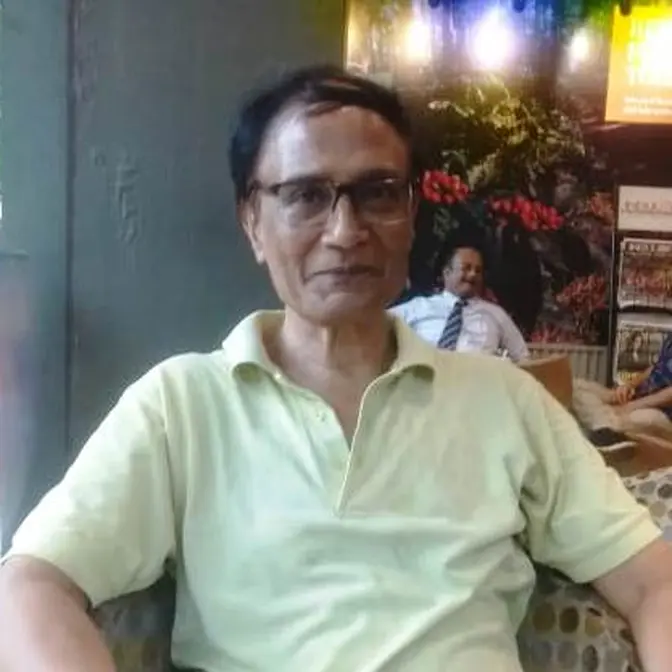
First survivor of Organ Harvesting lives to tell his story
This article titled “First Survivor of Organ Harvesting Lives to Tell His Story,” which documents the extraordinary and harrowing testimony of Mr. Cheng Pei Ming — the first known survivor of China’s state-sanctioned forced organ harvesting campaign. The piece highlights Cheng’s firsthand account of detention, torture, and his miraculous escape, as well as expert commentary from David Matas and Professor Sen Nieh, who have been instrumental in bringing such cases to international attention.

This story sounds like something out of a thriller. Yet, the account of Cheng Pei Ming — the first known survivor of China’s state-sanctioned forced organ harvesting campaign — is tragically real. His testimony offers a chilling glimpse into one of the darkest human rights atrocities of our time.
Cheng, from a rural village in Shandong Province, was repeatedly detained and tortured between 1999 and 2004 for practicing Falun Gong, a peaceful spiritual discipline rooted in Buddhist traditions. The Chinese Communist Party (CCP), which sees Falun Gong as a threat to its authoritarian control, has branded it a cult and waged a brutal campaign of persecution against its adherents.
Living Through Hell
“The torture in the prison was systematic,” Cheng recalled. “One part was mental, the other physical. They pressured me to renounce my faith in Falun Gong. When I refused, they threatened my family — even forcing my wife to divorce me.”
Cheng endured escalating brutality during his detention. In one harrowing incident, guards told him he needed an “operation.” He refused — but was forcibly injected and lost consciousness.
“When I woke up, I was in a hospital bed, in terrible pain,” he said. “There was a bloody tube attached to me. I was shackled to the bed.”
He was bound hand and foot, with an IV in his leg, a drainage tube in his chest, oxygen tubes in his nose, and a 35-centimeter incision across his left side. Segments of his liver and lung had been removed — without his knowledge or consent.
A Daring Escape to Freedom
That night, before another scheduled surgery, Cheng asked to use the restroom. The guard forgot to re-shackle him and fell asleep. Spotting the hospital’s fire escape, Cheng took his chance.
“I ran down the stairs, hailed a cab, and fled to Tianjin,” he said.
From there, he escaped to Thailand, surviving as a refugee in a UN camp for years. After nine years in hiding, he finally reached the United States in 2020.
The Man Who Helped Him Escape
Professor Sen Nieh, who has long worked to rescue prisoners of conscience, played a key role in Cheng’s escape. “A friend showed me pictures of Mr. Cheng’s long surgical scars,” Nieh said. “His story moved me deeply. I reached out to members of Congress and foreign affairs committees. Many were deeply touched and wrote letters of support.”
After five years of persistent effort, Nieh managed to bring Cheng to the U.S. “It was a miracle,” he said. “He was probably one of the last to make it out before the COVID-19 lockdown.”
Proof of the Horror
Once in the U.S., Cheng underwent medical tests — confirming his worst fears. Doctors found that portions of his liver and left lung were missing. “Only then did I realize what had happened,” Cheng said. “Part of my organs had been harvested.”
CT scans confirmed the missing segments. His body itself became living proof of the atrocity.
The Expert’s Verdict
David Matas, international human rights lawyer and co-founder of the International Coalition to End Transplant Abuse in China (ETAC), emphasized the significance of Cheng’s survival.
“Until now, no one has lived to tell the story,” Matas said. “Victims’ bodies are cremated, leaving no evidence. But Cheng is living proof — a speaking survivor of organ harvesting.”
He added, “This case is unprecedented. It shows that Falun Gong practitioners are dehumanized to the point that their bodies are used as spare parts. It’s a crime against humanity.”
Matas estimates that over 100,000 people are killed each year through forced organ harvesting in China. “The world cannot look away,” he warned.
A Promise to the Dead
Despite everything, Cheng remains resolute. “When I was in prison, my fellow Falun Gong practitioners and I made a vow: whoever survived would tell the world about these crimes,” he said. “Many of them never made it out alive.”
For Nieh and Matas, Cheng’s survival is both miraculous and horrifying. “Organ harvesting is still happening — and it’s escalating,” Nieh said. “Our leaders cannot turn their eyes away.”
Matas echoed, “This is not just a human rights violation; it’s a crime against humanity. The scale is unimaginable, and the world must act.”
What You Can Do
Stopping these crimes will not be easy. The regime is ruthless, and the victims are silenced. But awareness is the first step toward change.
You can help by signing the global petition to stop forced organ harvesting. It takes only your name, city, and country — no phone number or email required.
In collaboration with Doctors Against Forced Organ Harvesting (DAFOH) and international NGOs, a coalition is calling on the G7+7 nations — Canada, France, Germany, Italy, Japan, the UK, the U.S., the EU, Argentina, Australia, India, Israel, Mexico, South Korea, and Taiwan — to take urgent action.
Join the campaign at:
https://fohpetition.org/
Every signature matters. Every voice counts.
Together, we can help end one of the darkest chapters in modern history.
Comments