


Founding and unification
According to traditional historical data, the royal family of the Tang Dynasty came from the Li family of Longxi. Chen Yinke believed that it was after the Li family of Longqing in Zhaojun through textual research, and Zhu Xizu believed that it was indeed the Li family of Longxi through textual research. The royal family of the Northern Zhou Dynasty had a close relationship with the imperial family of the Sui Dynasty. Its ancestor was Li Hu during the Southern and Northern Dynasties. He was named one of the Eight Pillar Kingdoms in the Western Wei Dynasty because of his meritorious service, and was granted the title of Duke of Longxi County. His son Li Yan was granted the title of Tang Guogong in the Northern Zhou Dynasty. The royal family of the Tang Dynasty regarded themselves as descendants of Lao Tzu, and they favored Taoism during the dispute between Buddhism and Taoism.
The ancestor of the royal family in the Tang Dynasty was Li Hu during the Southern and Northern Dynasties. He was named one of the Eight Pillar Kingdoms of the Western Wei Dynasty because of his meritorious service. After the establishment of the Northern Zhou Dynasty, Emperor Wu of the Northern Zhou Dynasty named Li Hu's son Li Zong the Duke of Tang, and Li Yuan's son Li Yuan inherited the title. After Emperor Wen of the Sui Dynasty established the Sui Dynasty, Li Yuan still inherited the title of Duke of Tang. After Sui Yangdi succeeded to the throne, Li Yuan was reused by Emperor Yangdi and was sent to stay in Taiyuan in 616. However, Emperor Yangdi was not at ease with him and sent Wang Wei and Gao Junya to supervise him. During the Daye period, due to the excessive use of national power by Emperor Yangdi and the failure of the three expeditions to Goguryeo, there were continuous civil uprisings in various places, which are known as the civil uprisings at the end of the Sui Dynasty. Li Yuan saw that the world was in chaos and the demise of the Sui Dynasty was irreversible, so he had the idea of replacing it.
In 617, Li Yuan killed Wang Wei and Gao Junya, and rebelled in Taiyuan. Soon, Li Yuan led his generals to break through Qu Tutong in the defensive pass, and occupied Daxing City, the capital of the Sui Dynasty. Li Yuan supported Yang You as Emperor Gong of the Sui Dynasty, respected Emperor Yang as the Supreme Emperor, and appointed himself the Prime Minister and King of Tang. While in Yangzhou, Emperor Yangdi was disheartened and unwilling to return to Guanzhong, and was finally killed by Yu Wenhuaji and other rebels in the Jiangdu coup in 618. Li Yuan took this opportunity to force Emperor Gong to abdicate in May of the same year, and established the Tang Dynasty, that is, Tang Gaozu. Daxing, the capital city, was renamed Chang'an, and the eldest son Li Jian became the crown prince, the second son Li Shimin the king of Qin, and the fourth son Li Yuanji the king of Qi.
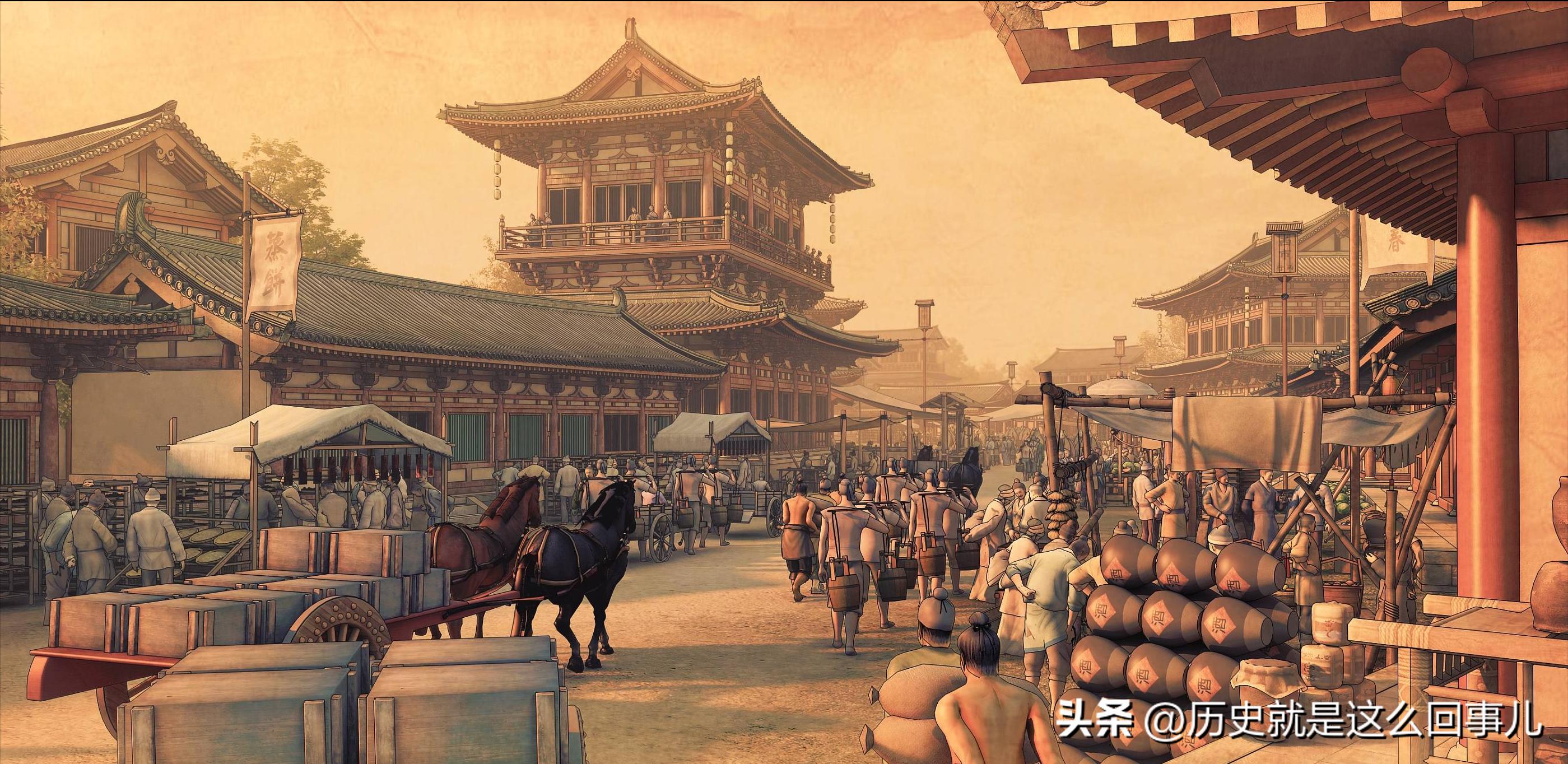
After Gaozu established the Tang Dynasty, he gradually unified the world with Guanzhong as the base. Before entering Guanzhong, he first sent envoys to praise Li Mi, the Wagang Army occupying Henan, making it a barrier to the east. After entering Guanzhong, he sent Li Shimin to pacify Xue Ju and Xue Rengao in Jincheng in the northwest in the battle of Qianshuiyuan, and sent Tang envoys An Xinggui and An Xiuren to capture Li Gui alive in Wuwei. In 620, he sent Li Shimin to defeat Liu Wuzhou and Song Jingang who invaded Hedong (now Shanxi Province) in the Battle of Baibi. Then Luoyang Emperor Zheng Shichong and Hebei Xia Emperor Dou Jiande announced an alliance to fight against Tang Dynasty. In 622, Li Shimin defeated the coalition forces in the Battle of Hulao, captured Dou Jiande, and Wang Shichong surrendered. Dou Jiande's remaining troops, Liu Heita, were also defeated by Li Jiancheng, and Hebei has been pacified so far.
In 623, Fu Gong Er led Du Fuwei's remaining troops to rebel against the Tang Dynasty in Danyang. The Lianghu area also won the battle between Tang Ping and Xiao Mian in 621, and the Liang Emperor Xiao Mian surrendered to the Tang Dynasty in Jiangling. The following year, Lingnan Feng Ang surrendered, and Qianzhou Lin Shihong died, and the Han land belonged to the Tang Dynasty. According to the order of the five elements, the virtue of "fire" in the Sui Dynasty was followed by the virtue of "earth". Therefore, the Tang Dynasty took "earth" as the imperial virtue and used the yellow corresponding to the virtue of earth as the positive color.
Reign of Zhenguan
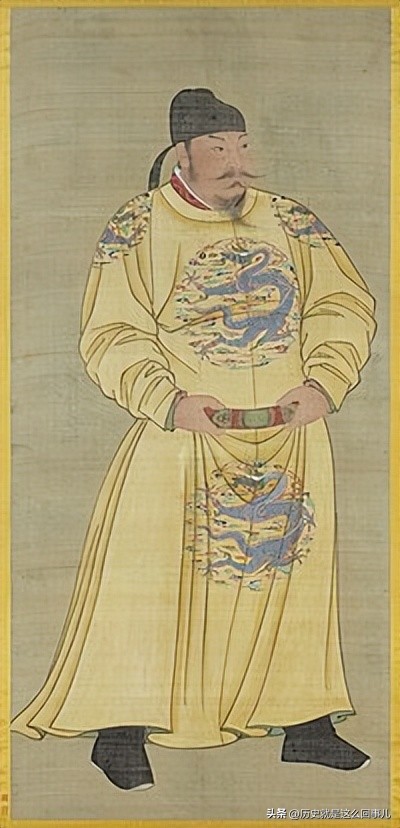
The rise of the Tang Dynasty depends on Qin Wang Li Shimin, who has outstanding military talents, led his army to win many key victories, and was named Tiance General. After sweeping away the heroes, Li Shimin and Prince Li Jiancheng fought for the succession to the throne. In 626, Li Shimin launched the Xuanwumen Change, killed Prince Li Jiancheng and Qi Wang Li Yuanji, and took control of Chang'an. Gao Zu was well aware of the situation, so he abdicated the throne and became the Supreme Emperor. Li Shimin succeeded to the throne, that is, Tang Taizong, the second emperor of the Tang Dynasty.
Taizong made great efforts to govern, accepted advice like a stream, and gradually restored the national power of the Tang Dynasty. In terms of internal affairs, Emperor Taizong promoted the land equalization system and rent adjustment to improve agricultural development. In terms of the official system, the system of the Sui Dynasty was improved, and the three provinces and six ministries and the imperial examination system were formed to restrict the development of imperial power and the hereditary aristocratic habits. Taizong recruited a large number of shrewd and capable ministers regardless of their backgrounds, such as Fang Xuanling, Du Ruhui, Changsun Wuji, Wei Zheng, Ma Zhou, Gao Shilian and Xiao Yu, Yuchi Jingde, Li Jing, Hou Junji, Cheng Zhijie, Li Shi and Qin Shubao, etc. generals. In addition, Taizong sent officials to inquire about the living conditions of the people, and then wrote the merits and demerits of each official on the screen for praise and criticism.
Externally, Taizong adopted the strategy of active defense, ending war with war, and appease the Quartet with restraint and force. At the end of the Sui Dynasty and the beginning of the Tang Dynasty, the Eastern Turkic Khanate in the north was very powerful, and it often went south to invade and intervene in various forces in the Central Plains. In the early Tang Dynasty, a lot of waste was waiting to be done. In 626, the Eastern Turks suddenly attacked Chang'an and led their army to Jingyang (now Jingyang County, Xianyang, Shaanxi) not far from Chang'an. For this, Emperor Taizong personally led Gao Shilian, Fang Xuanling and others to confront the Turkic Khan across the Weishui River, and made a Weishui alliance. After that, Emperor Taizong actively dealt with the Turks, provoking the relationship between Jieli Khan and Turks, as well as the relationship between Turks and the surrounding tribes. In 627, Xueyantuo, Huihe, Bayegu, and Tongluo tribes of Eastern Turkic vassals left one after another because they did not agree with Jieli Khan's government orders and reformed national customs. towards.
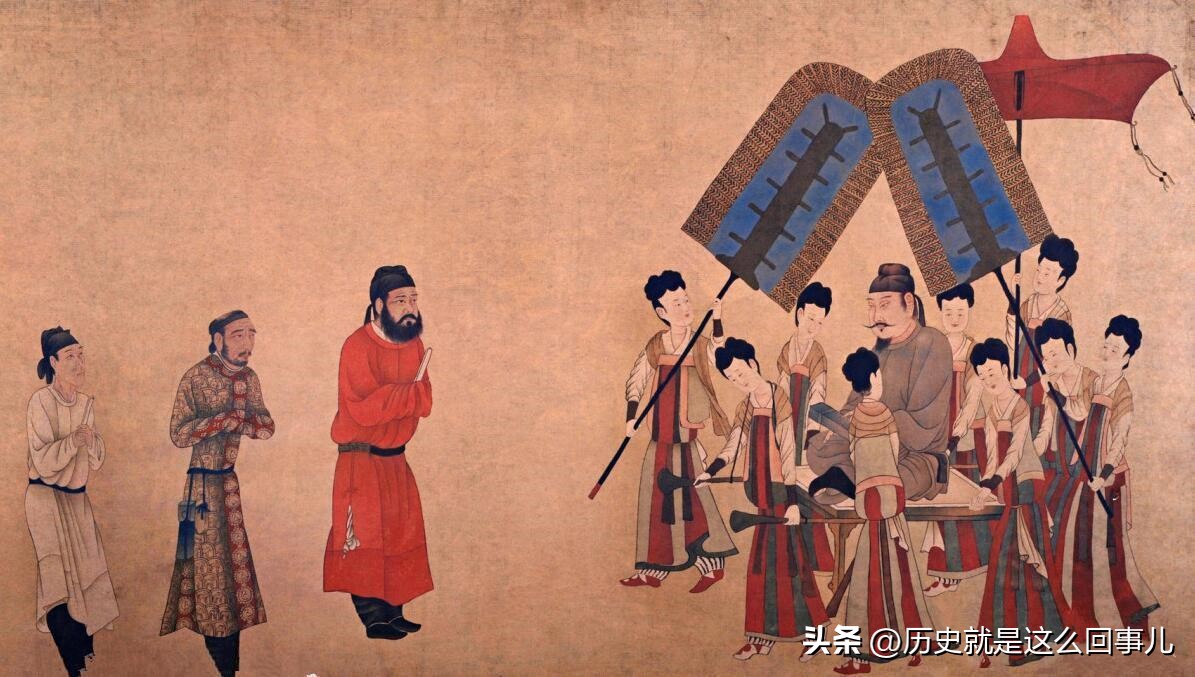
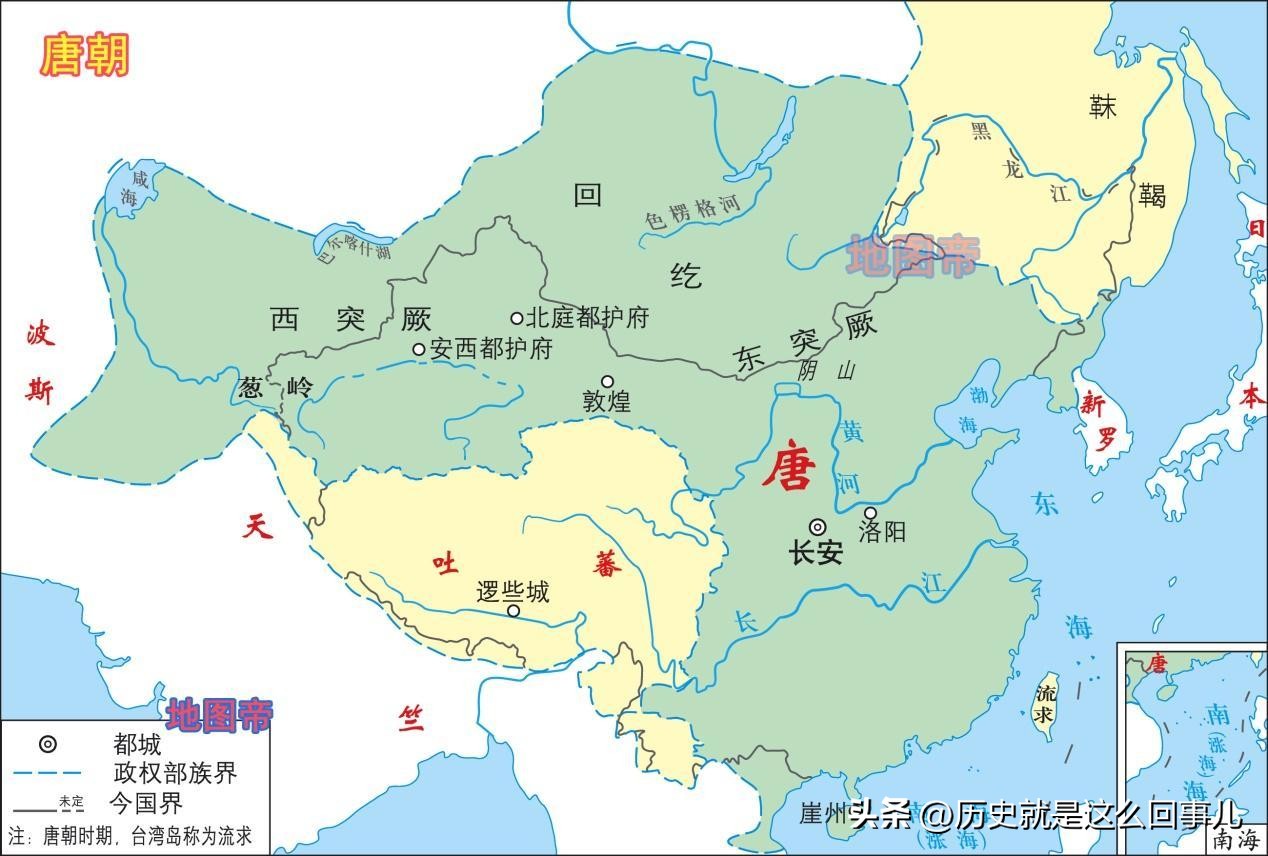
In 628, Liang Luoren, a native of Shuofang, killed Liang Shidu, who occupied Xiazhou, and surrendered to the Tang Dynasty. However, after the split, the East Turks were hit by heavy snow, and most of the livestock were frozen to death and starved to death. In 629, Li Jing led a cavalry raid to destroy the Eastern Turks. The next year, all ethnic groups in the north paid tribute to Chang'an, and all ethnic groups honored Taizong as Tian Khan. In 635, Li Jing was sent to capture Tuyuhun. In 657, Su Dingfang was sent to conquer the Western Turkic Khanate. In 641, Princess Wencheng was sent to intermarry Tubo Songtsan Gampo. All these stabilized the relationship between the Tang Dynasty and the four countries.
During the Zhenguan period, the country was stable, and the economy was restored and developed, which is known as the "Government of Zhenguan" in history. "Zizhi Tongjian" records that in the fourth year of Zhenguan (630), a bucket of rice was only three or four dollars, and there were only 29 death-row prisoners throughout the year. The summary of Taizong's achievements in "Zhenguan Zhengyao", which was written in the period of Zhongzong, became the textbook of governing the country for the emperors of Japan and Silla, and it was also the object of imitation for later monarchs.
Co-government
In Taizong's later years, there was an internal struggle between Prince Li Chengqian and Wei Wang Li Tai. Therefore, Emperor Taizong abolished Chengqian, expelled Li Tai, and changed Jin Wang Li Zhi to be the prince. After Taizong's death, Li Zhi came to the throne, that is, Emperor Gaozong of Tang Dynasty. At this time, the Tang Dynasty inherited the rule of Zhenguan, and its national power was at its peak, known as the rule of Yonghui in history. At that time, there were veteran generals such as Li, Su Dingfang, Xue Rengui, etc., and famous ministers such as Changsun Wuji and Chu Suiliang. Continue to implement the land equalization system internally, and select lower-level but capable officials. In 659, the Western Turks were wiped out, and the territory expanded westward to the Aral Sea and the Amu Darya River, and the Anxi Protectorate was established in Suiye City (now Kyrgyzstan Mark City). In addition, sixteen governor's mansions were set up west of Congling, and Central Asian monarchs such as Tocharo Yehu and King Hedarazhi served as governors. In the east, he joined forces with Silla to destroy Goguryeo and Baekje, the Northeast powers, and defeated Japanese reinforcements in the Battle of Baijiangkou. The Tang Dynasty established the Andong Protectorate on the Korean Peninsula, which eventually led to the Tang-Roman War and indirectly promoted the unification of the Korean Peninsula by Silla.
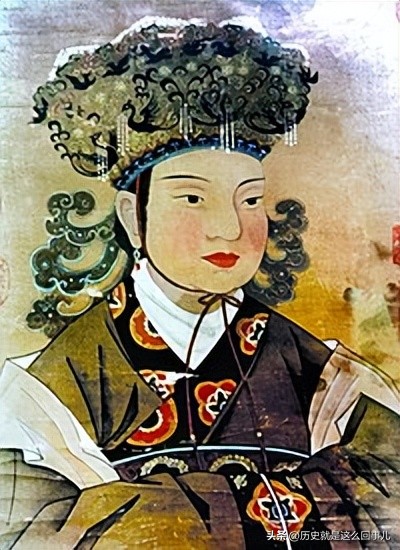
After the middle period of Emperor Gaozong, Empress Wu was appointed to assist in governing. Wu Zetian was originally a talented person during Taizong's period. After Taizong's death, he was recruited into the palace by Gaozong. She won the power struggle and was established as a queen. She was known in history as "Su Duo Zhi Ji, also involved in literature and history". From 656, due to Gaozong's health, many political affairs were gradually handed over to Empress Wu, who became one of the supreme rulers, and together with Gaozong, they were called "two saints" (emperor and empress). After Gaozong's death, Prince Li Xian came to the throne as Tang Zhongzong. Because of disagreement with Zhongzong, Empress Dowager Wu soon abolished Zhongzong as King of Luling and replaced her fourth son Li Dan as Emperor Ruizong of Tang. After Empress Wu put down Xu Jingye's rebellion, he abolished Ruizong, the emperor, in 690, changed the name of the country to Zhou, that is, Wu Zhou, changed the eastern capital Luoyang to "Shendu", and was honored as "Emperor of the Holy God", known as "Wu Zetian". , Changed Li Dan as the heir of the emperor, becoming the only female emperor in Chinese history.
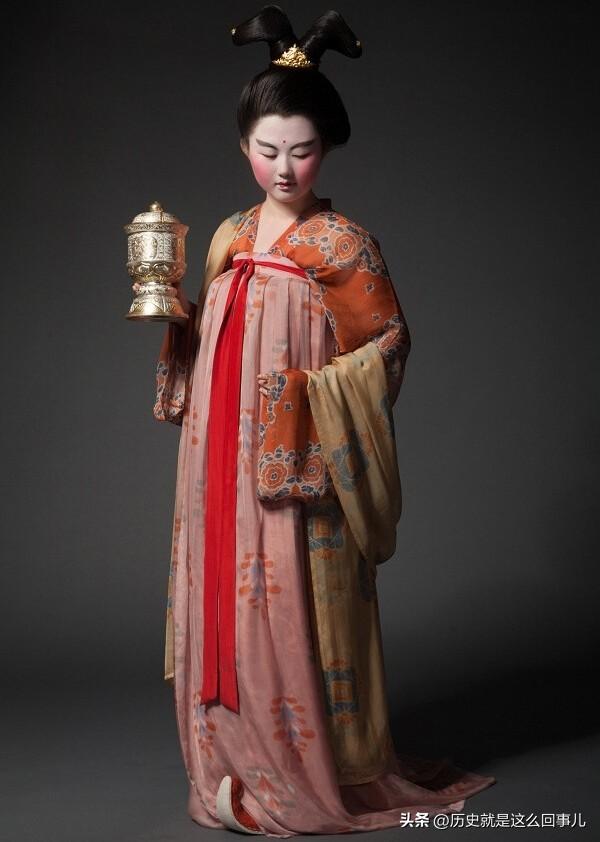
During the period when Wu Zetian was in power and proclaimed himself emperor, the country's population continued to grow, but the foreign wars were unfavorable, and the territory shrank a lot. During Wu Zetian's reign, the imperial examination system was further improved, and palace examinations and martial arts examinations were created. She vigorously promoted officials with imperial examination backgrounds. Many of these officials became virtuous officials in later generations, such as Di Renjie, Zhang Jianzhi, Zhang Renyuan, Yao Chong and so on. However, because Wu Zetian herself believed in Buddhism, she rewarded monks and nuns with a large amount of land, and requisitioned farmland to build Buddhist temples. The serious land annexation led to the collapse of the land equalization system. In the early stage of Wu Zetian's administration, in order to maintain his rule, he either killed or exiled several famous generals, and most of the "Wu Sansi", "Wu Yizong", and "Xue Huaiyi" who were used were mediocre people, resulting in more defeats and fewer victories during his reign. The country's borders have shrunk considerably. Another feature of Wu Zetian's administration is strong control, mainly including the severe suppression of opposition groups such as Xu Jingye, the massacre of Tang clan princes and ministers and generals who supported the Tang Dynasty. Encourage informants, secretly monitor officials and princes, and promote the system of cruel officials. Support Wu Sansi, Shangguan Wan'er and other party members. These are often criticized by historians in later generations.
In her later years, Wu Zetian followed Di Renjie's advice and reappointed Li Xian as the crown prince and changed Li Dan as the prime minister. When Wu Zetian was seriously ill in 705, the prime minister Zhang Jianzhi and the general Li Duozuo [Note 7] supported the crown prince Li Xian to stage a coup. They killed the brother of Zhang Yizhi, the queen's favorite male favorite, and forced Wu Zetian to abdicate. Zhongzong Li Xian Chongzuo, the restoration of the Tang Dynasty, made his younger brother Li Dan the Prime Minister of Anguo, and his sister Princess Taiping the Princess Taiping of Zhenguo, known as the Dragon Revolution in history. Zhongzong lacked experience in ruling, and when he was in power, he was politically corrupt and corrupt and corrupt. He was bewitched by Empress Wei, his daughter Princess Anle, and Wu Sansi, a party member of the Wu clan, and exiled and killed all the heroes Zhang Jianzhi, Jinghui and others. Empress Wei and Princess Anle are ambitious and want to become Wu Zetian's second. They teamed up with Shangguan Wan'er to force Prince Li Chongjun to launch the Jinglong Change, and Chongjun was finally defeated and killed.
In 710, Empress Wei and Princess Anle suspected that they had instigated others to poison Zhongzong to death in the cake. Li Chongmao, king of Wen, was made emperor, that is, Emperor Shang, and planned to harm Xiangwang Li Dan. With the assistance of his aunt Princess Taiping, Li Longji, the son of Li Dan, launched the Tang Long Rebellion. He wiped out Empress Wei and the Wu family, and supported the restoration of Ruizong Li Dan as emperor. After Ruizong was restored, he made his son Li Longji the crown prince, and agreed with his sister Princess Taiping to intervene in the political situation. Power struggles often occurred between the two sides. In 712, Ruizong decided to abdicate the throne, and Prince Li Longji came to the throne, namely Tang Xuanzong. But Xuanzong declared that Princess Taiping was planning to use the Habayashi Army to mutiny again. The next year, Xuanzong bestowed the death of Princess Taiping and sent troops to kill her followers. This was a congenital change, which ended the political situation dominated by women since the mid-term of Emperor Gaozong in the Tang Dynasty, and ended the coups and political chaos in the capital since the Dragon Revolution 8 years ago. situation, ended the disaster of political interference.
Comments