


400 years ago, on 4 July 1623, William Byrd (1540-1623) died at Stondon Massey, a small village near Chipping Ongar in Essex. According to his will, he was buried in the parish churchyard, but his grave has not yet been located. Byrd enjoyed the highest reputation among English musicians, and contemporary accounts hail him as a “Father of Musick,” and “Brittanicae Musicae Parens.” His music was copied extensively, and a number of poems ranked Byrd as among the greatest composers of the Renaissance. An Elizabethan scribe by the name of Baldwin mused:
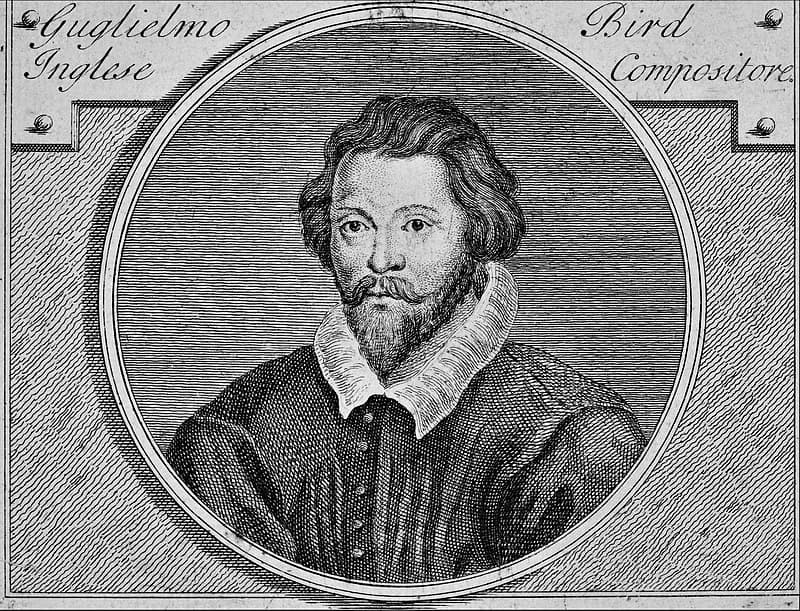
Yet let not straingers bragg, nor they these soe commende,
For they may now geve place and sett themselves behynde,
An Englishman, by name, William BIRDE for his skill
Which I shoulde heve sett first, for soe it was my will,
Whose greater skill and knowledge dothe excelle all at this time
And far to strange countries abrode his skill dothe shyne…
William Byrd: “Ave verum corpus”
Byrd was born in London, but as no record of his birth has survived, the exact year is not known with certainty. Scholars, however, do agree that he was most likely born in 1539 or 1540. Byrd came from a wealthy family of merchants and musicians, and like his two brothers, he probably was a chorister. It seems likely that he was brought up in the Chapel Royal. This establishment in the royal household served the spiritual needs of the sovereign and the royal family and consisted of a number of priests and singers that travelled with the monarch. It has been assumed that Byrd was the student of the famed organist at the Chapel Royal, Thomas Tallis, and that the young student crafted several compositions in his teens.
William Byrd: Fantasia in C
On 25 March 1563, Byrd was appointed organist and master of the choristers at Lincoln Cathedral, and having secured a large salary, he married Juliana Birley from Lincolnshire. He did get into hot waters with church authorities over his protracted organ playing during the services, and scholars interpret this “as the first indication of the stubborn Catholicism that would become a defining feature of Byrd’s life and works.”
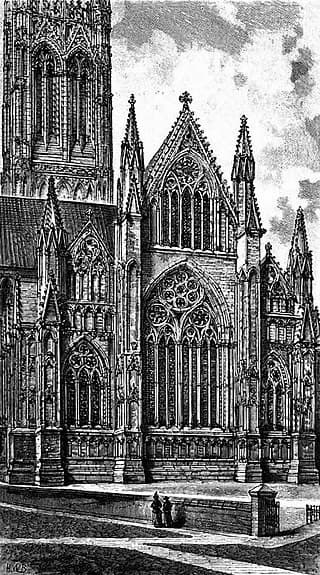
Exterior View of the East End of Lincoln,
Development & Character of Gothic Architecture (1890)
In Lincoln, Byrd quickly developed his compositional skills, and wrote organ and virginal music, alongside settings of English poems as five-part consort songs for solo voice and viols. In addition, “most of Byrd’s English liturgical music seems to have been written at Lincoln, and some of his Latin motets published in 1575 appear to have been composed around this time as well.
William Byrd: Deus venerunt gentes (The Sixteen; Harry Christophers, cond.)
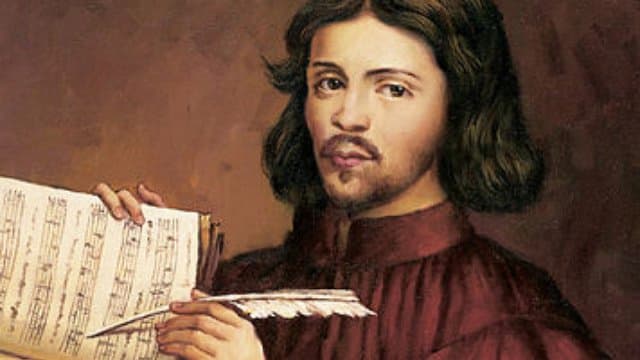
Thomas Tallis
In 1572, Byrd was appointed a “Gentleman of the Chapel Royal,” and shared organist duties with his teacher Thomas Tallis. Byrd quickly made the acquaintance of powerful Elizabethan lords, and he apparently “moved easily among the aristocracy.” He also gained favours with Queen Elizabeth I, a music lover and keyboard player. The Queen was a moderate Protestant, who shunned the extreme forms of Puritanism, and in 1575, she granted Thomas Tallis and William Byrd a 21-year monopoly for music printing and for lined music paper. This monopoly covered, “set song or songs in parts, composed in English, Latin, French, Italian, or other tongues as long as they served for music in the Church or chamber.” Tallis and Byrd immediately took advantage of the patent and produced a collection of 34 Latin motets dedicated to the Queen herself.
William Byrd: Laudate pueri Dominum
Byrd lived in an age of conflict between Catholics and Protestants in England. And Byrd’s loyalties were rather severely divided between the two religions. He and his wife were devout Catholics, yet at the same time, he held positions in Anglican churches and wrote music for their services. Most of his patrons were fellow Catholics, but the Earl of Northumberland was executed, and Lord Thomas Paget had to flee England in the aftermath of a supposed pro-Catholic plot against Queen Elizabeth I. As anti-Catholic sentiment was on the rise in England, Byrd and his family were frequently cited as “recusants.” This simply means that they were absent from services in the Church of England, which could lead to imprisonment and rather hefty fines. However, Byrd was considered loyal to the crown, and as we have seen, the Queen held him in high esteem.
Comments