


George III, who ruled between 1760 and 1820, was the first truly British monarch of the Hanoverian kings. Ruling Britain was his first priority and he never visited his family's home in Hanover. He was a well-intentioned and cultured family man. Sadly, his personal and political life was dogged by recurring bouts of severe mental and physical illness, and he was declared unfit to rule in 1811, handing the throne to his son, the Prince Regent, when his health failed. His illness baffled his doctors and has fascinated modern minds.
Unfairly characterised by historians as 'Farmer George' and 'mad King George', George III's long reign is notable for both his great successes and failures, including the independence of the American colonies.
We should not call George 'mad' today, but when he first fell ill he suffered additionally from the primitive medical treatment that leading doctors forced upon him in the seclusion of Kew.
Today George's personality resonates with our own times. He had an intense sense of duty and devotion to his family, as well as a curiosity in The Age of Enlightenment, which was undiminished by periods of debilitating illness.
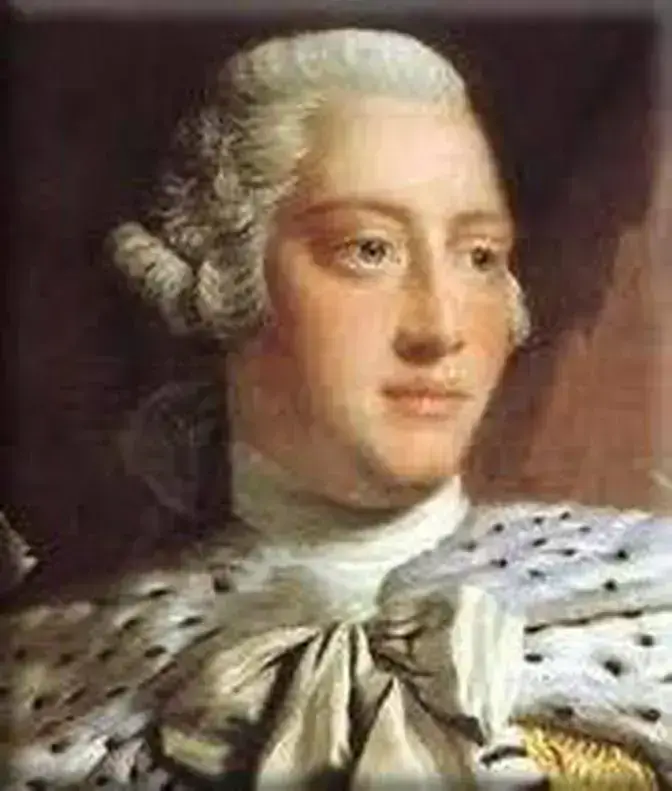
Image: George III in coronation robes, c.1761-2. Royal Collection Trust / © Her Majesty Queen Elizabeth II
DID YOU KNOW?
Art and science flourished under George's patronage. His reign saw the foundation of the Royal Academy of Arts, Captain Cook’s voyages to Australasia and British industrialisation.
THE MAKING OF GEORGE III
George III was born on 4 June 1738, during a period of cultural, as well as political revolutions. He was a shy boy, who had a sheltered upbringing under his German-born parents, Frederick and Augusta, Prince and Princess of Wales.
Though his mother took great care over his private education, George's teenage years were overshadowed by his domineering grandfather, King George II (r.1727-60). His grandfather and grandmother Queen Caroline hated his father prince Frederick, who was their eldest son and heir, and the young prince George inevitably became a pawn in the political rivalries that coloured his early years.
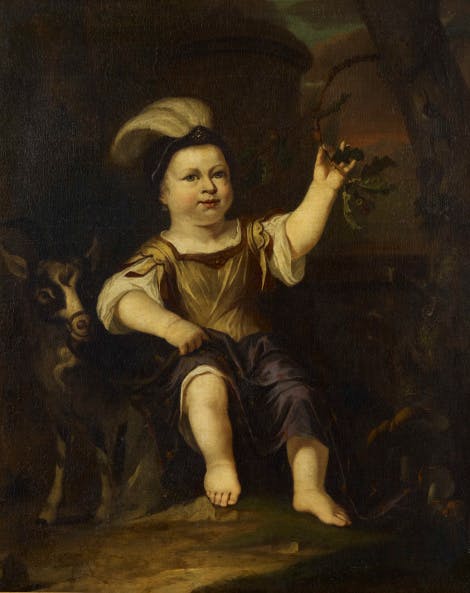
Image: George III when Prince of Wales, c.1740. Royal Collection Trust / © Her Majesty Queen Elizabeth II

A NEW GEORGIAN KING
George III came to the throne in 1760, at the young age of 22. He was relatively unprepared to reign after his father died suddenly from a chill caught gardening at Kew (though some said his death was caused by an injury sustained while playing cricket).
Despite this lack of preparation, George's thoroughly British upbringing marked him out from his Hanoverian predecessors and shaped his intense loyalty to his people.
Image: George III in coronation robes, c.1761-2. Royal Collection Trust / © Her Majesty Queen Elizabeth II
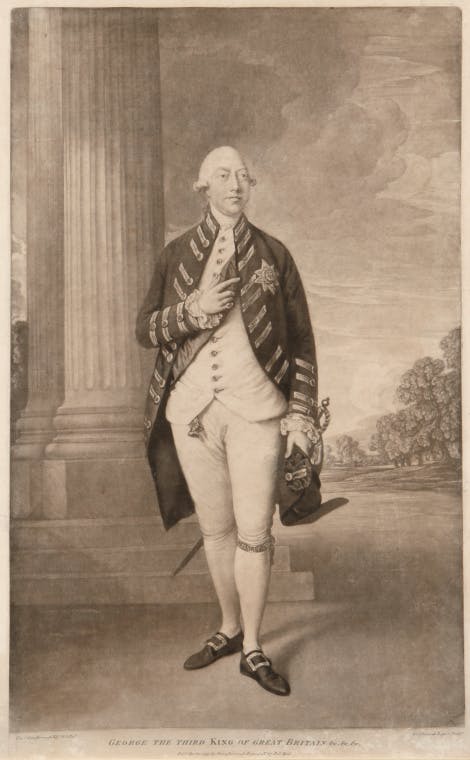
Below: An engraving of King George III standing in Windsor uniform with the sash and star of the Order of the Garter, a sword at side and holding a tricorne hat in his hand, 1790. © Historic Royal Palaces
George III, who ruled between 1760 and 1820, was the first truly British monarch of the Hanoverian kings. Ruling Britain was his first priority and he never visited his family's home in Hanover. He was a well-intentioned and cultured family man. Sadly, his personal and political life was dogged by recurring bouts of severe mental and physical illness, and he was declared unfit to rule in 1811, handing the throne to his son, the Prince Regent, when his health failed. His illness baffled his doctors and has fascinated modern minds.
Unfairly characterised by historians as 'Farmer George' and 'mad King George', George III's long reign is notable for both his great successes and failures, including the independence of the American colonies.
We should not call George 'mad' today, but when he first fell ill he suffered additionally from the primitive medical treatment that leading doctors forced upon him in the seclusion of Kew.
Today George's personality resonates with our own times. He had an intense sense of duty and devotion to his family, as well as a curiosity in The Age of Enlightenment, which was undiminished by periods of debilitating illness.
Image: George III in coronation robes, c.1761-2. Royal Collection Trust / © Her Majesty Queen Elizabeth II
DID YOU KNOW?
Art and science flourished under George's patronage. His reign saw the foundation of the Royal Academy of Arts, Captain Cook’s voyages to Australasia and British industrialisation.
THE MAKING OF GEORGE III
George III was born on 4 June 1738, during a period of cultural, as well as political revolutions. He was a shy boy, who had a sheltered upbringing under his German-born parents, Frederick and Augusta, Prince and Princess of Wales.
Though his mother took great care over his private education, George's teenage years were overshadowed by his domineering grandfather, King George II (r.1727-60). His grandfather and grandmother Queen Caroline hated his father prince Frederick, who was their eldest son and heir, and the young prince George inevitably became a pawn in the political rivalries that coloured his early years.
Image: George III when Prince of Wales, c.1740. Royal Collection Trust / © Her Majesty Queen Elizabeth II
A NEW GEORGIAN KING
George III came to the throne in 1760, at the young age of 22. He was relatively unprepared to reign after his father died suddenly from a chill caught gardening at Kew (though some said his death was caused by an injury sustained while playing cricket).
Despite this lack of preparation, George's thoroughly British upbringing marked him out from his Hanoverian predecessors and shaped his intense loyalty to his people.
Image: George III in coronation robes, c.1761-2. Royal Collection Trust / © Her Majesty Queen Elizabeth II
Below: An engraving of King George III standing in Windsor uniform with the sash and star of the Order of the Garter, a sword at side and holding a tricorne hat in his hand, 1790. © Historic Royal Palaces
Comments