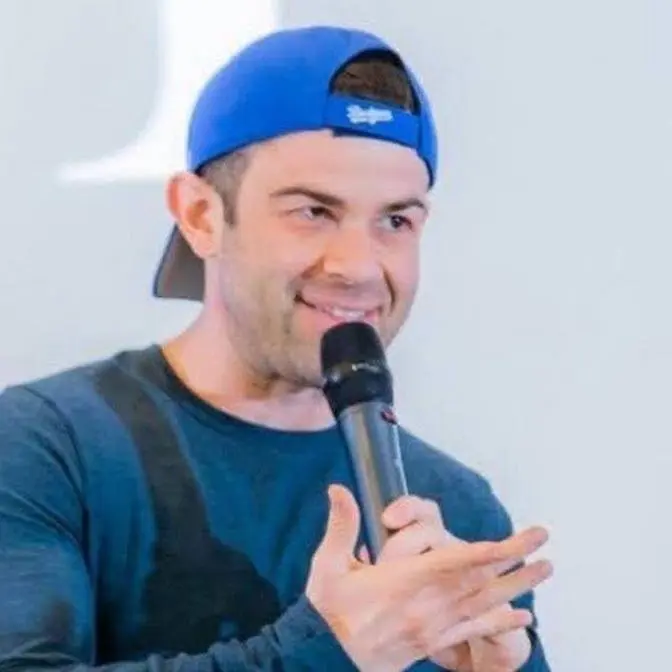
Why You Must Deal with Your Mental Health Before You "Make it." There are so many people that believe they will be eternally satisfied once they have "made it." How many times have you said or heard someone say when I get into a new relationship, I will experience happiness or whenever I hit my salary goal or have financial success I will get out of this rut. We hear that stuff time and time again and we all know that it can make us happy short term, but then our old habits and patterns come back. If you aren’t happy with the person you see in the mirror, none of that other stuff matters. So I encourage you to really pay attention to what my guest today has to say and our discussion in why you have to take care of your mental and emotional health and not focus so much on things externally. Today, I had the opportunity to chat with Apolo Ohno — America's most decorated Winter Olympic Athlete of all time, best selling author and highly sought after keynote speaker (he also won Dancing With the Stars). In this episode, you will gain a lot of life changing lessons based on his personal experience. We get into many topics such as the importance of managing your mental health, how to navigate transitions, dealing with pain and failure, his best practices and so much more. Show Notes: When we hear the word “athlete”, the first thing that comes to our minds is that we expect them to be strong and capable of staying focused and be well-driven, especially those who are at the peak of their career. Little did we know, they’re also struggling with mental health problems. Apolo will be talking about the Olympians’ struggles and the HBO documentary The Weight of Gold that premiered this past summer that showcases how the pressure of being an olympian can massively impact your mental health. It also encourages people to ask for help and not be afraid to open up if they are struggling mentally. As a dedicated mental health advocate, he will make us understand that this anyone can have battles with their mental health. It doesn’t matter who you are or how much you have achieved. He will also be sharing some points that can enlighten everyone about where the struggles of an athlete usually come from Just like all of us, one of the biggest parts of the adversity of being an Olympian athlete is that they are unsure of what’s going to happen once everything they currently have is all gone — may it be material things, money, or fame. Apolo will give his insights about how important it is to immediately identify your strengths and weaknesses, understand the process, and be willing to embrace change so that you’ll know what to do once you have decided to move on to the next chapter of your life. Apolo also encourages the listeners to constantly ask this question: "What do you want from life and what does life want from you?" We all need to know our purpose and meaning. We just have to take time to reflect, and look within. Quote: “What's being thrown at you is out of your control. How you respond, react, and maneuver through this life experience is powerful, and it is within your control.” -Apolo Ohno Connect with Apolo: Website: https://apoloohno.com/ Instagram: https://www.instagram.com/apoloohno/ Twitter: https://twitter.com/ApoloOhno Facebook: https://www.facebook.com/ApoloOhnoOfficial Connect with Doug Instagram: @dougbopst Facebook: Doug Bopst Website: www.dougbopst.com/gift More on Earth Echo Foods/Cacao Bliss: www.earthechofoods.com/dougbopst Use Promo code "Doug" at checkout to receive 15% off your order
I'm an entrepreneur and I'm on a mission to help others become the best version of themselves.
So I'd like to welcome you to the Adversity Advantage podcast, where we will help you
use obstacles, failures, and setbacks to give you that edge needed for success.
I'll be interviewing people from all walks of life on how they overcame trials and turned
them into triumphs.
So please sit back, relax, and get ready to be absolutely blown away by some of the wisdom
and stories you're about to hear.
You as the athlete need to come to terms with your particular physical skill set of what
you were doing before.
The way that you ran in a race, the way that you skated.
Those things are no longer relevant in your next career choice.
What is relevant is the process that allowed you to do those things.
The mindset behind the training, the consistency, the discipline, the sacrifice, the hard work,
the effort, the gratitude for strong and hard workouts, the recovery mechanism, the learning
how to take care of your body in a certain way, and that competitive spirit.
Those attributes are incredibly transferable to the degree that most organizations look
for people like that to either run their organization, to found a new company and follow
as a leader, or to be a part of this incredible co-working team that exists inside that culture.
I'm Doug Bopes, personal trainer, bestselling author, and entrepreneur, and I'm on a mission
to help others become the best version of themselves.
So I'd like to welcome you to the Adversity Advantage podcast, where we will help you
use obstacles, failures, and setbacks to give you that edge needed for success.
I'll be interviewing people from all walks of life on how they overcame trials and turned
them into triumphs.
So please, sit back, relax, and get ready to be absolutely blown away by some of the
wisdom and stories you're about to hear.
Welcome back to another episode of the Adversity Advantage.
I'm your host, Doug Bopes, and let's face it, I think it's no secret, there's so many
people out there that think that when they quote-unquote make it, that all of a sudden
all their struggles and problems will go away, and I think, you know, so many people believe
that once they experience or achieve something externally, it's going to fulfill them internally.
How many times have you said or maybe heard someone say that when I get into this new
relationship I will experience happiness, or whenever I hit my salary goal or have financial
success, I will get out of this rut?
We hear that stuff time and time again, and we all know that it can make us happy short-term,
but then our old habits and patterns come back, and if you aren't happy with the person
that you see in the mirror, then none of that other stuff matters.
So I encourage you to really pay attention to what my guest today has to say and our
discussion on why you have to take care of your mental and emotional health and not focus
so much on things externally, and I had the good fortune to sit down and chat with America's
most decorated winter Olympian of all time.
This guy is also a best-selling author and a highly sought-after keynote speaker.
He actually also won Dancing with the Stars.
In this episode, you will gain lots of life-changing lessons that are all based on his personal
experience, so today we aren't going to be going too deep into his fame as an Olympian,
but much more so into the mental health issues and struggles that many Olympians face, which
is relatable to anyone, no matter who you are.
So I am sure you know by now, my guest today is Apollo Ono.
Apollo will be talking about the HBO documentary The Weight of Gold that he appeared in, as
well as other notable Olympians such as Shaun White, Michael Phelps, Lolo Jones, and others
that premiered this past summer that showcases how the pressure of being an Olympian can
massively impact your health mentally.
As a dedicated mental health advocate, he will make us understand that anyone can have
battles with their mental health.
It doesn't matter who you are or how much you've achieved.
He will also be sharing some points that can enlighten everyone about where the struggles
of an athlete usually come from and how they share many of the same internal battles that
any other human has.
We also discuss the top must-dos when you go through any sort of transition, whether
it's a divorce, losing a job, retiring as a professional or Olympic athlete, or any
other moment in your life when a massive change is made.
We discuss so much more, so I don't want to give too much more away.
So let's get this conversation going and welcome Apollo Ono to the Adversity Advantage Podcast.
Apollo, man, thank you so much for coming on.
This is quite a pleasure and I'm so excited for the opportunity.
Yeah, thanks for having me.
I appreciate it.
Yeah, and we were talking before we were recording about The Weight of Gold, the new documentary
for those who aren't familiar with it, that just premiered on HBO, which is about the
mental health challenges that Olympic athletes face and how the postponement of the current
Summer Olympics was postponed a year, and just the challenges and adversity that many
Olympians face throughout their career.
And it was narrated by Michael Phelps and it featured, obviously, you, Michael, Sean
White, Lolo Jones, and many others.
And I was just telling you before we recorded, I had no idea to the extent that people struggled
with their mental health when they are at the peak of their career like that.
You would think that people who have that type of mindset to get to the top and win
a gold or get to the top to train for the Olympics and get there, they don't struggle
with any of that because of their ability to stay focused, stay dedicated and driven.
And I also was saying, I knew about Michael Phelps because I'm in Baltimore, and when
he was dealing with his mental health issues, it was always at the forefront of the news
here.
First, talk a bit about the mental health aspect of the Olympians.
I know you've been a huge advocate of that before we get into your backstory, because
right now, I think more than ever, people are struggling, man.
Whether you're an Olympic athlete, whether you're sitting at home and you just lost your
job, you're a high school kid, the pandemic has really opened Pandora's box for mental
health issues.
Yeah.
And I appreciate you want to dive deep on some of these topics.
These discussions, I think, are not always the easiest to talk about.
I always say, which generation you grew up in and which part of the country you grew
up in and what your life experiences were, athletes and the athletic movement is one
of those areas where you're taught to be strong, you're taught to be resilient and have grit
and you don't need to ask for help.
And it's sometimes a solo game.
And I've been a huge proponent and advocate that the real game is between your ears.
And that's where the real true game lies.
And that's where the incremental levels of performance can be gained or lost is in that
psychological awareness of how you approach your sport, how you live your sport, how you
prepare for your sport.
And if that brain and if that mental mindset is just simply not in line with or is conducive
to helping you get your best results, it can be really detrimental.
And Olympic athletes, particularly, I would always say that the curtain has never been
peeked behind.
Right.
We've never really got to see an inside look into what the consequences and the challenges
and struggles are associated with going and pursuing an Olympic dream.
And I think we've got our assumptions on the outside that we can think of hard work and
dedication and sacrifice and all those things.
But then there's the again, the human element that is associated in that human element really
is.
There's many athletes who simply they were struggling mentally and they were using their
pain as a lever to lean on to propel them through their sports, which is great.
Right.
Because that's an attribute of life that you will have to learn to become accustomed with
and utilize.
And then it dives even deeper to those who suffer from actual real mental health challenges
and that disease, as we would liken to call it, it can attack anyone.
It doesn't matter how many medals that you have.
It doesn't matter how much success that you've got.
It doesn't matter any of those things, how much accolades that you've been able to achieve.
I think it kind of has no name or face.
And so your ability to overcome inner kind of self-doubt, insecurity, even sometimes
suicide and depression are tough and challenging.
So the real message of that film is you don't have to go through it alone.
There's a ton of resources out there.
And to really destigmatize the association of the ego with, hey, look like you're this
invincible athlete and instead being open about some of those vulnerabilities and challenges
that you have, owning them and then being able to get beyond them in a way that will
greatly suit what it is that you desire in that particular sporting craft and atmosphere.
And for many years, I don't think that we had the necessary resources available to us
as athletes.
I don't fault anyone, the USOPC, the United States Olympic Committee for not providing
some of those things.
I think it's challenging, right?
I would say the most commonly responded to question that people ask athletes is, how
do you feel today?
And I can say, I feel OK.
And the reality is that I feel OK.
That complex answer has like thousands of layers of texture that are really challenging
to decipher.
It takes a great coach to be able to read between the lines.
And most of my career, I was not OK, but it didn't matter.
I was so hyper-focused on what I wanted to accomplish and achieve that I used whatever
that insecurity or self-doubt or fear of failure as a real means of propulsion to gravitate
towards that goal.
And The Weight of Gold is a short documentary.
I wish it was a six-part series because I think that there's so much complexity, discussion
that can be had around this topic.
And as we start to understand not only the neurochemistry of the brain, but the human
behavior and the neuroscience of why we do what we do, how microtrauma and large-scale
trauma can impact our decision-making processes on a daily basis, how important sleep and
social environments and all these things are part of this.
And a lot of these things have direct correlation to what people are feeling and experiencing
right now, today, even if they're not athletes.
Watching that film, I so related to a lot of what had been said, just from the aspect
of mental health being stigmatized and being afraid to raise your hand and ask for help,
especially at least as a male.
You're like, I got this.
I don't need help.
I'm going to shut down.
I'm going to harden up.
And really what that does is it pushes us even further away from getting that very thing
we want, which is to feel good about ourselves and be happy and feel purposeful and be able
to go through life being content with who we are as a person.
And one of the things that really struck out to me was the pressure.
I didn't even really think about the pressure to perform.
They talked about that in the film, that you think about and you train for 10, 15 years
sometimes.
You started training when you were a teenager for the Olympics, and it comes down to a matter
of seconds, like one move to the right, to the left, and your career could be over.
So do you think the mental health struggles were more from the, quote unquote, pressure
to perform or was it after you lost an event or both?
I think it's both.
Right.
I think that one of the things that I personally struggled with in my career was I was a habitual
self-sabotager.
And to provide some more context to what that means is I would put myself into these situations
through training or competition to where I would try to use the, quote, rock bottom or
the rock bottom loss or failure as a springboard and as a trampoline to come back super strong.
And then I became addicted in a sense to providing these completely obscene challenges and situations
to where I would want to perform outlandishly well in an extraordinary fashion.
So for example, I'd be in a final 1500 meters men's race at a world cup and there would
be three Koreans, three Chinese, two Canadians, and then me.
And then athletes would team skate against me and use other athletes as pawns as they
protect one of the kingmakers in the race.
And when everyone was like, well, he can't possibly win that race because it's just only
him against all these other great athletes.
I would somehow rise to the occasion and complete some amazing pass to be able to win that race.
And I would do so putting myself in these really extreme situations.
And so while that may not have kind of correlated with exactly what I'm talking about, the reason
why the self-sabotage was occurring on a deeper level was really because early on in my career
I didn't want to put myself out there in a kind of mediocre setting of a race and then
actually lose it.
At least when I put together all of these extreme outcomes where everyone just assumed
that I wasn't going to win that race, then I was able to really unleash my full potential
and really show myself in its full entirety.
And then I could win.
I feel like it was great.
And if I didn't, well, it's okay because no one expected me to win anyway.
So it came down to me doing some deep psychological work and saying to myself, like, look, you
can't be afraid to show 100% of yourself.
Yes, the game is a poker game and yes, you have to hold your cards close to the chest
at certain times, but the mere fact of winning and losing and using that as a metric, as
a guidance to your success, that's a complex way of thinking about it.
And I think that there's different ways that we can measure our wins and our losses and
turn them into lessons and opportunities versus the other part.
Talking about preparing a lifetime for a race that lasts 40 seconds long.
That is true.
I mean, you as Olympic athletes and as Americans, we watch the Olympic games because we know
that an athlete has dedicated his or her life to this one particular moment.
And the reality is that the variables are not in your favor on that day, right?
You've never competed at an Olympic games or under these lights or under these conditions.
There's so many variables that are constantly being manipulated and changing that don't
give you the greatest possible opportunity for being the quote, perfect scenarios and
perfect environment to perform in, but you have to.
And if you don't, the reality is the American public typically does not celebrate you because
you didn't win.
And we celebrate champions and we celebrate people who are on the podium.
And then so psychologically, the athlete is having to deal with, well, maybe I'm not good
enough.
What else am I good at?
And then it begins the transition stage from a competitive Olympic athlete to civilian
or what the next stage of your life is.
What else are you good at?
Your soul identity was tied particularly to that sport.
And if you're thinking that you're just not good at anything else, then that's something
you have to come to terms with.
I call it the great divorce.
You have to change your psychology.
I think what a lot of people don't think about is the sense that we celebrate champions,
as you said, and we kind of demonize in a way people who fail, which is very unfortunate
because it's not like people who are in your position or any other athlete, anybody for
that matter, when they're trying something and they're giving it their all, they're not
giving it their best, right?
Just like when a wide receiver misses a catch or a baseball player strikes out, I go on
and on with examples.
We do.
And I think it just sends this really bad message.
I mean, to people, it doesn't matter if you're an athlete or not, that almost shames you
for putting yourself out there and trying because now you're fearful that if you make
a mistake, you're going to be hated on.
You're going to be booed.
You're not going to make it in life, which is far from the truth.
Our failures provide us our deepest lessons and provide us with stepping stones to success.
But I think because of the way that failure is put into context in our society, we don't
ever get an opportunity.
Many of us don't get the opportunity to do that because we think of it as some terrible
thing.
So I know for you, your fear of failure, as you said, drove you throughout your career
and the self-sabotage and everything else.
You were always focused on, I can't fail.
I need to win.
Did any of that come from like your childhood from, I know you grew up in a single family
or single parent home, your mom and dad split.
Did you have a chip on your shoulder from that, that you were like, you know what, I'm
going to do this and I'm not freaking going to fail.
I'm going to be the best.
Was there anything like that present?
I think probably at the deeper psychological level, I'm sure that there are some elements
there that lend to the way that I raced, the way that I trained and my kind of obsession
around trying to be my absolute best on a daily and microminute level.
The fear of failure came from many different times in my life in which I touched that pain.
I touched that situation and that emotional feeling of when I was 14 years old and winning
the U S trials and being ranked number one in the country, not just in my age group,
but amongst all athletes.
And then eight months later competing in the Olympic trials and finishing dead last.
And then hearing the chatter and the embarrassment and the noise of people talking about me in
a way that it hurt emotionally, it hurt.
And I felt that those feelings and thoughts, I didn't want to touch them again.
And it was too painful to have that deep conversation.
So I did what everyone else typically does is I fortified my body and my mind in a way
that I calloused it.
And I calloused that mind through just an obsession with training and learning about
the sport and diving so deep that I was going to become so machine-like in my training that
no one would ever dare even compete against me and they should actually go for second.
And that's how it was in the U S right?
Internationally, they didn't see how I trained and I tried to carry myself a certain way
that was pure poker face.
But I do think that that fear of failure was a huge driving factor because it kept me up
very late at night and it made me rise early in the morning.
And it also made me never rest on my laurels.
And it also made me feel like it was just never good enough.
And so people said, like, would you ever have days where you didn't want to be at the ice
rink? And my response was probably, but I never succeeded.
So I never felt like I had the chance to even let up, if you know what I mean.
So I felt like I was almost in defense mode where I was thinking about somebody who was
on the other side of the world training and competing and who was better genetically
designed for the sport than I was, who had more talent, who had better technology, who
had better coaches, who had better ice time, who had better training programs.
And I felt like I was at a disadvantage.
So I couldn't let up even a fraction of an hour a day.
And that led to like when I say obsession, I really cared about nothing else except for
the sport. And while that was my mechanism for coping psychologically, I don't know if
it was the most mentally healthy way to live through my career.
I think there's elements of that that I can use and bottle as parts of wisdom and the
nitrous that we need.
But full out and flat out all the time, it can become toxic because you are your own
greatest asset and you are also your own worst enemy at the same time.
And if it's not managed appropriately and if you're not giving yourself the proper guard
rails, when you have a loss or you have a series of losses or failures or whatever you
want to identify with them, that is, they can lead to this downward spiral because of
that extremity in personality type.
And I always say that people who are obsessed with certain particular sports or
careers, it's an amazing attribute.
It just has to be balanced in a certain way that it doesn't spiral out of control when
it's progressive in the right way.
And you're seeking progress versus prize.
Always. I think it's healthy.
When you get so focused on I'm not good enough, this is not good enough and you don't
let yourself become present and you're only relying on what just happened versus what
you can be, that starts to become dangerous.
And I speak from a place of experience in that realm.
Yeah, it almost becomes like an addiction, right?
I think if you look at in today's society, just to make it a little bit more, I guess,
relative to just the everyday person, people today are so driven by the kind of car that
they drive, how much money they make, how many likes or comments they get on social
media, or how many people swipe right on a dating app may go on and on about these
external things to fill them up internally.
And what it ends up doing is it just gives you this false sense of self-esteem and
confidence that eventually wears off.
And from what I've heard you say and other people in this documentary, it didn't
matter how many goals you won.
If you weren't happy with who you were as a person outside of the sport, didn't
really matter because you needed to be fulfilled for something other than the
claps and the applause and being told that you're the greatest, because eventually
that's all going to come to an end.
I'm sure that was a big fear too, knowing that, wow, this is all going to end soon.
And what am I going to do after this?
Was that something that, I mean, clearly you talked about it, some of the other
athletes, like, I feel like that's like the biggest part of the adversity of being
an Olympic athlete is like, well, what's going to happen when I'm done?
We will get you back to this episode of the Adversity Advantage in just one
second, but first wanted to give a quick shout out to Danette May and Earth Echo
Foods.
Danette was a past guest on the podcast and shared her incredible story and how it
inspired her to create her products such as Cacao Bliss, which I take every day,
either in my coffee or in a smoothie.
It starts with a hundred percent organic cacao beans that are naturally kissed by
the sun, maintaining its miraculous health benefits.
Then it's blended with turmeric, MCT oil, coconut, Himalayan sea salt, cinnamon,
and black pepper for the perfect blend to make you feel the best you ever have.
The result, fall in love with a truly decadent, healthy, guilt-free chocolate,
removing your cravings, facilitating weight loss, boosting your energy, and
reducing your inflammation with one simple drink.
Not only that, it is friendly to keto, gluten-free, paleo, vegan, and vegetarian
diets.
So go to earthechofoods.com forward slash Doug Bobst.
Again, earthechofoods.com forward slash Doug Bobst.
Check it out for yourself and learn more about the amazing benefits of cacao
bliss.
And when you enter in the promo code Doug at checkout, you'll get 15% off.
Now back to the show.
That loss of identity and that transition, that conversation should be had as soon as
possible.
And if it isn't, then it's also fine, right?
But the reality is you as the athlete need to come to terms with your particular
physical skillset of what you were doing before, the way you handled a puck, the
way that you ran in a race, the way that you skated.
Whatever those things, those things are no longer relevant in your next career
choice.
What is relevant is the process that allowed you to do those things.
The mindset behind the training, the consistency, the discipline, the
sacrifice, the hard work, the effort, the gratitude for strong and hard workouts,
the recovery mechanism, the learning how to take care of your body in a certain
way, and that competitive spirit.
Those attributes are incredibly transferable to the degree that most
organizations look for people like that to either run their organization, to found
a new company and follow as a leader, or to be a part of this incredible coworking
team that exists inside that, that culture.
But as an athlete, you don't know that you feel like all that you did was only
good in that particular niche segment of Apollo almost skating in circles, trying
to beat other athletes.
How does that relevant to today's society?
And the reality is it's not, but it's when you peel back those layers and pages,
you say, Oh, I get it.
There's so much more here that can be applied in certain ways.
And so the quicker you can identify your strengths, your weaknesses, understand
that this progress is going to be an ongoing one, and don't lose sight of how
and why you were good at what you were doing before is also going to be the same
reason of how and why you will be good at whatever it is that you tackle next.
And none of it has to do with your genetic ability for that sport.
A lot of it's got to do with the training and the repetition
and getting your reps in.
So if you're retiring as an athlete and you're moving on toward the next career
path, then what do you have to do is if you're starting from that new sport from
scratch, what are you going to learn?
You need to get mentorship.
You need coaching.
You need to immerse yourself.
You need to recognize that this is not going to happen overnight and you're not
going to be the greatest overnight.
It's going to take time.
And the faster that you can recognize that, the easier your transition
will be and the smoother it'll be.
Yeah.
And I think one thing there that struck out to me is that you really have to focus
on the journey and the climb, because I think we get so many more valuable life
lessons and sense of authentic fulfillment on the way up than we do at the actual
top, because the top's great.
And you get there, I'm sure you win the gold or you make that paycheck you
wanted to, or get the girl or get on the show, whatever your big goal is.
And then you get the applause and get the external validation.
And then it's like, well, now what?
And what you have to fall back on is the strength that you gained during the
journey, the perseverance, the fortitude, the never giving up mentality that I
think you're right.
We'll carry with you to the rest of your life.
And it, and it seemed like for you, I don't want to say you got a headstart
because I know you play the poker face well, but it seemed like you started
reinventing yourself throughout your career.
You won dancing with the stars in 2007, you were doing commercials.
Did you know what was to come in that moment?
Did you have anybody?
Like, I know now you all are at the forefront of this being advocates to alert
people to be like, Hey, prepare for the change, prepare for the change.
It's coming.
Did you have anybody along the way kind of helping you out?
I had people tell me certain things like, Hey, what will you do when you retire?
Um, but the reality is man, like I didn't care about anything else.
I thought that my sole purpose on this planet was to do what
I was doing in the ice rink.
I really believe that like at my core.
So I was jumping out of the airplane trying to land on a target.
If I was landing on it, then it was safe, but didn't I die?
Like that's how I led my life for a long time.
But you're right.
I think in 2006, after my second Olympics, I started to see that there was an actual
world that existed outside of what I did.
And I know that sounds crazy and egotistical, but I really thought that
during the Olympics, everyone watched the Olympics.
I thought that's all that was important.
And I thought that what we did was the only thing that was important.
And then I'm like, Oh my God, there's a whole world of work and what
people do that is incredible.
And I need to come to terms with that and see my sport for what it is.
And it's an amazing catalyst that taught me so much, but the dancing with the
stars was my first entrance into the world of like entertainment and reality
show, like insanity.
And I say that like wholeheartedly, it was just completely insane.
And I had a lot of fun and it was interesting, right?
Diving into that world.
And then after that experience, I said to myself like, okay, like no matter
what happens in this next Olympic games, when you retire, you are going to say
yes to every single opportunity that crawls across your lap.
And I did that.
And for like 40 years, man, I traveled the world pursuing all types of like wild,
obscure businesses that I had no experience in and no background in pursuing.
But I knew that I needed to go out there and learn and experience and immerse
myself in the environments and just learn and just be around new things, be
uncomfortable, right?
Be in rooms that I wasn't the star guy, be in rooms where no one recognized me,
nor cared about the Olympics.
And that happened many times in many of these different types of meetings.
So that was a blessing to me was to be able to go and do that and just try those
things.
And for those who maybe are thinking like, well, I don't have those opportunities.
I don't have the money to go internationally and travel.
I would say, you know, the best thing for you to do is go find a mentor and shadow
that person, give two weeks of your time relentlessly and think about and do
nothing else except for just watch that person, put your social media away for a
while, put your phone away and just dive deep.
You have the two weeks and what you can learn from that person can be life
changing.
I didn't do that.
I did it by a lot of my own kind of experimentation and getting out there in
the world and trying things out.
And I don't think that everyone has to make those same mistakes, both with their
own capital and with their own time.
Right.
A lot of the lessons that I've learned were from my own inability to decipher
between who would be a good business partner, what would be a good business
and what would be.
And I think we learn by doing a lot of the times.
And so just like in sport, if you've got a great coach and you're in the right
environment, it's powerful, really powerful.
So start thinking about that now, just like if you were a speed skater, well,
if you could build the greatest speed skating training team, who would they be?
And why?
Well, you would pick the top athletes from around the world and create this
amalgamation of incredible talent because a rising tide lifts all boats, right?
Well, the same thing should go for your career.
How do you surround yourself with the right type of people and individuals
that will push you beyond what you think is possible right now, where you are
forced into transformation and reinvention.
And that's where the beauty and the magic really happened because now you're
starting to recondition your brain into how you observe and interact and react
and respond and are motivated in a new realm of life that you have, you know,
no experience.
I think it's really fascinating that you compare it to like going through a
divorce, right?
Cause you think about any people, when you're going through a breakup, divorce,
some sort of major transition, what's the one, number one thing they tell you to
do, keep yourself busy, try new things, get around people.
Right.
And you kind of did just that.
And I think the biggest thing that I think people struggle with when they're
going through any kind of traumatic breakup, if you will, is they have too
much free time on their hands and they're not able to refocus that energy that was
going towards whatever that thing was, whether it was a sport, whether it was a
relationship, whether it was an addiction to drugs and they can't channel it into
anything positive or fulfilling.
That's going to move them in a different direction.
And I'm just, I'm echoing what you just said.
Anybody who's going through anything similar, you got to find, you know, a
mentor to help you get through it.
You got to keep yourself busy doing the right things and you got to not give up
on yourself because I think if, if you do, you already know where that gets you.
If you are already going to give up on yourself and that's, that's it, that
you'll end up not doing anything else.
But if you continue to try and have faith that wherever you're going is going to
lead you into something more powerful than what you were in the beginning or
before, you at least give yourself a shot to, to make it.
And was there ever a moment after you got out after you retired where you were
really questioning your identity and having severe mental health issues to
the point where you need to get help?
No, but I shouldn't say that.
I think that my personal self development and the work on myself as, as who I am,
that's been an ongoing process since I retired.
I try to take the same approach that I was very open and I embraced change and it
took me a long time to unpack how I was the way that I was during training, why I
was, why did I do those things?
And instead say, well, how are those things relevant today?
And what can I learn from those experiences to catapult me towards what I
want to achieve today and tomorrow?
So I never had to, I guess, like check myself into a situation where I was
like fully immersed, although I know many people who have, but I, my work never
stopped when I was retired and it doesn't stop today, even talking to you.
I still go through bouts of times where while I don't feel depressed, I wonder,
is this the right path?
Am I doing the right thing?
It's something, the world is changing.
It feels unfamiliar to me, the way that it reacts and responds on social
media is like alien and weird and strange.
I can't relate.
Does that mean that I'm too old?
And those are voices that I think are natural.
And I also think that they're fine to have as long as you can have a secondary
voice that says, maybe all those things are true and it still doesn't matter.
I'll find a way.
I'll figure it out.
I'm creative.
I'm human.
The most powerful asset that I have is between my two ears and I will always
figure out some sort of a solution.
And then you start, you stop focusing on what you want in terms
of the grand scheme of things.
That's great.
You write it on paper, but you start focusing much more on the process.
So I didn't have times where they were so devastating, where I thought that I
was going to just end it right then and there, but there was many times where
there's lots of self-doubt and oftentimes that self-doubt led to other bad
decisions, meaning like bad businesses or bad business partners, or just getting
distracted by things that don't relate to what I deem to be fully important.
So there's a saying that always says like, always remember to make
the main thing, the main thing.
Like always keep the main thing that you want.
The main thing, you're always going to be distracted.
You're always going to see grass that looks better on the other side
because that's where you're standing.
The grass looks better from where you're standing because it's
from where you're standing.
And when you get over there, you're like, Oh my God, the grass that I
was on looks a lot better.
And you just kind of just ping pong back and forth.
So don't get distracted, keep your blinders on, be open and embrace
change and pivot when necessary.
But at the same time, like, don't worry about what's happening on the external
side, worry about what's happening inside and make sure that you're
doing the things necessary.
And typically when I'm not feeling my best, it's usually got some correlation
Doug with the way that I'm taking care of myself physically, how much sleep I'm
getting, this may sound crazy, but how much caffeine that I'm drinking.
Oh, I get it.
I get it.
Over long periods of time.
Right?
So if I'm crushing caffeine because I'm addicted to that feeling good and that
charge in the morning, usually two weeks later, there's some point where I feel
like, man, I just feel like life is just happening so fast and nothing's
really going in my direction.
Well, when I reverse engineer where I got to that point, it usually got
something to do with a combination of all those things.
Maybe I'm eating really bad.
Maybe I'm not getting enough sleep.
Maybe the stress is so overwhelming and I'm not doing the things that I know I
need to do on a daily basis to make myself feel good.
We lose sight of that, right?
So don't think that you're just going to wake up and have spectacular
days because some days you will, right?
Some days you'll wake up and you'll feel like frigging Neo from the matrix and
everything is going your way.
And other days you'll feel like.
You are on the bottom of someone's shoe.
You just feel completely crushed and useless and have no value to this world.
So what you need to be focused on is not rolling the dice every morning, but
instead what can I do on a day-to-day basis to set the stage for me to perform
my best.
So just like when you were an athlete or just like when I was an athlete, what
is the warmup?
What is the training?
What is the mental gymnastics I need to do on a day-to-day basis to prepare
myself for the possible chaos that's going to ensue for the rest of the day.
And I guarantee you, you will start to get those micro wins early on in the day.
And if you're not, and the things aren't rolling your way and they're like, Oh, I
just need a change.
Then stop focusing on the four-year goal, the two-year goal, the end of the year
goal, start focusing on just today.
Like what can you do before noon?
What do you need to do before lunch today to make it happen?
To make you say like, okay, got it.
Check that got that one in the basket.
That's one win for me.
All right, moving on to the next one and then trying it that way.
And it's breaking it down, right?
That's really the process of focusing on these micro wins.
And you're getting me all fired up and it's funny.
I'm sure part of the challenge from rediscovering your identity after being an
athlete at your level is the whole stress levels, right?
Like, cause you have this homeostasis where you're so stressed out and there's so much
pressure on you to perform.
You're worried about winning a gold medal in the next two, three, four years.
Or you're worried about if a sponsor is going to renew that could is responsible
for paying your bills and you're comparing yourself to all these other athletes that
you're competing with and you have all this pressure and stress.
And then when you get done, I think, you know, when we grow up or endure stressful
environments for a period of time, that becomes our new normal.
And so when we get out of that, we're looking for stress.
We're looking for anxiety because that's all we're used to.
And I think part of it is being able to, like you said, to kind of readjust your
habits, your routine to help alleviate that a bit.
And I'm sure that part of what had to change was your habits, because I think a
lot of people were probably slugging caffeine all day, not sleeping very much,
training like crazy, not having a social life, not used to talking to a lot of
people where now you're kind of a civilian, you have to kind of be reacclimated to
that. So I'm sure the training was insane back when you were training for the
Olympics. But I want to talk about now, because I think that is very relatable to
what people are going through in their everyday life as far as stress, as far as
adversity. What are some of your best practices now, like you said, that set
yourself up to win the day?
My best practices are typically I have some form of like a breathing routine in
the morning. I have some form of like a journaling mechanism the night before and
the morning of and then some setting of an intention for the remainder of that
day. So like, where is my mind going to be?
What am I trying to accomplish?
What would make today a great day?
And what am I grateful for?
Like, if everything else falls to crap, and I don't accomplish any of those
things, what am I happy for that I can say, you know what, like, these are the
things that I can be grateful for today, that routine right there is pretty, pretty
constant throughout my life.
And then I always move at least once a day, that can be walking for 20 minutes,
that can be doing a hit run, that can be doing Navy Seal burpees for an hour, that
could be doing pull ups, that could be a crossfit workout, some sort of a lifting
going for run biking, I find that that is very meditative in itself, that kind of
active meditation, and also very conducive for me, because I'm just so used to it.
So if I don't have access to a sauna, that I just try to bundle myself up and try to
get a great sweat in during one of those workouts, if I do, that sauna is a great
reset mechanism.
So those are some of the things on a routine basis that I try to incorporate,
whether I'm traveling or not, try to eat, you know, fairly balanced and clean, and
just enjoy those workouts when I can get them in, because I'm not the same person
when I don't work out.
And it's very apparent that that needs to be prioritized in my life for me to
perform better in other areas.
And if it was for a long time, people used to say like, well, you're not doing that
anymore.
Why are you spending so much time training and working out?
And my answer has always been, well, because it actually helps me be better at
what I'm trying to accomplish.
And it's got nothing to do at the athletic level.
Yeah, it's all relative, right?
I think no matter what you're trying to achieve in life, you always got to be
moving your body and getting better.
And it's the number one thing that you can do every single day to show yourself how
much you care about getting better and how much you care about getting stronger and
how you're not afraid to fail.
You're not afraid to kind of collapse when you're trying to run a faster mile.
You're not afraid to need a spot on that last rep.
You're not afraid to be like the weakest one in the gym or wherever you are.
And you're not afraid to just continue to be consistent.
That's the number one thing I think for people when they're trying to transform
themselves is to be consistent and dedicated to the things that they're doing, even when
they don't want to do them.
Because I'm sure just like you said earlier in our conversation, there's days you're
not feeling your best.
There's days your energy sucks.
And you're like, you know what?
I still got to get up and move somehow.
It might not be a hour run, but it might be a 15, 20 minute walk.
And it's just about doing something, staying present to work with what you have,
because I think so many people, they shun away from doing any kind of activity or
something when they're not quote unquote feeling their best, right?
They expect to feel their best 100% of the time, especially they think that Olympic
athletes feel their best 100% of the time, which we all know is not true, right?
You just give it your best that day.
And I think in today's society, it just seems that mental health is becoming less
stigmatized as it was 15, 20 years ago.
And it's still not I don't think it's still where it needs to be, but I think it's
gotten a lot better.
So like looking back at the start of your Olympic career, or maybe 10 years ago,
what do you wish would have been done differently as far as maybe it was people
on staff, maybe it was certain resources that could have, you know, alleviated a
lot of this mental health pressure that was put on these Olympians during their
training.
That's a hard question.
I do think that the entire concept around the business of the Olympics is designed
to churn more metals, right?
So it's hard to get away from that because the athletes themselves are willing to go
through that process at whatever price it takes.
So I don't think it's a plea for help.
I think it's more of a plea for, Hey, let's get some resources here that will
greatly benefit these athletes so that they will perform at an even greater level.
Because when an athlete is not complacent, but when an athlete feels good about
getting the support they need and is hungry for the right reasons, they can do
extraordinary things.
And then also on the transition stage, helping athletes recognize early the
skillset that they will build throughout the world of athletics will be incredibly
powerful for the next phase and transition of their life.
And in fact, maybe, and I posed this to some friends the other day, how do, why
don't we create some sort of a funding mechanism that with every new Olympic
sponsor that comes on board to sponsor the Olympic committee, a portion of those
funds directly goes into this basket that helps to onboard, educate and
reconfigure athletes so that when they do retire, they're ready to tackle the
world with the same type of tenacity and hungry that they did when during sport.
And there's a much lower case of mental health issues and situations to where the
athlete feels like he or she can't get help.
So that's the goal is to, we know we can't always eliminate it, but in a way, how do
we greatly diminish the challenges associated?
And when I look at those who come home from, you know, war, servicemen and
servicemen who dedicate their lives, the ultimate sacrifice for this country, and
they come home and they feel like they can't assimilate in society.
And even though as insane and grotesque as war can be, they prefer to be back over
there because that feels normal to them.
Well, with athletes, there's some similarities with, they don't feel normal.
They don't feel like other people can relate to them.
They don't feel like the world makes sense to them.
And I know this speaking from athletes all over and from my own personal
experience, like how can that person relate to me?
He or she's never been through what I've been through.
And while that may be true, it's also the same on the other side of the scale, right?
So you have to have that viewpoint in line.
And I'd love to see some implementation around some changes to help these
athletes, because I do think a lot of athletes can be tremendous leaders and
contributors to organizations and communities and families around the world.
Yeah.
I look at it very similarly to a lot of these kids these days that are told
they're going to be the next great quarterback, wide receiver, pitcher, and
really the, the chances of them realistically making it or in the single
digits, if that, right.
And then they have their mindset.
So fixed that they're going to go to this college and they're going to go pro or
the minor leagues or whatever the case may be, that becomes their identity.
And then they learn at a young age, many times that's not their identity.
And they ended up, you know, getting cut or not making it into the school they
want or not making it to the pros.
And then there's this grieving process and depression that sets in.
And you see a lot of these kids, you know, turn to drugs, turn to alcohol, turn to
sex and everything else to kind of help with the mourning process.
Right.
And that's why I think you brought up such an amazing point that the success of a
human being, not just an athlete, isn't about just about the medals and awards.
It's about so much more.
If you're constantly putting all of your stock in how much money you make, how many
likes you're getting on social media, how many people are clapping for you.
That gets old really quick.
And you can only get so many likes after a while.
You can only get so many comments.
And if you're not happy with who you are inside, none of that matters.
Right.
And like you said, just putting your energy and focus into who you are as a
person.
Do you have integrity?
Are you treating others with respect?
Are you cheering yourself on?
How are you as a parent?
How are you as a coworker?
Because that can't be taken from you, right?
The medals can be taken from you.
You can get in an injury and your identity is gone then, right?
If you never play again.
That's right.
And I think the more we can be outspoken about this and that you can raise your
hand and you can ask for help.
It's funny.
I wrote a book a few years ago for this very point.
I wrote this book called the heart of recovery where I interviewed 50 people from
all walks of life on how they overcame drug addiction and gotten to recovery and
whatever works for them to showcase.
It doesn't matter if you're worth a dollar or a million dollars to show that
addiction doesn't discriminate.
Right.
And so I interviewed people from TV personalities to actors, to everyday
people, just to show like it doesn't discriminate, right?
It doesn't at all.
And I think the more we can people like yourself and Michael and other people that
were in that documentary can be open just to say, Hey, look, I struggle too.
That it kind of lowers the guard a little bit for other people to come out and say,
Hey, if, if they're struggling, man, I can come out and say I'm struggling too,
because if everything they've been able to achieve and standing on those podiums
and winning those medals, and they're still struggling with mental health, like
I feel okay too.
Well, what was the like tipping point where you got, did you guys like come
together and say, you know what, we need to put this documentary together?
Was it after somebody died?
What was the tipping point for that?
Well, the director of Brett Rapkin said that he became really obsessed with this
issue because he was astonished at the lack of resources that were available to
athletes at the time when Stephen Holcomb, the driver for the men's bobsled gold
medal run passed away.
And then there was another athlete many years ago named Speedy Peterson, who was
a downhill aerialist athlete, took his own life and he started to dive into the
rabbit hole and started to find some similarities between all of the athletes
that he was talking to.
So he was really the guy who was diving deep into this conversation.
And then he had reached out, I believe, to Jeremy Bloom and Michael Phelps and
Sasha Cohen and another woman who's a luge athlete named Katie Ulander.
And that was the initial group who was having these conversations and educating
him, the director, Brett Rapkin around, Hey, this is what it's really like.
Like you think that there's this like amazing team of availabilities that
it's doesn't exist yet and it should.
And then he was really astonished at that because when he started diving the
rabbit hole, he found that there is plenty of money.
It just was never a focal point.
And then more and more athletes.
And then when I talked to Jeremy Bloom and Katie Ulander and Sasha Cohen, they
were like, we'd love to have you a part of this thing.
And then I called Brett immediately and said, Hey, like, how can I help?
How can I help spread the message in a proper way that is authentic and that is
meaningful, that will garner the greatest impact.
And I think it did a really good job.
I think there needs to be a followup for sure.
Yeah.
Had me in tears.
Like, especially when the, the Bob's letter passed, I was shocked.
Cause you saw him in the documentary too, right?
It definitely brought tears to my eyes and it's funny.
We live in this bandaid approach society where we're just constantly
looking at fixing problems.
We're not looking at like addressing the root cause of the problem.
Right.
And I forget who in the documentary said it, but they said, if you tore your
meniscus or had an ACL injury, they would bring the best ortho person to your side
to fix it.
But as far as if you needed mental health help, we'll just go find a therapist.
And really it's backwards because if you're having mental health issues and
you're not sleeping right, you're depressed, you're not feeling on point
with your focus that can cause a physical injury.
Right.
And I just think so much more needs to be talked about.
You're right.
People need to continue to come out and talk about the real thing that matters.
And that is the happiness of these athletes, because it's like Michael said
at the end, and I'm sure every one of you thought this, like he didn't know who
he was other than a swimmer.
You said you didn't know who you were other than a speed skater.
And if people aren't fortunate enough to have the resources or have the
connections or the mindset when they get out of the sport to make that shift and
pivot, they're screwed because there's so many people that don't make it, you
don't hear about.
Right.
And that I think is the main premise of the film, right?
Is to really bring light to the people who aren't as fortunate to have made it
like you all, right?
Yeah.
I think it also breaks down this old barrier belief that is no longer relevant
in today's society and instead opens us up to, Hey, look, that there's a lot of
people, not only in the athletic world, but even right now who are going through
some severe mental challenges and we need to talk about these things so that we as a
society can overcome them, become stronger and figure out better paths forward.
That's what this comes down to because people in 2020 with what we know and the
access to the resources and the technology that we have at our fingertips, we should
no longer be hearing about people taking their own life.
And we are right.
And I think the epidemic is actually exacerbated.
It is completely multiplying.
If I showed you data on the 12 and under suicide rates, it would blow your mind.
You'd be like, what, how are these kids even knowing that that's an option for
them?
And the reality is that's the dark side of the external society signaling.
That's telling you, you should look like this.
You should have this.
You should have this many likes.
It's a new paradigm shift that we have not experienced yet.
And we're coming to terms with those consequences.
So using social as a tool is the way that it should be used.
Using it as a source of information, as a freedom of expression, not having it use
you to mine your time and information and data and leave you feeling less than.
And I think the data is real, right?
We've all seen that.
We've all seen the implications associated.
So it's up to us as the operators of these devices to manage our time and energy and
intentions accordingly.
It's not easy because it's very easy to become accustomed and habitual with grabbing
that phone and checking all the time.
Yeah, I think there are two things that can completely cripple our mental health.
And one of them is your social media and being the person who's consuming it,
comparing yourself to your friends, your co-workers, everybody you're following,
whatever the case may be, as well as counting the likes and comments you get in
isolation too.
And they've both come together, right?
To create this humongous problem because now people are not only spending time on
social media, they're isolated and they're not in school as often and they're not
with their friends.
They can't travel and do certain things.
So now they have more time to be on this.
The very thing that brings them down is social media.
And you're right.
I've heard suicide rates are up.
Alcohol sales.
I don't even remember.
Like months ago, they were up 400%.
Lord only knows where they're at right now.
Addictions up.
So, yeah, it's only getting worse.
It doesn't matter if you are the most decorated Olympic athlete ever or if you're a
grocery store clerk.
We all struggle with mental health in certain points of our life.
And so the last question I want to ask, I mean, I could talk to you all day, but I
know I'm very cognizant of your time and I've appreciated the opportunity that I've
gotten so far.
So looking back and knowing what you know about everything with the Olympics, with the
mental health pressure puts on you, would you go back and do it all over again?
Absolutely.
That's awesome.
Absolutely.
Look, I think that there's no path in this world that is easy.
It's not meant to be.
I think that it's always hindsight 2020 that we can.
Look back and change many things in our life.
Life is a gift, man.
It's a gift.
How you live it is up to you.
What's being thrown at you is out of your control and how you respond and react and
maneuver through this life experience is powerful and it is within your control.
So if you can look at life in that way, which I do, I've made incredible achievements
in my career that I never thought was possible.
And I've made tremendous mistakes in my career and outside.
I never thought that I would make.
And through it all, I think that those are the learning lessons that provide a rich
life and not rich financial, just like a rich life full of experiences.
And while your financial goals and metrics are set in a certain area, that's great.
And like, that's important.
And to always be consistent in asking yourself, this is what I would looking
back and saying, like, I would never change anything.
I would ask myself maybe different types of questions in a certain way at an
earlier stage in my career that maybe would garner my attention towards a
certain skillset to develop fundamentally, whether it's finance or fundamentals of
business or whatever those things are.
But in the most part, I think that if I'd done that, maybe I wouldn't have taken
these leaps of faith and traveled the world and got to know all these
international businesses and people.
So the last thing I would love people to kind of remind themselves are ask yourself
this question consistently throughout the year.
What do you want out of life and what does life want from you?
And I think if you can ask that over and over again, you'll find the answer.
You may already have it.
If you don't, it's okay.
You will find it at some point and the sooner and the more reflective
that you can be in that question.
I think the greater levels of happiness, they start to increase in your life.
Absolutely.
And I love what you said there about everything in life that's worth doing,
worth achieving is hard.
It's going to take hard work.
Doesn't matter if you're striving to win a gold medal, doesn't matter if you're
trying to become CEO of a company, if you're trying to marry the love of your
life, whatever it is, takes a lot of work.
And it's not just about getting to that point.
It's about the lessons that you learn along the way, because life changes,
right?
We get unexpected things that happen.
We throw us those curve balls and it's the lessons that we learn along the way
and the tools we develop, it'll be able to get us through that and carry us on to
the next chapter of our life.
And into the last point you made was, it was fricking amazing.
Like what do I want out of life?
And what does life want from me?
We all need purpose.
We all need meeting.
And it comes from really taking the time to look within.
So last thing I'll say is if you're listening to this and you're really
struggling with your mental health, don't be afraid to ask for help.
We've all been there.
We've all struggled mentally and needed a push, someone to listen to us, someone,
someone to hold us accountable, to help us get better.
So Apollo, I wanted to thank you once again for your time.
This has been an incredible interview in my audience and get so much out of it.
So where can people find out more about you?
I know you've got a book that's coming out soon, I believe, but I think you're
at Apollo Ono for all your social media channels, right?
Yeah.
It's at Apollo Ono for all my social channels, apolloono.com.
And my book is currently soft titled hard pivot.
Awesome.
Well, thank you.
And once again, for those listening, please, this is one of those episodes
you're going to want to go back and listen to like five times because the
tangible tools and the lessons that Apollo provided during this episode is
something that is going to be life-changing for, for you, no matter
if you're an athlete or not.
So I invite you to just share the episode with your biggest takeaways.
The tag myself and tag Apollo and also check out some of his other interviews
he's done where he goes deeper into his story.
He's got an amazing backstory of how he got into the Olympics.
That's incredible.
What he's been able to do.
I mean, he's 38.
Now he retired when he was 28.
It's fascinating.
It's so inspiring.
And then also to just maybe send him a DM or send me a DM with one of the
tips, the mindset tips for your mental health that you're going to start
implementing, whether it's focusing on the journey, whether it's fitness, maybe
it's a mindfulness practice, whatever it is.
And once again, we thank you for listening to this episode of the adversity advantage.
I'm your host, Doug Bopes.
And we'll see you next time.