
The Most Controversial Mummies in the World - The Nazca Mummies
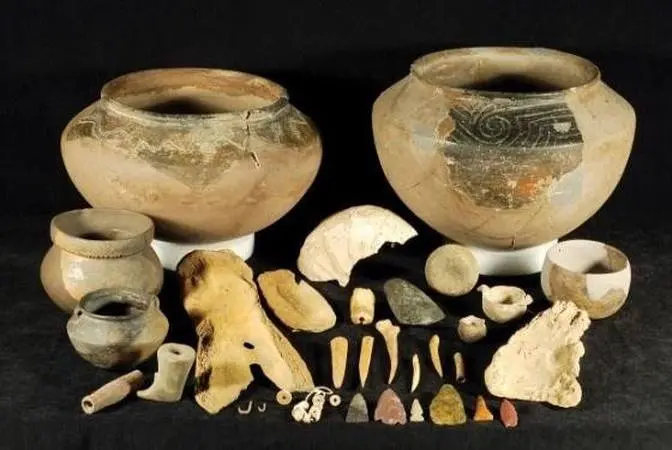
#Archaeology#archaeological artifacts
So, these are the most controversial mummies that have ever been found.
Supposedly found around the foothills of ancient Nazca, just off the coast of southern Peru,
these Nazca mummies come in all shapes and sizes.
Some look humanoid, some look like E.T., and others look like strange science fiction aliens.
Some claim they're fakes, some claim that they must be authentic,
whether they are really aliens like some claim them to be or not.
My friends Jesse Michaels and Will Brown at Incredible History have both covered the
history and forensics behind these mummies. Experts still have not been able to explain,
nor verifiably debunk. That said, I'm of course very skeptical about all of this.
I think that the size of the universe essentially indicates to me that it is,
basically, without a shadow of a doubt, there must be other intelligent life
somewhere out there in the universe. But whether or not they've actually made it to Earth or
interacted with human beings in any way that we can detect, let alone even in recent history,
I'm very skeptical of that. And so it makes me wonder, if these little Nazca Peruvian mummies
are something more than just a hoax, and they are not fakes, and they are actually authentic,
then what exactly could they be? And can we find some kind of context for them
in the pre-Columbian world? Since all of the mummies, especially the larger humanoid specimens,
haven't yet been debunked by experts, and because I'm not an expert in forensics or anatomy,
but I am an expert in the pre-Columbian cultures of Mesoamerica and Peru. In this video,
I'm going to break down what we know about pre-Columbian cultures affinity for skull
binding, body modifications, brain surgery, other surgical procedures, and genetically
engineering people with deformities. And if they're not a hoax, then I'll give you my theory
on what I think that they could be, and a semi-plausible context within the pre-Columbian
world that I think these Nazca mummies may be able to fit within. So it's actually alarming
just how unpredictable my life has become as of recent. At one moment, I'm telling my wife that
I'm not going to be traveling for the entire fall, and the next moment, pretty soon,
I'm going to be packing to head off to Argentina, and then Colombia, and maybe somewhere else.
I love it, but it's a nightmare, and working and traveling so much really puts a lot of stress on
your body. But I want to take care of my health and age as gracefully as possible, so I eat a
lean, high-protein diet. I work out four or five days a week, and I also take qualia.
So as you age, your body begins accumulating what are called senescent cells, and you and
I could refer to them as zombie cells. These are cells that linger in your body and drain your
energy, and this can be the cause for slow workout recovery, joint discomfort, and just
this overall feeling of malaise or a lack of energy. Qualia is a groundbreaking,
clinically-tested supplement made of vegan plant-derived compounds. It helps your body
to naturally eliminate these zombie cells and help you feel more rejuvenated quickly.
I take qualia only two days a month, and it helps my body age more efficiently at a cellular level.
It helps to support my energy and to age better than I would have otherwise.
Experience the science of feeling younger. Go to qualialife.com forward slash caverns for up to 50%
off your purchase, and use code caverns for an additional 15% off. That's Q-U-A-L-I-A life.com
slash caverns for up to 15% off your purchase. Your older self will thank you, and thank you
to qualia for sponsoring this video. Now, back to the show.
So for anybody who's interested in this topic, I think we should all be prepared for the very
plausible reality that not all of these mummies are authentic. But even if one of them is
legitimate, well, then we have a pretty interesting anomaly and mystery on our hands. And in writing
this video, I was curious as to whether or not we could actually find a place that makes sense for
them within what we know about ancient American cultures. So across most of the pre-Columbian
world, evidence for head binding and skull elongation can be easily found. From elongated
skulls found among the mound builders in Eastern North America, to burials containing elongated
skulls dating back to some 10,000 plus years all the way down in Patagonia. We don't exactly know
why skull elongation was practiced though, and perhaps the reason was different among various
different groups separated by thousands of miles and possibly thousands of years. But some of the
ideas that have been proposed are they may have signified elite social status. Many archaeologists
have thought that skull binding, which was performed on young children, was intended to
elongate the child's skull as they grew older, eventually serving as some kind of status symbol
to differentiate themselves among the lesser classes. This idea comes from the fact that often
we do find evidence of skull elongation in the tombs of wealthier individuals, while the tombs
of the poor contain skulls that look pretty similar to ours today. But I guess the real
question here is, if skull elongation was meant to signify status, then why does it and how did
that begin? What was the inspiration for wanting to elongate your skull? And one of the things that
I think people don't realize about skull elongation is that skull elongation isn't something that you
can perform on yourself. It's very clearly something when it is not natural and it is being
induced on people's skulls intentionally. It is something that an adult has to come up with
and then force upon a child. So it's a very interesting thing and I don't think people
realize that is that you cannot bind your own skull. You can only do it to a child who is
growing. So what caused this? What could be so significant within the consciousness or the mind
of an ancient person as to feel so compelled that your skull needs to be elongated that you then
induce this upon your children? Why is that? What could possibly be the precipice for skull
elongation? The second reason is that they may have been considered aesthetically appealing in
the pre-Columbian world. However, I would chalk this up as a byproduct of the tradition and the
clear emphasis on the importance of skull binding and elongation. If an elongated skull was the
symbol of wealth, rulership, and something to be desired, then naturally, it would probably start
to become appealing aesthetically as well. Perhaps this is not so different from medieval men being
attracted to fat women because it symbolized wealth and high status. And the third explanation
is that skull elongation may have had a religious or spiritual significance. They may have been
trying to emulate the image of their gods. There are instances among Paracas and Nazca artwork
where we see gods with elongated skulls. Even up in Mesoamerica, we see depictions of kings,
shamans, and gods with elongated heads beneath their headdresses, as well as depicted within
Olmec pieces. And the next question here is, at what point did not only just ancient Peruvians,
but ancient Americans as a whole begin viewing their gods as beings with elongated skulls?
This is where the door opens to the UFO community, hypothesizing that ancient people from around the
world may have been fashioning their heads in the shape of their quote-unquote gods because those
gods were extraterrestrial beings that visited Earth in ancient times. And it's definitely a
romantic idea, but I'll leave the UFOing to the UFO community that is kept in the good hands of
my buddy Jesse Michaels. From the Indian realm in Peru all the way up to Mesoamerica and even
further into the Mississippian world, I've seen ancient skulls where what is called trepanation
was practiced. Now, skull trepanation was an ancient surgical practice of deliberately cutting,
scraping, and drilling into the skull. There are a number of different reasons why archaeologists
believe this was done, whether it be for more vague reasons like spiritual or religious importance,
or even medical reasons like relieving pressure within the skull or treating skull injuries.
It's even thought that they may have known of methods to treat seizures, migraines, or even
epilepsy. But the reality is nobody knows why skull trepanation was practiced or the extent to
which pre-Columbian civilizations were aware of their own human anatomy. My guess is they were
probably much more aware of how the human body operates than we give them credit for, and much
more capable of performing complicated surgical procedures than we can possibly realize. Especially
given the fact that the patients that these procedures were performed on had a 50 to 80%
survival rate. And this can be determined by looking at how the bone continued to heal after
the procedure was performed. Almost every skull found shows signs that the patient lived for a
very long time following the surgery. And even the skulls with no sign of healing, many of these are
almost certainly test skulls for ancient doctors practicing to one day perform this procedure on
live patients. So this reality of ancient pre-Columbian people performing very complicated
surgeries and being extremely adept in the physical anatomy of the human body as well as
performing extremely complex and intricate and delicate surgeries on the skull is well attested.
But there's actually so much more evidence of ancient surgeries being performed around the
ancient Americas. All throughout the Peruvian world and especially at Machu Picchu, remains
have been found with deliberately amputated limbs. Marks on the bones show the use of unusually sharp
tools that could cut through tissue and even bone with remarkable ease and precision. We find
evidence of complicated dental surgeries being performed among the Maya, the Aztecs and Zapotecs
in Mesoamerica, as well as evidence of dental surgeries taking place among the Paracas, Nazca
and Inca down in Peru. Among many of these procedures, we don't actually know the entirety
of what tools were being used for such precise drilling and filing, but these ancient doctors
must have been well educated and very well trained. We also have evidence of painkillers
being used throughout these surgeries such as cocoa leaves, fermented corn alcohol, detera
and many other medicinal plants. In fact, according to the Aztecs, there were well over a thousand
known medicinal plants in Mexico alone. We find evidence of soft tissue procedures carried out by
the Wari and Inca Empire who were inspired and built their civilization upon the shoulders of
Peru's earlier cultures such as Chavin, Tiwanaku, the Nazca and the Paracas. These procedures,
again, required precisely and finely made surgical tools along with an extensive knowledge of tissue
anatomy. Again, evidence of these surgeries is found from Mesoamerica all the way down to South
America. Among the Maya, ancient iconography and skeletal remains show signs of sutured wounds
from warfare and ritualistic bloodletting, as well as sacrificial bodies that show signs of healed
incisions made on soft tissues, suggesting a much more profound ability among ancient surgeons than
we might traditionally expect. Among the Inca, Spanish chroniclers actually describe Inca surgeons
who were masterfully capable of suturing wounds with finely made needles. And like the Maya,
some Inca remains also show signs of healed soft tissue sutures. And as you may have guessed,
there are verified remains of Nazca and Paracas mummies with evidence of healed soft tissue
incisions as well, which Nazca and Paracas experts have interpreted as the remains of
surgical procedures to remove tumors and other unwanted growths on the skin. And living in such
an arid and hot environment as Nazca with very little tree coverage, it isn't really difficult
to expect that these ancient people very well knew that spots just appearing on your skin could be
associated with becoming sick and even dying, especially when cancers like melanoma are
particularly aggressive. The tools involved with these procedures aren't entirely known,
but razor sharp obsidian blades and copper knives have been found and were likely used for many of
the incisions. As if all of this isn't enough, we even have evidence of obstetric and gynecological
surgical procedures. The evidence is derived from ethno-historical evidence and skeletal remains,
which indicate that these surgeries were carried out in attempts to increase the survival rate of
as well as treat other reproductive health issues. Numerous mummies found from all around the
Peruvian realms, including mummified human fetuses, show an extensive ancient knowledge
of obstetric anatomy. From Mesoamerica down to Peru, we see evidence of pre-Columbian surgeons
carrying out extensive and complicated procedures to intervene with the complications of breech
births and other maternal complications. They were able to manipulate and reposition the baby
inside the mother's womb as well as perform cesarean-like procedures.
It's very likely that the person born with the highest IQ in all of human history
very well could have been a pre-Columbian Native American.
We even have evidence for bone setting and fracture repair. It's abundant and found
across nearly all of the pre-Columbian Americas. These were procedures intended to realign broken
bones and immobilizing the limb using splints until the fracture had been healed. This was a
very common ancient medical practice used to prevent deformity and disability from the Maya
to the Aztecs and, again, all the way down to the cultures of ancient Peru.
And finally, ear and lip piercing and stretching, induced rabismus, which is a condition where the
eyes are intentionally crossed, as well as intentional scarification and tattooing,
shows us that pre-Columbian Americans were interested in and well acquainted with many
different aspects of human anatomy and were constantly experimenting with things for a
medicinal and aesthetic purpose. And there's an additional topic here that I want to cover,
that is, I'm going into it just saying that, like with all things in the Olmec world specifically,
this is highly speculative. But the more time I spend studying the Olmec world,
the more I begin realizing that I think that there's something huge here. There's a large
gap that we're missing. And it's something that I just wonder if it doesn't somehow inform the
possibly of the Nazca people, or at least open up the door to a very particular possibility.
Throughout the Olmec world, if you've never been to the Olmec realm in central Mexico,
you probably only think of the Olmecs as these giant basalt colossal heads. But if you were to
come down with me to Mexico and spend at least just a week down there, you would leave Mexico
with a much different impression of the Olmec world. By far, the most common piece of iconography
in the Olmec world is what we call the werejaguar. And it's essentially this figure with these
downturned lips and fangs. It is a humanoid jaguar or an anthropomorphic jaguar. Nobody knows exactly
what this is. But in studying the Olmec world so extensively, I think that there are actually
two different segments of the world. You have the kings, and you have normal people that are
depicted not only on the colossal stone heads, but also throughout many other different forms
of their artwork. The Olmecs have many different forms of artwork, whether it's serpentine or jade
or obsidian, or whether it's basalt or granite. There's so much. You have normal people that are
downturned lips with clefts in the middle of them and fangs. And the more I've studied this,
the more I've seen that there really is this fissure down the middle of the Olmec realm.
And in the 1970s, there was a paper that was published that discussed that in the early to
mid 1900s, there were disproportionate cases of children who were born with what is called
ectodermal dysplasia. Ectodermal dysplasia typically has no learning disabilities. So
when you're born with this, your brain functions normally. However, in your mouth,
you may or may not have bottom teeth, but your top two teeth are fangs. And again,
this publication was specific to children that were being born in Veracruz, which is the
Olmec heartland. And I just wonder if looking back or projecting this deep into the past,
if this is not a genetic trait that has survived through the Olmec world, and perhaps
when children were being born in ancient times without learning disabilities, so they're still
perfectly intellectually capable as everyone else, but they have these two fangs.
If this is not something that is seen as desirable or special, or should I say even
divine? I wonder if the Olmecs were not in a way genetically engineering people to be more
commonly born with this. If you were born with this trait, it meant that you were imbued with
the power of the Jaguar or the shamanic power. And I can go on and on and on about this. This
should really be its own video. But in the Olmec world, I think that there is a decently strong,
yet indefinitely skeptical case here for the Olmecs genetically engineering people to be
born with a specific deformity that they thought in a way was divine. So across the pre-Columbian
world, we have so much evidence of intricate surgeries, body modifications, and now we even
have, at least I think, possibly an example of genetic engineering to bring about these
specific anatomical features that pre-Columbian Americans revered. So there is already this
precedent for extensive amounts of body modifications and incredibly sophisticated
surgeries taking place in the several thousand years leading up to European arrival within the
Americas. Which makes me pause and think, why couldn't the ancient Americans themselves be
responsible for these mummies? And why could they not have created them? If you study the Nazca
culture extensively, you'll find out it's a pretty strange place. And that's really saying something
for existing in ancient Peru. The Nazca culture was deeply spiritual with beliefs centered on
fertility, water deities, flying deities, shamanic rituals, and they depicted no shortage of weird
three-fingered beings with alien-looking heads on their textiles. Yes, I said alien-looking heads.
It is very strange. They created these massive geoglyphs, which we call the Nazca lines,
possibly to invoke their gods or ancestors as ancestor worship is pretty universal among all
Native American cultures. And there are often depicted hybrid creatures, half-human, half-animal
figures, which is not unlike what we see among the Olmecs with their were-jaguar. So if they're
not all a hoax, then what could they be? Again, I'm leaving the UFOing to my UFO friends. And I'm
personally offering an alternate, alternate explanation that could maybe possibly give
some kind of context to these crazy Nazca mummies. So my thought is, could this discovery be something
as peculiar and as weird and as strange and rare as finding the mummified projects of an
ancient Nazca Frankenstein? Perhaps a Nazca shaman or priest or even a crazy surgeon. Perhaps these
could be the mummified and buried projects of a Nazca shaman or priest with an extensive knowledge
of human anatomy who is surgically assembling a new being to mimic the image of the Nazca gods.
In my eyes, I honestly find this just as likely as these bodies being real extraterrestrial
beings. Perhaps this mad Nazca scientist created these beings to serve as vessels for the vital
essence of the Nazca gods themselves. Or perhaps this is some integral part of the Nazca world.
Could these not be some kind of deeply ingrained part of Nazca culture that we're just now becoming
aware of? Either way you cut it, the Nazca and Paracas people were certainly aware of three-fingered
beings with irregularly and honestly alien-shaped heads. Whether they invented them, whether they
physically saw them, or even interacted with them while they were under the effects of
plant hallucinogens, this is a real mystery that has never been explained. And my hope is that
further coverage from people like myself, Jesse Michaels, and Will Brown at Incredible History
will in some way lead to us finding out the truth about these mummies.
Alright man, so what got you into these mummies in the first place?
So I was down in South America writing my second book which will be called Enigmatic
South America. I wrote a first one, Enigmatic North America, where I basically dive into
controversial things just like this, the mummies. I had heard about them back in like 2017, 2018,
but it was associated with Gaia. And I just kind of put it to the wayside. While I was actually
in the airport in Peru, I saw that they had confiscated these mummies at the airport.
These not mummies, I guess I should say, these dolls that were clearly fake. And I remembered
in September of 2023, they had presented these things to the Mexican Congress. So I decided,
hey, I'm going to start asking questions. Before I knew it, I basically found out that there was
far more to the story than the press was telling everybody. And that there was really three likely
scenarios here. Likely maybe is the wrong word. There's three scenarios I was interested in here.
And scenario number one was that these were a hoax. And if they were a hoax, they would be
one of the greatest hoaxes of all time. They were literally presented to the Mexican Congress.
And there was also scans coming out at this time that showed what was underneath these mummies.
And the big ones were clearly humanoid, human, right? They weren't animal bones. So if this
was a hoax, it's the greatest hoax of all time. Scenario number two was maybe these were
manipulated in ancient times. And if that's the case, then wow, this is maybe the greatest
discovery in all of anthropology coming out of Peru. The level of sophistication needed for what
we're going to talk about, some of the things we're going to talk about, would just blow away
what we know about the Nazca people. And then scenario number three, these were real living
beings born the way that we see them, a new species. This would be the greatest discovery
maybe ever. And so all three scenarios were interesting to me. I didn't go down there
hoping necessarily to prove one or the other. I mean, obviously it'd be pretty great if these
were real, but I would just want to go learn as much as I can.
Yeah. So if you would dive a little bit more into it for us, your three major possibilities.
Yeah. So I guess so the three things that are the hardest to explain, really, I kind of want
to focus on one, Jesse Michaels does a great job in his documentary on the DNA. And we might be
getting some more information on that because Jesse is taking some action on trying to get
a better DNA sample with colossal bioscience labs. So kudos to Jesse for that. But for me,
the biggest thing that always blew my mind was when I interviewed Dr. Zuniga Jr.,
the younger doctor who is both a licensed medical professional and a licensed dentist,
who has plenty of experience with surgeries and something he sees called osseointegration. So
when he puts metallic implants in mouths or whatever for surgeries, after six months,
the body starts to really osseointegrate to that. And I might be using the wrong terminology there,
but basically what that means is organic tissue starts to fuse to the actual metal.
And when he dissected one of the little ones, which I've kind of stayed away from,
I'm interested in the big ones. But when he dissected one of the little ones,
yeah, exactly. It might've actually been that one. He noticed that on the metallic rod that
is implanted in their chest, what he thought was osseointegration. If that's true, and this hasn't
been peer reviewed necessarily, but he is a professional and there's been other doctors
say they've experienced the same thing with other bodies that they're looking at down there.
If that's true, whatever was implanted on that bone, that chest, whatever that was,
would have had to been alive. Is that true? I'm not a doctor. I was just reporting what
the doctor was telling me. So that to me blows my mind. And then also if you just kind of want
a little bonus anomaly in there, Dr. Zuniga Sr. told me that Maria has 32 vertebrae,
while most humans have 33. From what I understand, this isn't exactly impossible,
but we are talking about anomalies that are happening here. And it's something to be considered
because you're looking at these bodies, trying to see if there's anything different from humans.
And that is definitely one of them. Apparently she has 32 vertebrae, while most humans have 33.
She also has a protruding mouth. Some of them say that the eye sockets are abnormally large,
but I have also, to be fair, seen large elongated skulls in the Nazca region that have
what appears to be large eye sockets. So those ones come to mind. But to me,
if that's true about the osseointegration, how do you explain that?
One more bonus one is people are talking about the fetus inside of Montserrat having three fingers.
I've seen the scan where they highlight those three fingers. And to me, I was wondering,
is that kind of highlighted in a way that would show that? So I asked Josh McDowell,
who's the lawyer of the American scientists, whether that image is accurate. And he said,
they really just need better imaging to tell. And he didn't confirm or deny whether that
baby, that fetus, has three fingers or not. But if that is the case, how do you explain that?
You know, that would be a weird one. And on the opposite side, is there anything
about the mummies that you think is a red flag for you? Something that in the inverse
is also unexplainable? Yes. So I guess it's not necessarily that it's unexplainable,
but the story is just something people need to consider. At the end of the day,
we don't know where these were found. Archaeology, the way I understand it,
kind of works like a crime scene. You can tell a lot about what the truth is on a subject
by just studying the actual scene of where these actually were found. The red flag number two,
I'm starting to see photos of giant heads circulating that are way different than what
we're seeing with Montserrat and Maria, the two that look the most real, in my opinion.
These giant heads are also covered in diatomaceous earth, and they have this brow
that is clearly like, I don't have to be a biologist to tell you if what we're seeing
on the surface is the same as what's underneath, then that's a new species. So my question is,
why haven't those been scanned? And if they have been scanned, which I don't necessarily think
they have, but if they have been, why isn't that released to the public? We should release
everything. And a lot of the proponents have said, well, those giant heads are probably fake. That
doesn't mean these big ones are fake. And hey, I agree with that, but let's put it all out there.
Because if these are fake, we should be able to see exactly how they did it, right? Is there
anything that we're seeing on the surface that's tricking us that's a little different than what
we're seeing underneath? And if you look at those giant heads, they have eyebrows and eyelashes,
not eyebrows, but eyelashes. And some of the mummies that look more real also have those
eyelashes. And so there's just a bunch of things with the giant heads that I'm like,
why are we selectively putting out scans of the ones that look the most real, the big ones?
What about the giant heads? We should probably scan those, right?
Yeah. See, and that's the whole thing. Going back to not having the location of the
discovery site or not having the provenance for them. I worked with, I guess still am working with
Cusco's Ministry of Culture and Ministry of Antiquities and their archaeological team
on the fundraising for the chinkanas. And I believe that is the same organization
that oversees Machu Picchu and oversees the preservation of that site and everything.
And just the idea that Peru's archaeological department wouldn't be all over this all the
way down in Nazca. We don't have to go down that rabbit hole, but there's a giant question mark
there as to why those are not already on display in Lima or underneath Lima's museum down in a
laboratory. And to be fair, in the early days of this, the Ministry of Culture was just very
uncooperative. And so I don't actually blame the proponents for how they've handled this.
Like the University of Ica, in my opinion, Dr. Zuniga Sr. and Dr. Zuniga Jr., all of those guys,
in my opinion, have done a great job. They're doing what they can to preserve these. They've
done what they can to look at these because they were asked to. And the Ministry of Culture,
as the way I understand it, is kind of starting to cooperate a little bit more on this. You know,
I was at the press conference that got raided, and they were not cooperating then. They were
there to confiscate the bodies, and we might not have ever seen them again. A couple months later,
I think some management changed, and the University of Ica actually, at one point,
took custody of Maria for a quick scan and then returned it, you know, with good faith,
goodwill, to the University of Ica, which is where I saw Maria. I saw Maria at the University
of Ica. And, you know, they're working with the limited resources that they have. So I do think
that the University of Ica has done a good job with what they're working with, trying their best
to, you know, get some answers on this. Do I know whether their conclusions are accurate or not?
I don't know, but the head's kind of throwing me for a loop there. I also just wanted to add
one more thing, Luke. And this one really kind of upsets people online, but I think it's worth
considering. There's a bioanthropologist named Daniel Proctor that put out a video, and I can
send you the link of this, where he does a review on the scans of Maria. And a lot of people say
we can't find any manipulation on the hands or the feet. He points out what he thinks is
manipulations where the thumb should be on Maria's hand. I'm not a bioanthropologist. He is,
and he actually has publications on the evolution of the feet and even publications on the evolution
of hominids being able to grasp with their hands. And to me, it's like, hey, you know,
I'm going to listen to what he has to say. That's a pretty interesting background.
Yeah, so I could send you that video if you want to take a look at that.
Yeah, yeah. We send it, and we'll plug it in the description as well.
Okay.
So what do you hope comes of this?
I hope that Jesse Michaels and the team of American forensic scientists are allowed to do
what they would like to do to get to the bottom of this. So Jesse Michaels has stated that his
colossal bioscience labs to get new DNA study on this. And the reason I like that is because,
listen, maybe the old DNA study is fine. It's perfectly fine. Colossal bioscience
labs is going to make headlines. And in the year 2025, that's kind of what you need to get to the
bottom of something weird like this. You need headlines. You need Rogan to keep talking about
it. And you need enough oomph behind it to get people to peer review whatever comes out of that.
Second thing is, when I was down at the press conference, I asked
Dr. John McDowell, I got on the microphone and asked him, what do you need to see
to get to the truth of this? What's the process going to look like? And he basically just
described the peer review process. Somebody asked me on a podcast the other day, even if
these guys come out with a publication with what they think is the truth, do you think that people
will review it? And the answer, in my opinion, is yes. These are legit scientists. Dr. John
McDowell is about as good of a forensic scientist as they get. You can look at his credentials.
And so if those guys are allowed to do what they want to do, and they come up with some conclusion
showing either way, real or fake, people will peer review it. I am confident about that. So
that's what I would like to see. That's what I would personally like to see to get to the bottom
of this. Yep. I agree with you, man. I don't know if we ever will get there, but I agree with you.
Well, where can people find you and what are you up to?
So, Incredible History, at incredhistory on YouTube, Twitter, Facebook, and Instagram as
well. And right now, I've just got three, four years of footage and things that I've documented
that I'm about to make some solid content on. So you can check me out on YouTube. I'm going to be
doing a weekly show there. Will, thanks again so much for coming on and sharing your experiences
about the Nazca mummies. I haven't heard much from people in Peru. No, I've heard from people
in and around the case. Obviously, the people on the road that are real side have reached out
saying, you know, thank you for de-stigmatizing it and showing that they're worthy of investigation.
And then on the anti-side, a couple of people have reached out saying they had weird experiences
around studying the beings and came out thinking, you know, a couple of them were hoaxes. And so,
and, you know, they experienced some weirdness with the Wakeras and the Ikari Institute. So
I think those are obviously as worthy as the pro ones. But again, I would just say kind of
the evidence of the weirdness isn't necessarily evidence that, you know, there's something
fake underlying the whole story. Yeah, yeah. I can't say I'm like much more sure in either
direction as opposed to putting it out. I mean, obviously, people who I love, like Revan has really
gotten behind it. And he's excited about it. But I think he has the same stance as me, which is like,
this is just, it's, it's, it's worthy of having brain dead around the thing. And we need to
scientifically investigate this stuff. Yeah, that's the way I feel. I kind of like we were
talking about maybe a week ago or so. That's, you know, there's some things that I've seen
personally, that sort of raised some red flags that seem very strange to me. But in all of the
medical experts who have researched at least the more significant larger bodies,
there's like a bunch of anomalies there that basically present or prevent the bodies from
being verifiably debunked. So obviously, you have this situation where, you know,
there could be some, I guess, trying to speak vaguely, there could be potentiality for
some hoax to be amidst. But there are definitely things here that present real mysteries. And so
in my video, I basically started off saying, you know, I leave the UFO into my UFO friends,
Jesse Michaels, and Will Brown over incredible history. I know you guys have talked a little bit.
But yeah, he's great. And basically, my presentation, and I think it's something
you might be interested in, is I essentially take a look at the pre-Columbian world, mostly
South America and Mesoamerica. And I basically paint this picture of their affinity for like,
body deformations, and even like genetically engineering people to be born with deformations
and like their expertise in these complex surgical procedures that I think most people
probably aren't aware of. And so it kind of gives this context for the pre-Columbian world
that sort of alludes to the fact that, you know, even if these aren't a hoax, and, you know,
if they're not, if they aren't extraterrestrial, is there like an alternate explanation? Could
these be, you know, like a Frankenstein project that ancient pre-Columbians are creating during
their time as like, I don't know, something that resembles their gods? And I essentially go into,
you know, what is skull elongation? Why does it begin? And I talk about how, I don't know if most
people realize, it's a decision that someone without an elongated skull had to make for future
generations. Like you can't elongate your own skull, right? So that's kind of what I dive into
is like the pre-Columbian realm. But yeah, I just want to get your thoughts on how you felt. I
wanted to follow up with you after your doc came out and kind of see where you're at. Yeah, no,
I'm just, I'm just think we need more testing. We need, you know, hopefully, hopefully this
colossal thing works out and we can get, you know, your company, you know, advised by George
Church. You, you could say is one of the godfathers of modern genetics. You know, giving
some credibility to, to the whole thing. And they also obviously have ancient DNA testing techniques
that go beyond and do more error correcting than just kind of simple DNA testing. So,
yeah, I'm excited to see that possibly happen. And yeah, I don't know, man, I'm, I'm very open
to, you know, I think for all this trepanation success rates that were inordinately high,
normal skulls are also, you know, higher volume than the average skulls. And so what does that
point to? Is it, you know, it's the classic, you know, Bob Danikin sort of people from the stars,
or, you know, you know, just like the megalithic architecture, how do you explain it? Is it via
more advanced society or, you know, people paying homage to these sort of greater beings themselves?
And I think these questions are not, I don't want to say unanswerable, but they're going to be very
hard to answer. But, but yeah, I think, I think that's a very worthwhile vector that could
definitely bear fruit is like, you know, are these just extremely, extremely sophisticated
ancient mutilation rituals or whatever? And, you know, in a way that even transcends the ability
of like a modern person to detect these forensic experts, like try to detect that,
totally possible. But then again, you have a lot of these forensic experts looking for,
you know, finger and toe mutilations and stuff. It's like, they're not finding any of that. So I
find that I find that very intriguing and important as well. And then beyond that, if, you know,
I don't see how you can explain that via human, you know, that implies genetic inheritance between
mother and, you know, son or daughter. So I, you know, unless we're talking about a people with,
you know, genetic engineering, sephalitic impregnation inception abilities, which I
don't believe, you know, the Paracas or the Nazca people have, I think we're in very new
territory. Yeah. The only thing that I bring up in the video that I think is intriguing,
and it's something I need to, now I really need to, I realized while I was writing it,
I really need to make a video about this is, and we can talk about it like you and I some
other time, but the Olmec, and it'll be in a video, but the Olmecs, I think there's enough
evidence to suggest that they are, I guess, like genetically engineering people to be born with a
deformity called ectodermal dysplasia. And, and it's, there's no learning disabilities, but it
causes people to have fanged teeth and their whole iconography is around this fanged were jaguar
thing. So that's the only thing that I've ever found in the pre-columbian world. And maybe even
in all of the ancient world where people are being deformed with like, uh, an anatomic or
people are being born purposely with anatomical features that are just so, uh, vastly, uh,
you know, atypical, I guess. But anyways, that's a topic for another day. I just wanted to,
uh, follow up with you and, and, uh, tell you, I loved your documentary and I hope that,
you know, you putting that out, maybe me putting out this video will put out, uh, he put out a
documentary on it. He's done a lot of research on it, but I hope that all of us working together
at some point gets somebody interested enough to really do something about this. And maybe we find,
uh, maybe we find an answer. I love it, man. Thank you for having an open mind and covering
it. And, uh, I agree. Let's try to push this into some sort of discreet truth. Yeah. And, um,
that's amazing on the whole neck. So I got to jump in a second, but how, how, how did they do that?
Yeah, it's, it, it isn't the right word. It isn't the right word. So, um, in the 1970s,
there were some documents that were, uh, there were these, uh, there were these scientific
papers that were published of a disproportionate amount of indigenous children being born with
ectodermal dysplasia. And, uh, my wife's a dentist and she and I have talked about this a lot.
Um, and I've asked her some questions about this, but essentially there's no learning disability,
but, um, what tends to happen is you're not born with any teeth in your mouth and you may have
some bottom teeth, but your upper teeth are like two fangs, like a, like a Jaguar, you know,
like a feline fangs. And, um, and so all throughout the Mesoamerican world, since then people with
deformities were venerated. And like when the conquistadors arrived in Moctezuma's palace,
this palace was full of all these people with particular deformations and they were being
essentially, uh, spoiled and treated like they were, you know, uh, semi divine beings.
And so, uh, in the time that I spent studying this, I wondered if, uh, when you study the Olmec
world, you see all these depictions of like dozens of people who are depicted as were Jaguars,
and it gets more and more obsessive. And I have wondered as I've been studying this,
if the Olmecs were not like, I guess selectively breeding would be the right word, right?
Uh, they're selectively breeding people with the, with this trait of ectodermal dysplasia
and more and more people are being born with it. And my thought is like, when they're born
with this deformity, it, uh, essentially imbues them with the power of like their shaman or their,
you know, religious figure or whatever. Um, but it's, that's the only thing that I've ever seen
in the pre-Columbian world and maybe all of the ancient world where people are like,
where ancient people are like selectively breeding people to be born with some kind of deformity,
right? So, uh, and then that becomes obsessive in Mesoamerica. Like everyone who's abnormal
becomes venerated, like they venerate dwarves and they, and they venerate like people with
hunchbacks, all kinds of stuff. So, so fascinating. Yeah. Yeah. So, so, so, so interesting. Yeah.
So, uh, yeah, but that's topic for another time. I got to do a lot more research on that,
but maybe one day you and I can touch on that again. Let's do it. Well, um, uh, yeah,
appreciate your time and attention on this and excited to see what, uh, what happens.
Yep. Yep. All right, brother. Well, you enjoy your time off. It's good talking to you.
Thanks, Luke. You too. Talk to you soon. All right, man. Catch you later.
And I just want to give a shout out to my buddy over at tridactyls.com for sending me this
creepy little head. I'm Luke Caverns. If you'd like more videos on history and mystery all
around the world, well, please like, and subscribe for more.