
The BRUTAL Execution of King Louis XVI
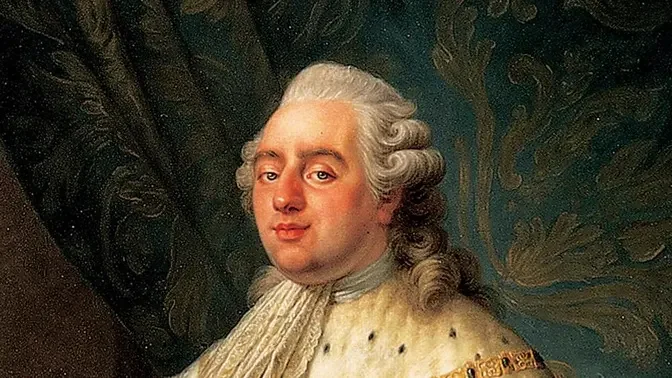
The execution of King Louis XVI.
King Louis XVI was the last king of France before the French Revolution.
He was born on the 23rd of August 1754 in the Palace of Vercel, France.
He ascended to the throne in 1774 at the age of 20, after the death of his grandfather.
After his grandfather, Louis XV.
Louis XVI was married to Marie Antoinette, who was a daughter of the Holy Roman Emperor,
Francis I, and Maria Theresa of Austria.
During his reign, Louis XVI faced a variety of challenges,
including financial difficulties, social unrest, and political instability.
He tried to implement various reforms to address these issues,
but his efforts were largely unsuccessful.
His reign is often associated with the decline of the French monarchy
and the events that led to the French Revolution.
In 1789, the French Revolution began with the storming of the Bastille, a prison in Paris.
Louis initially tried to resist the revolution,
but eventually he and his family were forced to flee the palace
and seek refuge in the Tuileries Palace in Paris.
In 1792, the monarchy was abolished and Louis XVI was put on trial for high treason.
He was found guilty and sentenced to death by guillotine on 21 January 1793.
His execution marked the end of the Bourbon monarchy in France.
Louis XVI's relationship with his wife, Marie Antoinette,
was complex and had a significant impact on his reign.
They were married in 1770 when Louis was 15 and Marie Antoinette was just 14.
The marriage was arranged as part of a political alliance between France and Austria.
Initially, the couple's relationship was strained
and they struggled to conceive a child for several years.
However, they eventually became closer and had four children together.
Marie Antoinette was known for her extravagant spending and lavish lifestyle,
which caused significant public criticism and contributed to the monarchy's unpopularity.
Louis often supported his wife's spending habits,
which further eroded public trust in the monarchy.
Despite their close relationship, he was unable to protect his wife from the criticism
and hostility of the French people during the revolution.
Marie Antoinette was accused of various crimes including treason and incest
and was ultimately executed by guillotine in October 1793, just a few months after her husband.
Overall, while Louis XVI and Marie Antoinette had a close relationship,
their inability to address the economic and social issues facing France,
coupled with their extravagant lifestyle,
contributed to the downfall of the monarchy and ultimately led to their tragic end.
Louis XVI was imprisoned twice during the French Revolution.
The first time was in 1791 when he attempted to flee France with his family.
They were captured in a small town in northeastern France and returned to Paris.
After this incident, Louis was placed under house arrest in the Tuileries Palace in Paris.
The second time that he was imprisoned was in 1792
after the monarchy was abolished and the National Convention was established.
He was accused of treason and other crimes against the French people
and in August of 1792 he and his family were imprisoned in the Temple, a former fortress in
Paris. He was separated from his family and placed in a small room with few amenities.
He was allowed to exercise in a small courtyard for one hour per day
and was visited by his family and a few loyal supporters.
Louis' imprisonment was a symbol of the revolution's victory over the monarchy
and his condition deteriorated over time. He was subjected to harsh treatment and deprived
of basic comforts but despite this he remained dignified and composed during his imprisonment.
In January 1793, Louis was put on trial by the National Convention and found guilty of high
treason. He was sentenced to death by guillotine and executed on the 21st of January 1793 in the
Place de la Révolution in Paris. His execution
Louis XVI's execution by guillotine was a significant event in the French Revolution.
He was executed in the Place de la Révolution in Paris which had been renamed from Place Louis XV
after the monarchy was abolished. Louis' execution was the culmination of a series of events that had
led to the downfall of the Bourbon monarchy in France. He had been imprisoned since August 1792
and in January 1793 he was put on trial by the National Convention which had been established
after the monarchy had been abolished. He was found guilty of high treason and sentenced to
death by a narrow margin of votes. On the morning Louis was taken to the guillotine in a procession
through the streets of Paris. He was dressed in plain clothes and had his hands tied behind his
back. He remained composed and dignified throughout the procession and during his final
moments. At approximately 10.22am Louis was executed by guillotine in front of a large
crowd of onlookers. His execution was met with mixed reactions with some celebrating the end
of the monarchy while others were mourning the loss of their king. His execution marked the end
of the Bourbon monarchy in France and the beginning of a new era of French history.
The French Revolution continued for several years after his death ultimately leading to the rise of
Napoleon Bonaparte and the establishment of the first French Empire. When he arrived at the
guillotine Louis climbed the steps to the platform and addressed the executioner saying,
I die innocent of all the crimes laid to my charge. I pardon those whose occasion my death
and I pray to God that the blood you are about to shed may never be visited on France. Louis's
head was then placed on the block and the guillotine was activated severing his head
from his body. His body was then taken away for burial in an unmarked grave. After he was executed
his body was initially buried in the Madeleine Cemetery in Paris in an unmarked grave. However
in 1815 after the fall of Napoleon Bonaparte, Louis XVI's remains were exhumed and moved to
the Bascula of Saint Denis where most of the French kings and queens were buried. Louis's
body was placed in a crypt at the Bascula along with the remains of his wife Marie Antoinette
who had also been executed during the French Revolution. The crypt became a pilgrimage site
for royalists and other sympathizers who visited to pay their respects to the fallen monarchs.
In 1816 a monument was erected at the site of Louis XVI's execution in the Place de la
Revolution in Paris which had been renamed Place de la Concorde. The monument which still stands
today is a statue of a winged figure representing liberty holding an olive branch as symbol of
authority. This statue stands on a pedestal that bears an inscription that reads to the French
people from the National Assembly in memory of the victims of 1792 and 1793. Today Louis XVI's
legacy is still debated in France with some viewing him as a well-intentioned but weak monarch
who was unable to address the social and economic problems facing France while others view him as a
victim of circumstance who was unable to overcome the forces of the revolution. Regardless of one's
perspective Louis XVI's execution was a significant event in French history and marked the end of the
Bourbon monarchy in France. Please continue to support my channel by subscribing. Please comment,
like and subscribe if you wish for more stories and leave your suggestions below
and I will endeavour to cover them.