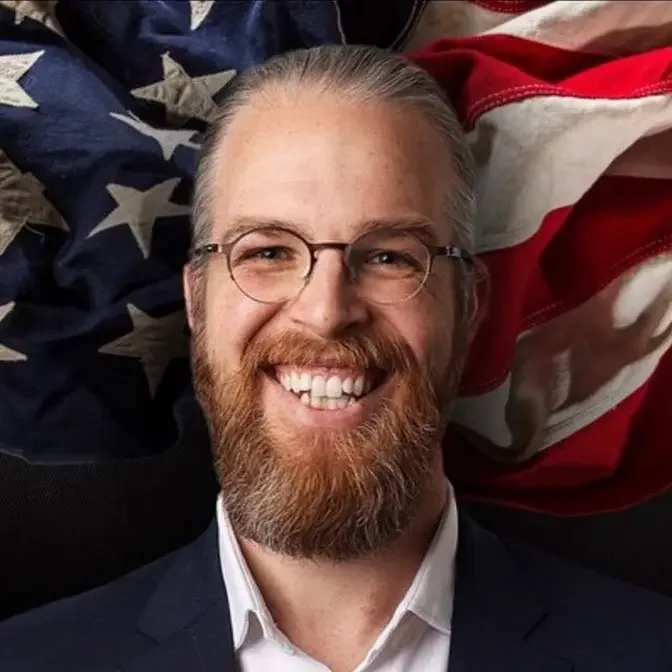
In this interview, I sit down with Mark Wilburn of Neos Capital to talk about the stock market shock that wiped nearly $450 billion off NVIDIA in just days. Mark warned about it on X six days before it happened. We talk about why your 401k may not be as "diversified" as you think, and what bank and cyber failures overseas could mean for us here at home. Is this the first crack in a much bigger bubble?
Go to https://2027MoneyPrep.com now to reserve your FREE seat at the 2026 Freedom Trading Summit with Mark Wilburn of NEOS Capital. Free LIVE virtual event: Thursday, November 19th at 4pm ET or Saturday, November 21st at 11am ET.
DISCLAIMERS: Some of the links in this description are affiliate links and pay me a small commission if you use them. I hope you do! Thank you so much for the support, it really helps to keep this show truly independent. Guest views are their own and are not financial, medical, or professional advice; consult a qualified professional before acting on anything discussed.
PROTECT YOUR FINANCES: -- Learn more about investing in gold & silver, visit http://goldwithseth.com, or call 626-654-1906
STAY HEALTHY: -- Age well by restoring your cellular health with NMN-3 from Brightcore 25% Off with code: MIA at https://brightcore.com/mia Or call (888) 575-6488 for up to 50% OFF and Free Shipping. ONLY when you call!
– Improve your sleep and support bee health with the PureWave Cell! Visit https://4RBees.com and use code SETH to save 20%, with a portion of every purchase helping provide free PureWave Cells to beekeepers in need.
-- Detox your body from everyday nano-toxins, including heavy metals, forever chemicals like BPA, and pesticide residues: https://zeolite123.com. Use code SETH to save.
BE PREPARED NOW: – Get a FREE Chapter of Prep Like Noah! Learn how to build a reliable emergency food supply for your family, without spending a fortune or feeling overwhelmed:: https://preplikenoah.com
-- Are you ready for what’s coming? Take the FREE Ready Score test here: https://readyscore.com/
The video examines the volatility of the AI stock bubble, highlighting how political shifts and overvaluation in semiconductors create systemic risks. Guest Mark Wilburn discusses the dangers of market concentration in the S&P 500 and advocates for financial self-reliance, diversification into physical assets, and practical education to protect wealth from institutional manipulation and economic instability.
A month ago, President Trump set up a rally in Tennessee
and warned people that if the
Democrats won the midterms,
that America would get into a depression like 1929.
And those are his words.
We talked about it on my show.
Well, as you know, the Democrats won,
whether they did it by cheating or not, you know,
who knows?
Maybe we'll know.
Maybe we won't know.
But either way, they did win.
And the morning after, Wall Street threw a party.
Stocks jumped more than 1%, which lasted about 24 hours.
But then old Bernie Sanders got an X and typed five words.
He typed, National Data Center Moratorium Now.
And by Thursday, the NASDAQ 100 had its worst drop since March 2020.
And NVIDIA, AI's favorite stock, crashed more than 9%,
which erased nearly $450 billion off its market cap.
By Friday, Bloomberg was calling it a $3 trillion route.
This is a pretty big thing.
And Trump did predict it, so it happened.
And a new Congress hasn't even been sworn in yet.
Not a single vote has been cast.
But if you read what Bernie's bill actually requires, it's this.
It says that the government signs off
on AI products before you're allowed to use them.
Which I don't like that.
And in his own summary, he says, quote,
the wealth generated by these companies must
be shared with the American people.
Shared wealth kind of sounds like Marx talking, but anyway.
So the thing is that who decides how it gets shared?
Well, them, of course.
So Bernie, old, you know, kind of...
Share the wealth. Bernie has three houses
so that we know how he shares. Maybe he invites
his neighbors over for dinner often
and that's how he does it. But either way, the guy's got
three houses. Now, maybe you're thinking, okay, hold on, Seth.
I don't really own NVIDIA.
Maybe that's true, but the reality is that if you've got a 401k,
you probably do own
NVIDIA.
Four out of every $10 in an S&P 500 fund is riding on 10 tech stocks,
and most of them
are the exact AI names that just got hammered.
That's exactly why I've got my guest today coming
in to talk about this, because I've
been talking about the AI bubble for quite some time,
and I think what we're seeing is
a hole starting to appear in that bubble.
So my guest today is Mark Wilburn.
He's back with us.
He's the president and the co-founder of Neos Capital.
And he wrote a book called Understanding the Matthew Effect.
So that's really based on the scripture Matthew 25, which says,
to everyone who has, more will be given.
It's basically his book is describing why the rich keep getting richer
and how regular folks can actually use the same playbook.
And Mark brings a biblical view of stewardship
to how families handle their money, which
is why I trust him.
And I really appreciate his perspective on things.
It's rooted in faith, which is, in my opinion,
the only place to root any beliefs these days,
because if you don't have that, good luck out there.
Mark has trained thousands of people to read
the stock market for themselves, not gambling,
not guessing, and not waiting on some talking head
on CNBC to tell them what to do.
And Mark actually has a knack for seeing what's around the corner.
So on October 30th, he posted a warning on X
that the NASDAQ 100 was about to drop below
$27,000 and that NVIDIA would fall below $190.
And six days later, both those things happened.
The NASDAQ 100 had its worst drop since March 2020,
and NVIDIA crashed more than 9%.
As I mentioned, erasing close to half
a trillion dollars of its market cap.
And the same day, the market was in full-blown panic.
Mark was calling out winning trade after trade at that time.
Now, what's also good about Mark is that he loves teaching people.
And so he's holding a free live training called
the 2027 Financial Preparedness Summit.
So this is it right here.
So it's two showings, one on Thursday, November 19th,
and then also one on Saturday, November 21st,
where he's going to show you what's really happening in these markets
and how to really take back control of your own money.
So if you want to learn more about those,
you go to the website 2027moneyprep.com.
The link's going to be in the description.
It's 100% free, and he's giving away a digital copy of his book
just for showing up.
So let's go ahead and get into my conversation with him.
I've been looking for us.
I always enjoy talking to Mark.
So Mark, man, welcome on the show.
I always enjoy having you here.
Thanks for being here.
Hi, Seth.
It's feelings very mutual, man.
I always like our pre-conversation or post-conversation.
We always get into, you know, what are you doing for your well pump?
How are your chickens doing?
That kind of stuff.
So it's always fun.
It is.
And it's interesting because I kind of tune in, you know, you're
Your summit, it's the 2027 Financial Preparedness Summit.
And I'm glad that you called it that.
I know that you're not someone that is living
in a high rise in New York City, working on
Wall Street and calling that being prepared.
And you're similar to me.
You're homesteading, you're homeschooling,
raising your family in that way.
But I think that preparedness spans so many different areas.
But financial preparedness is one of the main ones.
That's why I'm a big believer, as I know you are too.
This good old metal that comes out of the earth and storing that.
But the thing is, is that what I find about being prepared
is it's really weighing out
a lot of the risks and a lot of the benefits.
Where are your things safe?
Say you've got a bunch of food,
but your food is stored a hundred miles away at, you know,
in grandma's food cellar.
That's not going to help you when you need it.
And so financially, I know that a lot of people,
they think, oh, look at my balance sheet.
Look at my net worth.
I'm doing pretty well.
But those are numbers that are stored on some computer.
or they're tied to some market that...
You're just trusting your financial advisor to be managing for you.
And so as I opened it up with this,
so on October 30th, you warned people on X,
the NASDAQ was going to fall and NVIDIA was going to fall.
And then six days later, both those happened.
So I want to see though.
What is your perspective? I mean, what do you see coming?
Do you think there's any validity in
Trump's 1929 warning?
Are we seeing the first crack in that or was just some kind of like an
overreaction to things? No, it's a great question.
And so first kind of rewind a minute. When you
trust the system, you're at the will of the system, right?
And so again, like you said,
You said, I'm a big believer in gold and silver.
But also diversifying, and that's where we engage
the stock market with that.
We engage real estate with that.
But just looking at what you saw in Paraguay last week,
where people woke up and they don't
have any access to those electronic funds.
Whereas if you did have some gold and silver, you still would, right?
And so again, I'm a big believer in electronic funds.
That's what we teach.
That's what we do.
But like you said, preparedness goes full circle.
There's every single thing that you can do.
So getting into what you were saying, though.
As far as is this, you know, is this a crack?
Is this breaking down?
What we saw were a lot of names in big tech, especially
the semiconductor industry, beginning to show weakness to people.
And it's no secret.
I mean, Seth, you've talked about this all the time,
how wildly overvalued so many of these companies are.
We talked about the circular financing model that they're
just taking money and feeding each other all of that money.
And these companies, a lot of them aren't even profitable.
Right when you look at Anthropic coming out,
they're showing a huge loss every quarter.
It's getting better, but it's still losing.
And it's the same way with OpenAI and ChatGPT.
And so regardless, about October 22nd,
that's where we started really looking for a bigger downside move.
We saw Google earnings that were terrible.
That confirmed to us the NASDAQ is going below 27.
NVIDIA, it's probably going below 190, maybe a little bit further.
Honestly, I thought it was going to take a few weeks longer.
I was thinking more towards December-ish,
but the midterm momentum, man, we got there quick.
Like we got there really quick.
And after looking at other companies like Broadcom,
another semiconductor company, Taiwan Semiconductors,
another semiconductor company, that's where we started seeing
these cracks take place that you're mentioning.
And so is this the start of a big drop?
Is it overreaction and panic selling?
It could be a little of both
because these are the types of events, Seth,
that people do go panic sell
because they're too afraid to buy
or honestly, they don't know what to look for.
They don't know when the right time to buy is.
And so personally,
I don't try to catch a falling knife, right?
Like I had a mentor of mine.
He's like, all right, Mark,
I'm gonna drop this knife, try to catch it.
I'm like, I'm going to cut my hand.
He's like, there's a way you don't.
And so I just waited until it hit the ground and picked it up.
And that's what we kind of teach you how to do with it.
But when you have three of the top 10 names in the world,
NVIDIA, TSM, Broadcom, all down 30 plus percent,
that's where I start to pay attention
because it could be a good buying opportunity.
Well, and so I want to focus just, you know,
a little more on what happened in Paraguay
because I think that, that.
Obviously, we have the AI bubble,
and we'll be kind of digging into that a little more.
But one of the kind of core things that I try
to look at things through this lens is
that I don't like the idea of my...
The network, the things that I own being just on a printed out paper
or being on a digital screen. And that's the thing
is that we're seeing an increase in hacking attacks.
I think a lot of them are being blamed on AI, which whether they
are or not, we probably will never know, but they've now got
the perfect scapegoat for AI attack cause X, Y, and Z to happen.
And so if you look at what happened in Paraguay,
so here's a different article I pulled up.
So Paraguay's bank collapse hits millions.
This just happened.
It also pulled their president out of office after this happened.
So here it says,
Paraguay's president was removed from office and detained
after the country's largest digital bank melted down,
leaving half the populace without access to funds
and plunging the country into a political crisis.
So it says,
a youth-friendly banking app, UNO, if that's how it's pronounced,
collapsed amid allegations of insider lending.
And proximity to the country's longtime ruling party,
which is closely aligned with Washington.
It says the bank, the app was credited with expanding access in a
region where as many as one in four adults doesn't have a bank account.
And so they say its implosion was a kind of tsunami in the end.
And so this is, I mean, these are situations where.
You just, okay, hey, this person can't fill their gas tank
because their debit card's not working.
These are situations that can literally collapse
the fabric of a society and a country.
And so if you look at Paraguay,
you look at the lessons from this,
I think it's even more important for people
just to realize that the normalcy bias
that we have here in America of,
oh, life is, since I've been born,
life's always been great,
therefore it always will be great.
A lot of people are relying on apps just like
these or even just their bank accounts, which
we're seeing these increases in AI, empty accounts and everything.
So what are some of the lessons
or warnings that you see what happened with Paraguay?
Well, you got Paraguay.
And on top of that, a couple of days later,
you had 128 banks simultaneously go out in
Japan.
At the exact same moment, you saw cyber attacks hit blood banks
in France where they raised the temperature of the blood bank
and food grocery stores have been hit all across Europe with these.
And even Anthropic, which does go public in the next coming weeks,
like it is imminent in their IPO release.
They talk about how this does pose an existential threat to humanity.
And I'm like, why are we doing this then?
Like, why are we doing this?
Yes. And so you do have like the.
This moratorium that Sanders wants to come
in and stop building out of data centers, and I'm not mad at that.
I don't want data centers close to me. It sucks up a ton of the water.
It sucks up a ton of the resources, right?
And so I think we have to be smart about this.
We have to pause this kind of stuff. But again, to your point,
preparing for these and knowing like, okay, I do have a 401k balance.
I do have a retirement balance. I do have.
Money here, how can I protect that?
How can I see some of this coming down the pipe?
And what can I do?
What can little old me do to protect myself?
Well, it turns out a lot.
There's a lot that you can do to protect yourself.
There are ways that you can position your money.
There's questions that you can ask your financial advisor
to help protect, A, protect some of those assets
if we do drop, B, get out of some of the exposure.
I believe you and I did talk,
didn't we talk about BlackRock and how Larry Fink wanted
to kind of slide the data centers into people's 401k?
Oh, yeah, exactly.
A few months ago?
Yes, we did.
They're doing it.
And how many pension funds and how many people are in that.
And that's the thing is that everyone's, oh, it's a magnificent seven.
And like you said, the talking heads,
they're always saying, Jim Cramer out there.
But if you just look at some of the kind of basic numbers, right?
So the 10 biggest stocks, if I remember correctly,
are roughly 40% of the S&P.
Now, NVIDIA alone is bigger than
the bottom 200 companies in there combined.
And so there's a lot of people that think that their 401k
or their portfolio is really diversified.
But...
Is it? That's the question. It's like, yeah,
it's like back in 2008, you thought all these
things were diversified with the mortgages and everything.
You found out that no, a lot of this
is all bundled together in these giant just tranches of risk.
So how do you look at what's
happening with diversification as it relates to the tech bubble?
Well, like we said just a second
ago with Larry Fink, they're trying to do that again with data centers
because they can see that
risk. And so instead of the private investors
who've been funding it up to this point,
holding that bag, what they're trying to do is sneak it into 401ks.
They're trying to sneak it
into retirements. They're trying to sneak it into pension funds
and college funds so that when that
doesn't work like they're saying it will,
they're not the only ones losing and their risk is spread
across the board, which, you know, to us seems really unfair.
But, you know, the goal is to
find out what you have.
And I'm sure you're very aware that that can be really difficult.
Calling and finding out exactly, hey, what am I investing in?
Because usually they hold numerous stocks.
A mutual fund is basically just
a giant basket that has debt everywhere.
And so if you call your financial advisor
saying, hey, what exactly am I in?
Doubtful they'd be able to tell you.
It would take them a little bit of time.
And so what's crazy, Seth,
if most people just tied your retirement to SPY, which is the S&P 500.
You're going to be on par with whatever the market returns.
So if the market's up six, you'll make six.
If the market's down five, you'll lose five.
And you will avoid all the fees
because most money managers don't outperform the market.
And to your point, you said, you know,
about 40%, it's actually around 38.
And what's crazy is as of, I think it was November 5th,
31% of the S&P was in a bear market.
All the names of the 502 companies
that are in the S&P were in a bear market, meaning
they're down 20%.
And you can actually add NVIDIA to that list.
You can add Google to that list, AVGO, AMD.
All of those, really, there's only two stocks
holding everything together right now, which
is Apple and Microsoft.
You've got a handful that are still rallying.
You've got Costco that's doing really well.
You've got Walmart that's doing really well.
And we were long those names.
Those are some of the names that even during the sell-off,
we saw two days after the election.
Those names continue to rally because
so many people are going and preparing for this stuff.
But if those names drop, I think we could see a lot more downside.
I think it'd be almost.
I mean, nothing is certain,
but you're looking at pretty strong certainty.
And so now looking at Bernie's bill that he's proposed, right?
So his bill would have the government have
to approve AI products before the release,
but then decide how the wealth gets shared,
which to me, it's like, this is, you look
at, okay, what is, say, fascism or these different things.
It's like, well, look at this is another version of this.
The state gaining more power over private assets,
which obviously Bernie tends to be
more on the socialist perspective.
So I guess it makes sense coming from him.
But looking at what his bill proposes,
when he talks about how, okay, well then the government
then decides how the wealth is shared.
And so when Washington now takes control over
who's picking the winners and who's picking
The real question is...
How does that affect just the regular investor?
The way they kind of do that, right?
I mean, if you go look at Trump over the last year
and a half, he came out and he's like,
oh, go buy Dell.
Dell's the best, right?
He does the little hand thing.
Go buy Dell.
It's the best.
It was about $120.
Now it's at $600, right?
He said the same thing at Intel around $40.
It went to $135.
It's already dropped all the way back down.
But the downside to the regular investor
who's not paying attention to those types of signals
on individual stocks because your investment
is usually tied to a mutual fund or an overall
market. It's hard to call your fund manager,
especially if you're in a 401k or a managed IRA
and be like, go buy this stock because they're in mutual funds, right?
So that makes it really
difficult unless you're doing it for yourself,
which is, again, what we're trying to help people
do. But to me, Washington,
they're going to continue to profit off this. If passed,
They'll probably profit even more.
Because they know who gets all the contracts before
the average person does, right?
Oh, we're going to allow Anthropic products to come through,
not OpenAI products, because
Anthropic funded our last campaign.
Anthropic gave more to us, so that product's going to go through.
In my opinion, it's another avenue of Washington corruption.
It's allowing those elites to walk down
that secret path that they block off for the average
person.
And it's just another way to go do it.
Yeah. And I think, I mean, it fundamentally,
I think it just is a very rigged system. And I think that that's
also why they don't want you to learn how that system works.
I mean, that's the common perception.
It's as my experience as well, is that
People talk about stock markets, like, oh, I'm not a day trader.
You know,
people I've talked to, like, what do you think about the stock market?
Like, oh, my analyst, he handles all of it.
Or, you know, my Vanguard representative
or whoever it is that's, you know, the money
manager is doing it all.
But I know you've talked a lot about this
before, where, you know, basically the idea
that Wall Street tries to convince everyday Americans
that trading is too complicated.
Like, they don't want you to come play in this game.
But...
Why do you think, like, what are some
of the drivers behind that messaging?
It's the same reason the government doesn't
want you to think for yourself, man.
It's all about control.
Just trust the science, right?
Yeah, trust the science that I just created out of nothing.
You know, six feet, where'd that come from?
I just made it up out of thin air, right?
Trust it.
They want the control.
They want the control.
If you're not thinking, you're easier to control, right?
In fact, I was actually listening to...
a Napoleon Hill book, Outwitting the Devil,
and he says one of the most dangerous people
are people who think for themselves, the actual true thinkers, right?
If you know how to manage
your funds and make the same,
if not better returns than the market can give you without
paying those steep management fees, why would you do that?
Why would anybody? And that's exactly what
we want to help people do.
In fact, Seth, when I graduated high school, I graduated the year 2000,
My sweet mom opened up a $2,000 IRA for me.
I started learning how to trade in late 2008, 2009.
And by the time I was about six months in,
I'd taken 10 grand, turned it into $50,000.
And when my mom found that out,
she told me about this IRA.
And so I called Raymond James
and the guy who was managing the funds for it.
And I was like,
I'm stoked. I'm thinking, this guy is a professional.
I'm brand new at this. I 5x'd my
money in six months to a year.
This guy, I'm thinking, dude, there's got to be at least 50k
in here. $2,100. In 10 years, it only grew 100 bucks,
and he took fees out every quarter. He
made more money in fees in a year than he made me in 10.
He 10x'd what he made me.
And I'm like, this is crazy.
And so I fired him, took the $2,100
and put it into my accounts and did it myself because
I had a track record of doing it.
But they don't want you to know you can do it for yourself.
They want to control you
and they want you to think less than of who you are.
Yeah, that's true across almost everything.
They don't want you growing your own food.
They don't want you raising your own chickens,
homeschooling your own kids.
It's just, you see a pattern here.
The pattern is one simple thing,
is that the more we can get you addicted
to the teat of the government,
the more we can control you.
And so now...
So based upon this discussion, it's like we're saying,
hey, go pull everything out of the stock
market and become a day trader, right?
Because that's not going to be for everybody. Actually,
it's not for most people,
but for just your average person that's got a job and a family,
401k, that wants to take back more control,
what does it actually look like?
No, I would highly discourage you from pulling all
of your money out of your retirements and
trying to do this yourself for the very first time.
Your emotions are going to be all over the place.
Um,
Please hear us on that.
And again, one of the things we teach
isn't just day trading.
Do we day trade?
Sure, but most of our positions
are what are called swing trading.
It's positions where we buy and hold
to a target over a few weeks and months.
So it actually fits seamlessly into people's lives.
But I would be asking my financial advisor
some questions here, Seth.
I want to know, what is your plan for my money
if we have more downside movement?
Because I don't want to watch my retirement drop
if the market drops.
And I would ask them,
What is the plan?
When do you implement the plan?
Like what puts this plan into action?
What are you actually looking for here?
And there's about five or six other questions
that I would be asking them.
And if you come to the event,
we're actually going to show you those exact questions.
We'll let you screenshot it, write them down,
and then tell you, hey, these are some good answers
that you should look for from your financial advisor,
from your portfolio managers on here.
And so again, I understand people are busy.
I've got four kids, we homeschool,
we've got businesses to manage, we've got a farm that
we're growing, and I've got to build that chicken coop I
was telling you about and put those suckers
in. But I firmly believe trading can fit into anyone's life.
And the reason is we've taught
people from all walks of life.
I mean, we've taught blue collar workers, truck drivers,
school teachers, doctors, lawyers, high level executives, how to
Take this skill and fit it into your life.
And at this event, that's what we're going to do.
We're going to show you how the market moves.
It's kind of like watching a wave at the ocean, right?
Like the first time you see an ocean, like, dude, this looks chaotic.
This looks random.
But there's a process that waves use to get formed.
And it's the same way with the movement of the stock market.
There is a process stocks go through,
which is how we knew the NASDAQ was going to go
to 27,000 or below.
And once you see it, you have the ability.
to use it for your own financial gain.
And that's what we really want to help people do.
So you've got this summit coming up,
which I mentioned earlier on the show,
which is the Financial Preparedness Summit.
It's on November 19 and November 21st,
which it's free.
Thank
The events are here.
The link will be in the description,
show description.
So what can someone expect to learn?
Like, what are you going to expose them to
here on this event?
Great question. So now that midterms are over,
we're going to talk about what Democrat policies could do to the market
with all the clown magic that they're going to be bringing in.
you.
Yeah,
We're going to talk about where we're seeing institutional money flow,
because we're actually seeing a lot of it come out of those AI names,
out of those semiconductor names.
I
So where are those going? We're going to talk about
understand.
these other what I call mayhem events,
everything going on in Japan, the cyber attacks in Europe.
How could that impact us here? I was actually at the ball fields.
My kid plays baseball right now.
He's doing like a fall ball thing.
And one of the other dads is in cybersecurity at a local hospital.
And I'm like, man, how many attacks do y'all get?
He goes, we get one every night, minimum one every night.
He goes, we wake up to government disclosures
because they're in a bigger hospital in this
region saying, hey, let us know if this tried to come through.
And he goes, usually it did.
Luckily, we have all of the systems.
And so one of them ended up stopping it.
But it's just a matter of time.
And so what we're going to do is show people how.
How and what to look for during this time?
Like, what should I be investing in?
Where should I be moving my money?
If it's in the market, how do I read stocks?
And by the time that we're done,
they'll have a really good idea of what to look for
in the upcoming weeks and months of 2027.
I mean, okay.
And one of the important questions,
I know I've asked you before,
but so with this event,
if someone registers, but they can't make it,
say you've got a school play or whatever,
They still get access to the information.
Is that correct?
Yes, that's correct.
So we do give two times
and we're going to be live both times, right?
So we've got Thursday at 4 p.m.
We've got Saturday at 11 a.m.
And we'll be live both days.
Even still, if you miss it,
you can still get the replay.
In fact, we have a lot of people who attend
who still watch the replay again
because they're taking so many notes in the past.
And this is a brand new event.
We've never hosted this particular event before
Things have shifted so much with midterms.
Hey, how do we prepare for that?
And so you'll be able to get the replay.
You'll be able to watch it.
You'll be able to learn a ton of information.
And again, we want to make it free
so that you can prepare as much as you possibly can.
And they can ask you questions directly.
Is that right?
So someone wants to hop on there and say,
hey, Mark, look, here's my situation.
What do you recommend for me?
They have direct access to you.
It's not some recording of you, right?
Yes, this is a live event.
Usually we'll call everybody out by name that we can see.
I mean, tech, most of the time we don't want to say sell out. But, you know,
we hit our max on Zoom, which is like a thousand-ish people.
And so we'll have over a thousand registrants and people come in.
And so we'll talk to as many people as we can.
But we do typically answer every single question that comes in the Q&A.
Now, if someone gets that specific, Seth, if they're like,
this is my financial situation, then we'll set up an appointment.
And help that person.
And the reason is it might be too in-depth to go into.
Maybe they don't want that much personal information out
in front of 900 other people.
Yeah.
Right.
And so what we'll do is we avail ourselves as much
as we can to help as many people as we can.
That's great, man.
But we do answer all the questions.
And I've been on there too.
So yeah, it's fun.
It's not some boring college chart.
I find charts to be so boring,
but somehow you actually made it interesting.
I appreciate that.
I wanted to follow along.
All right.
All right, so Mark,
I'll just kind of pull up one more time.
So okay, it's the Financial Preparedness Summit.
So it's free Thursday, November 19th
at 4 p.m. Eastern and Saturday,
November 21st at 11 a.m. Eastern.
Really, you guys are going over what's going
to change January 3rd once Democrats take office,
what to do leading up to then. It's not just theory.
It's practical things, how to read stock
charts, how to spot when to buy and sell, how to manage your own risk.
The link is in the
description. Again, the website is 2027moneyprep.com.
Again, as we talked about,
It's free, doesn't cost anything.
There's no hidden secrets to it.
And he's also giving away a copy of his book,
a free digital copy,
Understanding the Matthew Effect,
just if you show up.
And remember, if you register,
but you can't make it,
then you can still access the course,
the entire discussion afterwards.
So Mark, man, it's always good talking to you.
We live too far away.
So you're the kind of guy I'd love
just to kind of sit and drink coffee by a pond
for hours on end.
Maybe he knows what the future brings,
but thank you for giving us your time today.
And also thank you for doing what you're doing.
I think this is a major area of preparedness
that is really easy to overlook.
I think that you're giving people very important skills.
I really appreciate that.
Thank you so much, man.
It's always awesome to be here
and it's right back at you.
So I'm a fan of the channel,
love what you're doing with the arc.
And again, the goal is help like-minded people
because if we can put money and resources in,
People who have integrity, who love the Lord
and who are going after the things of the kingdom,
that's how we bring real change.
And that's what we want.
Couldn't agree more.
Couldn't agree more.
Well, thank you, man.
Take care and God bless.
Yes, sir.