
Sargon Of Akkad – Did Sargon of Akkad influence the Exodus account of the baby Moses?
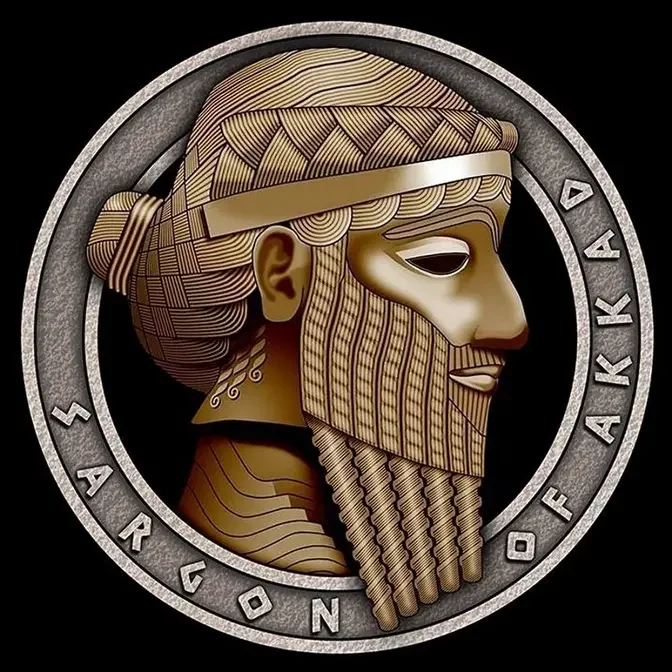
10 Video Views·Apr 11, 2023
Even though his true name, Saru-Kinu, meant true king, he took the name Sargon when he ascended
the throne. Why he did this is unknown, and some scholars say it was a biblical translation,
not a willful choice. The name has given scholars the idea that Sargon the Great
was a Semite who spoke a Semitic language. The problem is that the name Sargon was used often
after his reign, confusing historians as to which legend, myth, or actual historical record applied
to the original Sargon, known as the Great. He was found floating in a river. Legend has it that
a gardener found Sargon floating in a river in a tiny little basket. This myth reflects the story
of the biblical Moses and has led some scholars to claim that the biblical authors copied from
Sargon's birth to give Moses a more human and humble beginning. Little is known of Sargon's
parents. His mother was supposed to be a priestess in an unknown town located around the middle of
the Euphrates. His father is completely unknown. Even with the handicap of not knowing who his
relatives were, Sargon rose to be the cupbearer of a ruler of Kish, and because of his position,
Sargon was given leadership over an army. Sargon went on to conquer and create his
powerful empire, establishing his name as Sargon the Great, historical record,
and tablets from Sargon's era. Finding information about Sargon is quite difficult.
There are many men who came after him who used the same name, but the royal inscriptions do
attest to him, although the majority of the Akkad texts come from 2nd millennium Assyrian
and Babylonian texts. Yet, those were not the only locations that held inscriptions referring to
Sargon. When the town of Ebla was unearthed, its importance was not fully realized, but Italian
archaeologists decided to dig a little deeper and eventually came upon a much older city
underneath Ebla. In the ruins of that older city were 42 tablets from Sargon's era. A little later,
15,000 more were found, and they detailed the business dealings and trade between different
nations and Sargon. However, these documents do not pinpoint the dates of his rule nor provide
a sequence to the events surrounding his life. These tablets also describe the law code that
Sargon had imposed on his people. Men were fined for having sexual relations with unmarried women,
or if they were a virgin, they were put on trial to see if the woman was raped. Religious tablets
were also found depicting the religious practices of the time. He expanded his empire. Sargon was
able to use his military and personal genius to carve out a large empire. After conquering Sumer,
he set his sights on Syria, Susa of the Elamites, southern Anatolia, and even western Iran.
For Sargon, keeping control of such a vast empire was not that difficult. He used trusted men to
oversee the captive cities, even to the point of using his daughter to make sure the conquered
people were controlled through religious and political means. No emperor has an easy time
ruling other nations. The nation-people have a way of becoming disgruntled with foreign rule
and seek ways to end it. Even after reigning for 56 years, Sargon still had rebellions and
other opposition to his rule to put down. The fact that Sargon was able to create a dynasty
and have a grandson named Sargon II shows that he was a capable ruler whose empire
lasted long after his death. His influence also lasted long after his death as well.
Origin of the Akkadian Language
Sumer's language was quite different from the language that Sargon spoke. Akkadian was a
Semite language which was only one version of a group of Semite languages that existed at that
time. The name Semite was taken from the Bible. It refers back to Shem, one of the sons of Noah.
Some of the other Semitic languages spoken at the time and centuries afterward are Hebrew,
Arabic, Assyrian, and Babylonian.
Sargon the Great's Legacy
While Sargon was a great leader, his empire did not last very long. He built a beautiful capital
city and named it Agade. Unfortunately, this city did not survive past his grandson Naram-Sin.
The mountain-living Guti descended upon Sargon's capital city and destroyed it.
But his capital city was not the only part of Sargon's legacy. Two Assyrian kings were named
after him. Sargon also left behind the rule and religious code that helped govern his empire.
Finally, his Agade city name evolved into Babylon, which became a center point for
Mesopotamian history for approximately 2,000 years. Even though Sargon the Great rose out
of obscurity, he was able to grow into a successful leader. He didn't let his lack
of family or status in life hinder him from obtaining the absolute leadership of the Akkadian
people. This is probably one reason he was given the title, The Great, when others examined his
rise to power and his overall accomplishments. Sargon did not let handicaps or obstacles get
in the way of his goals. Sargon is credited with establishing the first world empire,
even though it may have been founded on earlier expansion efforts conducted by
Lugalzagasi of Uma. No matter who started the expansion, it was Sargon who finished it.
His influence helped guide future military leaders, including Alexander the Great.
The Sumerians were the first known people to settle in Mesopotamia over 7,000 years ago,
located in the southernmost part of Mesopotamia between the Tigris and Euphrates rivers,
modern day Iraq. Sumer was often called the cradle of civilization. By the 4th millennium BC,
it had established an advanced system of writing, spectacular arts and architecture, astronomy,
and mathematics. The Akkadians would follow the Sumerians, borrowing from their culture,
producing a new language of their own, and creating the world's first empire.
Who were the Sumerians? The origin of the Sumerians remains a mystery till this day.
They called themselves Sagiga, or the black-headed or bald-headed ones,
and their country Kengi, or civilized land. Some believe they came from around Anatolia,
or modern day Turkey. Others suggest they might have come from India and were Caucasian in origin.
They were established in southern Babylonia, in what is now Iraq, by at least 3500 BC.
Located in what the ancient Greeks called Mesopotamia, meaning the land between the
rivers, Sumer was a collection of city-states, or cities, that were also independent nations,
some of which endured for 3,000 years. Beginning around 3500 BC, the Sumerians began to build
walled cities, including Ur, the capital of this civilization. Each of these cities contained
public buildings, markets, workshops, and advanced water systems, and they were all
surrounded by villages and land for agriculture. Political power originally belonged to the
citizens, but as rivalries between the various city-states increased, each adopted the
institution of kingship. Where is Akkad? The Sumerians may have been one of the first
known civilizations, but it was the Akkadians that formed one of the first known empires.
A Semitic group, they moved into southern Mesopotamia during the early part of the
third millennium and gained political control of the area. The civilization was founded by
Sargon the Great, and was a collection of city-states under the control of Sargon's city
Akkad. Sargon reigned from approximately 2334 to 2279 BC, and conquered all of southern
Mesopotamia as well as parts of Syria, Anatolia, and Elam, which is now western Iran. Establishing
the region's first Semitic dynasty, Sargon is known almost entirely from the legends that
followed his reputation through 2,000 years of Mesopotamian history, but not from documents
written during his lifetime. This lack of contemporary record is explained by the fact
that the capital city of Akkad, which he commissioned, has never been located and
excavated. It was destroyed at the end of the dynasty that Sargon founded and was never
inhabited again, at least under the name of Akkad. The Rise and Fall of the Mesopotamian Empire
In 2350 BC, Sargon conquered all the Sumerian city-states, united them under his rule,
creating the first Mesopotamian Empire. He defeated the armies of Sumer in two battles
and captured Lugos-Zegezi, the Sumerian king who had united, or conquered, all of Sumer and earned
the title of King of Kish. For the next two centuries, the Akkadians would rule Sumer,
during which time the cities carried out many revolts against them.
Around 2100 BC, as Akkad declined, the city of Ur took its place rising to prominence
a century after its fall, and the city-states once again became independent.
The Akkadian Empire collapsed sometime after 2200 BC. Historians blame its downfall on tribes of
mountain people called Kushians who conquered many parts of Sumer, or possibly point at
administrative incompetence, a poor harvest, provincial revolt, or perhaps even a giant
meteor. Climate change has of course been thrown into the mix as well, and evidence of a long
drought. Changing winds and ocean currents have been provided to support that ideal as well.
In a 2019 study, fossil coral records from Omen were given as new evidence that frequent winter
shamals, or dust storms, and a prolonged cold winter season also contributed to the collapse
of the ancient empire. Asria and Babylon would grow to dominate the area afterwards.
From 2112 to 2004 BC, the dynasty based at the city of Ur revived Sumerian culture to its greatest
height, even though the Sumerian language had begun to fall out of use. By 2000 BC,
it was no longer being used and was replaced as a spoken language by Semantic Akkadian.
Although Sargon's dynasty only lasted around 150 years, it created a model of government that
influenced all of Middle Eastern civilization and left a permanent imprint on Mesopotamian
civilization for the millennia that followed. If you guys enjoyed this video and want to
see more like it, please consider subscribing to us and hitting the like button. Feel free
to leave a comment below and suggest which theory you would like to see next. If you would like to
further support this channel, please consider heading to our Patreon found in the description
box below and subscribing there. We appreciate your support and as always, thanks for watching.