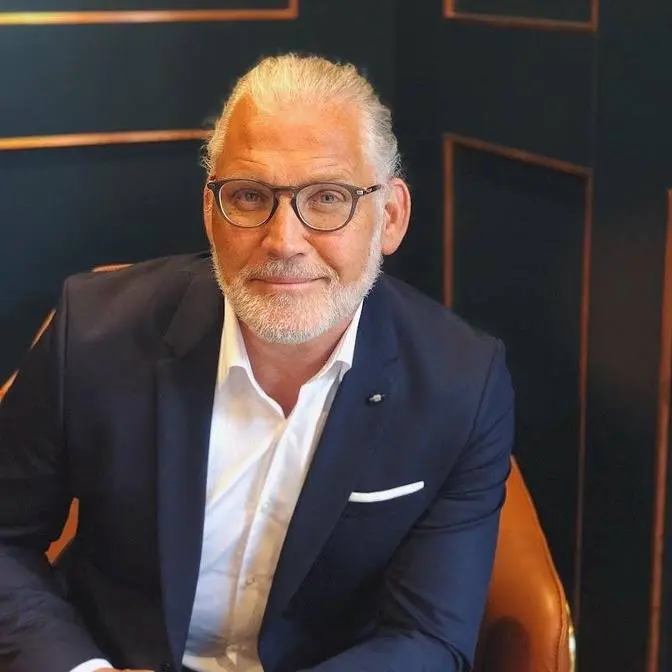
In this episode of Leadership Insider, Paul reflects on one of the most overlooked realities of leadership today: leadership is emotional, whether we acknowledge it or not. Drawing on more than four decades of experience working with leaders, teams, and global organisations, he explores how many leadership problems remain hidden in plain sight because they are misdiagnosed, avoided, or oversimplified.
Key themes explored in this episode:
Why leadership is shaped more by emotional climate than strategy or structure
How leaders often mistake control, compliance, or engagement metrics for real leadership
The difference between managing obedience and cultivating ownership
Why people disengage when they feel unseen, unheard, or unsafe
How emotional blind spots quietly erode trust, culture, and performance
Why the most damaging leadership issues are often the most obvious ones
How misdiagnosing problems leads to repeated fixes that never work
Paul also shares real-world observations from working inside organisations — including luxury brands — showing how leaders can become disconnected from the lived experience of their people, and how this disconnect affects morale, loyalty, and results.
Key takeaway: Leadership improves when leaders stop managing symptoms and start paying attention to the emotional reality of the people they lead.
To continue the conversation, you can stay connected with Paul through the Leadership Insider podcast, where he shares further reflections on leadership, culture, and the human side of work.
Welcome to Leadership Insider where we were talking in the last episode or two
about the greatest hidden problem in leadership today, in my opinion, is that leaders think
they're leading but they're mostly managing obedience rather than cultivating ownership
and empowerment. And I talk to you about what leaders think the problems are and the problem
with misdiagnosing the problems. So leaders think the problems are people aren't engaged
or there isn't enough people taking initiative. We lack initiative in the staff and the team
and how that can solve to be such a wrong diagnosis, missing the obvious fix of that,
which is often hiding in plain sight, just to do with empowerment and ownership and not having a
permission giving culture, but encouraging initiative and encouraging innovation and
encouraging people to step out and try their ideas and speak their minds and speak up and
think outside the box and so on. A third thing that leaders think is the problem that often
is not is a communication breakdown. Leaders often say to me, we have a communication breakdown in
the team and their answer to fix that assumed problem becomes, we have more meetings,
we have more memos, we have more conversations, we have more layers of
communication between us and the team and their teams. There's more cascades, if you like,
introduced into the company and that's the scene that fixes the problem of poor communication.
But communication isn't broken. Psychological safety is broken. People speak up when they feel
psychologically safe to speak up and people don't feel psychologically safe for all kinds of reasons
that need to be understood. But to assume the lack of communication or the lack of feedback or lack
of people speaking their minds or the lack of people giving a clear answer when they're asked
a clear question and they fudge it and they avoid saying what they think and feel or just go quiet
and nothing gets said and things continue to happen and be dysfunctional. To call all of that
a communication breakdown is to be way too shallow and far less nuanced than we need to be
as leaders as we look at what else is going on here. It may present as what we casually
call a communication breakdown but I would be interested to explore is it actually a lack of
psychological safety that means that people aren't speaking up because that's where the real fix then
needs to be applied. That's the real problem as I said earlier in the last episode or two about
wrongly diagnosing the problem. If we think it's communication then we introduce all these other
things to boost communication when it makes no difference. People don't feel safe to speak their
minds, to speak up. Maybe the leadership has given out the vibe that we only want to be agreed with.
We want yes people. Maybe leaders surround themselves with people that tend to go along
with everything that the leaders say and the real voices you need at the table are the ones that
aren't prepared to do that and so the pattern becomes if we speak our mind we get marginalized
so we don't feel safe. There were consequences last time I spoke my mind so I don't feel safe
to really say what I think or tell the truth of what I'm experiencing. That's not a communication
problem. That's a psychological safety problem and that is dealing with separate communication
all by itself. Why don't people feel safe psychologically? What am I doing as a leader
to contribute to that and how do we fix it? That's the real solution often to what we call
a communication breakdown. The other thing that I think leaders think is the problem that's a
misdiagnosis is some version that goes like this. Leaders just don't, people just don't respect
leadership. People don't respect my leadership. So where you feel people don't respect your
leadership what tends to happen is we push hierarchy harder. We reinforce who's in charge.
We have ways of letting people know what the hierarchical order is and where they sit in it
because we feel that we've been disrespected and it's hard to feel disrespected and not to feel
offended and not to feel you need to do something about it that's often more reactionary and
defensive and insecure and ego driven than it is calm and thought through and solution oriented
as to what's behind what I'm calling like a respect. What's actually behind that? It could
be all these other things we're talking about. So often again what leaders think is the problem
that is not the problem is disrespect. You don't have a disrespect issue. You have
again coming back to this sense of people feeling served and loved unseen issue because respect
flows towards service not status and if you want respect then people need to be treated
with respect and people need to be included in conversations that matter. People need to feel
that they are seen and that their opinion matters and that they're respected and appreciated rather
than they keep being treated like a problem person and you call that disrespect. It's not.
More often than not in my experience with people that I have thought that about towards me or I
watch leaders say that about people in their team often it's not. It's that listen where people feel
served therefore feel loved and respected. Respect towards you as the leader that's respecting them
is not a problem. You reap what you sow. You get back what you put out. You import what you export
kind of thing is the idea here. So maybe you are using the language unhelpfully of we have
respect issue here but what you have is a lack of respect for them which presents a service
and kindness and inclusion towards them then you have a problem with respect at all. That is not
your problem either. All right here's a few things I think leaders are not seeing when it comes to
these hidden problems we started talking about. What are leaders not seeing? What they're not
seeing one of the things they're not seeing is what I would call leadership drift which
what I mean by that is that authority has replaced service. It's a drift in leadership
because over time leaders forget that their role exists for the people not because of the people
and that the people don't exist for their role. The people aren't there to serve you. You are there
to serve them and when you forget that you drift from being a cultivator of human potential. You
drift from being a gardener that sees people in your leadership team and staff as plants to be
nurtured I suppose who given certain ingredients and nutritions and culture and environment
will flourish. Instead of seeing people as needing that we become guards more than guardians
and gardeners of their well-being and their flourishing. So is that new at all at the moment?
Are you thinking you have a disrespect issue that's making you double down on authority
on who's in charge around here and it's making things worse and again I want to say the people
you most need will leave where they feel that you are giving out the vibe that they exist for you
that the people, the staff, the team exists for you. No, no. Leadership is service. It's kind of
no more no less. It's service and where we feel served, we feel loved, we feel seen, we feel valued,
we feel we matter. You're not going to have a respect issue with people that feel all those
things and those things are earned. They can't be demanded, they can't be structured, they can't be
bolted on, there can't be words that you mention or emphasis you have as a topic in a staff meeting.
These things are earned by having good humans who love people in charge. Another thing that
I don't think we see as leaders is the emotional temperature of the organization is set by you.
Leaders are the emotional climate controllers of the emotions in the organization, emotional
temperature, emotional intelligence, what is the norm here, what is celebrated and what is not
celebrated, what we want more of, what we want less of. Leaders are the emotional climate controllers
and temperature setters of their organizations and if you don't realize that you are that,
what you are often getting is the team are mirroring the leader's emotional habits
and yet you think the problem is coming from somewhere else. As a parent, you wouldn't blame
your children for behaving poorly, badly, rudely if that's how you modeled behavior to them.
At the end of the day, all humans are some degree of monkey see, monkey do.
What you model, what you set as the norm becomes how people realize things go around here.
So if as a leader you're anxious all the time and don't regulate that anxiety,
the team become cautious and anxious around you and you don't want that in your organization,
you don't want especially key people to be cautious and second-guessing all the time and
psychologically not feeling safe as I mentioned earlier because you as the leader are anxious a
lot of the time. Your anxiety is obvious and expressed and shared and languaged. Who wants
to be around that kind of leader? If the leader is defensive all the time, which is often the ego
wanting to be right and this is a particularly male issue where men in leadership and leadership
is generally male still around the world, dominated by men generally around the world,
where our ego gets offended, we become defensive. But where you are operating in a defensive mode
as a leader, people become silent around you and you may call that communication issue,
going back to the wrong diagnosis that I mentioned earlier. But it's not, it's that people simply
feel that whenever they mention anything, they're dealing with your ego, not with you.
They're dealing with your defensive mechanisms rather than openness and vulnerability and service
so they become silent. Silent isn't fixed by more meetings where you talk about communication,
more layers of memos and box ticking and filling in paperwork and all that stuff. Communication
isn't fixed by that, it's fixed by like in a marriage, a friendship, a romantic relationship.
What's the problem here? What's really going on behind what we can see? What's
the story in the narrative we can't see? That's where the fix is going to be. If the leadership
is controlling, the teams stop thinking for themselves. Obviously, when you work with and
under people whose leadership style is controlling and sadly many, many are, then what it creates
is a lack of initiative. You think that's the problem as I mentioned earlier, a lack of openness
because your style of leadership is controlling. It may be controlling with a smile, you may be a
great person to be around otherwise, but you are just prone to be controlling and to not be open
and to shut down ideas and to have your own way of letting people know it can be a look or an
energy or a vibe or a body language that lets people know that you are controlling the climate
in a way that you really shouldn't be and don't want to because it's reproducing what you don't
want. So, I want you to understand as a leader, you are the emotional thermostatic controller
of your organization. You are. How are you arriving at work every day? Everybody comes
to work every day carrying stuff. Everybody in your team has stuff going on in your life that
they know nothing about and they know nothing about what's going on in your life as the CEO,
as the senior leadership. They don't know what you're dealing with personally in your life.
Everybody's coming to work as just people in motion in life dealing with crap. So, someone
in the organization has to take responsibility for saying here in this bubble where we work as it were
in this business organization, this is going to be a thermostatic climate emotionally. We're going
to be happy. We're going to be playful. We're going to be helpful. We're going to be cooperative.
We're going to be team players. We're not going to be drama. We're not going to be heavy. We're
going to be light-hearted. We're going to have fun as we do this together. We're going to be
appropriately apologetic where we need to be. We're going to say sorry when we need to. We're
not going to be judgmental, hold grudges. Whatever language you give to the climate you want and the
emotions that go with it, then you as a leader have to set that. Please do not let your organization
default to accidental emotional climate. It's never good. I tell you now, it's never good.
It doesn't default to good. Emotional climates have to be intentionally created and sustained
intentionally. You can't afford to have an off day and think it doesn't affect the emotional
morale of the team. So again, something leaders hugely miss is that they are the emotional
climate controllers of the organization. What is the climate you're bringing to your company
as the leader? Is it good? Is it bad? Have you thought about it? Do you know you're
responsible for it? Do you know you can change it? Another thing that leaders are missing
and not seeing is that they think that the people are underperforming, but really
they're underheard. I think we can look at people and accuse them of being underperforming,
but the best insight and innovation in most organizations sits unspoken. I think a few
layers down from where you'd think it would be spoken because no one feels that their voice
can be spoken safely. They feel that there are consequences to speaking up and so it results
in some version of people looking like they're underperforming. What's going on is that they're
underheard and the sense of I'm not heard here and it's not safe for me to speak up
means that the voices you need to be hearing get further and further down, buried under
often voices you don't want to be hearing. Sometimes the most innovative, insightful,
helpful, timely voices you need in your organization are a few layers down where people
have gone to hide. Like I mentioned in one of the early episodes about people I meet when I'm
secret shopping hotels and I talk to staff, these people are many layers down from the boardroom I
finish up in the day after. These people are far removed from those spaces, but what they said to
me in the elevator or in the corridor of the hotel needs to be said in the boardrooms where
they're not invited into and you may say well they're underperforming. No, they're not feeling
heard if they felt heard and included and we let them know their opinion, their insights, their
voice matters, not in a token way, but in a way that can shape the organization and change
policy and structure and all the rest of it. If people feel that, you will never have an
underperforming diagnosis again. I'm not saying that's never an issue. People can underperform,
I get that, and others can over perform to compensate. That's not good, but I think what's
often not being seen is that they feel underheard. Another thing that's not being seen by leadership
is that trust is shrinking quietly and daily and invisibly, not through major
bust-ups or scandals or issues, but through lots of micro moments of unavailability
and dismissal or emotional avoidance or emotional reactivity in the leadership.
What happens is trust in any close relationship of working together, doing life together,
trust begins to be eroded and shrink and it becomes invisible. It was once there and it
was more pronounced in the mix of things, but trust gets so eroded and so we call it something
else and now we think we have a trust issue that needs fixing. Well, what you have is really
a climate, again, in which people don't feel they can trust because of the unavailability
of a leader to listen to them, to really let them know you matter here, your contribution matters,
an unregulated emotional climate that erodes trust. I don't trust that if I
bring the real knee to this space as an employee, I'll have my job a month from now.
So again, what's not being seen is that trust is shrinking quietly, daily, invisibly,
and we think it's something else that needs to be fixed. No, what needs to be fixed is people
need to know that they are seen and heard and that their life and voice matters. What leaders
are missing entirely? Let me talk to you about what I think leaders are missing entirely.
What's been missed entirely is that leadership today is primarily emotional work. It's not
strategic work or administration. That leadership today is primarily emotional work. I spend a lot
time in organizations around the world now, some luxury brands included, teaching, having
conversations with executive staff particularly, about emotional intelligence. Because if leaders
aren't emotionally self-regulating, aren't bringing the worst versions of them to the workspace,
then you're going to have problems. Because you think it's fixed by strategy or more admin
or more task-related conversations that are the fix. But no, what's happening is that we perceive
you as a leader as emotionally disengaged, emotionally absent, emotionally clumsy,
emotionally non-intentional in the workplace with us. And we struggle to be around that.
I want to remind you leaders, particularly with the emerging generation in the world,
that leadership today is primarily emotional work. How is your emotional intelligence?
How careful are you? How intentional are you about the emotional condition you come to work in
and are there through your day? Does it even cross your mind that how you enter your premises,
how you first greet your team on the morning, how you are in the sit-downs and the meetings,
how you are as you move around the campus, whatever your situation is, interact with your staff.
Are you aware of your emotional status, your emotional climate, what you are giving off,
your vibe as it were? If not, you're missing the whole hidden element that's the x-factor element
of leadership that we want to work for and with people who are emotionally intelligent,
who realize that I want to work with and for someone that's emotionally present,
that understands emotion, that understands mine, understands yours. We don't hide them,
postpone them, leave them at the door to work and then go home and pick our emotions up on the way out.
Leadership today is primarily, increasingly, emotional work. The other thing we're missing
entirely is that the new generation won't obey their way into excellence.
Commands get compliance but only service creates commitment and the commitment that you want.
So again, the emerging generation, there's something about the emerging generation
that has an allergic reaction to the old command and obey dinosaur leadership styles that are still
around but they're dying out, thank God. And the emerging generation of people you want in your team
that are the future leaders of your organization, they don't get into excellence which is where you
want them to be, they don't come to the place of awesome in their performance which you want them to be
through obedience and submission and compliance. They do it through loving what they do,
loving being at work, loving being around the team, knowing it's safe to be open, knowing that you are
open, knowing that we're a great group of people aiming in the same direction, love their job
because the leadership are engaging with them and then with you, there's a real sense of intentional
emotional intelligence and climate, all that stuff we're talking about, that's how you get the best
out of people in your workplace. The other thing we're missing entirely, I think often, is that
culture is formed more by how you behave in stress as a leader than by anything you
say or do in a calm state. Again, coming back to leadership is emotional. You form the culture
emotionally by how you are on any given day without pre-planning how you're going to be
in a 10-minute exchange with someone. The culture is formed by how you behave in stress and if
your workplace often is stressy, a lot going on, it's deadlines, it's very demanding, you're short
staffed, you're short of money, it's making you anxious. The culture emotionally and relationally
is going to be formed in those times far more than the easier times of when it's calm and less
stressful and we get a better version of you. How are you in stress? How are you in high stress?
Because that's what we take home. We remember how kind you were to us if we're your staff.
I can remember bosses I've had, how kind they were when they themselves were under so much stress
and would have loved probably some kindness in their direction. We want to, we stick with,
we want to work with people that are good and kind and remember us, remember what we are all here to
do and don't abandon us all and themselves in a stressful time. The better you are in stress,
the kinder and more considerate, the more present you are emotionally and the better leader you are,
the better human you are in stress in your workplace, the more respect you will have from
your staff and your team. The other thing we're missing entirely is that the greatest blind spot
for leaders is self-awareness. I talk so much about this with businesses and organizations
around the world. It's self-awareness. Most leaders know their quarterly numbers, their quarterly stats
better than the emotional impact they're having on their team. You may know all the facts and
figures and the metrics and that's great, that can be impressive, good, you should know that I suppose,
but you have no idea at all. You walk through your staff and your team with a complete
oblivion to how much wreckage you leave in your wake because you have no self-awareness. You don't
know how others experience you. You don't know the mesh you're creating, which is what finishes up
exhausting your HR department. I work a lot with HR teams around the world and by and large they're
exhausted because leaders and managers have no emotional intelligence and it's constant train
wrecks every day and confrontations and arguments and conflicts that are then thrown into HR to sort
out, but you keep creating it. Your lack of self-awareness means you keep creating the same
problems you're asking others to sort out. You are the problem. Your lack of self-awareness is the problem
and that's missed entirely in sit-downs I have when I have to say to CEOs sometimes, are you aware
of how your team experienced you? The experience you was rude, as emotionally unavailable,
as dismissive, as unkind, as uncaring, as moody, as short-tempered. Do you know your team experienced
you like that? And when they say, really? Are you serious? Who? No one's ever told me that. That's the
problem right there. So to miss that you lack self-awareness is the biggest problem in your
organization right now. That's how massive it is. It is a joy to work with self-aware people. A lot of
what I do with companies and individuals and leadership is around that whole raising the idea
of self-awareness. How do you find it? What is it? What's it look like? How do you practice it? How do you
increase it? How do you sustain it? How is your self-awareness? The real problem becomes this.
Modern organizations are being led by people whose leadership mindset belongs in a completely
other era. They're using authority when the world responds to authenticity. They're using hierarchy
when culture now flows through influence, not authority, power, or hierarchy. They're using command
when what teams actually need is connection, as I mentioned earlier in my talk to you guys.
So the problem really isn't leadership competence, it's leadership consciousness.
Oh gosh. All of this stuff I've been teaching you and chatting with you about is an appeal to wake
up to be a conscious human, to be a conscious leader, to be a conscious person in that place
of work. It's a joy to be around conscious people, conscious humans, conscious leaders, one of which
is self-awareness. Most intelligence, all these things are traits of a conscious person, let alone
a conscious leader. So you don't have a leadership competence issue really, you have a leadership
consciousness issue. How conscious are you as a human? Where do you bring in that consciousness
to your place of work, to your team, to your staff, to the people that you should be loving and serving
and helping to flourish and get the best version of them to be at work, because you're bringing
the best version of you to work. The cost, a bit about the cost of all of these hidden problems.
The cost is teams talk less and so leaders hear less and that becomes a massive trap
in organizations. The people aren't talking, they talk less, so you hear less and what you need to
be hearing is more of the great stuff that people are seeing and sensing that should be passing on
to you. But one of the costs of all of this stuff we're talking about is people go quiet and they talk
less, so you hear less and that's a real danger. Leaders hear less, so they understand less.
When they understand less, they control more. When they control more, people contribute less. See the
cycle that this is going, the sort of circle it goes in, and then the organization quietly
gets starved of creativity, because people talk less, you hear less, you understand less, so you
control more, you control more, so people contribute less and the organization quietly gets starved
more and more and more of the creative voices you need to keep ahead of the curve, ahead of the
competitors and be the best company of your kind in your space, in your field, in your expertise,
whatever it is that you guys do. Okay, I hope that's been helpful to you. All this stuff has come
hard-earned to me over many years of working this stuff out in my own life to be able to pass on to
others and still working with organizations all around the world. All this stuff is absolutely
100% better. This is what I deal with day in day out with corporates around the world, so I hope
this has been helpful to you. Hey, thanks for being here. If this has been helpful to you, please
follow and subscribe to the podcast, get the word out, because that helps us, of course,
lift the status and lift the ratings of the podcast, so help me with that, would you?
All right, speak to you next time. Hope it's been helpful. Cheers, take care.