
Gibeon Overview & Tour, Joshua, Sun Stands Still, Samuel's Tomb, Gibeonites, Nabi Samuel, Jerusalem
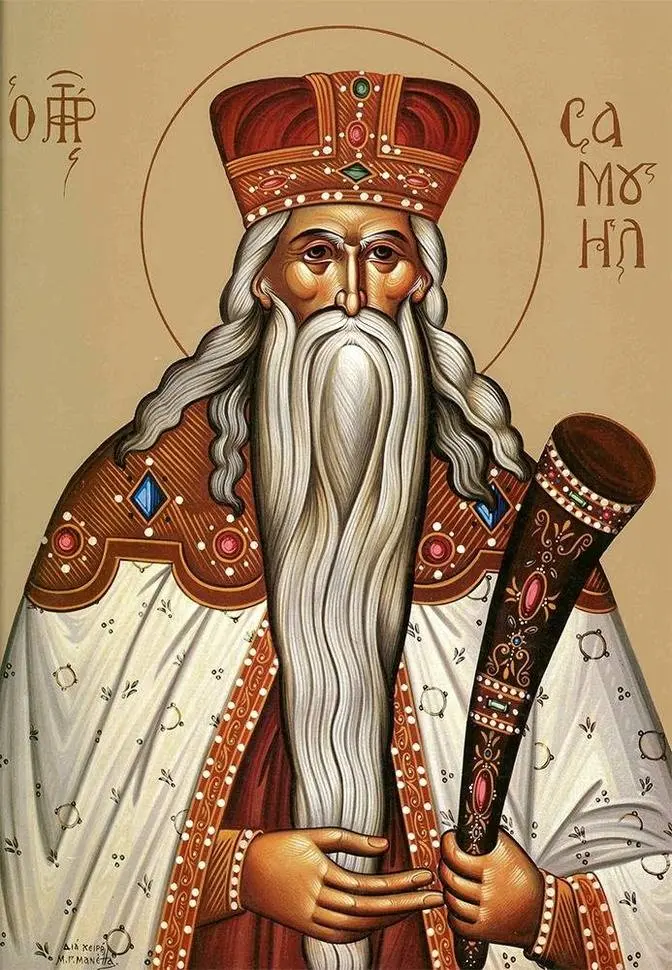
Welcome to the National Park of the Tomb of the Prophet Samuel, Nebi Samuel, which is
probably one of the most rare places in the world that are holy for Christianity, Judaism
and Islam.
And it's not even too far from Jerusalem, so lots of surprises are waiting for us on
the way.
One of the most exciting things about this place is that archaeological excavations show
layers over layers of eras that took place here.
It's as if you take a chocolate layer cake, you cut in the middle and you can see layers
one over the other.
So, for example, we have an old mikveh, rich bath from about 2,000 years ago, or this furnace,
a Muslim furnace from 1,300 years ago, a whole street from the Hasmonean period, which means
from the times of the Second Temple period.
On top of the mountain we have a gorgeous fortress from the times of the Crusaders,
which means it's about 900 years old.
In it, there is a mosque from the Ottoman period, which is about 400 years old.
And on the top we have the minaret, which is from the British Mandate period, which
means that it's about 100 years old.
Where else in the world can you find a street that was preserved for 2,000 years, where
you can see the fronts of the houses on all the cisterns, and no, you're not mistaken,
I'm actually in a jacuzzi that was built in a wall that is 2,000 years old.
The Bible tells us that the prophet Samuel was the son of Anna and Elakonah, and he was
born in a city named Ramah, which is here.
Well, that's what the tradition says, for about 1,500 years now, from the times of the
Byzantines.
The interesting thing is that this tradition was even stronger about 900 years ago when
the Crusaders not only believed that he was born and lived here, but he was also buried
here.
Now, they had another tradition that his burial place is in Ramleh, another city, but they
said Ramleh sounds like Ramah, but it's definitely not the same, so they moved the prophet's
body from Ramleh to here, to Ramah, and ever since, this became such a holy and important
place that Crusaders, back then, 900 years ago, built this gorgeous building, and it
was restored by Muslims, Mamluks, who lived here about 900 years ago.
The tomb of the prophet Samuel is holy for the three religions, and that's why we have
a Crusader church that has a synagogue in it, and also a mosque, and that is why there
are two sinks for the Jews to wash their hands before they go into the synagogue, but also
another sink over there for the Muslims, in order to purify themselves by washing their
hands and their feet before entering the mosque.
So let's go into a church that is now operating as a synagogue, but also as a mosque.
For centuries, you could have seen Jews, Christians, and Muslims coming here to pray next to the
tomb of the prophet Samuel, but then 900 years ago, the Crusaders came here and built this
beautiful church over the tomb.
Okay, so where is the tomb?
As common in Crusader churches, the tomb itself is not on this level, but at the basement
of the church, which means in the crypt.
But then years have passed, and the Muslims came here, and they also wanted to worship
prophet Samuel here.
So they built a tomb up here, and built this niche, this mihrab, facing Mecca, as a mosque.
But then more years passed, and in 1967, after the Six-Day War, this place became part of
the state of Israel, and now Jews wanted to also pray here.
What do you do?
You have a mosque, you have a synagogue, how is it going to work?
So the Muslims moved the tomb of the prophet Samuel into here, and now it is operating
as a mosque, showing the tomb up here, and the Jews pray down there at the crypt next
to the original tomb.
So we have two tombs actually here, one for Muslims, and one down there for Jews.
Why is this place so important?
When you read the biblical story about the prophet Samuel, you see that his mother Hannah
was a barren woman for many years, and she prayed to have a son.
And she succeeded.
And therefore, this place became a place for barren women to come and pray for children.
When we read the diaries that were written by pilgrims that were on their way to Jerusalem
in the many last centuries, we see that this spot is one of the most exciting ones, and
that is because this is the first spot on the way where they could actually see Jerusalem.
And until today, if we look out there, we can see the ridge of Mount of Olives and also
the area of the Old City.
If I would have been here 900 years ago, I would probably see convoys of pilgrims coming
up here in order to get to the top of the mountain.
They would come to this very spot in order to send their donkeys and horses to the stable.
And then, by foot, they would have gone on these three arches on a long stairway in order
to get straight to the church of the tomb of the prophet Samuel.