
CLASSICS READING WRAP UP | Thomas Hardy, Virginia Woolf & MORE!
Hi everyone! Today I am here with a classics reading wrap-up, and it's a very exciting one
because it's filled with lots of my favourite authors and books that I thoroughly enjoyed,
so I can't wait to share with you all the classics that I have read lately. I've been
so into my classics lately and I'm not entirely sure why it is, but I think that there is something
so nice about sitting down with an old book in the evening when the nights are drawing in,
it's getting darker, autumn is finally here, this is my favourite time of the year to read
classics. So I've got quite the selection to show you, let's get into it. The first classic I read
was Sparkling Cyanide by Agatha Christie, which I must say is probably the Agatha Christie I've
been most looking forward to read because it sounded like it would be just my thing. This
is a standalone of hers, there are some loose connections with other books that she's written,
but you can read this without knowing about a specific detective involved. It's not a Miss
Marple book or a Poirot book for example, and I must say that I think I enjoy her standalone
crime novels more than I do the ones that are linked to a specific detective. I don't mind
Poirot, I probably prefer Miss Marple, but there is something about having a self-contained story
that I think just allows her to shine. The first chapters that make up the first part of Sparkling
Cyanide each follow a different character as they recount the events of a year before when a woman
called Rosemary Barton died at a dinner party that they were all in attendance of. So we have
characters like Rosemary's sister Iris, we have her husband's secretary, we have Rosemary's husband.
The book goes into detail about why each of these characters might have murdered Rosemary. While
Rosemary's death was not assumed to be a murder at first, it becomes very apparent that in fact
she was murdered at the dinner party. What I really loved about it is that each chapter,
particularly at the beginning, feels like an unreliable narration. I'm not sure who is keeping
something from me, who is telling the truth, where are the gaps in the narrative. It becomes
so obvious that you very much are reading through someone's eyes and you are seeing their biases and
you are not sure what's a secret, what is truth, and you just know that you cannot trust anyone.
I'm not sure what this says about me but I found one of the surprising things about reading Sparkling
Cyanide was that I sort of was rooting for the characters to have murdered her. Like I would read
one chapter and I'd be like, this is a really good motive, I think you should be the one who's murdered
Rosemary. And then I'd read the next chapter and I was like, oh actually I think it should have been
you. And I won't say if any of my suspicions were correct because you have to read it for yourself
to find out who the murderer was. But I did find it interesting that actually I was rooting for
a really strong motive and I found that the depth that Agatha Christie went to in this book to
establish very valid, well valid maybe isn't the word, but very interesting and very complex reasons
why somebody would have murdered Rosemary who you don't feel a lot of sympathy for in the book. She's
quite an unlikable character and I like an unlikable character. I found her very interesting
to read about through everybody else's eyes. I don't want to give any spoilers but I will say
that the thing that I'm finding with Agatha Christie is that I love her books but I read
them for the journey rather than the outcome at the end of who the murderer is. If I was to hold
that most important as I was reading this finale, this showdown, this sort of result of who has
murdered, I think I would be disappointed and that isn't the sole fault of this book. I think it is
just a sort of feature of Agatha Christie's books is that the journey, the working it out for
yourself is far better than any sense that you've got it right or wrong and I'm just finding the
more that I read of her the more common that experience is. So the key with Agatha Christie
is to trust no one, be suspicious of everyone. Next up we have Summer by Edith Wharton which
I've been meaning to read for years and I am so glad that I did. I had been spoiled for this
many years ago and I was very upset about it and it put me off reading it and then I read it
and realised that somebody had lied to me because the thing that they spoiled me for didn't happen
which was actually a very good thing in the end. I love Summer and I love Edith Wharton's books
but this one, I don't know if it was the time that I read it, it was just what I needed. It
reminds me of everything that I love about Edith Wharton's books and it's very short, like it's
one of her shorter novels comparable to Ethan Frome in sort of the subjects that it deals with,
the setting that it's based in, but also just in the way that she manages to condense so much story
in so few pages. I think a lot is given to short books these days, we all lead busy lives, we want
to read shorter novels, many of us do, but I think that the lesson I can take away from reading
Summer is that sometimes short books can be the most powerful and they can really pack a punch.
Summer is set in an extremely rural community, a village called North Dormer in New England,
and our main character is a young woman called Charity Royal who has known for her whole life
that rather than being from North Dormer she was instead taken down from a very remote mountain
community and brought up by a man who was not her father. This mountain community is frequently
referred to in the novel as this backwards place which is rife with poverty, where there is no
opportunity, where the people don't even really speak the same language as the people from North
Dormer. And whilst North Dormer is not the most happening of places, Charity for example works in
the library where nobody ever visits, its inclusion means that three different levels of
society are being explored in the book. You have the lowest of the low, the mountain community,
you have North Dormer where nothing happens, and then you also get the main town. This exciting
world of commerce and opportunity and culture which in many ways is othered just as much as
the mountain community is. Charity's life changes at the beginning of the novel when she meets
Lucius Harney who is an architect visiting North Dormer in order to document the houses and the
historic properties that are there. Lucius comes from New York which is very much treated as this
otherworldly place that never quite feels real in the book. It feels like not just something to
aspire to but something that is so far out of reach that it will never ever be possible. As a
place that is absolutely so far out of the reaches of the characters that live in North
Dormer that you never quite get a grasp of it. Very different to lots of Edith Wharton's old
New York novels like The Age of Innocence, like The House of Mirth where she is portraying very
high New York society. This is the total opposite. I've been thinking a lot since I read this about
the role of love stories and how we sort of think about love in classic novels,
particularly at this time. A Victorian novel for example. I've been thinking a lot about
how maybe I would have perceived characters with some sort of romantic element to their stories
as a teenager and how I perceive them now with a lot more life experience, having read a lot more,
having lived a lot more. And how nowadays where romance stories are so pervasive, reading
something like Summer by Edith Wharton where a romantic relationship is central to the book,
but actually it's not something that you can add heart eyes to. It's not something that you can
romanticise or something that indeed should be romanticised. The other thing I'd like to talk
about in relation to Summer without giving any spoilers is that there are a few scenes in this
book which are set in an abortion clinic in this backstreet, very secretive but also reputable
abortion clinic. And that really surprised me in the way that Edith Wharton talked about it,
in this matter-of-fact way that it's dealt with in the book, but also how powerful that is because
it is seen as this extraordinary event that is very mundane in the way that it is dealt with.
And I thought that was so skilful and that is something that is going to stay with me for a
long time. I think those sorts of scenes are what Edith Wharton does best. I'm thinking too of the
She goes into this other world that is so different to the societies that she's portraying,
but they're very real. And I think that what Edith Wharton does best is that I don't ever feel with
her books like she is being overly moralistic. I feel like she's just exploring a world that
absolutely existed, that people knew about, that people had used at this time. She doesn't shy away
from the taboo, but neither does she shy away from the stigma that would have been involved,
for example, in walking into an abortion clinic at this time period. She manages to write about
such difficult topics in a way that does feel full of understanding and empathy towards her
characters, which I think is really quite rare for this period. I still don't feel like I fully
digested Summer. It's a book I will definitely reread because I think I would get so much out
of a reread and you'll be hearing a lot more about it because I love talking about it.
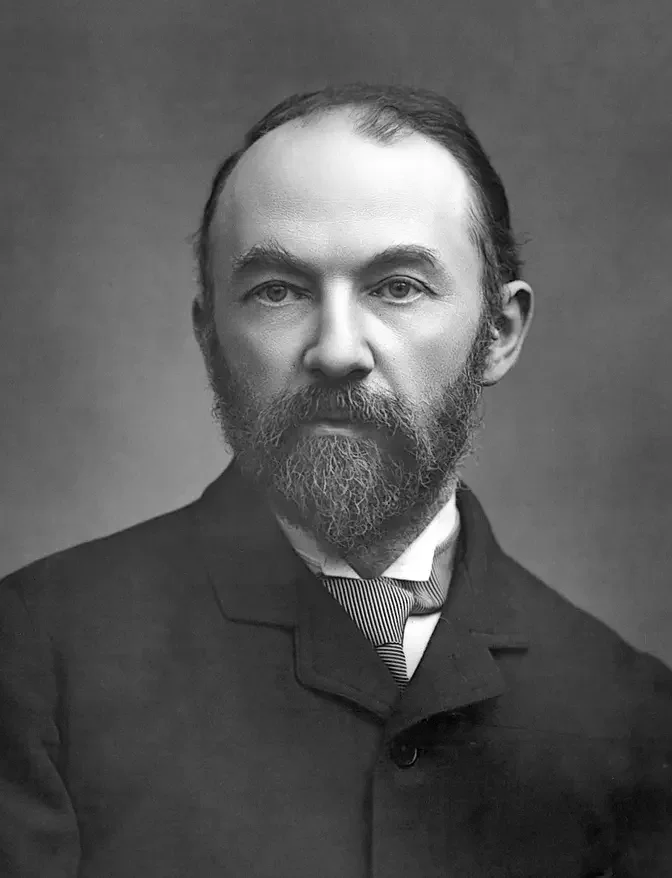
If you've watched any of my videos over the years you might know how much I love Thomas Hardy. He is
one of my favourite authors. I've always loved his stories and I've read so many of his books now
that I can't quite keep track. But my latest Thomas Hardy read was The Mayor of Casterbridge.
I don't think this is going to be a new favourite Thomas Hardy, but I still really enjoyed it and I
think it's a great book. So The Mayor of Casterbridge opens up with an iconic first chapter.
In it our main character Michael Henshaw and his wife Susan are attending a fair and at this time
a fair was an opportunity for people to gather, to find work, to sell livestock. It was a staple of
agricultural society. Michael Henshaw is searching for work. He's a labourer. A labourer was a very
poor member of society. He goes to this fair to look for work but it's out of season. Michael is
with his wife and daughter and they go into a tent where they partake of alcoholic beverages
and he becomes very very drunk and decides that he is going to sell his wife. This was based on a
real story that Thomas Hardy heard about and he wrote it down in his notebook and saved it so
that he could one day write about it. So Michael Henshaw sells his wife. Her and her child go off
and live with a sailor. They are not heard or seen off for many many years and when we pick back up
on their story the daughter is no longer a small child but is now a young lady and she's travelling
into Wessex to the town of Casterbridge to seek out a relative that her mother has talked about
called Michael Henshaw. They're not sure if he's alive, where he might be, but they follow a trace
and they discover that their relative Michael Henshaw, who the daughter has no clue is her
father, is now the mayor of Casterbridge. To put it into context, rising from a labourer,
the bottom rungs of society, into a position of privilege and to become a business owner and
somebody that society respects is no mean feat at this time. The book is subtitled The Life and
Death of a Man of Character and was also serialized first before it was published
in a full edition and I think that's one of the downsides. It's where Thomas Hardy goes wrong.
He's so focused for the majority of the novel on portraying Michael Henshaw's rise and fall. He is
so focused on these things that happen to Michael to raise him up into this man of privilege and
then to take that privilege away from him that it almost becomes melodramatic in its extremes. He's
so focused on putting Michael through hell that he forgets about believability and plausibility
and I think that it's really important to show how volatile living in this society was, how one
misstep can take you down a very different path. But there's just then so much going on in the book
that doesn't feel like anything can really breathe. I liked the characters, I didn't love them,
I enjoyed reading about Michael but as more unfortunate events took place and as they affected
him, I just, I got weary. Thomas Hardy didn't realize what he's good at in this book which is
delivering a really impactful ending. I feel like it just doesn't have the force of Thomas Hardy's
usual writing in the way that it could because there's just so much happening along the way that
I think about books like Jude the Obscure, which honestly had me throwing the book across the room
because I couldn't believe what he'd just written, or Tess of the D'Urbervilles where you just,
you feel so close to Tess throughout and you really feel everything she's going through.
I think about The Woodlanders which I burst into tears, I could not finish reading it for ages
because I was crying so much. The Mare of Casper just doesn't do that which I think is really
disappointing. I think it has such potential for a really good book and yet it doesn't quite deliver.
It didn't fall flat, I loved it, I loved the writing but it's definitely a book that I can
heavily critique. It's not quite as bad as The Trumpet Major for me, it's just not gonna be
a new favourite Thomas Hardy. He wrote a lot of books so it's not not a major disappointment.
Then I read To the Lighthouse by Virginia Woolf. I have again wanted to read this for years,
I started it a few times and I found it hard going. Virginia Woolf is not the easiest of
writers to read because she had her own unique style of stream of consciousness. So you basically
feel as you are reading her books like you are in somebody's head and you're reading all of their
thoughts. And just like our thoughts, full of tangents and new directions and messiness,
the characters are experiencing that same thing too which is wonderful but it does take some
adjusting too. To the Lighthouse follows the Ramsey family who have a holiday home that they
are entertaining at. There is Mrs Ramsey who really is the central character in this book,
her children, her husband and then a multitude of other characters. My favourite being Lee Briscoe
who is an artist. So we get lots of really interesting discussions on creativity and what
it means to be creative and to create art. I think the thing that I will take away from this book,
and not just in terms of the books I read but just into life, is just how powerful its explorations
of grief are. And I still can't fully talk about how I felt while I was reading certain sections
of this book, particularly this mid-section where you really are delving into the passage of time
and grief and then you come back and everything feels very dark and very lost. It feels like
there is something missing and that's exactly what Virginia Woolf wants to create. And I still can't
fully comprehend everything that she did because I just found it genius. This book is a perfect
companion for grief. It's very cathartic and was influenced by Virginia Woolf's own life and her
own grief. This was one that I read and highlighted and underlined extensively. One of my favourite
lines was, for now she need not think about anybody. She could be herself by herself and
that was what now she often felt the need of. To think, well not even to think. To be silent,
to be alone. All the being and the doing, expansive, glittering, vocal, evaporated.
And one shrunk with a sense of solemnity to being oneself, a wedge-shaped core of darkness,
something invisible to others. I loved To the Lighthouse. I surprised myself at how much I
loved it and I would insist that you all read it if you haven't already because it is, quite
honestly, I think one of the best books that has ever been written. One of the best books in the
writing. And finally we have a book that I didn't enjoy as much as the others but I still think
deserves to be talked about because I think it's one you probably haven't heard of or probably
haven't read. This is Olivia by Dorothy Strachey. Linked in many ways to the last book I talked
about because this is dedicated in the memory of Virginia Woolf because Dorothy Strachey
was associated with the Bloomsbury group. It follows Olivia, a young lady who is sent away
to Paris to finishing school and there she falls in love with her schoolmistress. In many ways this
felt like a very claustrophobic, very cloying, very annoying narrative of young teenage love
and your first teenage crush. It feels very relatable in many ways, in probably the worst
way because it sort of brings back secondhand embarrassment. I can't say that I loved any of
the characters in this book and at many points I was quite confused about the narrative because we
start with an introduction where the autobiographical nature of the book is discussed
and then we go immediately into the first chapter where that voice feels very similar. It feels
almost identical. So I was never quite sure if the introduction was from Dorothy Strachey or is it
part of the feature of the novel? Is it our main character Olivia introducing her own book?
I was never quite convinced either way. It feels like a book that doesn't know its own purpose.
I think when we're talking about literary merit we've got to be very careful that we don't place
too much emphasis on perfect writing. An author like Virginia Woolf has a very clear place in
the literary canon now. Something like Olivia will get overlooked and ignored because it absolutely
is not a perfect piece of fiction. But I think its place within the queer literary canon cannot
be understated and absolutely should be highlighted. I absolutely think we should be talking
about this book alongside other books of the period from the 20th century. Books by Radcliffe Hall,
by E.M. Forster, Even in War. I've been reading Brideshead Revisited lately. I think we need to
be talking about the emphasis that many of these books place on an ending and how there can only
be very few acceptable endings for people who aren't straight, who have relationships, or who
have feelings towards people of the same sex. I really think those are such important conversations
to be had. It's why I love an author like E.M. Forster who places an emphasis on a happy ending
which is so subversive that it had basically never been done before. A book like this
at this time period will always fall into a mould towards the ending because it absolutely would not
have been accepted for two queer characters to have a happy ending. Morris by E.M. Forster is
such a brilliant book because he absolutely says right from the beginning that a happy ending is
necessary. This has no happy ending. It doesn't really have an ending. It's a book that is very
much focused on teenagerhood, on young girlhood, and first forays into sexuality and understanding
your sexuality. Because the characters aren't particularly strong, because they're not
particularly memorable in many ways, the ending just feels like a non-event. It doesn't feel like
we're leading anywhere. It just feels like a footnote rather than something that adds to
the story in any way. I'm really glad that I read it. It is a very short book and I'm so glad it
wasn't any longer because I don't think I would have wanted to spend any more time with it. It did
what it had to do and then I put it down and that was it. And I was quite happy with that as a
reading experience. If you're looking for a book that's going to change your life, I'm not sure if
this is it, but despite that I would recommend reading it. Thank you so much for watching my
reading wrap-up. I would love to know in the comments what classics you have been reading
lately and maybe I'll pick up some recommendations for my next wrap-up. Happy reading!