
99% of Dalmatian Owners Don't Know This
24 Video Views·Mar 21, 2026
AI GeneratedMay contain errors
59 Dalmatian Facts Every Owner Should Know
1. National Fire Pup Day is celebrated every year on the 1st of October.
This day honors canine firefighters, particularly the Dalmatian breed,
which has been the long-standing mascot of the fire department.
2. Did you know that Dalmatians have a unique sport
that is specifically dedicated to the breed? Yep, that's right. The Dalmatian Club of America
hosts road trials that test your Dal's off-leash obedience while following a handler on horseback
or a horse-drawn carriage. 3. According to the AKC Breed
Standard, a fully-grown Dalmatian needs to be 19 to 24 inches at the shoulder while weighing 45
to 70 pounds. Any dog above the 24-inch height limit is immediately disqualified at AKC dog shows.
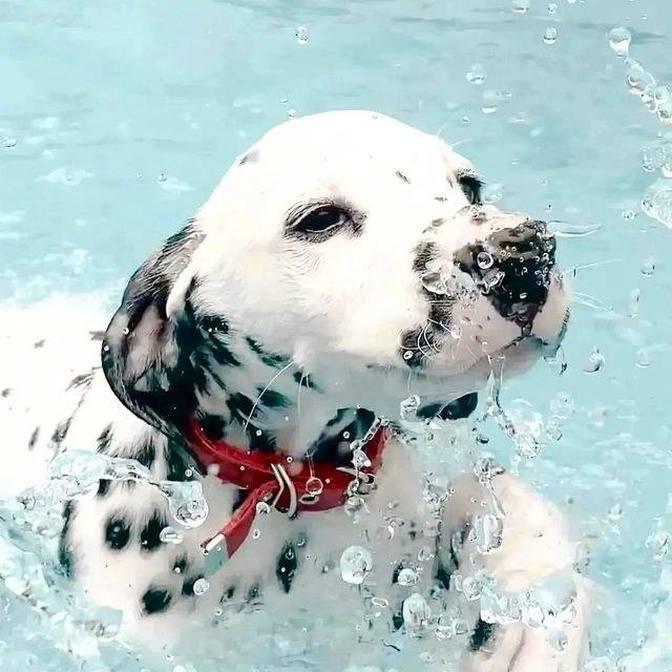
4. The color of your Dal's nose is the same as the color of their spots,
so a black-spotted Dalmatian will always have a black nose while a liver-spotted one
always has a brown nose. 5. Your Dalmatian's coat
is just as unique as your fingerprint, since no two Dals have exactly the same pattern of spots.
6. Dalmatians can have spots in other non-standard colors like blue, brindle, mosaic,
orange, lemon, and even tricolored variations. 7. In America, orange and lemon spots are the
common among the non-standard Dalmatian colors. Orange Dals have darker, more vibrant spots with
a dark brown or black nose, while lemon Dals have lighter, yellowish spots with a light brown nose.
8. After years of living and working with carriage horses, Dalmatians have developed a sort of
natural affinity with horses. The two animals get along great and have been known to form strong
bonds throughout history. 9. Back in the days, Dalmatians
would help firefighters by leading fire carriages through busy streets to the area of the fire
that cleared the way for the carriage and also prevented the horses from wandering off.
10. The Dalmatians' unique appearance, coupled with their history as working dogs,
has earned them various nicknames like Spotted Coach Dog, Leopard Carriage Dog,
Plum Pudding Dog, and Firehouse Dog. 11. Dalmatian puppies start out with plain
white coats. Their iconic spots usually only appear after 10 days and continue to develop
until the pup is around 18 months old. 12. Dalmatian spots are most commonly
black or liver in color. Black is the dominant gene while liver is recessive,
meaning both parents have to carry the liver gene to produce this color in puppies.
13. Dalmatians can sometimes have larger solid patches of color instead of spots. These patches
are distinct from a collection of connected spots and can be identified by their smooth edges and
absence of intermingled white hairs. 14. Very rarely, a Dalmatian could be
born with no spots whatsoever, giving them a completely white coat. However,
this is a genetic fault and should not be promoted for the well-being of the breed.
15. One retired firefighter from Florida named Scott Erbel is such a big fan of Dalmatians that
he owns the world record for the largest collection of Dalmatian-related items at 1,152 items in total.
16. In the U.S., Dalmatians are also known for their association
with Budweiser Beer and Busch Gardens theme parks. After all, these dogs are often seen
accompanying the Anheuser-Busch Company's iconic beer wagon drawn by Clydesdale horses.
17. A serious health concern in Dalmatians is a genetic predisposition for deafness.
This is caused by the absence of mature melanocytes in albino and piebald dogs like the Bull Terrier,
the Dogo Argentino, and the Dalmatian. 18. In America, a total of 30% of all
Dals have some form of deafness. Of that 30%, 8% are completely deaf in both ears,
while 22% are only deaf in one. In comparison, the U.K. has a lower prevalence,
with only 5.3% of Dalmatians being bilaterally deaf.
19. Early Dalmatian breeders were unaware of the high prevalence of deafness in the breed.
As a result, they wrongly believed that Dalmatians were not intelligent
when the dogs did not respond to their commands. 20. Blue eyes have been proven to have a genetic
correlation with deafness. This is why it is generally frowned upon for Dalmatians
to have blue eyes instead of brown. 21. To determine whether your Dalmatian is
deaf, you cannot rely on homemade tests like stomping on the floor or banging pants together
because your pup can still feel the vibrations. The only reliable scientific test available
is the Brain Stem Auditory Evoked Response Test. 22. Some sources claim that nearly 5%
of purebred Dalmatians are affected by hip dysplasia, a condition that can cause limping,
fatigue, pain, and difficulty in getting up. It is believed to be caused by abnormal growth
of soft tissues around the hip joint attributed to the breed's unique genetic characteristics.
23. Dalmatians usually have short coats, but occasionally, some Dalmatian puppies can be
born with longer hair. These pups, however, are not accepted by the breed standard.
24. Interestingly, long-haired Dalmatians tend to shed less than the ones with short coats.
This is because their longer hair trap and hold the loose hairs more effectively.
25. Dalmatians can have difficulty breaking down uric acid, which can result in health
issues like gout, kidney stones, and bladder stones. Older male Dalmatians are particularly
prone to these conditions. To lower the risks, you gotta feed your Dal a lopurian diet.
26. The origin of the Dalmatian breed is uncertain, but it is widely accepted that
these dogs were once prevalent in the historical region of Dalmatia, which is now known as Croatia.
27. Some theories suggest that Dals may have originated in places like India,
Austria, or Greece. People also estimate that pointer-type breeds and a spotted Great Dane
were used in their development, but there is simply no definitive evidence.
28. The first written mention of a Dalmatian dog dates back to 1375 when Bishop Peter of Dakova
described a hunting dog found in Dalmatia with short white hair and black round spots. He named
this breed Canis dalmaticus. 29. Church chronicles from other notable
figures once again mention the Canis dalmaticus or Dalmatian dog in 1719 and 1739.
30. The first person to refer to the breed as a Dalmatian was a Welsh writer Thomas Pennant
in his book Synopsis of Quadrupeds from 1771. Then an English historian Thomas Buick followed
suit in 1790. 31. Croatia also has some of the earliest
illustrations of Dalmatians. An altar painting in Veli Lošinji dating back to 1600-1630 and
another mural painting in Zaustrog both depict Dalmatians.
32. Despite the breed's origins in Croatia, it was in England that Dals were developed
into the current breed. They likely made their way to the British Isles as companions to the
nomads of Dalmatia. 33. During the British Regency era of 1795-1820,
British nobility highly valued Dalmatians with decorative spotting patterns and even
considered them a status symbol. 34. Wealthy English nobles would make
their Dalmatians run along their carriages as a display of their wealth. And when they were not
being put on show, these Dalmatians would often be found guarding the horse stables. This is why
Dals are often known as coach or carriage dogs. 35. One theory behind the Dalmatians' murky
origins is that they were originally the carriage dogs of Romani people, widely known as the
Gypsies. The nomadic nature of the Romani people would make it challenging to pinpoint the ancestry
of their dogs. 36. Other people suggest that Dalmatians
might have originated in Egypt instead. This idea comes from the similarity between Dalmatians and
dogs painted in ancient Egyptian tombs where they are shown running alongside chariots.
37. The first president of the United States, George Washington, also owned a Dalmatian named
Madame Moose who worked as his coach dog. He later imported a male Dal from England
to mate with Madame Moose. 38. Thanks to their natural affinity
with horses and their years of training, Dalmatians became excellent carriage dogs. In fact, they
performed so well that in the US, the fire department started using them to run alongside
fire carriages. 39. Once at the fire site,
Dalmatians played a crucial role of calming down the horses. Usually, horses would be startled by
the flames and run off. However, having Dalmatians nearby calmed them down, enabling firefighters to
carry out their duties. 40. As fire carriages evolved into fire
engines, Dalmatians were no longer needed as fire dogs. However, they continued to support
firefighters as loyal companions and guardians of their tools.
41. Early Dalmatians had various other roles, such as hunting and even serving in wars as
patrol dogs. They would guard the borders of Dalmatia, which has given them a strong
guarding instinct that still remains. 42. As hunters, Dalmatians would exterminate
rats and vermin and help humans hunt small game like rabbits and birds. They were sometimes also
employed in packs for hunting wild boar or stag. 43. In 1882, an Englishman named
Vero Shaw introduced the first unofficial standard for the Dalmatian breed. This standard
became official when the first Dalmatian club was formed in England in 1890.
44. The American Kennel Club registered their first Dalmatian in the AKC Stud Book in 1888.
In 2022, they've ranked 49th on the AKC's list of the most popular dog breeds in America.
45. In 1956, the Dalmatian breed experienced a surge in popularity due to the novel The 101
Dalmatians written by Dodie Smith. Their popularity rose even more with the animated film
101 Dalmatians by Walt Disney in 1961 and its live-action version in 1996.
46. After the release of the Disney movie 102 Dalmatians in 2000, Dalmatians became even more
popular as pets. However, many people bought them without knowing their specific needs,
like their high-energy nature. This led to a lot of Dalmatians being abandoned or given
to animal shelters. 47. From 2000 to 2010, a significant number
of Dalmatian rescue organizations were established to provide care and new homes
for unwanted Dalmatians. During this period, the number of Dalmatians registered with the AKC
decreased by a whopping 90 percent. 48. Perhaps the most famous Dalmatian in
pop culture is Louie, also known as Lou Dog, the mascot of the rock band Sublime.
Lou Dog was adopted by singer Bradley Noel in 1990 and frequently appeared on stage during
the band's performances and in their music videos. 49. Dalmatian litterers are usually
made up of six to nine puppies. However, in 2019, one Australian mama dal set a record for the
breed by giving birth to 19 puppies in one litter. The owner even named all of him after characters
from 101 Dalmatians. 50. To address the issue of uric acid metabolism
in Dalmatians, the Dalmatian Pointer Backcross Project was started in 1973 by Dr. Robert Scheibel.
By crossing dals with an English pointer, the project successfully developed a line of dals
known as low uric acid or LUA dalmatians. 51. LUA dals exhibit a tenfold lower urinary
uric acid to creatinine ratio when compared to other dalmatians with high uric acid.
This puts LUA dals to a lower risk of uric acid buildup, which is why they are typically more
expensive than usual dals. 52. Thanks to the English pointer
ancestry in LUA dalmatians, they are visibly different from purebred dals. LUAs have smaller
spots and less pigmentation. They also have softer coats and a more elevated and pointer-like gait.
53. LUA dalmatians initially faced criticism for not being purebred, but they were later
recognized officially. In 2010, the UK Kennel Club registered their first LUA dalmatian named
Champion Fiacres first and foremost, and the AKC followed suit in 2011.
54. Following the Backcross Project, the Dalmatian Heritage Project was started in 2005.
Its goal is to preserve and enhance the dalmatian breed by addressing problems with uric acid
metabolism and deafness while ensuring their friendly and confident nature is maintained.
55. Despite all the health issues, dalmatians have an average lifespan of 10 to 13 years,
which is pretty much the same as other dog breeds of this size. With the right care,
they can live up to be 15 or 16 years old. 56. Dalmatian coats are also dirt-repellent.
If your dal rolls around in mud, they can usually just dry it all off to reveal a shiny and clean
coat. 57. Right outside of Hassenfeld Children's Hospital in New York City, you can find a 38-foot
sculpture of a dalmatian named Spot, perfectly balancing a Prius taxi that was donated by Toyota.
The artist Donald Lipsky created this sculpture to bring smiles and motivation
to the patients and parents at the hospital. 58. Prominent painter Pablo Picasso is one of
the most famous people to have owned several dalmatians throughout his life. They even
appear as motives in some of his paintings. 59. Other famous fans of the dalmatian breed
include founding father Benjamin Franklin, actor Glenn Ford, singer Gloria Estefan,
and playwright Eugene O'Neill. Alright guys, which of these facts do you think is the most
important for the prospective dalmatian owners to know? Let us know in the comments below!