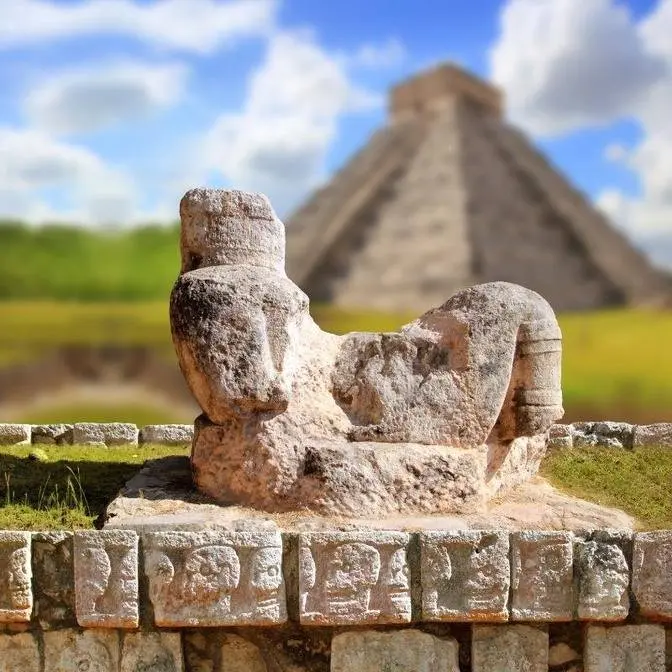
#Hitory#Secret Discover the mystery of Gypsum Cave in Nevada, where archaeologists uncovered ancient giant sloth remains, prehistoric weapons, preserved dung, and unexpected DNA evidence. Explore the controversial 30,000-year-old human history claim, the discovery that challenged it, and the remarkable secrets this Ice Age cave continues to reveal.
Gypsum Cave in Nevada serves as a critical archaeological case study on the dangers of relying solely on stratigraphic layers. Once thought to prove human presence in the Americas 30,000 years ago through the coexistence of humans and giant ground sloths, radiocarbon dating later revealed the artifacts were thousands of years younger, debunking the \"sloth hunter\" theory.
In January 1930, an archaeologist named Mark
Raymond Harrington walked into a cave in the
Frenchman Mountains, about 15 miles east of Las Vegas, Nevada.
He had come because of vague rumors
that the cave might hold something
of architectural interest. On the floor,
he found a thick layer of hard, dried, fibrous material.
A local man told him it was seaweed,
left over from a time when the cave held an underground lake.
Harrington had cleaned out too many stables
as a young man to be fooled. It was dung. Later he
said it was manure, curiously enough,
that first aroused his interest in the cave. Within months,
the dung had produced a giant sloth skull,
claws 9 to 12 inches long, a patch of reddish-brown hair,
and the wooden darts of an ancient weapon called an atlatl.
By August, newspapers on the other
The other side of the world were running a headline, 30,000 years.
Shown as Age of Americans.
The claim was that people had hunted giant sloths
in a Nevada cave tens of thousands of years ago.
It was wrong. The title of this video says
that an ancient find in a Nevada cave is leaving
archaeologists speechless. The find is real,
but it is not new and its famous claim did not survive.
What it left behind is stranger and better.
Sloth dung from this cave that spans at least
17,000 years. DNA from that dung.
A horse skull that sat mislabeled on a museum shelf for decades
until it turned out to belong to an entirely separate genus of horse.
In this video, we will go through what was found, what was claimed,
how a simple radiocarbon test undid a headline,
and what the cave is still teaching us.
Start with what scientists wanted to know in 1930.
The question of 1930.
To see why a pile of dung made headlines,
you need the mood of American archaeology
in 1930.
The big question was how long people had lived in the Americas,
and whether they had lived
alongside the animals of the Ice Age.
For years, many scientists had been reluctant
to believe in great antiquity.
Then, in 1927, a stone point turned up among
the bones of extinct bison at Folsom, New Mexico,
and the argument shifted.
People, it seemed, had hunted Ice Age animals.
That opened the door.
Every cave, bone bed, and gravel pit across the West was now a
possible place to find the next link between humans
and the giant animals that had vanished.
The expedition to Gypsum Cave was built around exactly that question.
According to the Natural History Museum of Los Angeles County,
the cave was excavated in 1930
by field crews from the Southwest Museum,
now part of the Autry Museum of the American West.
And from the California Institute of Technology.
The driving question was whether early humans
and Ice Age megafauna had interacted there.
The animal at the center was the Shasta ground sloth.
It was a vegetarian, smaller than some of its giant relatives,
but still a large, shaggy animal with claws 9 to 12 inches long.
By then it had been extinct for a long time.
How long, no one knew.
Because in 1930, there was no radiocarbon dating.
That method did not exist yet. If you wanted to
say how old a cave deposit was, you argued from the layers,
from the animals, and from the tools,
and you argued from what was beneath what.
That is the key to everything that follows.
Harrington and his colleagues were reading layers of dust
and dung with the best tools they had,
and the layers seemed to tell a clear story.
But first, you need to see the place.
The Cave and the Team Gypsum Cave is a limestone cave
in the eastern foothills of the Frenchman
Mountains in Clark County, Nevada.
It is about 15 miles east of Las Vegas. According to the
Nevada Historical Marker, it is about 300 feet long and 120 feet wide,
with six rooms all filled
with dry, dusty deposits.
The arid, cool air inside is the reason for everything that follows.
As the Natural History Museum of Los Angeles County puts it,
the climate in the cave allowed extraordinary
preservation of Ice Age fossils,
including soft tissue, hair, and dung.
The man who opened it up to science was Mark Raymond
Harrington. He was born in 1882 on the campus
of the University of Michigan, where his father
taught. From 1928 until 1964,
he was curator of archaeology at the Southwest Museum in Los Angeles.
He had spent years living and working with Native American communities,
and a modern Bureau of Land Management
archaeologist calls him a huge name in
paleontology throughout the West. He did not work alone.
Chester Stock, from the California
Institute of Technology, worked on the fossil side of the project.
Early in the work, he and
Harrington found the darts of an atlatl
and the skull of a giant ground sloth. And there was a
The third member of the team
who deserves her place in the story, Bertha Parker and
An archaeologist and ethnologist of Abenaki
and Seneca descent was Harrington's niece.
She served as the expedition's secretary,
and it was Bertha Parker who found the sloth skull
in room three of the cave.
They dug through 1930 and into 1931 among dust and fallen blocks of
crystal. What they found there was not a fossil in the usual sense.
The animal's own flesh and
fur were still there. That is the point at which
a routine excavation turned into something else.
What was in the dung? Here is what the team recorded.
A deposit made in large part of sloth dung.
In and around it, the remains of several animals,
the extinct ground sloth, a horse, a camel, a mountain sheep.
Later work added dire wolf,
deer, and bighorn, and even frogs, lizards,
snakes, a desert tortoise, and a condor.
But it was the sloth that made the cave famous,
because of how it had been preserved.
Chester Stock described the unusual condition
of the material in a 1931 article.
Besides the dung, there were the horny sheaths of the claws,
there was hair, there were small
pieces of skin, there were bits
of dried flesh still clinging to the bones, and there was
the skull, and parts of the skeleton.
Harrington thought the sloths had used
the cave as a den during the Ice Age.
There was so much of the animal left behind
that it seemed to him the cave must have been
have been a home and mixed in with the dung.
The team also found things made by people,
pieces of painted dart shafts, torches, stone
points, string made of yucca fiber,
and a distinctive chipped point, abundant in the
cave, that later archaeologists would call the gypsum point.
Here is the puzzle in one sentence.
The sloth remains and the human tools were in the same deposit.
And the clearest case, the one that mattered most,
was a small pocket in the floor.
In the passage between two rooms...
One of the diggers found twelve small sticks,
each burned at one end, and one unburned stick.
They lay at the bottom of a hole in the lower layer of sloth dung.
The hole was about ten and a half inches deep,
and filled with loose dung.
Above it, sealed over, was an unbroken layer of solid,
well-preserved sloth dung,
about seventeen and a half inches thick.
The sticks lay twenty-eight inches below the surface.
Harrington wrote that it would be exceedingly difficult
to explain the sticks any other way
than as left by people after the lower dung had been laid down
and before the upper layer was
deposited. To him, that was proof of association.
Humans had made a fire in the cave while the
sloths were still using it. He was honest about a possible exception.
He noted that the hole might
have been a rat's nest from the sloth period,
since a few rat droppings were found in the loose fill.
But none of the sticks showed any sign of being chewed,
and a second find, in room two, seemed to say the same thing.
A decorated atlatl dart shaft,
recovered at a depth of eight and a half feet.
Harrington was unequivocal.
He believed it was contemporary with the sloth,
so the team believed they had it.
A camp, a fire, a hunter's weapon, and a sloth.
The claim the news went out fast.
Harrington sent a telegram to the director
of the Southwest Museum, a man named Shearer.
In it, he reported finding, in one of the cave's rooms,
a campfire of what he called
our sloth hunters, a patch of real charcoal under
an unbroken layer of Pleistocene deposits.
Shearer took it public.
A newspaper report from New Zealand,
dated August 1930, carried the headline,
30,000 years shown as age of Americans.
It quoted Scherer saying that men of great skill,
with the atlatl, had lived in the cave
before the sloth came to the region,
and then the newspaper told a story.
According to Scherer,
the sloth drove the people out and made the cave its home.
Until a landslide down the craggy mountains blocked the door,
and locked the sloth in.
The men with the atlatl, he said,
had been shooting at targets in the cave thousands of
years before Robin Hood lived in the forests of England.
It was a wonderful story. It was also
far older than the evidence would turn out to support.
Harrington's own conclusion, which was
controversial from the start,
was that humans and the ground sloth had existed at the same time.
By one account he dated them to about 8500 BC.
Not everyone on the team was so bold. Chester
Stock's 1931 article,
Problems of Antiquity Presented in Gypsum Cave, Nevada, asked what
degree of antiquity could be ascribed to the animals
in the dung layer. And the museum's own
history notes that Stock put forward
the possible joint occupancy of early humans and Ice Age
megafauna as an interpretation.
Not a settled fact, but the interpretation stuck.
In 1933, Harrington published a 197-page monograph on the cave.
In 1940, he wrote a popular piece in Desert Magazine called Man
and Beast in Gypsum Cave.
The Nevada Historical Marker would later say
that Gypsum Cave was once thought to be one
of the oldest sites made by people in North America.
For decades, as two later archaeologists put it,
Gypsum Cave was held up as proof that people lived
in the cave with the ground sloth and presumably hunted it.
There was just one problem.
Nobody had yet tested the human side of it.
The test then came radiocarbon dating.
The method was developed at the University of Chicago by Willard Libby.
In the early 1950s,
samples of gypsum cave sloth dung were dated with it early on.
The results, published in 1955,
were roughly 10,500 years old for one sample,
taken from about six feet down, and roughly 8,500 for another,
taken from about two and a half feet.
A third date, published in 1963, gave 11,690 years.
So the sloth was in the cave between about 8,000 and 11,000 years ago,
according to those dates.
That was already a challenge to the 30,000-year story.
But it was not a challenge to the idea of sloth hunters.
The question was about the humans.
In February 1950, the archaeologist Robert Heizer wrote to Harrington.
He suggested that Harrington send samples of charcoal
or wooden artifacts to be dated,
to check the dung dates against the human ones.
Harrington, Heiser later wrote,
sounded interested. But it was never done.
Sixteen years passed. In 1966, Heiser tried again,
writing to the Southwest Museum.
This time, everyone agreed. The museum's director,
the original collector,
and the staff all thought it was worth finding out. They chose the best
possible samples. First,
the burned sticks from the pocket under the sealed dung. The very find
6 of the 12 sticks
Made of greasewood, went to Berkeley,
and three of them went to the lab at UCLA.
Second, a decorated atlatl dart shaft,
the piece Harrington had called contemporary with the sloth.
The results came back.
The burned sticks were about 2,400 years old.
The atlatl dart was about 2,900.
Not 30,000, not 10,000, about 2,400 to 2,900 years.
Heiser and his colleague Rainer Berger wrote it plainly.
The ground sloth lived in the cave long before people used it,
and since about 2,400 to 2,900 years ago,
the loose surface deposits in the cave had been disturbed.
In the process, artifacts, including the fireplace sticks and the dart,
came to rest where they were covered by sloth dung
that the excavator took to be lying in place.
They called it a classic case where an apparently
obvious association was not true,
yet seemed entirely real, and they drew the lesson.
Date the materials directly, whenever you can.
There were hints all along. Another archaeologist,
Edward Lanning, had noted
that the gypsum point type appeared elsewhere in much more recent
contexts, and suggested
that the sloth remains might simply have ended up on top of the points.
Because people dug holes in the cave long after the sloths were gone.
So the headline of 1930 had a flaw, and it took decades to find it.
The dung tells its own story, take away the hunters, what is left.
A remarkable record of an animal that is gone.
In 1998, an international team that included Hendrik Poinar,
Michael Hoffreiter, Svante Pääbo, and Paul Martin,
published a paper in the journal Science,
with an unusual title, Molecular Coproscopy.
Coprolite is the word for fossil dung.
The team had achieved something new. Ancient feces had
resisted DNA analysis
because of chemical cross-links in the material. The researchers
found a chemical agent that could cleave those links.
When they used it on a coprolite from
Gypsum Cave, they recovered DNA.
It proved that the dung really did come from an extinct sloth,
the Shasta ground sloth,
and they also found plant DNA from seven groups of plants.
Here is what that plant DNA said.
The plants the sloth ate are plants that today live
at elevations about 800 meters higher than
the cave. That suggests that when this sloth lived here,
the climate around Las Vegas was
cooler and wetter, and those plants grew lower down than they do now.
The University of Arizona's
report on the work said the dung was about 19,000 years old,
and that caper and mustard plants made
...made up about 43% of the plants the sloth had eaten.
Two years later, a second study...
in the journal Molecular Ecology looked
at five coprolites from Gypsum Cave
dated to about 11 000 20 000
and 28 500 years ago all five held dna from the shasta ground sloth
the researchers identified 13 families
or orders of plants in the sloths diet
and found that the animal fed on trees as well as herbs and grasses
That is a span of 17,000 years in one cave,
and it changes how we think about extinction.
In 1974, Austin Long, Richard Hansen,
and Paul Martin looked again at the first radiocarbon
dates on Gypsum Cave dung. They could not verify them.
The youngest date they would
except from the cave was about 11,360 years.
Other cave records across the southwest, dated
Dated since 1974,
...supported the idea that the Shasta ground
sloth went extinct about 11,000 years ago.
Then the arguments shift to why.
One paper on a cave in New Mexico noted that it is hard to explain
the sloth's disappearance by climate change or dietary stress.
Human hunting, it said, remains a possible explanation,
because the extinction appears to coincide
with the time of Clovis mammoth hunters.
Another study, from Rampart Cave in Arizona,
Found no unusual change in the sloth's diet right before it died out.
Notice what that does.
It does not put humans in Gypsum Cave.
It puts humans in the same broad period as the sloth's end,
somewhere in the American Southwest.
That is circumstantial.
It is not a smoking gun.
But it is the version of the story that survives.
The skull on the shelf.
Here is the part that really is leaving scientists a little speechless.
And it happened in a museum, not in the cave.
For decades, the horse bones
from Gypsum Cave sat in museum collections.
They were so well-preserved that they looked modern.
In the Natural History Museum of Los Angeles County,
a horse skull from Harrington's expedition
was labeled, in pencil across the top,
Modern Sample, Wild Horse or Burro.
Paleontologist Eric Scott,
an Ice Age horse expert at California State University, San Bernardino,
helped track that skull down. It did not look old at all, he said.
It looked like last week's lunch.
It was about 13,000 years old. Scott was part of an
international team that extracted ancient DNA
from the gypsum cave skull, along with well-preserved
bones from Natural Trap Cave in Wyoming
and from the Klondike Goldfields in Canada's Yukon.
In November 2017, they published their findings in the journal eLife.
Until then, the lightly built Ice Age horses with long,
thin leg bones, called stilt-legged horses,
were thought to be related to the modern Asiatic wild ass,
or a separate species
of the same genus that includes horses, asses, and zebras.
The DNA said otherwise.
They were not closely related to any living horse.
They were an evolutionary dead end.
Which split from the line leading
to modern horses some four to six million years ago.
The evolutionary distance, said the study's senior author,
Beth Shapiro of the University of California,
Santa Cruz, took the team by surprise.
So they named a new genus,
Harringtonhippus francisci, a small footnote.
The name honors Richard Harrington,
the Canadian paleontologist who first described stilt-legged
horses in the early 1970s.
It is not named after Mark Harrington, despite the spelling.
The skull was the most complete ever found
of a New World stilt-legged horse.
And there was more.
Scott and a colleague identified bones
from 10 individual horses in the collection, some
with ligaments, tendons, skin, and hooves still present.
Some of the bones showed what seemed to be bite marks,
possibly from a wolf, which suggests
that the horses were dragged into the cave by a predator.
The museum has also run a grant-funded project,
paid for by the Bureau of Land Management,
to catalog the whole Gypsum Cave fossil collection.
Staff identified over 1,500 fossils, cataloged 701,
and digitized more than 400 field tags from
the 1930s dig. So the cave is still giving things up,
not from the ground, but from the drawers.
Which brings us back to the question in the title.
What, in the end, did the find change?
What changed, and what is still open-signed?
So what did the find change? First, a method.
Gypsum Cave became a classic cautionary case.
Heizer and Berger used it to make a simple point.
If you want to know whether two things are the
same age, date them directly. Do not rely on where they were lying.
Second, a picture of the ice age.
The dung gives us a record of what one animal ate
and what grew near Las Vegas, over 17,000 years.
The horse skull gives us a new branch on the family tree.
And third, a different kind of
The 1930 headline was not a lie.
It was a good faith reading of the layers by serious scientists.
The layers just turned out to be disturbed.
Now, three readings that remain. The first is
Harrington's and it is rejected. Humans and sloths shared the cave.
The strongest piece of evidence,
the sticks under the sealed dung, was dated to about 2,400 years ago.
The sloth dung is more
than 11,000 years old. The second is the one Heizer and Berger,
and Lanning before them, put forward.
People used the cave much later.
Their digging, their fires, and their dropped tools were pressed
into older dung, and the excavator mistook it
for an undisturbed deposit. The dates fit it. The only
weakness is that it cannot prove nothing older is there.
The third is a question the old authors
Heizer and Berger wrote that it is still possible
that there is evidence of humans in Gypsum Cave
older than 2,900 years, but that only more excavation could test it,
and they asked for a restudy of the original collections.
That restudy has, in effect, begun,
in museum drawers and in the lab.
There is even a loose end in the public record.
The Nevada Historical Marker says that human use began about 3,000 BC.
The two dated artifacts in the old study are about 450 and 950 BC.
The marker also gives the sloth as living in the area between 700-500
and 9,500 years ago,
which later dating pushed back to 11,000 and earlier.
Public records age too,
and there is a perspective missing from this story.
A Bureau of Land Management archaeologist has said
that Gypsum Cave is important to
local Native American groups, as well as to scientists.
The 1930s accounts speak of the people of the cave as sloth hunters,
with no names and no history.
The people whose descendants live in this region today have
their own history with it, so the title
is right, but not in the way a headline writer would hope.
What the find leaves people is not
speechless awe, it is a respect for how easily
a good story can be built on a layer of dust.
Go back to January 1930. A man walks into a cave near Las Vegas,
looks at a thick layer on the floor, and decides it is not seaweed.
What follows is one of the most interesting stories
in American archaeology,
a team that included a Caltech paleontologist and Bertha Parker,
who found the sloth skull.
A claim that went around the world, and a test,
30 odd years later, that showed that
the fireplace was thousands of years younger than the sloth.
That should have been the end.
Instead, it was the start of a longer story,
because the sloth did leave a record.
Its dung holds DNA and plants, and a record of a cooler, wetter desert.
A horse skull, labeled as a modern burro in pencil,
turned out to be a new genus.
And a collection of fossils, once neglected,
is being cataloged one drawer at a time.
The cave has been on the National Register
of Historic Places since 2010,
and a Bureau of Land Management archaeologist calls it important
to local Native American groups as well as to scientists.
The archaeologists who dated those sticks did
not set out to ruin anyone's headline.
They simply ran a test that had
been proposed years before, and never done.
Which leaves the one the title was really asking.
How many other famous finds are sitting in a drawer,
or under a layer of dust,
with a story that no one has yet tested?
And what does the pencil say on the label?