
What If the Fermi Paradox Is Really a Question of SURVIVAL?
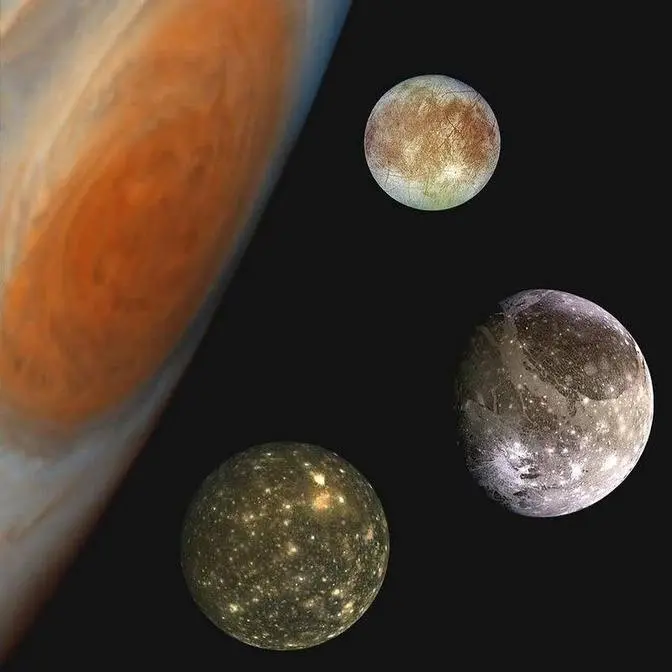
What if the greatest threat to an intelligent civilization is not another species, but the clock ticking beneath its own planet? Asteroids can strike, oceans can lose their oxygen, atmospheres can change, and even a stable star will not remain unchanged forever. Could a civilization learn to recognize these deadlines early enough to survive them, or is there a limit that technology cannot cross?
In this science documentary, we begin with a rare example of humans deliberately changing a celestial outcome. In 2022, NASA's DART spacecraft struck Dimorphos, a small asteroid moon, and shortened its orbital period by roughly 33 minutes. The experiment demonstrated that a known asteroid can be deflected under favorable conditions. It did not prove that every impact can be prevented. The difference between finding a threat decades in advance and discovering it too late may decide whether an intervention is possible at all.
Earth's geological history reveals another kind of danger. The Chicxulub impact devastated ecosystems 66 million years ago, yet life survived. The end-Permian extinction, associated with immense Siberian volcanism, involved interacting stresses on climate and oceans rather than a single incoming rock. And the Great Oxidation Event transformed the atmosphere through biological activity itself. These histories show why the survival of life, a species, an ecosystem, and a technological civilization are not the same thing.
We then turn to Venus, Mars, and the future of Earth. Venus has an extraordinarily hot, dense atmosphere, but whether it once had long-lived oceans remains uncertain. Mars preserves signs of an earlier watery environment beneath its present thin atmosphere. The Sun will gradually brighten, challenging Earth's surface habitability long before its distant red-giant stage. Could future societies engineer a planet's climate, move to another world, or construct habitats beyond their home star? Physics allows us to explore such proposals, but no civilization has demonstrated survival on that scale.
Other star systems face different clocks. Massive stars can die after only millions of years, while small red dwarfs may shine for trillions of years despite potentially harsh early activity. Nearby supernovae can leave physical traces, such as iron-60 found in Earth's geological archives. Gamma-ray bursts could alter planetary atmospheres under sufficiently severe conditions. Yet neither observation establishes that an alien civilization has been destroyed. Distance, timing, radiation exposure, and local planetary defenses matter.
Thousands of exoplanets are now confirmed, but we still have no verified evidence of life or technology beyond Earth. A planet may be habitable without being inhabited, or inhabited without producing a signal we can detect. The silence of the galaxy could reflect short technological lifetimes, limited searches, or possibilities we have not yet considered. It is not proof that space is filled with dead civilizations.
Finally, we extend the question from planetary survival to cosmic time. Star formation has declined since its ancient peak, while low-mass stars could provide energy for extraordinary spans. Accelerated cosmic expansion is observed, but the nature of dark energy and the universe's ultimate fate remain under investigation. Heat death is a model-dependent far-future scenario, not an approaching event anyone has witnessed.
Some deadlines may be moved. Others may require abandoning a particular world, and some may remain beyond any technology we can presently imagine. The lesson of DART is not that humanity has mastered the universe. It is that early knowledge can sometimes turn a seemingly inevitable outcome into a different one.
If intelligence can change a planet's fate once, how many other cosmic deadlines could it learn to outrun?
#Alien #Civilizations #FermiParadox #SpaceDocumentary #Astrobiology #Universe
Video Summary
AI GeneratedThis video examines the vulnerability of inhabited worlds to planetary and cosmic catastrophes. By analyzing Earth's geological history, NASA's DART mission, and the evolution of stars, it contrasts preventable threats like asteroid impacts with systemic collapses and thermodynamic limits, exploring whether intelligence and technology can extend a civilization's survival against inevitable cosmic deadlines.