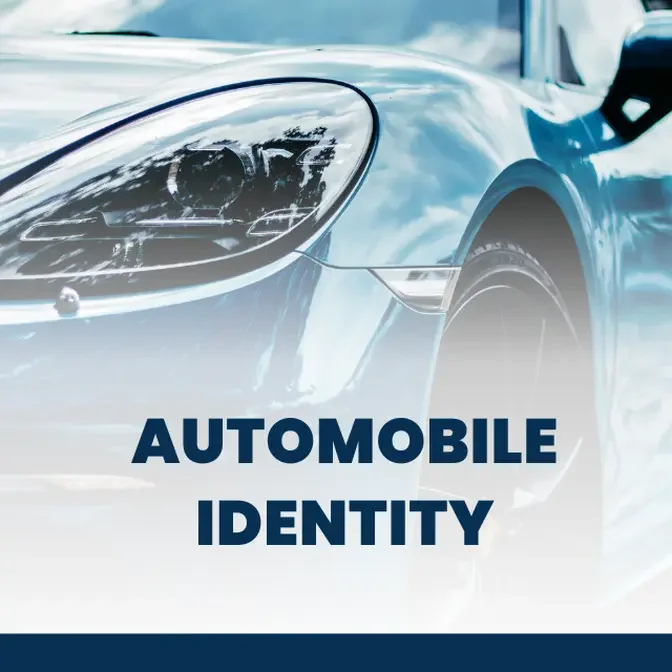
This is a 2008 Porsche Cayman and it's a thrilling, mid-engined sports car. The 987 Cayman offers an incredible driving experience, especially for the price. We are thrilled to be offering this 2008 Porsche Cayman for sale on CARS & BIDS!! Today I'm reviewing this 987 Cayman and I'll show you the many quirks and features. I'll also get behind the wheel and review the driving experience.
CHAPTERS: 00:00 THIS... 00:29 It Can Be Yours On CARS & BIDS!!! 00:59 The Basics 02:15 It's Brown 02:52 Beautiful Hip Line 03:39 Baby Carrera GT Spoiler 04:10 Front Trunk 04:41 The Hatchback 05:57 There's An Engine Back There? 06:34 How Tell a Base Cayman From a Cayman S 07:10 Interior Quality 07:48 Interior Quirks & Features 09:35 Center Control Stack 11:01 Sport Chrono Lap Timer 11:40 More Interior Quirks & Features 13:43 Transmissions 14:28 An Absolute Bargain 15:32 Driving Experience 20:03 Final Thoughts 20:30 DougScore
This is a 2008 Porsche Cayman, and it's just phenomenal.
It's not that fast or that rare,
but it is a wonderful car, truly fantastic,
and I recommend them to basically everyone interested in a fun sports
car in this price range.
Today, I'm going to review the original Cayman and show you why.
And I'll also show you all of its quirks and features.
Before I get started, good news,
this Cayman is currently for sale and it's being auctioned
live on Cars and Bids.
This is a base model Cayman with a manual transmission, a simple,
All
right!
Time for the quirks and features of the original,
the early 987 Porsche Cayman, starting with
the basics.
So the Cayman, as you probably know,
is essentially the coupe version of the Porsche Boxster.
The Boxster came out first.
Back in 1997, it debuted as a convertible only.
That was the original 986 model, and it was sold through 2004.
And then, in 05, a brand new,
redesigned version of the Boxster came out.
And the following year,
the Cayman debuted as its coupe model companion.
Now, like I said, 987 Cayman came out in 06,
and originally it was sold as just the Cayman S.
The base model, the base Cayman, came out for 07,
joining the lineup, and the cars had different
engines. The base Cayman, this one,
had a 2.7-liter flat-six, about 240 horsepower,
or if you upgraded to the Cayman S,
you got a 3.2-liter flat-six with about 290 horsepower.
But, despite the significant power increase, they were
They were both pretty quick,
base model did 0-60 in about 6 seconds, a little over, whereas
the Cayman S did it in about 5.5,
both pretty fast cars in the mid-engine Porsche range.
So let's talk quirks.
And there are two very obvious and noticeable ones right here. One is
the color of this car. It's brown.
Yes, that was the factory color. This is factory paint.
I believe they called it macadamia metallic.
I worked for Porsche around when this car was sold
new and this was not a popular color.
But in the years since this car has came out,
the Porsche people are now obsessed with weird
and cool and different colors.
And so browns like macadamia.
Metallic are definitely in demand these days,
even though back in the day it was mostly
silver, black, white, kind of your basic colors.
Now, the other important quirk to discuss
on the outside of the 987 Cayman is this hip
line over the rear wheels.
I always felt they executed this.
perfectly. The rear of the car,
the roof line kind of flows down in the middle and the hips
flank it on both sides and it just looks damn good.
Now, when the Cayman was redesigned for
the 2013 model year, they lost the hip line.
They tried to preserve it, but in order to add more
headroom, the roof came up
and you just didn't have the same sort of egregious hips on the side.
And frankly, I always felt that kind of ruined the look.
I like the later Cayman models, but the best
Looking Cayman unq-
uestionably, was the 987 model
with its flared hips that just looks so cool.
Now, the other cool thing around the back
of this car is the little ducktail spoiler,
as you can see, kind of pops up just ever so slightly from the back.
Interestingly, this can be raised with the push of a button inside.
You push this little button here,
and then the spoiler comes up with kind of two posts
on each side, sort of like a mini baby Carrera GT spoiler popping up.
Now, of course, the Carrera GT had come out just a
Just a couple of years earlier,
so that design touch probably was an attempt to tie it in
to Porsche's super sports car at the time.
And the other interesting quirk about this car,
access from the outside, is practicality.
Now, everybody knows about the front trunk, the frunk.
A lot of Porsche models have them.
It's actually pretty large.
You open it with a button on the key fob,
and then there's a little latch under here.
You pop it open, you can see it really is a good-sized,
practical front trunk.
And there's a decent amount
of space up here where you can store luggage, suitcases, bags,
whatever it is that you might need to put
in the front trunk in order to go on a
trip, or whatever.
But not everybody knows that the Cayman
is more practical than just the front trunk,
it's also a hatchback with a rear trunk.
Take a look at the key, you can see
there are two trunk buttons, front trunk and rear trunk,
and you open up the rear, the hatchback,
and you can see another surprisingly large cargo area back here,
again, despite this being a
mid-engine car. So you have in the back,
the furthest back part, a pretty good-sized trunk
where you can stick stuff, more luggage,
anything you can't fit up in the front trunk.
And then between the trunk and the passenger compartment,
there's like a parcel shelf where
you can stick luggage if you want to.
And up there, there's a little bar that prevents stuff
from kind of flying into the interior,
the cabin, and damaging you or your car or whatever.
And there's also a cargo net, again,
to keep your luggage kind of tied down and in place.
You also, interestingly, have little cargo compartments on each.
Each side back here, so you could open this up
and add extra storage over here and over
on the other side for like smaller items, more valuable, fragile stuff.
If you don't want it rolling around,
it is shockingly practical in back.
And again, this is in spite of the mid engine design.
In fact, you might forget looking back here
that there's an engine in the back in this
compartment, but it's mounted in the middle
and low and out of the way so they can get
all of this storage in here.
You are reminded of the engine when you open up.
This little panel, you pop it open
and you can see this is where you add oil
and add coolant to the Cayman.
Interestingly, this panel clips right back in place and it's carpeted
just like the rest of the interior of this cargo storage area.
That's actually a nice little piece
of attention to detail,
even carpeting the panel that contains the oil and coolant cap.
By the way, since I'm back here, before I go inside,
one other interesting quirk to note,
the easiest way to tell apart a base Cayman from a Cayman S is,
of course, the badge. Base Cayman
or Cayman S. But people monkey with the badges.
And so if you really want to tell, you look at
the exhaust. The base Cayman had only one exhaust pipe.
The Cayman S has two. Although you'll note
that this base Cayman has two exhaust pipes
because it has an aftermarket exhaust. But from
the factory, that was a major distinguishing point.
You could swap the wheels, the paint.
You could really make a base Cayman look like an S,
but from the factory, you couldn't
change the dual versus single exhaust.
And next up, we climb inside the 987 Cayman,
where you are greeted by an interior that
is, I would say, fine, reasonable, functional.
The original 986 Boxster,
people complained that the interior was too cheap, too plasticky.
The later 981 model, Boxster and Cayman, is a screen.
It became a little high-tech and luxury car.
This was a nice in-between.
It wasn't cheap-looking, but it wasn't too high-tech.
It was functional and focused, and it was a decent interior.
And it has held up shockingly well
in this car over about 143,000 miles.
Actually pretty impressive,
and illustrates that this car is probably fairly well-built.
And, as you might expect, there are some interesting quirks.
We start with the door panel,
where you have the window switches not next to each other
to illustrate the relative position of the windows, but instead...
Front and back, which means you have to kind of figure out
and remember which one controls which.
I will say, from driving a lot of these cars over time,
you do remember that the one closest to you controls the driver window,
the other one is the passenger window,
but it is a little bit unusual at first.
Another unusual item in the door panel
is you have this storage pocket and it's not just
a little tub where you put stuff like in most cars.
Instead, it is a compartment with a lid
that you can open and close.
You have that on driver and passenger side and
it's just another thing that adds some practicality to the Cayman.
Also interesting for practicality
and frankly design is the cup holders. It's over on the
passenger side of the dashboard
and at first glance you don't notice it but then you see
Drink symbol. You press that.
This panel opens up and there are cup holders hidden behind there.
And the cool part here is you can open the cup holder,
kind of take it out for
use, and then you can close up the panel that.
Stores the cupholders again so that you don't see all
the ugly inner workings of the cupholder situation.
And then when you want to put the cupholder away,
you just open the panel again,
fold the cupholder back into the dashboard, and then it's gone.
It's actually a pretty genius design.
Now, people complain that these cupholders were a little flimsy.
The placement wasn't really the best since
the middle one is sort of right over the controls.
And that may have been true, but the overall design
of this is just typical fantastic German engineering
Solving a problem they probably didn't really need to solve.
In a way, they didn't need to solve it,
but the solution is actually pretty impressive.
And it works quite well.
But anyway, next up, moving on to the center control stack.
You can see a lot of buttons in here and no touchscreen.
A screen was available in the Cayman
and became kind of standard fare later on,
but this car doesn't have it.
And the center control stack
is primarily dominated by your climate controls,
which are on the bottom, and your stereo
controls, which are on the top.
Now, the stereo has a few interesting quirks.
For one, when you turn it on, it says Porsche in this.
Sort of old school stereo font, I guess,
just reminding you that this is a Porsche
in case you had forgotten.
You also have a button up top marked menu.
...with an E at the end. I presume this is the German spelling.
They actually used to do this a lot, the Germans.
If there was a word that was similar in German and English,
they would only make the button one way,
and people would just figure it out.
The 986 and 996 had these buttons, too.
Eventually, they stopped doing that, but it is interesting
to see kind of an old-school way of making buttons and cutting costs.
The other interesting thing about
this stereo is all of the preset buttons.
You had 10 stereo preset buttons.
Unlabeled, and that's because there were two different FM settings
on the car, which meant that FM1 gave you presets 1 through 10,
FM2 gave you 11 through 20, so you had the ability
to have 20 different radio presets if you wanted.
I'm not sure how many markets even had 20 radio stations,
but you could save them all as favorites if you wanted to.
Anyway, next up, moving up from the center control stack,
you have this clock display, which is the Sport Chrono.
display in this car. This is a lap timer. And in order to turn it on,
you would go into the gauge cluster using this little switch coming off
the steering column, go into the gauge cluster,
select the chrono, and then start the lap timer.
Now you'll notice it also times digitally inside the gauge cluster.
So the actual old school chronometer is not really necessary,
but it looks cool. And so Porsche leaves it there.
You have the analog and the digital as a backup.
In case you really want to see your lap times now
in this display area in the gauge cluster,
you can also use this to check your oil level.
Interestingly, this car has no dipstick
because the whole engine is covered by carpeted storage
areas.
And so you check the oil inside the gauge cluster
in this little menu and it tells you
where your oil level is.
Now, also worth pointing out that this car has cruise control.
This is operated from a different
stalk coming off the steering column.
There are four turn signals, wipers, cruise control,
and the menu stalk. It's a lot to see and deal with,
but there is cruise control,
which you might not expect
from a base model 20 year old sports car. And yet
It's in here.
Now, also worth pointing out, in the gauge cluster,
you can see the central gauge is
the tachometer, which is tradition on Porsche
and many other sports cars as well.
The speedometer is sort of over in a corner,
kind of de-emphasized, because when you're
on the racetrack, your engine speed matters more than
the vehicle speed, so the tachometer
is centered.
Thankfully, they realized most of these
will be driven on the street,
and so there is a helpful digital speed readout
just below the tachometer
to show you exactly how fast you're going
without trying to figure it out on the small speedometer.
Also in the gauge cluster,
one thing people always comment about
is this strange little dial with a clock on it.
This, of course, adjusts the clock,
which is also found in the gauge cluster
over on the right side.
You push that in and then you can change
the time, the date, et cetera.
But it's kind of funny they actually include
include an image of a clock on the dial that changes the clock.
One other interesting thing in here is the rearview mirror.
You can see the shape of it is unusual,
kind of angled in at the sides, sort of a curving
arc on the bottom.
And that's because the mirror is specifically designed
for this car to look back in this
exact space and it won't see the edges of the seat backs
or the cargo area below it
because of this design.
A lot of cars use sort of a generic rectangular.
And finally, one last interesting
quirk worth mentioning in this car.
The Cayman was, of course, offered with an automatic transmission.
In the early Caymans, it
was the Tiptronic torque converter automatic, and in 09 they
switched to the dual-clutch PDK,
and then the automatic became a lot more popular.
But in these days, people didn't like
the torque converter, in large part they were
They were buying the manuals, but...
The manuals were different depending on the Cayman you got.
The base Cayman, this car,
has a five-speed manual transmission, as you can see here.
The Cayman S, the performance version,
has a six-speed manual transmission.
You got that extra gear if you got the Cayman S
with its bigger engine and more power,
and that was another selling point
of the more expensive, sportier model.
And the last interesting quirk of this car worth pointing out,
very much worth mentioning,
is that these cars have become kind of absolute bargains on cars
and bids we are routinely selling
early base cayman models like this one in the 14
to 18 000 range with a manual transmission if
you're willing to get an automatic it's almost down
to 10 grand if you want to get a cayman s
it's more like 16 to 20 000
but regardless it's a pretty damn good deal for a pretty impressive car
A mid-engine Porsche.
Porsche sports car from the modern era with decent power
and acceleration that's pretty
affordable to own and to buy.
It really makes this car a tremendously impressive value, which is why
I recommend them to basically everybody.
And it's not just because it looks cool and it's
surprisingly practical and it has good engine power.
It's also because this car drives
fantastically, especially for the money that they sell for today.
For more on that, well,
Time to get behind the wheel.
All right, time to drive
the 987 base regular Cayman with a manual.
And God, the first few minutes in a 987,
I am reminded just how great the 987 is.
All you need is a 987.
I love my car.
My Ford GT, Carrera GT, Countach, they're amazing.
But I'll tell you.
If I had to pare it all down and just get a 987, I would be happy.
This car is so good.
In fact, I'm reminded of a little story.
When I worked for Porsche many, many years ago...
I had 911s as company cars,
and one time I took my 911 to the dealership for service,
and as a service loaner, they gave me a base 987 Boxster.
I had never driven one before, a 987.2 base Boxster,
that was a new car at the time,
with only one option, PDK, because they wanted everybody
to be able to drive it in the service
loaner fleet.
And I remember taking that car out
and beating the hell out of it and having so much fun,
and realizing then and there that the mid-engine cars could
be just as fun as a 911, if not
The transmission
in this car is just
absolutely amazing.
It's so good.
The clutch is easy.
It's not notchy like a lot of modern BMW clutches are.
It's not rubbery.
It has a perfect feel to it.
The shifter itself, the throws are absolutely perfect in length.
They are perfect in feel when you slot it into gear.
Oh, it's just such a dream.
And as you accelerate, you get on the street,
you hear that mechanical sound.
You feel the analog of this car.
The thing that this car does so well
Wonderfully nicely is combine amazing dynamics,
decent acceleration, comfort and convenience,
and affordability.
And I think it does it better than any other car.
I really do.
And you just have this excellent feel
when you're driving the car.
The steering is precise.
The shifting is so good.
The acceleration is surprisingly good.
Zero to 60 in 6.1 seconds.
I mean, people are always like,
oh, well, it's not the S, it's not a 911,
and it's not the S.
You drive the base Cayman,
6.1 seconds, this car is also not really about acceleration,
it's quick, but it's not about
acceleration, it's about a complete package,
and sort of the tossable kind of live dynamic nature
of the car is what makes it so great,
and I don't consider a 6.1 second 0-60 to be anything to scoff
at at all, especially when dynamically the car is so good,
and I think that that is the real point
One point worth mentioning here,
this car is an absolute dynamic star, mid-engine,
It's a little mechanical.
It's not as precise as modern cars,
there's no question about it, but it's tight.
It's quick.
It's fun.
So mechanical, so easy to drive in a fun way.
It makes every drive exciting.
You can ring it out in gears.
When you go to shift, the feeling is absolutely excellent.
It's just amazing to shift that,
the clutch and the shifter are so good.
You have a great sound.
This car feels like it has some sort of exhaust on it.
It is just...
Everything about this car is just dynamically so wonderful,
especially for the money.
It's just so much fun.
It's just so much fun to toss around.
And these have proven to be relatively reliable,
and I've got to say, to that
Point. This car is approaching 143,000 miles,
and it feels good in here. This car is well
screwed together. Nothing is flaking or cracking.
I mean, there's wear on stuff, as you'd expect
for a 20-year-old car with 143,000 miles.
But I drive a lot of older cars with miles
for this site, and this car is in much nicer
shape than virtually all of them, even though
it's got higher miles than virtually all of them. It is, it's just...
This car is just so lovely, the 987 in general,
the Boxster too, honestly, and in Southern
California I would almost prefer one,
although the Cayman definitely looked better and definitely
feels more focused, but it is just such a great
car and a great value and an impressive thing to
drive around, even in base model, early, you know,
no touchscreen, simplest form, it's a great car.
And so that's the 2008 Porsche Cayman.
I adore this car.
It's not the fastest, it's quite common,
it's not amazingly special or earth-shattering,
but it's simply good.
Practical, fun, affordable, enjoyable, the base 987 Cayman.
And you can get this one on Cars and Bids.
Anyway, now it's time to give the early Cayman a Doug score.
And the Doug score is here, 55 out of 100,
which places the Cayman here against some similar cars,
tying the wonderful Honda S2000 and Lotus Elise.
The Cayman doesn't quite earn the same weekend
scores as those more focused sports cars,
but it makes up for it with a stronger daily score,
thanks to good storage, excellent quality, and great value.
And while an S2000 is certainly
a bit more thrilling to drive than a base Cayman,
the Porsche is the better all-rounder.