
Why China Never Made Cheese When Everyone Else Did
22 Video Views·Sep 6, 2026
AI GeneratedMay contain errors
Video Summary
AI GeneratedThis video explores why China, despite its immense historical sophistication, never developed a traditional cheese-making culture. It examines the intersection of genetics, geography, and social identity, illustrating how the soybean provided a functional alternative to dairy, making cheese unnecessary for millennia.
There are roughly 1,800 known varieties of cheese on this planet.
France alone has more than 400.
From the crumbly white feta of Greece to the smoky, stretchy paneer of India,
nearly every major civilization figured out how to turn milk into something solid,
tangy, and delicious. Every civilization, that is, except one.
China, home to the world's oldest continuous culture, the inventor of paper, gunpowder,
the compass, and silk, somehow never developed cheese.
For 5,000 years, the largest and one of the most sophisticated civilizations
in human history looked at milk and said,
No, thank you.
The question is, why?
To understand the answer, we need to rewind to the very beginning,
not just of Chinese history, but of humanity's relationship with milk itself.
Around 10,000 years ago, somewhere in the Fertile Crescent,
early humans began domesticating goats and sheep.
Milk was an obvious reward.
But there was a problem.
Almost every adult human on earth at that time was lactose intolerant.
The enzyme that breaks down lactose, the sugar in milk,
naturally shuts off after childhood in most mammals.
Humans are no exception.
Drinking raw milk as an adult would have caused bloating, cramps, and worse.
But then something accidental and brilliant happened.
When milk was stored in pouches made from animal stomachs,
the residual rennet in the stomach lining curdled the milk.
The lactose drained away with the whey.
What remained, a soft, preserved, low-lactose solid, was cheese.
It was not a culinary invention.
It was a survival hack.
Cheese allowed lactose intolerant humans to access the fat and protein of milk
without the digestive consequences.
And over the following millennia,
a genetic mutation began spreading through populations in Europe,
the Middle East, and parts of Africa.
A mutation that allowed some adults to keep producing lactase,
the enzyme needed to digest raw milk.
This is called lactase persistence,
and it is one of the clearest examples of human evolution in real time.
Here is where China's story diverges from the rest of the world.
And the reasons go far deeper than biology.
China's agricultural civilization developed along the Yellow River and the Yangtze River
in some of the most fertile floodplains on Earth.
The climate was warm and wet, ideal for growing rice, millet, and soybeans.
And that last crop, soybeans,
turned out to be one of the most consequential decisions in the history of food.
Where European and Middle Eastern farmers built their protein economy around livestock,
cattle, sheep, goats, Chinese farmers built theirs around the soybean.
Pound for pound, soybeans deliver more protein per acre of farmland than any animal product.
They do not need pastures.
They do not need grazing land.
They can be planted, harvested, and stored with remarkable efficiency.
From this single crop, Chinese cooks developed an entire parallel dairy system.
Soy milk became a staple drink.
Tofu, made by coagulating soy milk with mineral salts,
is functionally identical to cheese in how it is produced.
Fermented tofu, known as furu, is aged and brined in a process so similar to cheesemaking
that Western food scientists have called it Chinese cheese.
The soybean gave China everything that dairy gave Europe.
Protein, fat, fermentation, preservation, without a single drop of milk.
But biology and agriculture are only part of the story.
The deeper answer lies in how China organized its land, its labor, and its identity.
China's heartland was densely populated cropland.
Every acre was precious.
Raising cattle for dairy requires enormous amounts of grazing land.
Roughly ten times more land per calorie than growing grain or legumes.
In a civilization where arable land was the foundation of political power and social stability,
devoting vast tracts to grazing animals would have been an extraordinary waste.
European geography allowed it.
The cool, rain-soaked grasslands of France, Switzerland, and the Netherlands
are poorly suited to growing rice or soybeans, but they are perfect for grazing cattle.
Europe had the land.
China did not.
Or more precisely, China had better things to do with its land.
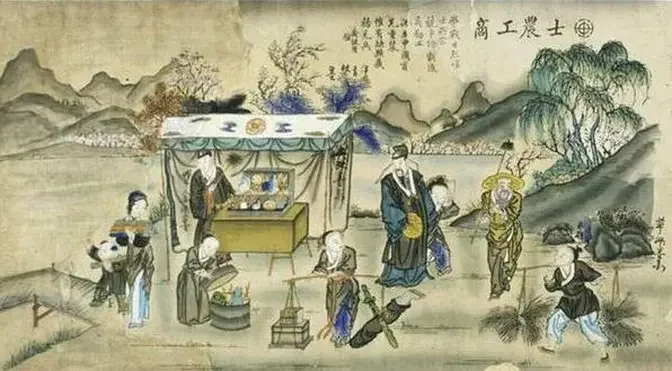
In Chinese civilization, a powerful line was drawn between the settled agricultural Han Chinese
and the nomadic peoples who lived beyond the Great Wall—the Mongols, the Xiongnu, the Turks.
These nomadic groups did eat dairy.
They drank fermented mare's milk called koumiss.
They made dried curds.
Dairy was a defining feature of their cuisine.
And in Chinese culture, that association became a stigma.
Dairy was the food of barbarians.
It was the food of people who wandered, who did not plant, who did not build permanent cities.
To eat dairy was, in a sense, to reject the values of Chinese civilization itself.
Agriculture.
Settlement.
Order.
This was not a subtle prejudice.
Chinese historical texts from the Han dynasty and later are filled with references to nomadic
peoples as the stinking ones, partly because of the rancid smell of fermented dairy on
their clothes and breath.
The Chinese scholar Jia Cixi, writing in the 6th century, recorded recipes involving milk.
But these were explicitly described as barbarian foods, curiosities from the northern frontier,
not part of the mainstream Chinese kitchen.
And then there was the philosophy of food itself.
Chinese culinary tradition, deeply influenced by Confucian and Taoist thinking, placed enormous
emphasis on balance, harmony and the medicinal properties of food.
In traditional Chinese medicine, dairy was classified as producing dampness in the body,
a condition associated with sluggishness, bloating and disease.
This was not superstition.
It was an empirical observation rooted in the biological reality that the vast majority of
Han Chinese adults were, and still are, lactose intolerant.
Estimates suggest that between 80 and 95% of East Asian adults lack lactase persistence.
When nearly your entire population gets sick from drinking milk,
it makes perfect sense that your medical tradition would classify it as harmful.
So the pieces come together.
Biology made dairy uncomfortable.
Agriculture made it unnecessary.
Geography made it impractical.
Culture made it undesirable.
And the soybean made it redundant.
Any one of these factors alone might not have been enough.
But all of them together created a civilization that had no reason, and no desire, to develop
But here is where the story takes an unexpected turn.
China is now one of the fastest growing cheese markets in the world.
In the year 2000, the average Chinese person consumed virtually zero cheese.
By 2023, China was importing more than 180,000 metric tons of cheese annually,
and domestic production was climbing rapidly.
Pizza Hut has over 20,800 locations in China.
Mozzarella consumption has increased tenfold in less than two decades.
A new generation of Chinese consumers, urban, globally connected, and eager to experiment,
has embraced cheese with an enthusiasm that would have astonished their grandparents.
This shift is not just about globalization or western influence.
It reveals something fundamental about the original question.
China did not avoid cheese because Chinese people were incapable of making it,
or incapable of enjoying it.
They avoided it because their specific combination of environment, genetics,
agriculture, and cultural identity created a world in which cheese simply was not needed.
The moment those conditions changed,
the moment urbanization removed the pressure on agricultural land,
the moment global trade made dairy affordable,
the moment cultural identity decoupled from dietary restrictions,
cheese found its way in.
And this forces us to re-question itself.
We tend to assume that cheese is a universal human achievement,
something so obvious that any culture should have invented it.
But that assumption is rooted in a European perspective.
From China's point of view, the real question might be the reverse.
Why did Europeans never develop tofu?
Why did they never figure out how to turn a simple bean into milk,
curds, and a hundred fermented variations, all without needing a single animal?
The answer, of course, is the same.
Europeans did not need to.
Their environment gave them cattle, grasslands,
and a genetic mutation that made dairy digestible.
Their path was cheese.
China's path was the soybean.
Neither path was superior.
They were just different solutions to the same fundamental problem.
How do you feed a civilization?
The absence of cheese in China is not a gap in Chinese culture.
It is a mirror, one that reflects how powerfully environment,
biology, and identity shape the foods we eat,
the foods we ignore, and the foods we never even think to create.
Every cuisine in the world is defined not just by what it includes,
but by what it leaves out.
And sometimes, what a civilization chose not to make
tells us more about who they are than anything.