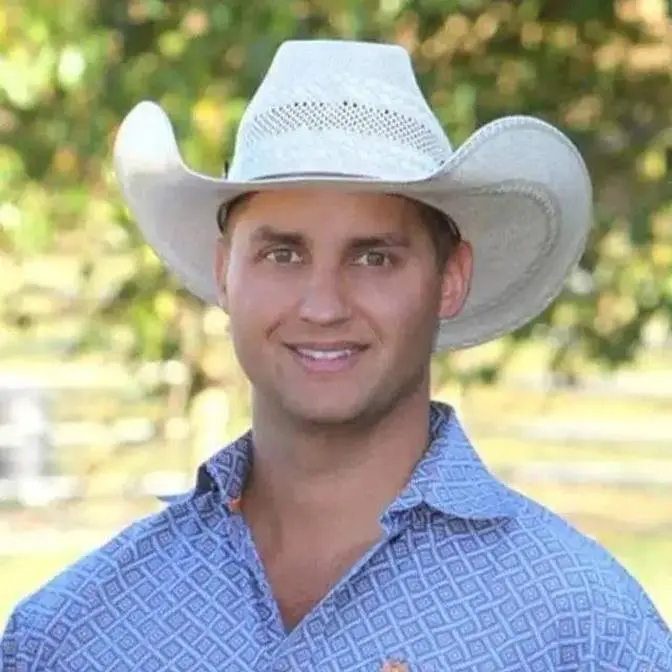
My assistant trainer, Jake Gelinas, and I are continuing our series where we train a wild mustang horse in preparation for the Mustang Magic competition in January. In this video we work on ropes, following a feel, bareback mounting, and obstacles.
💼 Learn the business side of horses they never taught you in the arena. Join our Skool community to learn marketing, business systems, and proven strategies to help you grow in the horse industry. 👉 https://www.skool.com/horsemanshomepage/about
🤠 Take your horsemanship to the next level by joining our Patreon! Get exclusive training content, behind-the-scenes videos, and monthly giveaways! 👉 https://www.patreon.com/ryanrosehorsemanship/
This video documents day four of training Casper, a gentle Mustang. The trainer focuses on progressive desensitization using ropes to prepare for saddling and farrier work, while introducing bareback mounting and obstacles to build trust and curiosity through a low-pressure, patient approach.
But I'm not going to lie, I'm a little nervous about taking him out of the round pen.
Oh, now we got ourselves in a proper bind.
But look at that.
What a trooper.
That is amazing.
Like, that is unbelievable.
Are you kidding me?
Wow.
That's impressive.
That's really impressive.
So impressive.
Man, what a cool horse.
Alright, well today is day four and we made a big adjustment.
As you can see, he lives in a different spot now.
The round pen, he was kind of baseline just uncomfortable because the other horses would leave
and he really wanted to be by a friend.
And so we got Emily's retired horse, Leo, as his buddy.
So he is much, much happier in this pen.
And I think what's cool is eventually we'll be able to just turn him out here with Leo
and I think he'll be super happy with that.
So that's going to work out good.
And so I'm just going to get him caught up and then we're going to take him to the round pen.
We got three objectives for today.
We're going to expose him to some ropes in preparation for lots of things,
but essentially directed a little bit towards saddling as a goal.
So we'll get him used to some ropes.
Also prepping his feet for handling his feet a little bit more.
I like to use the ropes first, let him kick at those for my hand.
And then last but not least, some bareback mounting, kind of accepting the human
and kind of head towards riding.
And then I think if all that goes according to plan,
then I'll have Jake take him shopping in the playground.
So far we've been careful to just get him kind of to the round pen, to over to here,
but I think he's getting as he gets gentler and he's feel less likely
that he's going to try to bolt or something on us and lose him.
But that is a risk.
You got to be aware of that that something can spook them
and all of a sudden the wild horse comes out in them and they're gone.
And so you got to be really mindful of when you're taking them across big areas and stuff.
So and so we're trying to be progressive with him.
But the good news is with this particular competition,
we have six months ahead of us to prepare.
So that's that's enough time that this is more of a marathon than a sprint
where some of the other Mustang challenges are a hundred days
and that's a lot quicker, quicker paced to everything.
And so essentially we have time to give him a nice foundation
and not to be too rushed.
But there's some advantages to like everything's new
where you can be progressive with things.
But you can see he wants to be a good boy.
So obviously he's real hard to catch.
You're a good boy Casper.
I feel like this horse is going to be pretty highly sought after at that sale.
I think so.
Bring your checkbook people.
So that competition is the last week of January.
So if you guys watch it, make sure you mark your calendars and come cheer us on.
I'll be there supporting Jake and he'll be there competing with Casper.
And there's a lot of other really great competitors in this competition as well.
So it's going to be a going to be a heck of a year for the competition.
But just through going in and out, he's gotten some practice.
Then partially we got the sticking string to keep Leo at bay.
Which they kind of know each other now.
Kind of start the habit of getting him used to going through a gate
and yielding the hindquarters and kind of facing up.
He's actually doing really good with gates.
A lot of them can be a little bit funny about gates
because in the holding pens when they go through gates
a lot of times they have a pretty big squeeze there
and they go through them really quickly.
Nice.
Pretty smooth.
So one of the things I'm going to do to kind of introduce him to the ropes
is let the string out on the stick now.
But I'm just going to kind of see where he's at with things.
Let him follow me around a little.
Check out a couple of the yields that we taught him yesterday.
Well luckily he seems to be really good minded
and just chill with everything which makes all the difference in the world.
There's a few things that make up a horse's disposition.
Learned behavior obviously is a big one.
You know when the horse goes from being untrained to trained
and that's where it's a bit of an educated guess when you're picking one out
of what their innate disposition is.
But there's the innate disposition
and that's influenced by learned behavior,
then the environment,
and kind of their spirit level of like how intense is it.
But you can't change their innate disposition.
So even though you can teach him skills and things,
if he was innately, he's innately pretty gentle
and that's what makes him pretty easy to deal with.
If they're innately more wild or really strong willed
and things that's going to make it a little tougher
and you can still train them and teach them all kinds of cool things
but just innately they're always going to be a little bit more challenging
than one that's innately more gentle.
Okay so we're just going to let this out here
and see if he'll let me swing this around.
And I'm kind of tempted like I could go about this really slowly
but with him because he's so gentle
I'm tempted to kind of just kind of go for it a little bit
just because I'd like to teach him that you know
if he gets scared of it acting like a prey animal
I don't want to keep it going until he kind of settles in.
But he's handling those ropes getting wrapped around his legs really well.
Have you already done this with him Jake?
I have not.
Wow.
It's the first time he's ever done it.
I rubbed him plenty with the stick but I haven't let the string out.
So we've pet on his legs with the stick and that's it.
Today's the first day of wrapping him around with the string.
But again that just speaks to his disposition.
Man.
Hopefully he's not going to be too lazy when we ride him.
Just get his feet moving here a little bit.
So Jake's been just doing a couple of extra short sessions
just reinforcing what we do in the first session that we're videoing
but we're trying to show you guys all the very first times
that we introduce something new.
So yesterday this was new to him
but now he's had a couple sessions getting comfortable with this.
You kind of have to mean it.
Yeah, I see that.
There we go.
So I kind of point and cluck and that's the first cue.
And then I follow up with the stick and string if we need to.
There we go.
And what's nice about that is that would be what we're doing when we're sitting on him.
We'd lead a rein out, cluck, cluck to it, and that cue.
And again I'm not trying to wear him out at all
so he kind of says yes there a little bit.
Got to save Jake some horse to play with when I'm done.
So this is something you don't want to introduce this too, too early
to where we're putting it around him.
I think I'm just going to put it around his hindquarters here to start with.
Again, he's just so good natured about everything.
I mean I do this with plenty of domestic horses that have some issues with it.
Yeah.
But it's horses like this that make you feel like you're a good trainer.
That's right. We like the good ones.
Things just go really smooth.
Yeah, this is the first time this has ever been done on him
and he acts like it's been done a bunch.
We're going to give people a lot of false hope.
They can go get a Mustang and have at it.
Yeah, I mean this horse is way above average gentle for Mustangs.
And honestly we could even be going quite a bit faster with his training if we wanted to
but again we're just trying to be thorough and do a good job with everything.
He's handling all of it so well.
I think I'm going to use the other rope on his legs.
This rope is easier to get on their legs if you needed that
but I think he's going to be pretty easy about it.
And the other rope is just a little bit gentler and I can put a feel on it a little easier.
So here's going to be a good question.
So here he's looking off.
So I'll just ask him to refocus.
Pay attention to me.
Because what you wouldn't want to do is just forget that he's a Mustang
that's only a few days into taming
and try to do something that he's not quite ready for.
So I'm just going to check this out a little bit.
Again, this is a step that we do frequently in colt starting.
Normally he'd be a lot more worried about even that step.
But again, he's so good.
And even just the fact that he's over here by the arena
where he can see the other horses getting rowed is a good exposure.
And he's paying attention to them but he's not overly concerned about it which is great.
So this is just kind of preparing him for the cinch on the saddle.
So I just try to keep an even feel on it.
And I want him to find relief moving forward so I can loosen it when he's going forward there.
Because you really want him to be able to find forward.
But, man.
He's supposed to buck.
Yeah, usually they have to get used to that a bit.
Just the other day I did this with a 17-year-old horse
that was having trouble accepting the saddle.
And he got all sorts of bothered just by the rope being back here by his hind legs.
Just this step right here.
So I'm going to see here if I can get him to step out of the rope with his right hind.
Oh, I kind of botched it there.
So let's try a front foot here first.
There we go.
First try. Good work.
Yeah. Thanks. Thanks, Goose.
Hey, I'm Ryan Rose.
And for over 20 years I've been helping people improve their communication with their horses.
Whether you're wanting to fine-tune advanced skills or help solve common behavioral issues,
my Patreon page is a great place to get some help.
I post a new video there every week.
I answer your questions regularly.
And there's a great community support.
So if you want to start your free trial, click the link below.
Now let's get back to the video.
And so I like to teach him to lead by the foot before I put my hand down there.
Because he's getting used to something being there.
And, again, they just kind of see the rope as an extension of our arm.
And, again, you can see there's no resistance to it.
Which, again, this is not normal.
Normally they would be a little concerned about it.
And he's just not changing states at all, which is just super impressive.
So now what I'm going to do is I'm going to put a feel on the rope.
And I'm going to ask him to just take the weight off of it right there.
He took the weight off and that's it.
So that would be the next step in the progression.
Wow. Really good yield that time.
And then even these ropes dragging on the ground, a lot of times that really bothers a lot of them.
And he's just so gentle.
But, again, I put that feel. He takes the weight off.
This is the start of farrier preparation right here.
Man, it's not normal, folks.
I think he's the most willing, not just Mustang, most willing horse I've ever seen.
Yeah, and a lot of them just this left brain typically are a bit argumentative and stuff.
And he's just, like, he's cooperative.
He's got, like, all the good sides of being left brain.
The only thing that's bothering him slightly is just seeing Emily there riding her horse around.
But I like the exposure.
We're kind of just far enough away that it's relevant, but it's not spooking him really bad.
Man, but he's just handling that so well.
So I'm going to do this side for you, Jake, and I'll let you do the other side.
Perfect.
My goodness, he just makes this so easy.
So for this hind leg here, luckily he's letting me fumble around and kind of careful with it.
I like this one to go up high on them above their hock because if it's down low and they kick at it,
which most of them are going to do, then it jerks your hand a bunch.
But there's a lot less movement to it when it's up high.
So I like to kind of start it off up high.
And then eventually move it down?
Yeah.
Man, that is insane how gentle he is.
And, again, I would do this with any horse because you never know when they get their leg tangled up in something.
And so you just can't go wrong by just spending some time getting them gentle to ropes being around them.
Man, he is just making this look easy.
So now just to make this a little bit safer, I'm just going to pitch this off to the side here.
So I just got this one rope and I got it in my outside hand.
This way my face is as far away from his legs if he were to try to kick.
And, again, I start off high.
And if he were to move his foot like that, then I just retreat back up here, work my way down again.
Well, that was easy.
So I think now we'll do a little bit of bareback mounting and then we'll bring in those barrels
and kind of expose him to that just a little bit.
And so the idea with bareback mounting, there's a couple things.
This is about accepting the human in preparation for the saddle but also the farrier and the vet.
And so we just want him to get used to people coming towards him with a little bit of energy,
a little bit more life up, making sure we can touch everything over here.
And if we felt any tight spots, I would just redirect his hindquarters away like this
and just kind of build this pattern in.
But you don't want to surprise him.
You want him to see you coming and just getting used to that little bit of energy there.
So, to me, this is the first step of just kind of life up, coming at him with some energy.
This will help your horses get easier to catch, too,
if you've got a horse that you feel like you've got to sneak around him to catch him.
See, like here he can't see me, so I'm not going to go running in there when he can't see me.
It's just a little thing just to be mindful of.
And the distraction with him thinking about Emily is like a little bit annoying, but it's good.
It's like because you're never going to have perfect conditions.
So if you try to set up your conditions to be perfect all the time,
well, any time you try to take your horse somewhere to do something,
it's going to be a big world out there for him.
Where if you just work through some of this stuff where they're not totally paying attention
and just kind of get them used to it, it can really take you a long ways.
So here I'll stay in here a little closer, and each day we'll progress,
like coming up to him with some energy, but I'm really happy with that.
So here I'm just bouncing next to him here a little bit.
I'm putting some weight on both hands.
And then I like to finish this with a hindcourt of yield
because this is the same pattern I would use when I introduce a saddle pad or bareback pad,
eventually the saddle.
So I like to step in here, swing the rope over him,
and it kind of creates a pattern so they know what's coming,
so they're not surprised by anything.
This was originally called the Jeffrey's Method,
and it was a guy in Australia that kind of just learned how to gentle horses
by just getting a lot of body contact with them and being close to them and stuff
versus the traditional cowboy way was to maybe even blindfold them
and get them saddled and then get on them right away.
So again, I've got my body against him.
I'm putting some weight down on his withers, getting him used to that.
He's handling that really well.
If they got tight or bracy, he's just acting like I'm not doing anything new to him.
But if they did get bothered by it,
you would wait there and hold that position until they weren't bothered anymore.
But they can lurch forward and kick out too.
So, like, I only kind of don't trust him not because of anything he's doing whatsoever
but just because he's only three, four days out of holding.
Right. He's supposed to be a Mustang.
And so until he's had a little bit more time in grade,
I'm not fully going to let my guard down with him.
I'd still rather be prepared than lucky.
Right.
I like having their head tipped towards me just slightly,
kind of getting them used to the bouncing
and then kind of getting them used to the weight here.
Just little doses of it.
And then step away.
Do a little hind quarter yield.
But a lot of these horses, like, if you were to bump their leg or something right now,
like, they'd come unglued, you know.
Right.
And him, you just feel like, man, he's just really settled.
Have you had one this gentle?
There was one that was similarly gentle that went through the Mustang taming.
And a lady that lives here locally ended up buying him.
Gotcha.
I can't think of his name right now.
I thought I had the name of the horse, but he was really gentle.
Milo. She called him Milo.
Oh, look at that.
Yeah.
So if you guys go back, way back on the old YouTube channel,
you'll see some videos of Milo.
He wanted to be gentle.
Like, first session in the round pen, you could walk up and put the rope over his head.
Gotcha.
That's how he caught him.
Set the rope over.
He's caught, you know.
All right.
Well, I'm pretty happy with that to get started.
I don't want to take all the fun out of it for you.
So let's go ahead and put some barrels in here,
and we'll just see what he thinks of them.
So, again, he's kind of snorting at it.
You probably can't hear it, but he's a little bit like, what's going on?
Again, first goal is not to, like, bring him up and make him.
It's to see if we can get his curiosity to come out.
He's thinking on it pretty hard.
Sometimes you just relax and let him work at it.
And so the first goal for this week, even if we could ask him to do some of the obstacles,
I would wait and just let it build curiosity.
We'll take him around the playground, and the goal is for him to get curious about the different things.
So, like here, good example, he got worried.
Your instincts would tell you, take him right back to it and show them that it's okay.
It's like, no, he wants to be back here.
It's like, hey, come on back here.
Because, actually, I just wanted to do a few hindquarter yields over here.
So I'll just move him around over here.
So, again, there's zero pressure on by the obstacle, although he is goosing by it a little bit.
Again, I'm not trying to take him to the obstacle, so I wouldn't turn his head away there.
Kind of get him to settle back in and then re-approach.
Again, with no pressure.
So I'm not directing him.
I just happen to be wandering over here by these things.
And so why it's no pressure is there's existing pressure from them being obstacles.
But there's no pressure from me.
And so that's what matters, is that I'm not looking at him.
He is not feeling anything from me that's telling him to go to those barrels,
other than I just happen to wander over here.
And he may get interested. He may not.
If he doesn't, we'll go away from them.
Maybe do some more circling, some things over there, and just wander back over here again.
Because, again, we've got plenty of time to ask him to do obstacles and build stride.
So, like, there he found the grass.
And he's like, oh, I missed a spot.
There's some grass right here.
So that's great. That tells you he's letting his guard down all the way here.
And so my next move is going to be to go away from the obstacles.
And practice our backup here a little bit.
Yeah, I would say you're kind of killing two birds with one stone working on obstacles
because you get to go over there and work on his yields.
Exactly. You get to add a purpose to it.
There we got a touchdown.
Got his nose to land on it.
But I'd rather him see something he's not sure of or something that's new and go, oh, what's that?
And his first thought to be, what is that?
Versus, oh, they're about to put pressure on me to make me do it.
Yeah. And kind of foundationally, you could say you're teaching him to be curious the way you're doing it
instead of kind of forcing him right now to go in between it.
Exactly.
You're kind of making a connection to the idea of making him be curious, you know?
Exactly.
Like right here, he could think about jumping it.
And if he feels squeezed, and sometimes they'll do things like that where it doesn't make sense.
It would make sense to go somewhere else.
But backing up isn't high on their priority list.
So right there, I didn't like that scenario.
Even though there was no pressure back there telling him to come this way,
it's a less natural response for him to retreat away this way
versus to just charge through and get away.
So I just redirected him there.
Again, a little thing, but that's all the little stuff that keeps things low-key
instead of getting more exciting as you go.
Kind of interesting to me how confident he is with humans.
But then these obstacles, he's actually a little bit unsure about.
Yeah.
So this is a really good try.
Just giving it a sniff.
Really getting inquisitive about it.
Now he's licking it.
Good boy, Casper.
Let's see if he'll go ahead and follow me through it over here.
All right.
Well, I'm going to be really happy with that.
And I'm going to hand him off to Jake now.
And we probably should put the .22 on him.
But he could probably be okay with this too.
But I would just have you take him back to his pen
and just if you want to show him a couple obstacles, see what he thinks about it.
And so Jake will work with him again later today doing a review of what we just did here.
And that's it.
You know, it's kind of just reinforcing some of the things we've already showed.
And tomorrow we'll try some new things with him.
It's all yours.
Well, that was easy.
Yeah, that's weird.
Makes me uncomfortable.
Why is this going so good?
You doing extra training sessions in the middle of the night or what?
No, I swear to God I'm not.
I think you got a good one, man.
Yeah, I think so.
Thank you.
Well, hopefully there's something more exciting for you guys next video.
Rachel was talking about calling him jailbreak or something because he came from the prison.
A bandit. Yeah, that was a bandit.
Oh, bandit. That's not bad.
Got him broke out of prison here.
Lay down.
Oh, got distracted.
Looked like he was fixing to lay down.
No thanks.
Right here, let me hand him to Jake.
Then you can come out.
You tell me you're a Mustang and you don't know how to pick up your feet.
Come on, Casper.
I feel like I should have picked a more exciting horse for YouTube now.
I'm happy we picked him.
This might be one of the most boring YouTube videos we've ever made.