
Aliens May Exist — So Why Haven’t They Reached Earth?
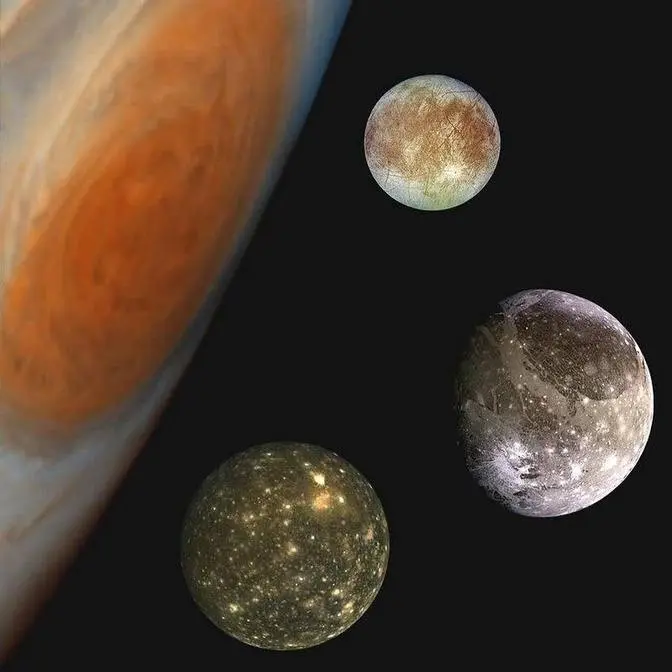
What if alien civilizations really exist throughout the Milky Way—but the laws of physics make meaningful contact extraordinarily difficult?
This documentary examines a different answer to the Fermi paradox. Instead of assuming that the silence of the sky means intelligent life is rare or extinct, it asks whether civilizations could be separated by distances so enormous that even highly advanced technology struggles to bridge them.
The nearest star system, Alpha Centauri, is about 4.24 light-years away. That sounds close on a galactic map, but it represents roughly 25 trillion miles. At the speeds achieved by today’s spacecraft, an interstellar journey would take tens of thousands of years.
To reduce that journey to decades, a spacecraft would need to travel at a substantial fraction of the speed of light. That immediately creates another problem: energy. Accelerating even a relatively small probe to 10 percent of light speed requires enormous amounts of kinetic energy—and a spacecraft that wants to stop at its destination must pay much of that energy cost again during deceleration.
The documentary explores chemical rockets, nuclear propulsion, fusion concepts, antimatter, and laser-driven light sails such as Breakthrough Starshot, showing that known physics may allow some interstellar probes without making interstellar travel easy or routine.
Distance also creates a problem of time. A civilization 1,000 light-years away sees Earth as it existed roughly 1,000 years ago. Our technological radio presence has only expanded a relatively small distance into the galaxy, and ordinary radio leakage becomes increasingly difficult to distinguish from natural background noise.
Even successful starships would face interstellar dust, high-energy particles, cosmic rays, long-term material degradation, navigation uncertainty, communication delays, and the enormous challenge of slowing down after arrival.
Relativity offers time dilation, but it does not eliminate the journey. Traveling near light speed could reduce the amount of time experienced by travelers while centuries or millennia pass elsewhere, effectively turning deep interstellar travel into a journey into the future.
We also examine generation ships, self-replicating probes, digital intelligence, warp drives, wormholes, the Kardashev scale, technosignatures, and why advanced civilizations might rationally choose better telescopes and robotic probes instead of biological visitors.
The conclusion is not that alien visitation is absolutely impossible. It is more careful—and perhaps more unsettling.
Alien civilizations could exist throughout the galaxy while remaining separated by physics, distance, and time.
The night sky may be silent not because no one is there, but because the universe is far larger and harder to cross than it looks.
#Aliens #FermiParadox #InterstellarTravel #SETI #Astrophysics #Space #ExtraterrestrialLife