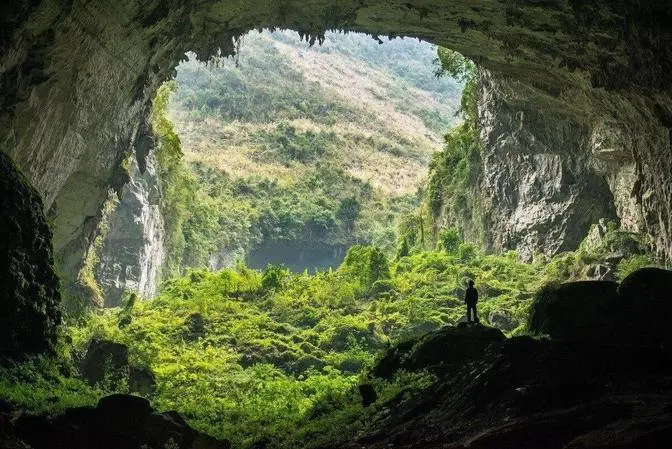
MADAGASCAR: The Last Untouched Wilderness | 4K Travel Documentary
Thousands of years ago, people set sail into the unknown — across 5,000 km of open ocean — and found a new world. That voyage gave birth to Madagascar — where Asia met Africa, and two worlds became one. But who were these people? And what was it about this distant island that drew them across the endless sea? 🌊 Every face, every song, every forest in Madagascar still carries echoes of that impossible journey.
► See More: The Real Morocco Most People Never Discover | 4K Travel Documentary • The Real Morocco Most People Never Discove... The Real IRAN Most People Will Never See • IRAN: The World’s Most Misunderstood Place... ►Best Playlist: • Asia Travel Documentary ►Subscribe: / @trueglobe66
0:13 Birth of an Island and Sacred Landscapes
4:53 Cultural Convergence and Ancestral Identity
11:07 Stone Forests, Rivers, and the Spirit of the Land
17:05 High Plateau Mysteries and Highland Life
26:31 Forests, Islands, and the Living Symphony of Nature
37:03 Coastal Legends, Wild Heart, and the Emerald Sea
49:44 Final Call: Nature, Wonder, and Protection
Madagascar is a land of extraordinary biodiversity and cultural heritage, where 90% of wildlife is endemic. From the iconic baobabs and razor-sharp limestone forests to lush rainforests and turquoise coasts, the island blends a complex history with otherworldly landscapes, offering a profound look at nature's evolution and the harmonious rural life of the Malagasy people.
Tens of millions of years ago, a piece of Africa drifted out to sea and never returned.
Here, people didn't bury the dead. They woke them up with music and dance.
Madagascar. Forests where trees grow upside down, creatures with eyes that glow in the dark,
and landscapes that look like they were copied from another planet.
This wasn't just an island. It was the moment Earth began to speak its own language.
Thousands of years ago, Austronesian voyagers from Southeast Asia crossed more than 5,000
kilometers of open ocean to reach Madagascar, followed later by Bantu settlers from Africa.
Together, their worlds intertwined, giving rise to the unique Malagasy identity.
Over the centuries, ancient kingdoms rose, French colonization took hold in the 19th century,
and independence was finally won in 1960. Today, beyond its layered history,
Madagascar remains a living treasure, a sanctuary where nearly 90% of all life exists nowhere else
on Earth. The Avenue of the Baobabs, an eternal symbol of Madagascar. Lining both sides of the
Red Dirt Road, ancient baobab trees rise like silent giants, some reaching over 30 meters tall,
their massive trunks swelling like pillars carved from stone. These baobabs, known scientifically
as Adansonia grandidieri, are among the oldest living beings on the island.
Some are believed to be more than a thousand years old, standing as living witnesses
to centuries of rain, wind, and time. Each trunk stores thousands of liters of water,
allowing the trees to survive the fierce droughts that shape Madagascar's western plains.
With their thick, bottle-shaped trunks and bare, root-like branches stretching skyward,
the baobabs are often called the Upside-Down Trees, a name that perfectly captures their
surreal and otherworldly beauty. Under the sunlight, their rough bark glows with warm,
golden-brown tones, striking against the dry, red earth. Every curve of the trunk and branch
seems sculpted by wind and time, creating a scene both mysterious and poetic, a living artwork
born from nature itself. For the Malagasy people, the baobab is far more than just a tree.
It's sacred and believed to hold the spirit of the earth and the souls of their ancestors.
Stories and legends have been passed down for generations to explain its strange form.
One of the most beloved tells that the gods impressed by the tree's stubborn will to live
forever planted it upside-down roots in the sky, defying the natural order. Walking among them
feels like stepping into a living legend, where every tree breathes an ancient story
and silence itself seems to echo with eternity. A landscape that seems carved not by time,
but by the hands of ancient gods. Tsingyidebe Maraha, a stone forest millions of years
in the making. There's a legend told among the Malagasy people that the earth once tried to
stand upright to reach the heavens, but the gods, fearing its ambition, struck it still.
What remained were blades of stone, rising in silence, the frozen echoes of that rebellion.
From above, the Tsingy looks like an ocean turned to stone waves of gray frozen mid-motion.
But down below, the truth is far more intimate and far more dangerous. The rock is sharp as
broken glass honed by centuries of wind and rain. One careless touch can split the skin.
Every surface cuts. Every ledge demands respect. Here even the earth has edges. Here sound feels
sacred. The wind moves like a whisper through a maze of limestone spires, and every footstep
sends a shiver of echoes down into canyons no light can reach. Those who enter will learn
to move differently, slower, quieter, more mindful of their breathing. A slender bridge
spanning a canyon below a deep abyss swaying with the vibrations of the air can make even the heart
stop for a moment. Many have to close their eyes and step lightly to overcome their fear.
Yet even in this fortress of stone life endures. White Sifakas leap effortlessly across the jagged
gaps, moving like dancers suspended in mid-air. Each jump is a burst of grace, arms outstretched
bodies balanced against the blaze of the sun. Their white fur catches the light, turning them
into living spirits gliding above the stone. In that moment they seem weightless, almost
otherworldly, as if even the wind itself were lifting them, keeping time with their silent dance.
The Tirubihina River winds through the wild heart of western Madagascar, rising from mist-covered
highlands and flowing westward toward the Mozambique Channel. Its bronze waters move
through endless plains past groves of tamarind and palm, and between cliffs of sandstone glowing
in shades of copper and amber. Along its banks life drifts quietly by. A modern bridge stretches
gracefully across the river, a sleek line of progress gliding above the water, connecting
distant worlds while keeping the calm untouched. But not every crossing is so simple. Farther along
people still rely on wooden ferries that drift patiently from shore to shore, guided by faith
rhythm and the gentle pulse of the current. Every journey on the Tirubihina feels personal,
a slow communion between humanity and nature. The river becomes both a path and a prayer,
carrying travelers through moments of stillness and discovery. Sometimes the water reveals small
miracles, a hidden waterfall spilling in clear ribbons from red rock, the cool breath of mist
on the skin, or a quiet pool that invites you to stop and listen. Here surrounded by raw beauty,
you begin to sense the heartbeat of Madagascar itself, steady, ancient, and alive in every drop
of flowing light. In the far north of Madagascar the earth blushes red, a landscape sculpted not
by man but by wind rain and time itself. This is Redsinghi, a fragile cathedral of clay and light,
where every pillar seems to rise and breathe beneath the open sky.
Unlike the sharp limestone towers of Bemaraha, this surreal landscape formed by centuries of
features dramatic laterite peaks shaped into towering cones by the combined forces of rain
wind and river currents. Over the centuries rainwater and landslides have exposed these
crimson masses that seem to tint the land revealing a hidden world of terracotta towers
that glow gold at dawn and rusty copper at dusk. To walk here is to step into a dreamscape,
the ground feels alive soft beneath your feet, yet whispering of its ancient strength.
Between the fragile chimneys of clay silence rains broken only by the wind sliding through
narrow corridors of red dust. Locals say that each grain of earth holds the spirit of an ancestor
returned to guard this sacred place. Discovered only in the 1950s, the Redsinghi remains one
of Madagascar's quiet miracles, a place where geology becomes poetry. Locals say that each
grain of earth holds the spirit of an ancestor returned to guard this sacred place. In the heart
of southern Madagascar the mountains of Andringitra rise like an ancient cathedral of stone, a hidden
gem of biodiversity and dramatic scenery place where the earth seems to breathe and the wind
carries the memory of those who came before. The Betsileo people call it sacred believing the
spirits of their ancestors dwell among the granite peaks and whisper through the mist.
Clouds gather like pilgrims clinging to cliffs before drifting away toward the valleys below.
At 2,658 meters, Pikbobi the mountain, once known as Imari Volanitra, stands as the island's
second highest summit, a challenge and a promise to those who climb it. With over 1,000 plant species,
100 bird species and 13 types of lemurs, including the thick-furred ring-tailed lemurs
adapted to the high altitude chill, its fur glowing like flame against the gray rock,
it is said that seeing one is a blessing, a sign that the mountain has accepted your presence.
In the heart of Madagascar, where the desert breathes and the sky feels close enough to touch,
lies Isolo National Park, a place where wind, sand and time
have spent millions of years shaping the bones of the earth. The land unfolds in waves of sandstone
cliffs, narrow canyons and wide savannas each layer a page in the planet's unfinished story.
The rocks shimmer gold rust, an ochre changing color with every hour of light.
Some rise like fortress walls, others curl into arches and domes,
cathedrals sculpted not by human hands but by the endless patience of erosion.
To the Malagasy people, this is the land of spirits. They believe the wind that moves
through Isolo carries the breath of their ancestors, whispering across the cliffs at dusk.
Even today, tombs are hidden among the rocks, their entrances marked with simple stones,
symbols of an eternal dialogue between the living and the dead. Yet even in this desert of silence,
life persists with quiet grace. At Piscine Naturale, crystal water gathers beneath palms
and ferns, forming a sanctuary so calm it feels like time itself stops to rest.
Varro's sifaka dance gracefully across the ground, their white forms gliding silently
yet alluringly as if gravity itself were bending to their will.
When evening comes, the sun melts into liquid fire. At Fenetre d'Isolo, the window of time,
light passes through the stone like a final heartbeat painting the valley below in amber and
flame. Antananarivo rises from the highlands like a story told in layers, seven red hills
dotted with rooftops glowing like embers in the evening light.
From a distance, the city seems to float its old French facades,
rising from the hillsides, its narrow streets intertwined with markets and memories.
This is a city built on contradictions, where colonial balconies overlook rice paddies,
where the rhythm of tuk-tuks and street vendors harmonizes with the beat of royal drums.
Life abounds in every corner, the buzz of conversation at Annalackley Market,
the scent of mangoes and spices, the hum of bargaining in Madagascan and French.
The highest point in the city is the Rova of Antananarivo, the ancient royal palace
that once ruled the island's kingdoms. From the steps, the view stretches endlessly,
red roofs cascading down the hillside into the lush valleys below. Here is a place where history
and hope beat, the flame of the past still burns silently beneath the stones. Not far away,
Lake Anossi reflects the sky. In the middle of the lake, there is an island connected to the city
by an isthmus, on it is a memorial built by the French to those who died in World War I,
the Monument aux Morts. And as the sun begins to set, Antananarivo transforms itself,
golden light stretches across the hills. Here the capital is more than just a city,
it is a living rhythm, a conversation between old and new, between memory and movement.
Antananarivo does not whisper about its beauty, it sings it boldly,
brightly across the hills of Madagascar. Hidden high in Madagascar's central highlands,
Lake Tritrever feels like a place suspended between myth and geology and is one of the
country's most mysterious and captivating natural sites. Formed inside an ancient volcanic crater,
the lake rests quietly at over 1,700 meters above sea level,
its deep sapphire surface surrounded by rugged cliffs and dense green slopes.
Seen from above it, glows like a piece of the sky fallen into stone. No one truly knows
how deep it goes and perhaps that's part of its spell, the mystery lies as much beneath the water
as in the stories told along its shore. Locals speak of two lovers, Rabeniombi and Ravalahanta,
who forbidden to be together, chose to join each other in the lake's dark depths. Near the water's
two intertwined trees stand side by side, said to be their spirits made visible, forever united.
Visitors often fall silent here, not out of fear, but reverence. Yet Tritrever is strange in more
than legend. While the rivers nearby swell with the rains, the lake inexplicably sinks
and when the land dries, its waters rise again. The rhythm seems to follow something deeper than
weather, as if the lake listens only to its own heartbeat. To walk the trail leading down to
Tritrever is to enter both a landscape and a story, one written in lava love and silence.
It is said that you can hear Ranomafana before you see it, the murmur of rivers winding through
the mist, the cries of lemurs echoing like lost songs among the trees. This is not a forest
you can easily walk into. It envelops you. Warm rain lingers on your skin,
the smell of damp earth rises like a memory and sunlight filters through the green like liquid
gold. Ranomafana, which means hot water, is a living symphony of temperature and humidity,
a rainforest alive with secrets that science is still uncovering. Hidden in the dense bamboo
thickets, researchers in the late 1980s found one of Madagascar's rarest treasures,
the golden bamboo lemur. Its fur glows with a deep amber, its eyes curious but watchful.
It feeds on bamboo laden with natural cyanide, surviving what should have been death,
a quiet defiance that seems to reflect the resilience of the forest itself.
Here, every branch trembles with life. In the distance, ring-tailed lemurs drink
from the dark mud, their distinctive long tails raised like little flags.
If you're lucky, you might catch sight of one of the most stunning creatures on earth,
the comet moth Agama Mitre, a living jewel of the night. Its golden wings shimmer like firelight
and its long elegant tails drift through the darkness as if dancing in a dream.
The majesty of Ranomafana is also expressed in the mysterious but also somewhat dangerous
waterfalls. The white water flows like a giant silk ribbon in the heart of the forest. The sound
echoes bounces off the cliffs and spreads far away, blending with the birds and the wind blowing
through the foliage to create a natural symphony. Located just a few hours east of Madagascar's
capital, Andasibe-Mantedia National Park is one of the island's most accessible and enchanting
rainforests. Spanning 155 square kilometers, it is a wonderland of mist moss and melody.
Rain falls here more than 200 days a year, feeding rivers and waterfalls that wind through
dense undergrowth and bring life to a world seemingly untouched by time. The park is home
to some of the island's rarest species, notably the song of the Indri Madagascar's largest lemur,
which fills the entire valley like an ancient hymn. In the distance, the sight of a black and
white lemur with thick velvet fur and bright orange eyes perches on a tree branch and looks
straight into your eyes, inviting you to look.
Another smaller creature, the bamboo lemur, with its innocent eyes and gentle demeanor,
is often seen clinging to a bamboo trunk as if whispering secrets that only the forest
can understand. Slowly, almost imperceptibly, a parson's gecko moves along a branch,
its skin changing color to the rhythm of the forest's breathing. The people of Madagascar
call this place the forest that listens to your breath, because when you enter Andasibe,
the whole forest seems to close in and listen to your feelings.
Every call, every rustle, every heartbeat becomes part of a larger rhythm, and more than that,
a reminder that this is not simply a forest to explore, but a world to let yourself go free.
After admiring the majestic beauty of the forests, your feet quickly move to the beach,
letting yourself be carried away by the cool blue waters. And there where the horizon stretches out
and the air smells of salt and sunshine, lies Nosibi, Perfume Island, and its precious sister,
Nosirania, two islands that seem to be suspended between dream and reality.
Nosirania isn't just beautiful, it's teeming with life. Sea turtles swim slowly, as if cruising
deep. In the shallows, coral gardens bloom in all their colors, sheltering schools of brilliant reef
fish, and rays glide like silken shadows. In contrast, Nosibi hums with the warmth of
offshore boats and the sweet scent of flowers. Fields of magnolias stretch across the hills,
their bright yellow flowers filling the air with a scent so faint, it seems like a fading memory.
Around Nosibi is a cluster of small islands, each with its own character,
and Nositanically is the brightest gem among them. Dubbed a natural aquarium,
its waters teem with brightly colored fish and countless other marine life.
This extraordinary biodiversity only adds to the turquoise beauty of this true paradise.
As the sun sets, the islands turn a brilliant gold. Fishermen sing to the waves,
lanterns flicker along the shore. You can almost hear the land exhale, a sigh of peace,
of surrender, of perfect stillness. Hidden deep within Madagascar's central highlands,
just 12 kilometers east of Analaveri, lies one of the island's strangest and most mesmerizing
natural wonders, the cold water geysers of Analaveri. At first glance, they look like
any other geothermal spring, but these fountains defy the rules of nature. They don't erupt from
volcanic heat, but from a remarkable alchemy of minerals, pressure, and time. The geysers
are born from underground water passing through mineral-rich aragonite deposits.
As the water moves through metal pipes toward the Mazie River, carbon dioxide trapped within
is suddenly released, sending columns of water bubbling and bursting skyward,
as if the earth itself were breathing. The effect is hypnotic rhythmic bursts of crystal water
sparkling under the sun, each eruption accompanied by the soft hiss of escaping gas.
Perched high in the mountains, this countryside appears like a vivid picture.
Green fields clinging to red hillsides, where every line carved on the land
tells a story of patience and perseverance. Living in the small mountain villages,
time seems to pass instead of run. The pace of life is not shaped by the clock,
but by the rustling of rice stalks, the distant calls of zebu cows,
and the gentle rustle of wind through the valleys. Here, the land is both teacher and friend.
Every step on the terraced fields is shaped by the hands of many generations who know how to feel
the land, when to let it rest, when to revive it. A paradoxical beauty that you have to use your
heart to feel here. The contrast of the red hills with the green nature of the village.
On both sides of the road, the countryside seems to breathe. Tall grasses sway in the wind,
and the horizon sparkles with the deep green and red earth of the Madagascar highlands.
There is no rush, no noise of machinery or crowds, only the quiet sound of footsteps echoing on the
winding road. Especially when the sun sets on the fields, the beauty of the land and sky seems to
blend together, creating a majestic and mysterious atmosphere that is heartbreaking. Life in these
villages is not easy, but it has a peaceful, solemn beauty. The people here do not fight
nature, they live in harmony with it. There is only one dirt road leading to Andrahei village
connected to the outside world by this fragile thread. However, this place always exudes an
ancient beauty, gentle but breathing the land. Tourists wandering here often find more than just
beauty. They find silence, a reminder that there are places where life is neither hurried nor noisy,
where time stretches as far as the horizon, and where every breath is a conversation with the land
itself. In rural Madagascar, the world slows down just enough for the soul to catch up.
Il Sainte-Marie, also known as Nosy Baraha, is an island off the east coast of Madagascar,
where history, myth and nature mingle like the waves that lap at the shore. Legend has it that
it was a safe haven for more than a thousand pirates and many 17th century ships. Today,
it is one of the most peaceful and enchanting places in the Indian Ocean. Beneath the placid
surface lie remnants of that wild past, rusted anchors buried in the sand-weathered gravestones
from the legendary pirate cemetery and whispers of hidden treasure carried by the sea breeze.
But Sainte-Marie's true magic comes to life in its waters. Every year, from July to September,
the island becomes the stage for one of nature's greatest shows, the humpback whale migration.
These majestic giants migrate thousands of miles from the icy Antarctica to the warm,
protected bays of Sainte-Marie to mate and give birth. At dawn, their massive tails rise from the
turquoise waters shimmering in the sun. At night, they rise in graceful arcs as if celebrating the
rhythm of life itself. On land, the island is a place of serene peace, palm-fringed beaches,
crystal-clear lagoons and fishing villages where time passes gently to the sound of crashing waves.
The air is fragrant with the scent of ylang-ylang and the salt of the sea, and sunsets
tinge the ocean with gold. At Madagascar's northern tip, where the map turns into wind and water,
the port of Antsiranana, still called Diego Suarez by many, opens like a great blue amphitheater to
the sea. The harbour is a deep protective bowl. Ships slip in and out like quiet thoughts,
while rust-coloured warehouses and balconied facades from another century lean toward the
water as if eavesdropping on the tides. Sugarloaf. Mountain. This majestic islet
emerging from the waters of the bay is a striking and emblematic sight
of Diego Suarez, that small volcanic cone set in turquoise. Most unique is Sakalava Bay,
located about 20 km from the city of Antsiranana. Diego Suarez. The bay is the starting point for
adventures to other bays' neighbouring islands and the Emerald Sea. The bay has warm, clear water,
with temperatures ranging from 24 to 32 degrees, is surrounded by a coral reef,
has moderate waves suitable for surfing, and a shallow, sandy bottom. But beyond its visual
splendour, Diego Suarez also boasts the warm welcome of its inhabitants, the lively markets
filled with the scent of spices and the peaceful pace of local life. It's a place where you
immediately feel transported, enveloped by the raw yet refined beauty of a corner of Madagascar,
still sheltered from the tourist crowds. Maswala National Park is the beating heart
of Madagascar's wilderness. A rainforest so ancient and lush that every sound feels like a whisper
from another age. Draped across the northeastern peninsula, this vast sanctuary spills from mist-wrapped
mountains down to coral-fringed bays, where the jungle dissolves into turquoise water,
and the air hums with life. Here the forest is perfumed by clove trees, their glossy leaves
and fragrant buds releasing a sweet, spicy scent that mingles with the damp aroma of moss
and earth. This is the stronghold of the red-ruffed lemur flame-coloured thick furred,
and found nowhere else on earth. Their deep resonant calls roll through valleys at dawn-like
drums. Among the tangled vines and towering palms lives one of nature's strangest and most
enchanting creatures, the aye-aye. Under the shroud of night it emerges its golden eyes,
glowing like twin lanterns. With a ghostly grace it moves along branches, tapping the bark with
its elongated middle finger, listening for the faintest echo of insects hiding beneath.
Then with surgical precision it gnaws through wood and extracts its prey part,
lemur part woodpecker, and wholly extraordinary. The locals once feared it as a symbol of ill-omen,
but to those who look closer it embodies the quiet genius of evolution.
And the beauty is revealed even more when the forest meets the sea, immersing you in a magical
scene. The tree silhouettes lean forward as if drawn by the salty air of the turquoise water.
The tides blow through them in a slow rhythm, filling and emptying the forest floor with liquid
light. Kayaks glide gently through the mangroves, slowly enjoying the natural beauty. Here the sea
changes colour, constantly shimmering like an endless mosaic. Madagascar is more than just
an island, it's a living story written in stone wind and water. From its endless forests,
teeming with endemic species to its magical island souls, every corner resonates with a vitality
unlike any other on earth. It's a place where time slows and nature speaks with colours and rhythms
that challenge the imagination. But behind its beauty lies a deeper calling, a reminder of the
vastness and fragility of the world. Every step across Madagascar is both a journey across land
and a journey inward back to wonder itself. If this glimpse of the island's soul has moved you,
keep going. Join us at True Globe as we explore the wild, sacred and mysterious corners of our planet.